
Tale from the riverbank
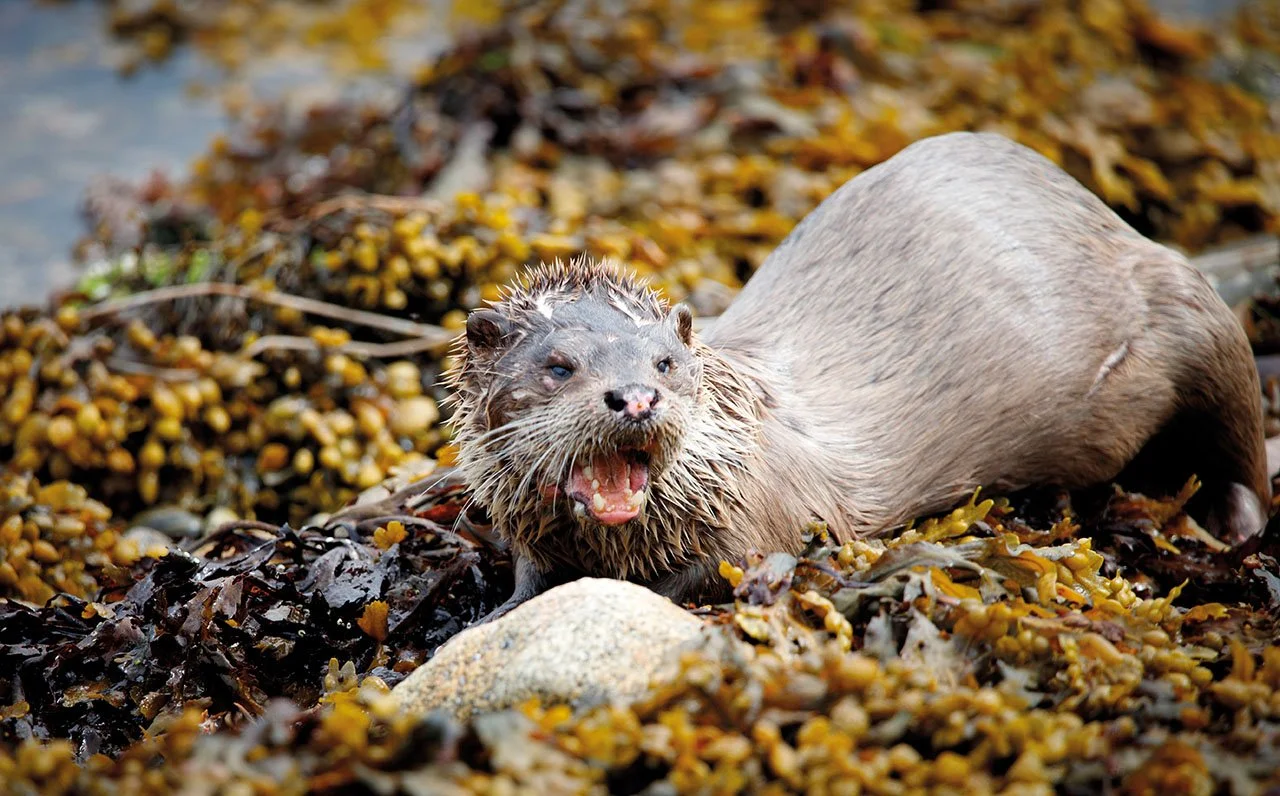
A Northumbrian otter (Photo: Jacky Seery)
First published in edition 204 of The Northumbrian, Feb/Mar 2025
Northumberland Wildlife Trust chief executive Mike Pratt celebrates the Northumbrian otter
If you seek a wildlife success story, you need look no further than the return of the Northumbrian otter. Declining since the 1950s, by the mid- 1980s otters were rare, even extinct, on most English rivers, so polluted was their habitat and so disturbed by otter hunting, which remained a regular pastime until 1981. Heavy metals and pesticides also did for the otter until they were banned, as did habitat destruction and decline. The species held on in Scotland, but south of the border it dwindled.
But with new protection and conservation efforts is has slowly returned. It happened here in Northumberland first, otters expanding as riverside trees and other wilder habitat were improved and even new otter holts were built for them. Reintroduction was not needed here, but it was in other places. Championed by the Duke of Northumberland, landowners such as Charles Baker-Cresswell, and farmers in the north of the county, they made good progress as part of Northumberland Wildlife Trust’s first big species approach, The Otter Project.
These amazing animals, top of the predatory tree in our waterways, are now seen regularly on our nature reserves and coastlines, from Amble Harbour to the Farne Islands, the Tyne to the Rede, the Coquet, Kielder and everywhere in between, even in Newcastle’s Ouseburn and other urban streams.
What a success it’s been, and I have followed their return avidly, spending much time tracking and watching them, supplemented by visits to their true kingdom of Shetland. Locally, I’ve seen them cross the road at night, while recently on Lindisfarne my wife and I were stopped in our tracks as a mother otter and her pup crossed our path in the pouring rain, near the castle, all bristled up like porcupines.
The only thing I worry about when I see them is how they may be affected in future by the increasing deterioration of our rivers. The otter is an icon of how we can help nature back to normal, and it would be tragic if it were knocked back, as so many other species have been. That’s why, always as a last resort, we need to seriously consider reintroductions, from harvest mice and beavers to martens and green-winged orchids, even eagles and other predators, to restore ecosystems. Compared to Europe we have so little wildlife diversity and abundance, even in this region.
But for now, I’m enjoying the otter here in its element and I like to imagine its nightly explorations of watery ways. This is how I think it might run one dark night in September:
Unnoticed by anything, the old dog otter slides down the river bank next to the bridge at Haltwhistle, under the cover of darkness, into the black waters of the Tyne. Had anyone seen, they would have gasped at its serpentine shape caught in the moonlight and reflected colours of the aurora from the sky above, turning it silver and purple before it dived deep.
The short-sighted otter couldn’t see the sky and wasn’t interested in anything other than food – he was hungry. This was the time the sea trout ran and he could sense their movement, smell their sea-liced bodies moving up river.
It wasn’t long before he found fish; not the migratory ones he sought, just a couple of eels and a brown trout he consumed on a rock mid-flow, whiskers shedding water droplets as his boxing glove-like face struggled to crunch the bones and swallow the skin.
Replete for now, the otter moved to the bankside. Anyone watching now would see him turning himself in circles to shed water and roll on his back, touching his hind quarters to rock to set scent and riffle his thick coat, grooming it back to a sleek waterproof.
The otter was experienced at hunting and had fathered many cubs; some now with a female further up river. But he played no part in their up-bringing. In fact, he kept his distance, as is the otter’s way. His territory reached about 3 miles in either direction. Challenged by incomers on a regular basis, he had to mark his boundary constantly.
He knew everything about the river and its life, and a little about its strange and unpredictable nearby human inhabitants, from whom he worked to keep distance. Down the line of his otter ancestors, ‘the upright ones’ were known as fearless hunters, taking their kind with dogs and guns, stealing fish, bringing disruption and their inexplicable, gross outpourings into the river. He had found their attempts at swimming laughable!
Something moved behind him – a loud rustling in the alders. He flinched and peered and sniffed the air – a badger nosing for worms by the hedge gave him no fear. They were poor swimmers, slow and heavy, though were not to be bitten by.
On the river he sensed the movement of goosanders taking flight at his presence, and he moved off, sliding easily into the water as if it were nothing, transmuted into its watery element, caressing the flow as it changed from rough to smooth between rock and weed. He surfaced several times around the meander to chase small fish for fun, enjoying their spraying out of the water ahead of him as he advanced.
His main quarry was in a pool under a small ‘man-bridge’. They gave themselves away by their turbulence and fins breaking the surface, taking bites at night insects. He didn’t rush in and scatter them as they were big and fast. He crept first along the bankside, showing no silhouette and then launching like a torpedo he was among them, as many fish as he had toes on his paws.
He embraced one as if he was dancing with it and then, as it writhed free, latched onto the next and this time took a bite behind its neck. Dragging it into the shallows, the salmon thrashed out its life as the otter took its fill. A fox would finish it off later and leave just its skin. A tawny owl screeched as the otter, full and tired now, sleeked into one of his ancient holts in a hole under a large ash. He turned to sleep as the day broke.
These stunning animals are such a barometer of the state of our Northumbrian environment. Let’s all hope we can keep our waterways healthy enough for them to thrive way into the wilder future that must be in store for Northumberland.
Mike’s books, including Infinite Wonder, Loving Nature Back to Health, are available via Northumberland Wildlife Trust at www.nwt.org.uk, at selected bookshops, and at:
www.livingmindfullywild.com