From frontline to sunshine
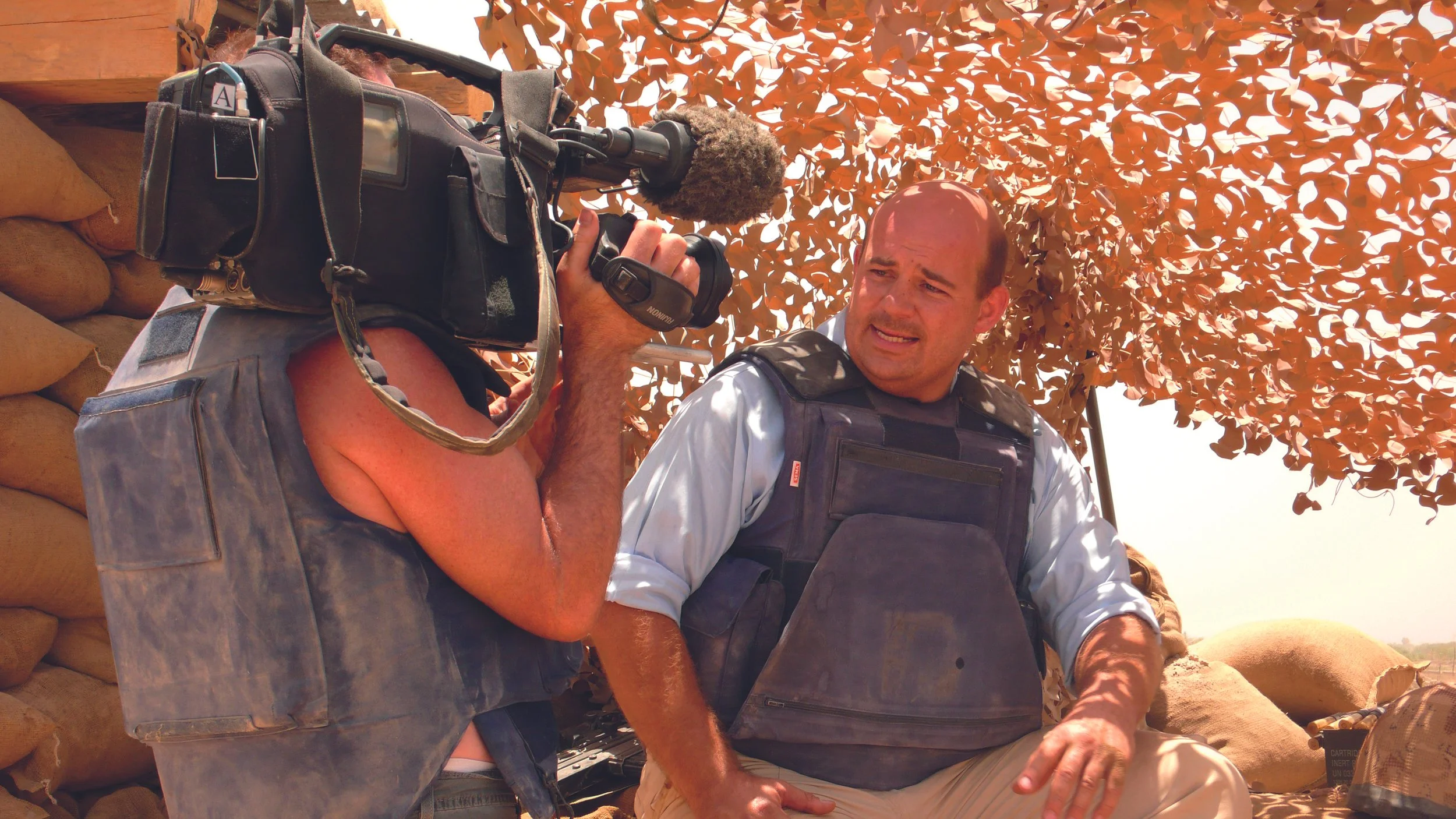
Alastair, Helmand, 2007
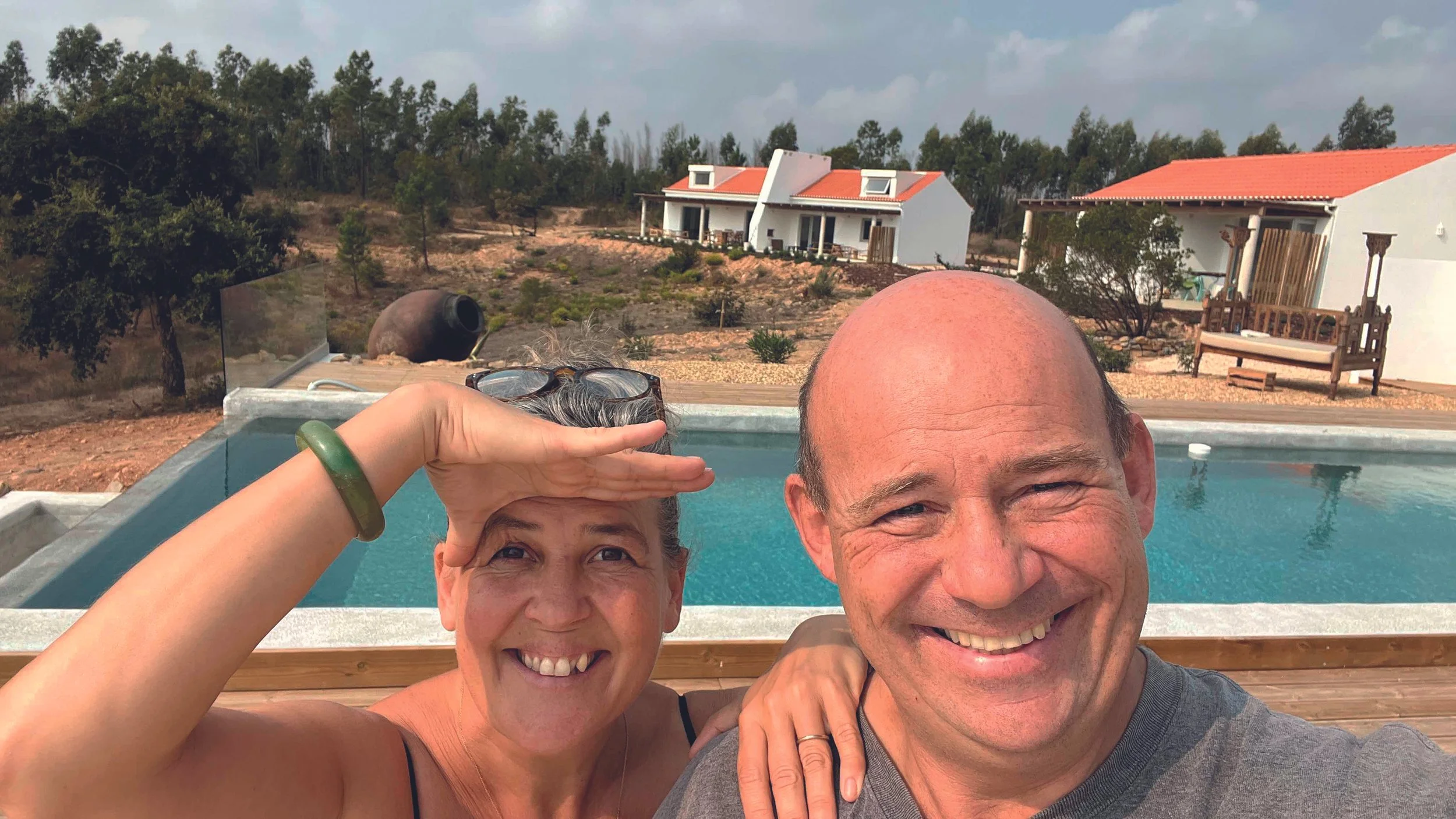
Alastair and Ana, Portugal, 2026 www.valleyofthestars.co.uk
First published in edition 211 of The Northumbrian, April/May 2026
From Northumberland to the world’s war zones, former BBC correspondent Alastair Leithead has swapped the frontline for Portugal’s wild Atlantic coast, where he and his wife Ana have created an off-grid travel retreat powered by the same grit and determination that shaped his reporting career and hers in international diplomacy
When the bombs start to fall and the chaos of a new conflict begins, the war correspondent drops everything, grabs a passport and tries to find the fastest route to the front line.
After 20 years living around the world, always ready to head into the unknown of a war, a crisis or a natural disaster at a moment’s notice, there was a simple packing routine. First by the door were the flak jacket and helmet; a serious first aid kit with torniquet and magic blood-clotting powder; and enough extreme camping gear to bivouac in a desert, survive after a tsunami or head into the eye of a storm . . . depending on the deployment.
Ten years ago I would have been jostling and hustling to get to Iran. But I write this in a place so quiet I can hear my heartbeat – along with the sound of distant frogs in the lake, a little birdsong and the gentle snores of an ancient American dog called Simon.
Change happened almost by accident with the pandemic, and a sudden shift of direction and a slightly mad idea. Being a foreign correspondent, you learn to make risks rather than take them, calculating the cost and benefit of chancing your life on the whim of a crazed militia commander or accompanying front line troops as they dodge incoming fire, roadside bombs or the new terror-in-the-sky of kamikaze drones. But my second life began a little before my 50th birthday when my wife Ana and I made a different kind of risk – throwing our entire life savings into a new adventure in a remote part of Portugal.
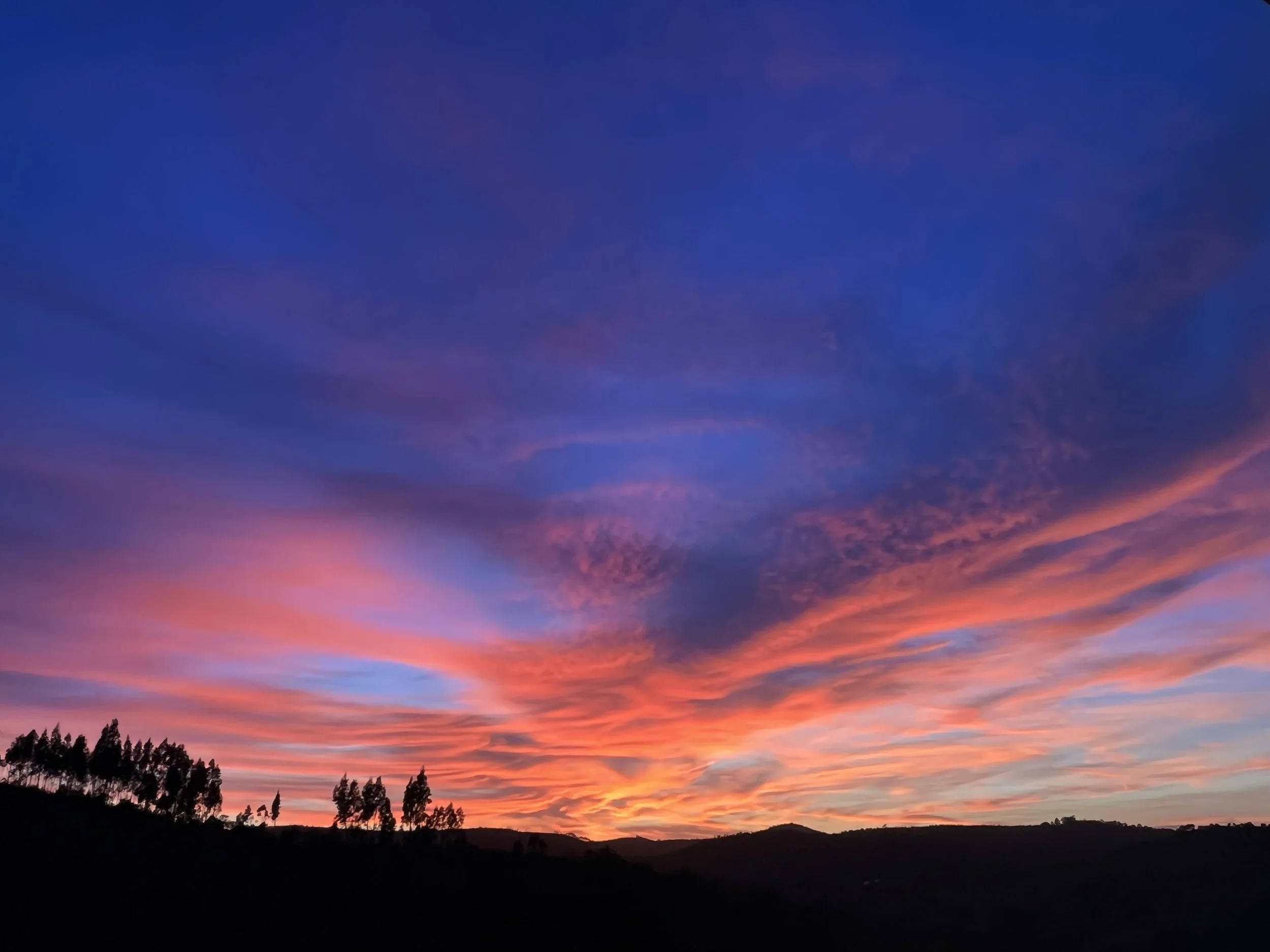
Sunset over the valley where Alastair and Ana have made their home and created their travellers’ retreat at Vale das Estrelas www.valleyofthestars.co.uk
We’re in the countryside, on the coast and off-grid, which in our case means no connection to municipal power or water, but an excellent internet link (journalists can’t go off all the grids). What started out as an innocent dream of running a little B&B became a big loan, a major construction project, a deep-dive into the world of self-sustainability, and a reinvention of ourselves as small-hoteliers.
I’d had a good journalistic career, leaving with all my limbs intact and without the post-traumatic stress disorder (PTSD) which affects so many of my colleagues. It’s a dangerous occupation with noble intentions. The drive of the rookie reporter to “make a difference” continues – and sometimes you do – but adrenalin is also a drug which can tether the addict to the intensity of war and survival.
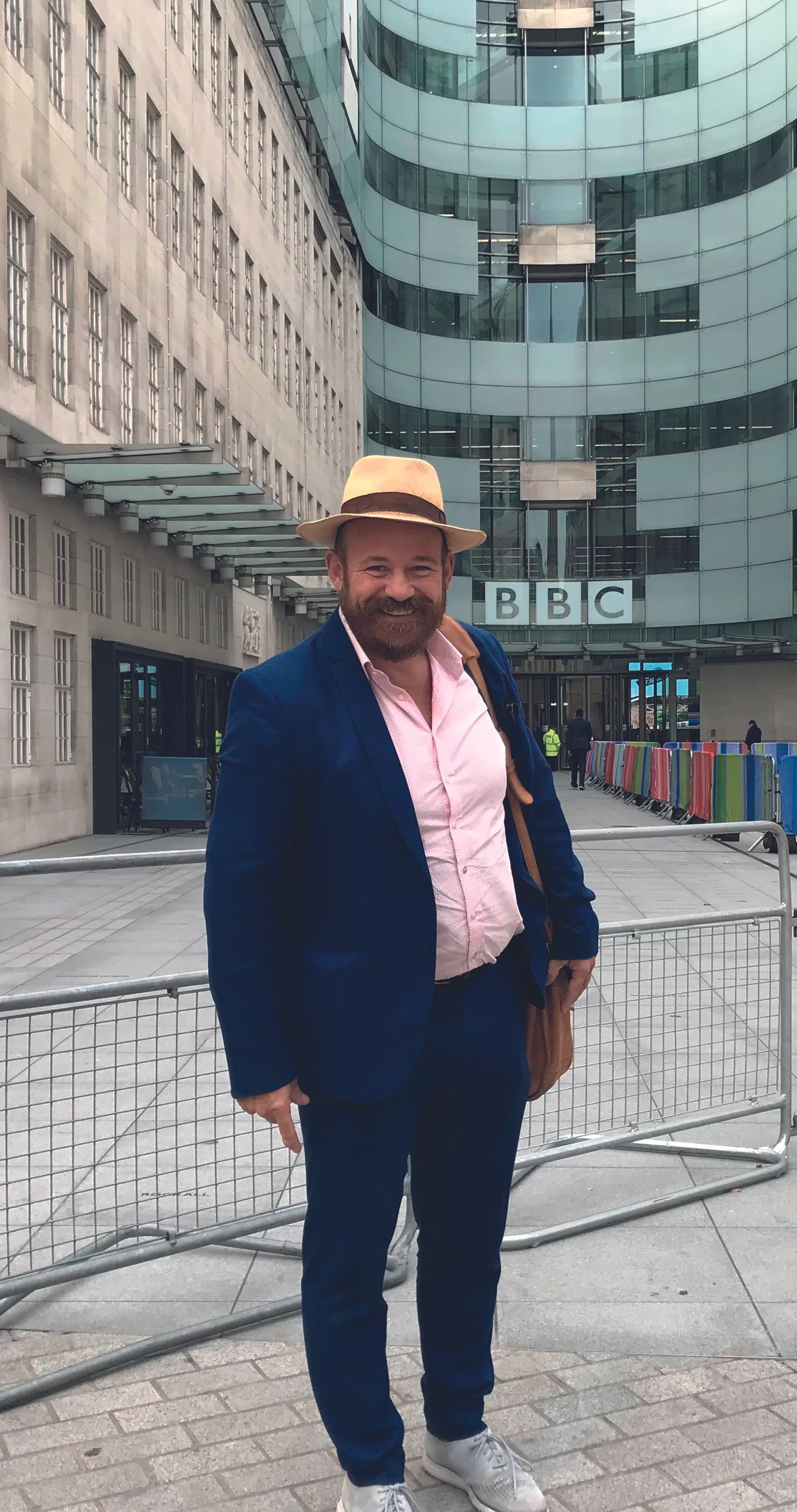
Alastair’s last day at the BBC
The old adage is true: you never feel more alive than when death is all around you. Somehow doing things at home, going to the shops, working 9 to 5, knowing what to do on a weekend off . . . is no longer enough. The draw of adrenalin pulls those working in war zones back to the next crisis, the next disaster . . . the next calm in the storm of normal life.
Yet now I joke there’s more chance of developing PTSD navigating Portuguese bureaucracy or dealing with the pressure of starting and running our own small business than there is coming under fire. And I wouldn’t swap our new life in Portugal for a trench in eastern Ukraine, a destroyer in the Strait of Hormuz, or a bunker in Tehran.
An easy decision, you may presume, but the frontline is what the foreign correspondent lives for, and heading ‘home’ after many years abroad isn’t that easy. They say there’s no place like it, but after decades of moving to a new place every few years, no place is really home. You arrive and start learning about a country or a region; build new social and professional circles; and after four years there’s familiarity, deep knowledge and insight – but the job is to be the outside outsider, so it’s also time to move on. The only sense of home in a new house in a new country is the same furniture arranged in roughly the same places.
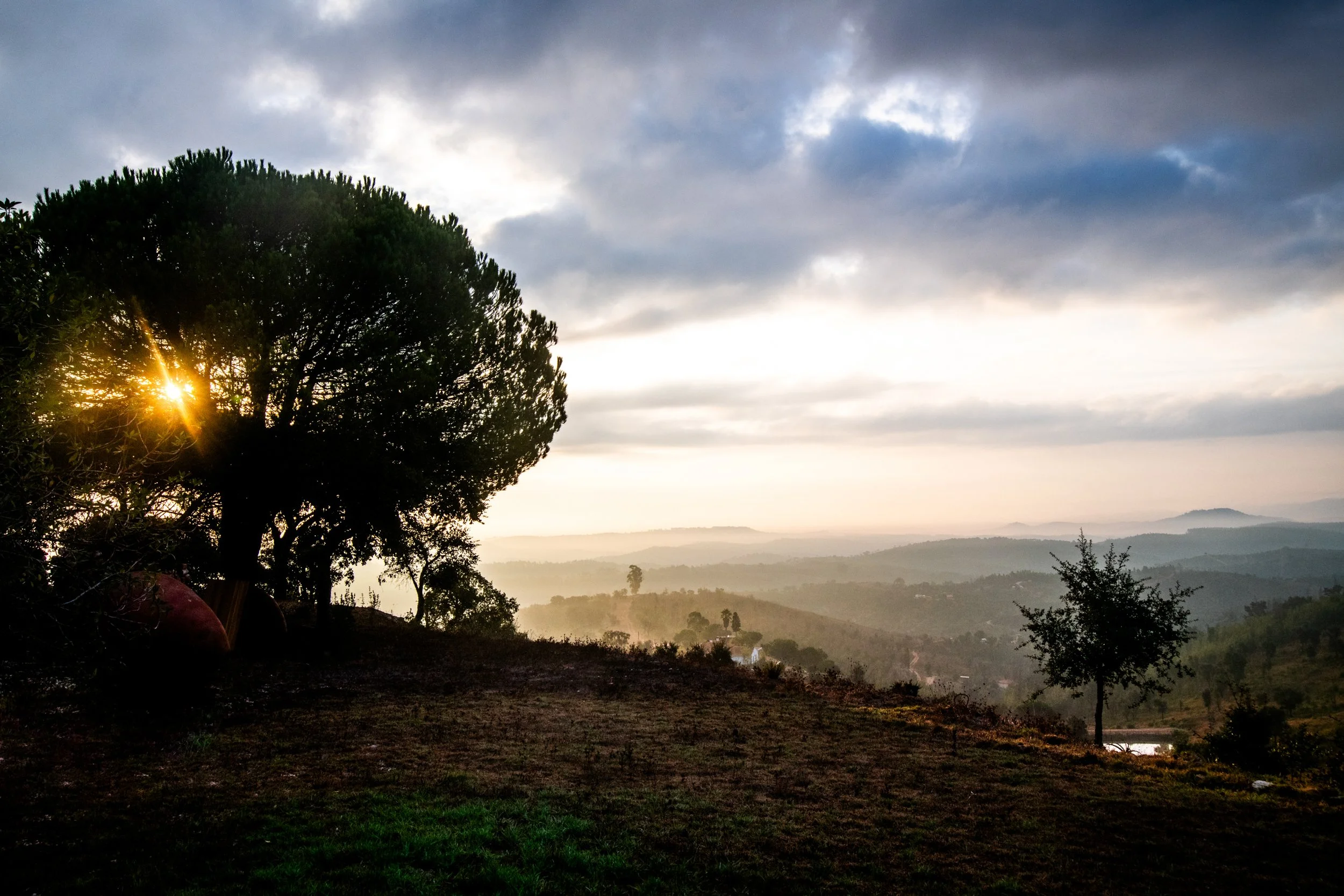
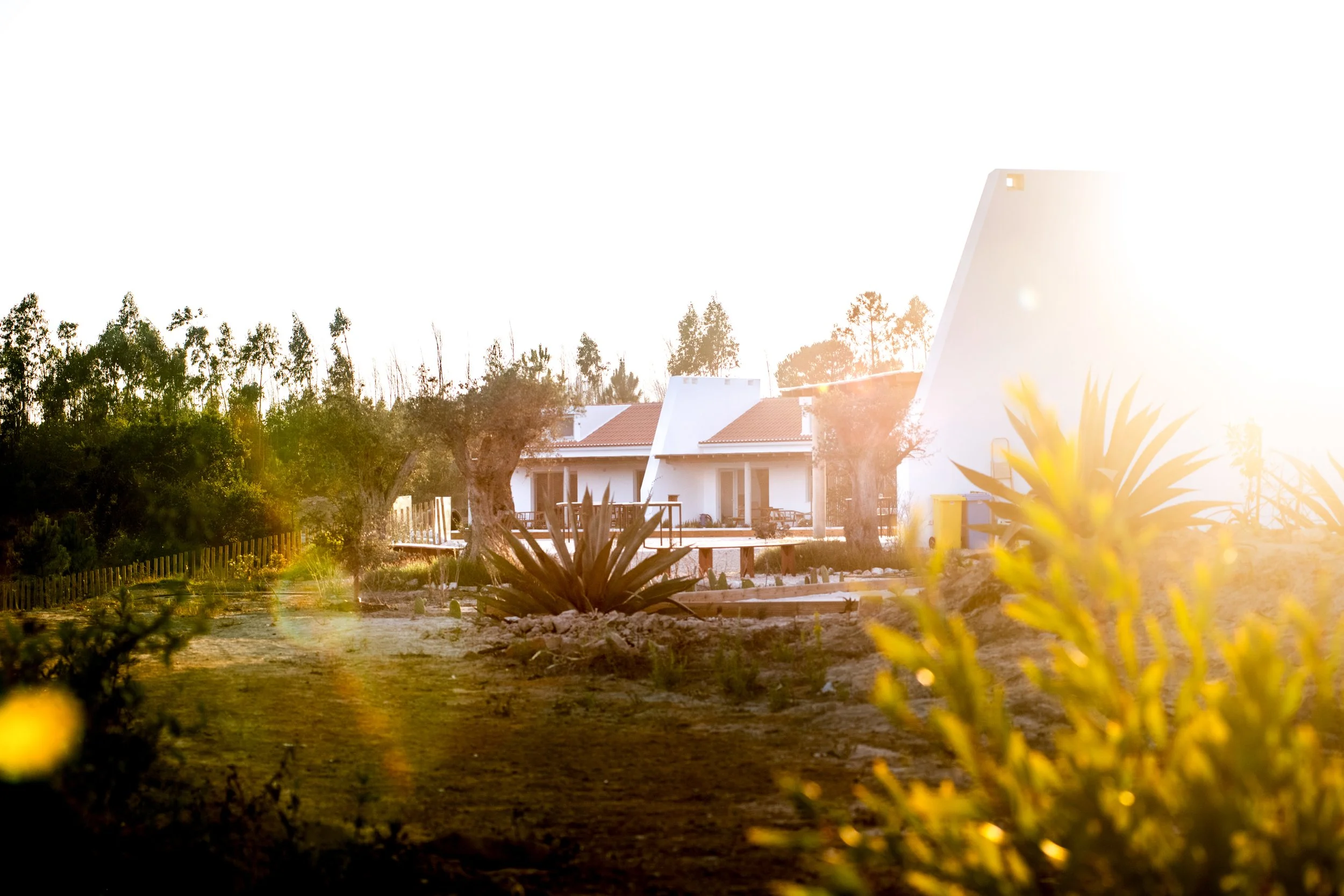
The view from Vale das Estrelas (photo: Cia Jensen)
I left the UK almost 25 years ago, so when I left the BBC in 2020 it was no longer the obvious place to return. I was built in Northumberland, where I was raised by kind and supportive parents, but as an only child, my ties to the region weakened when they died. After decades of always being the outsider, I had perhaps changed too much to come home.
My wife Ana is Swedish-Portuguese – the daughter of a revolutionary student leader who worked against the brutal fascist Salazar regime until he was forced to flee Portugal for political asylum and met her mother – a Swedish doctor and activist.
Ana and I met in Bangkok: she was a diplomat for Sweden, I was covering Asia after two and a half years of war in Afghanistan. We moved with her daughter Oda to Los Angeles, and then to Nairobi. While living in Africa we dreamed of a farm in Portugal and began looking for a ruin and a little plot of land to do up over a decade as our globe-trotting careers continued.
We chose Alentejo – a rural province where Ana’s Portuguese family has deep roots. “Alem-Tejo” means beyond the Tejo, or the Tagus River which flows from the Spanish mountains to Lisbon. It covers a third of the country south to the Algarve, and despite being the country’s poorest region, has a special place in the nation’s heart for its beautiful landscape of rolling hills and cork oak forests, its ancient traditions and its sense of sossego – a feeling of peace, calm and tranquillity.
We festooned a Google map with colour-coded icons: houses for sale, historic pousada hotels and wineries. A week-long trip tagged on to a wedding in the south of France in 2018 took us to two clusters of prospects which appealed to us and to our budget – the interior winelands near Évora and the Atlantic coast. In the end it was an easy decision – the ocean wins every time.
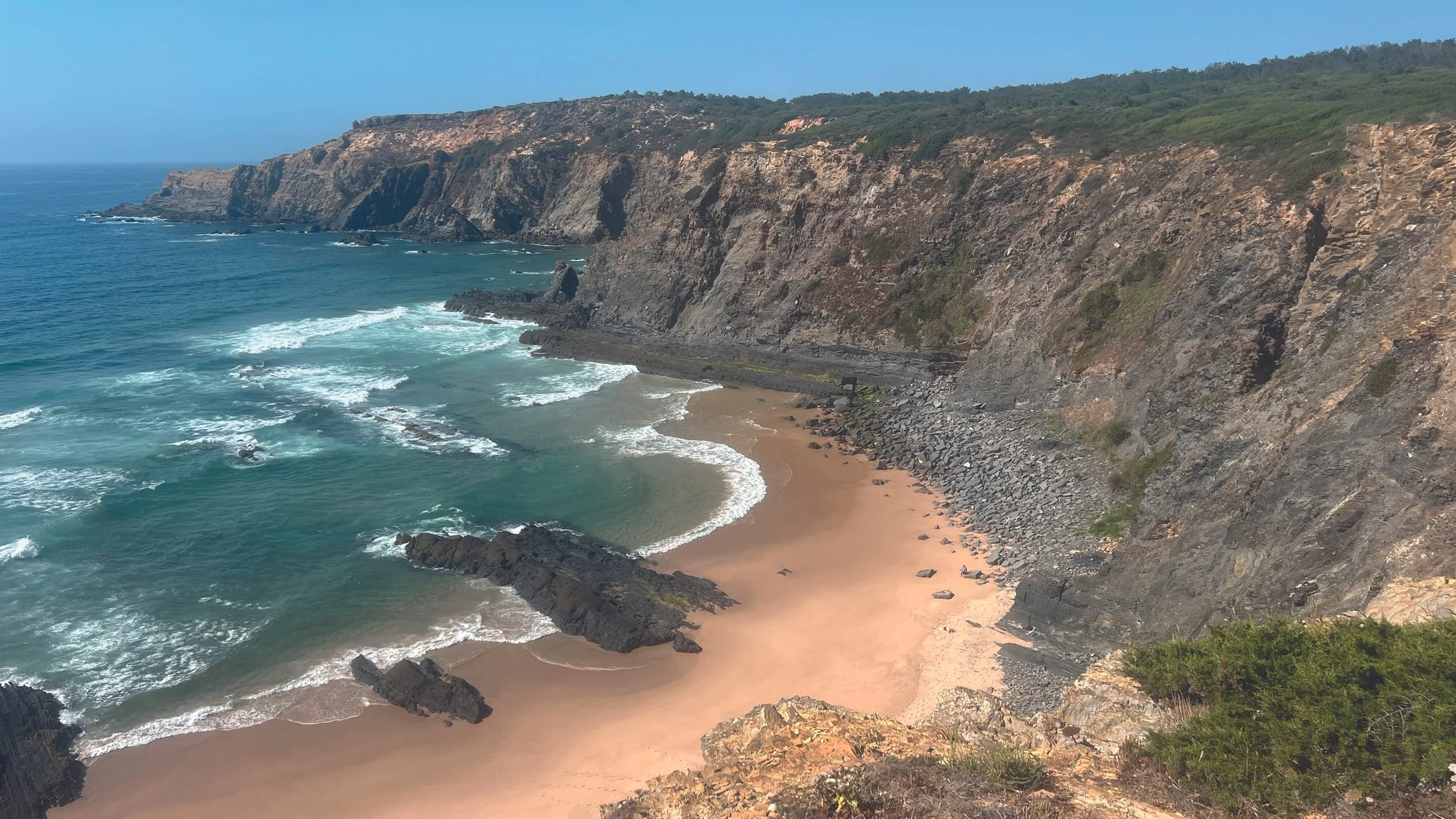
One of the many remote beaches close to Alastair and Ana’s property
While I spent my youth exploring mountains, coasts have always been in my blood. My father Arthur was born in Cullercoats in 1925 and I scattered his ashes from Cullercoats pier 86 years later. A draftsman in the shipyards with bigger ideas, he was disowned by the family for emigrating to Canada for a new life in the 1950s. But he did come home and met my mum Edna in the Gibraltar Rock pub in the shadow of Tynemouth Priory. They returned permanently to the North East shortly after I was born as my dad became chief engineer in the building and running of Eldon Square shopping centre in Newcastle.
My mum taught at West Jesmond Junior School In Newcastle-upon-Tyne for many years and childhood family days out were trips to St Mary’s Lighthouse, walks along wild Northumberland beaches, and pork pie and pease pudding picnics in a warm car with a flask of tea. Since then I have always been drawn to rugged and dramatic coastlines; from Cape Town to the central coast of California and now to perhaps the last wild coast in Europe – southwestern Alentejo.
We only had a couple of days house hunting, but after a few disappointing ruins we stumbled across a solid German-built place with a vast view over rolling hills to distant mountains. From my childhood home in Winlaton we could sometimes see The Cheviots. “If you can see the hills it’s going to rain,” my dad used to say, “and if you can’t see the hills, it is raining.” With 300 days of sunshine here every year, we see the hills most of the time, and Ana and I instantly fell in love with the dramatic view and decided on the spot to make this our home. Looking back, signing on the dotted line was when we should have asked more about what “off-grid” actually meant.
Meanwhile, our African adventure continued. In South Sudan I was ambushed three times in one day; I was banned from Zimbabwe; I tracked Al-Shabab in Somalia; trailed Boko Haram and the missing schoolgirls through Nigeria; went all the way to Timbuktu; and travelled down the Blue Nile and up the River Congo.
Then Covid hit during a career break from the BBC while I was on a journalism fellowship in California. Foreign jobs were locked down and I didn’t want to take an adventurous life back to New Broadcasting House in London, so our someday plan became our today, and in 2020 we threw ourselves into our new project in Portugal.
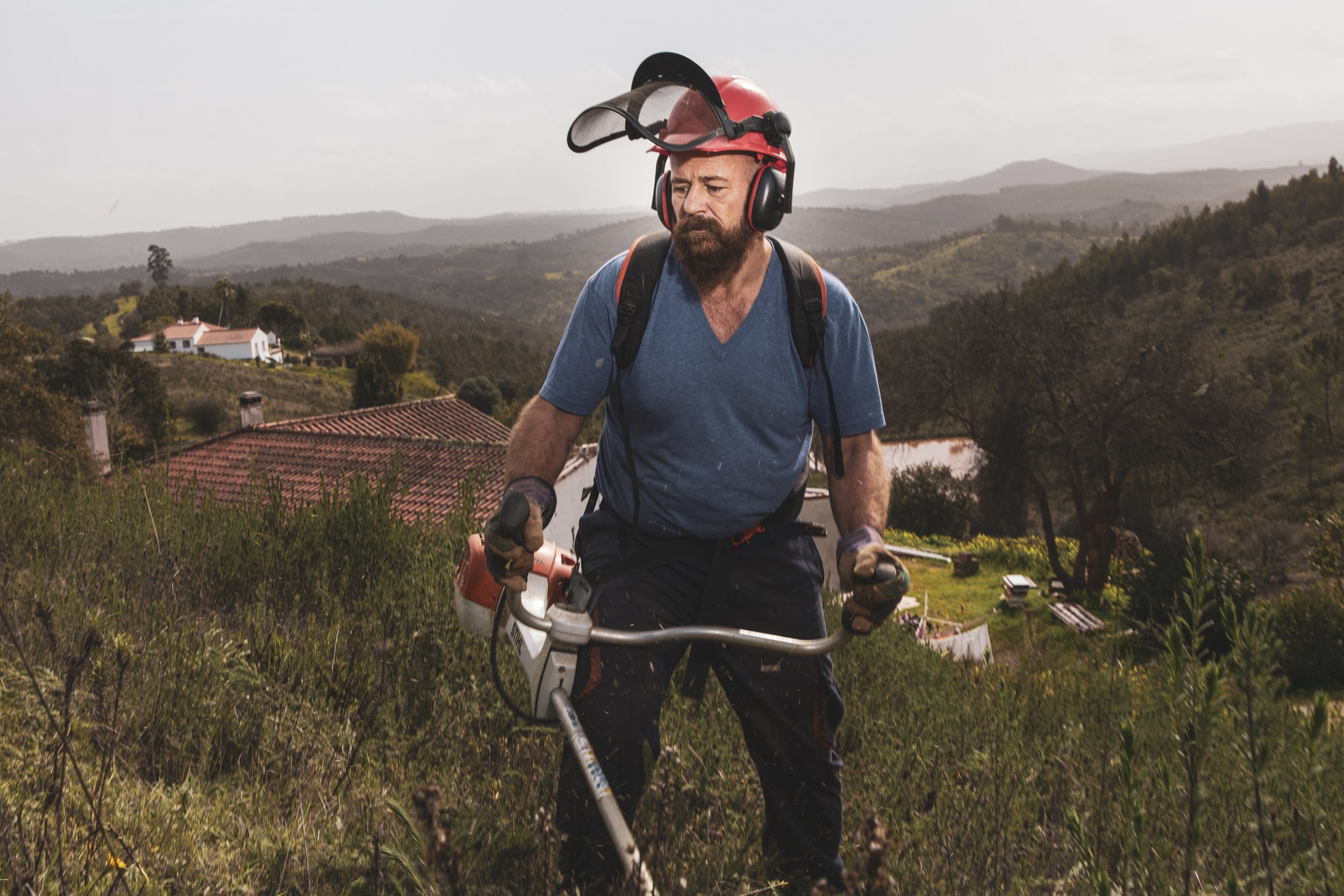
Alastair the self-taught DIY-er (photo: Cam Camerena)
We had two major things in our favour: utter naivety, and moving from elastic, chaotic but can-do Kenya rather than a rigid, sensible, computer-says-no place like Switzerland. In remote Atlentejo, we found there was power and water until there wasn’t, and that off-grid means no instruction manual and nobody to call.
A small building full of solar-powered lead-acid batteries became an expensive Tamagotchi I failed to keep alive; I learned how to use chainsaws and petrol strimmers by breaking and replacing them; and despite Arthur’s best efforts I wasn’t even handy with a hammer or a drill.
But every day’s a school day. We learned to paint and plaster, to repair toilet cisterns and dabble with electricity. We found a great solar guy, a water treatment guy, a landscape guy and gradually began to understand how things work. We planted hundreds of olive trees and thousands of plants. I was labourer to a local builder as we extended the house onto the patio, learning reinforced concrete, bricklaying, plastering, woodwork and roofing. It was a crash-course in construction.
Sadly, we couldn’t just retire. We needed an income to live in Portugal and decided to invest our savings as seed money. It began with our lawyer, which led to an architect, who found us a consultant, who helped us get a loan from the tourism authority. We cut down and dug up the eucalyptus forest on our flat land, but we neither had permission to build nor a contract with a builder. We also hadn’t paid a deposit when the first load of steel reinforcing rods arrived and a man with a digger started to level everything. It turned out a handshake with the 67-year-old Alentejo builder was enough. “Pay for what I finish,” he told us.
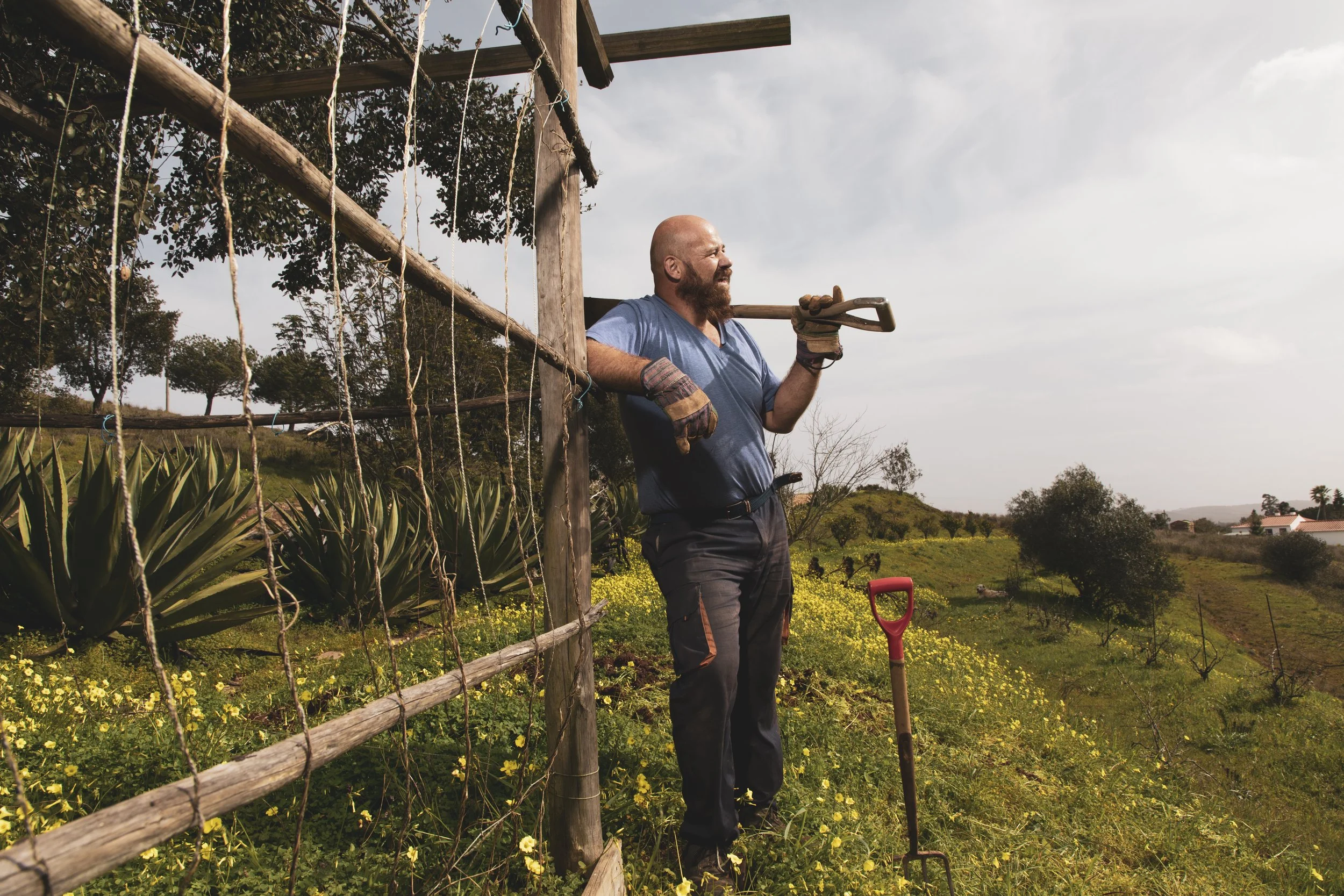
The work is hard but satisfying (photo: Cam Camerena)
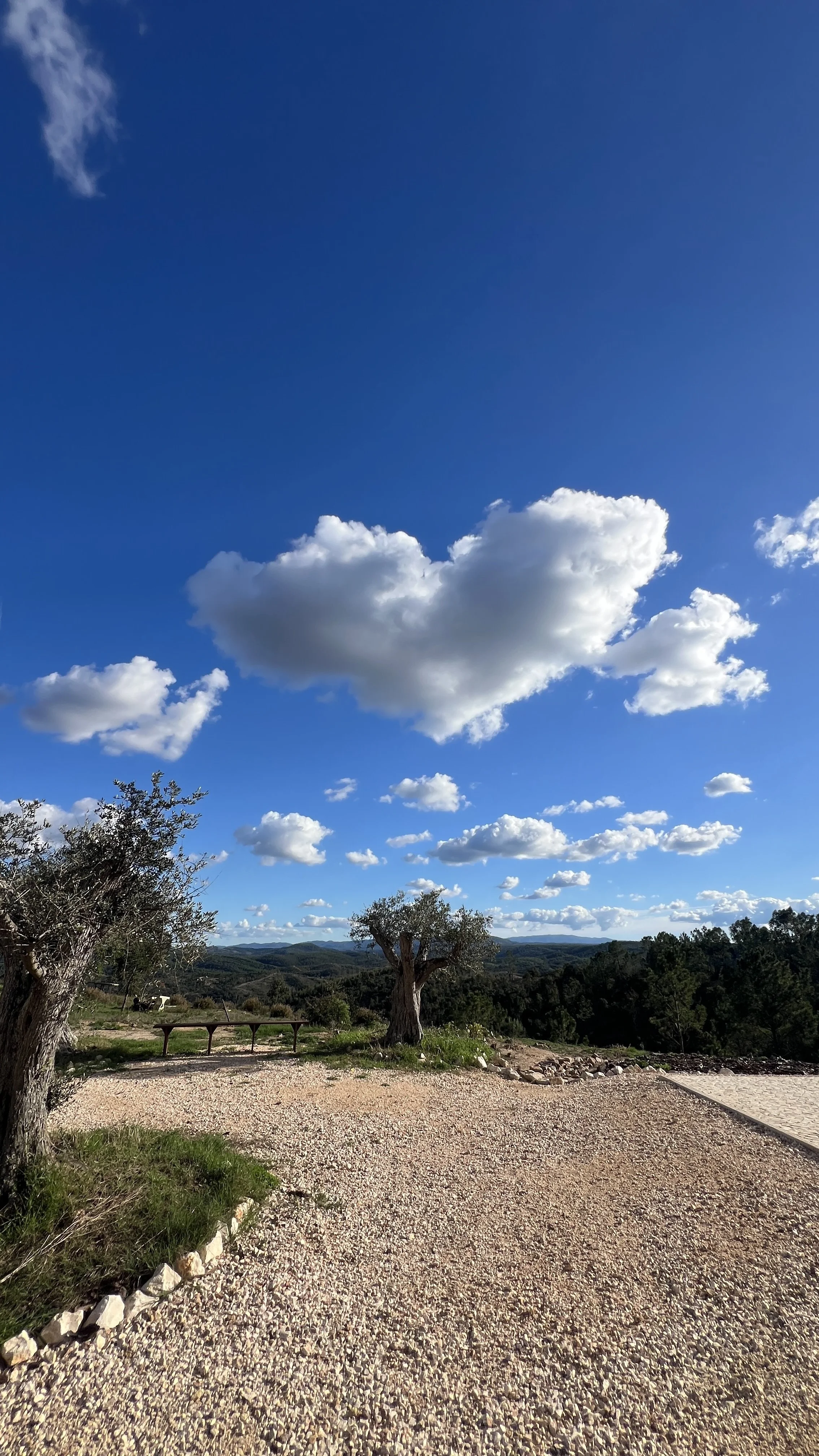
Even the clouds are heart-shaped at Vale das Estrelas
Imagine a Portuguese couple with not very good English and no construction experience buying a place in Northumberland and trying to build an off-grid hotel. It’s a fair parallel to Alentejo where farmers and builders wear flat caps, speak with an accent city folk can’t follow, and don’t suffer fools gladly. But the same instinct to get the story, cross the lines, and make it happen drove us. A friend’s words stuck: “If it was easy everyone would be doing it.” And they weren’t.
It was touch and go. A few times we were close to giving up. As budgets swelled with pandemic inflation and the site looked like a First World War movie set of water-filled trenches we wondered if it would ever happen. But 8km of pipes and 82 solar panels later we had finished, and a year ago we were granted our licence.
The relief of finishing was immediately replaced by the fear of failure. After four years spending money we now had to make some. Learning to build was replaced by learning to sell rooms and provide customer service. Our Field of Dreams marketing strategy (“Build it and they will come”) had predictable drawbacks. We built it, and for a few stressful weeks they didn’t come. But then, all of a sudden, they did. They found us through the blog I had written for four tumultuous years; we popped up on Booking.com and AirBnB; they saw us on Google Maps and they were curious. Valley of the Stars, as we called it, Vale das Estrelas in Portuguese, was gaining traction.
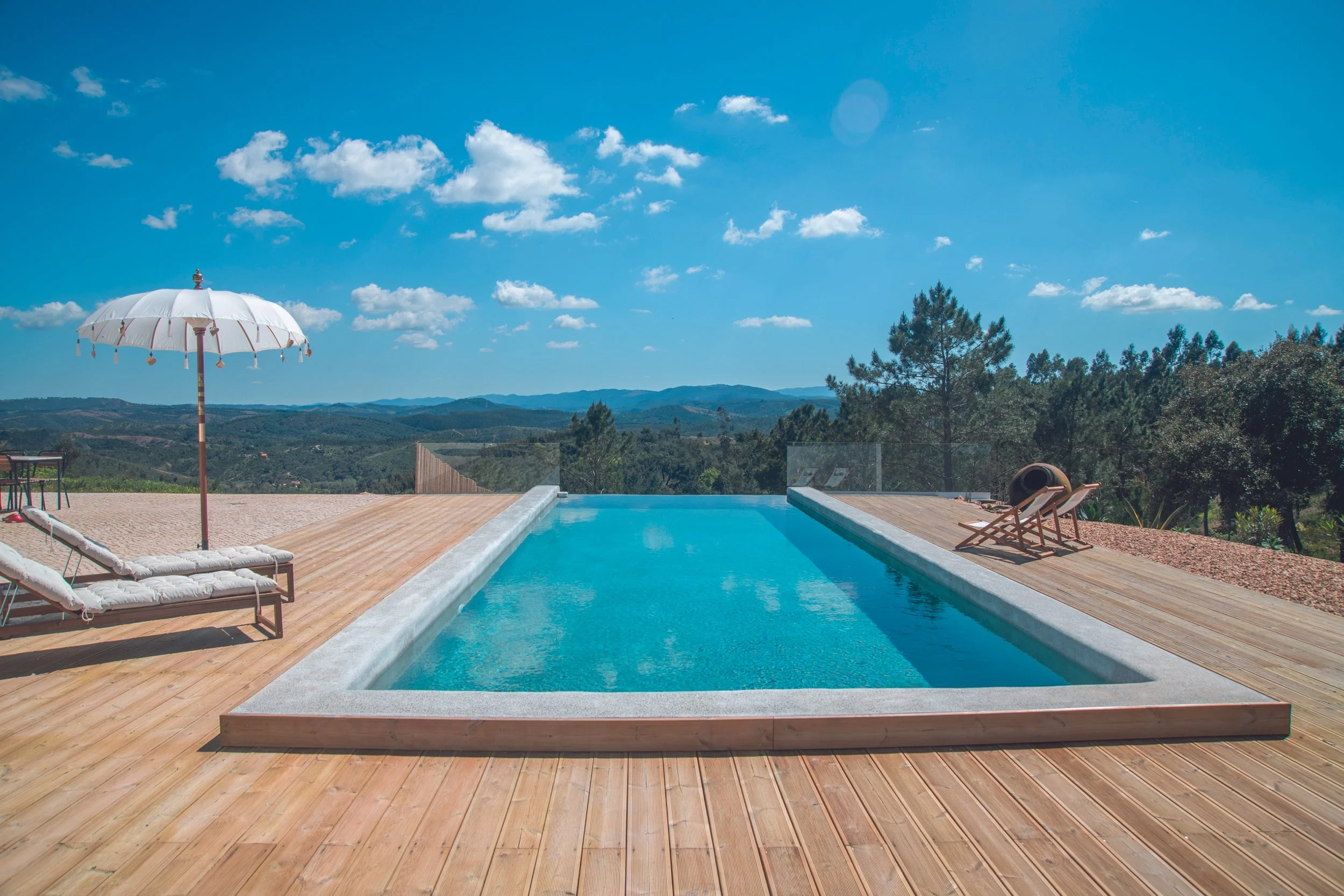
The infinity pool and the valley beyond at Vale das Estrelas (photo: Cia Jensen)
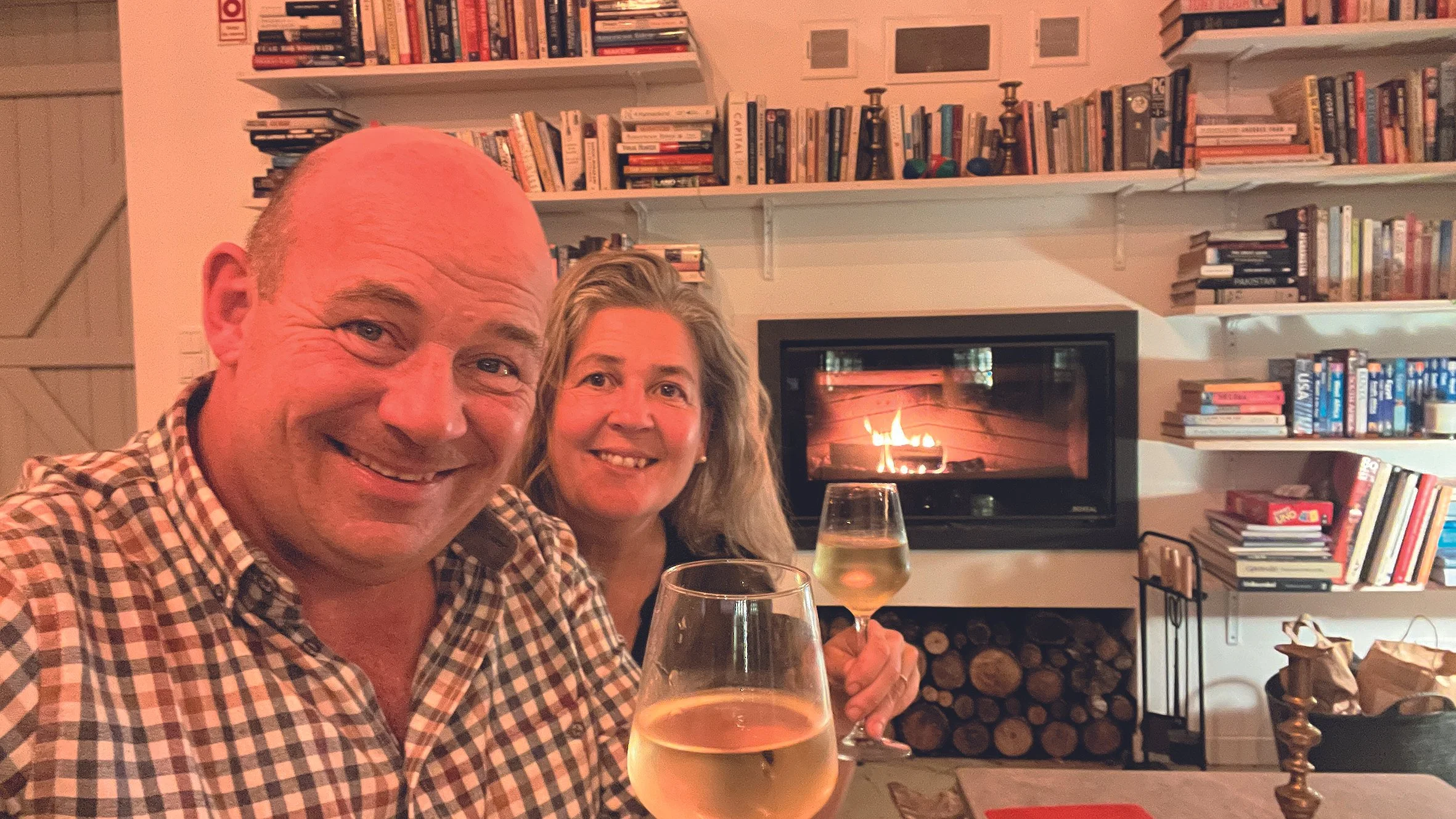
Alastair and Ana in the guest Clubhouse at Vale das Estrelas
The name came from the first night we stayed in our new house, as we sat outside and looked up to see the Milky Way roaring across the sky. It stuck, and now stars painted on a series of wooden posts direct the adventurous and the curious down the rugged pine tree avenue and cork oak forest to our door.
We’ve learnt a lot in a year. Off-grid sounds a bit too rough and ready for a travel destination, so Ana came up with the term “eco-luxe” to describe it. Our guests are reminded that our electricity comes from the power of the sun, and they’re encouraged to save water by using a five minute egg-timer in each shower.
Ever the outsider and foreign correspondent, I have been surprised how little I miss frontline reporting, having instead swapped war for wine. By making a history and travel podcast I learnt how Alentejo’s vinho is still made the way the Romans did it in huge clay amphorae, and about the 250 varieties of unique Portuguese grapes. They’re tales I now tell our visitors with a tasting glass in their hand, and with every sip the story gets better.
Every guest is blown away by the view we fell in love with, both by day and by night, and after years travelling the world we have found home. The people and the stories now come to us. The flak jacket sits undisturbed on a top shelf, and a daily soundtrack of classical music has replaced rolling news. Every day is challenging and invigorating. It’s wild and crazy and beautiful and fulfilling and addictive. Give me a second life every time.
For details and to book a stay at Vale das Estrelas, visit: www.valleyofthestars.co.uk
For more on Alastair and Ana’s adventures in Portugal, visit: https://alastairleithead.substack.com
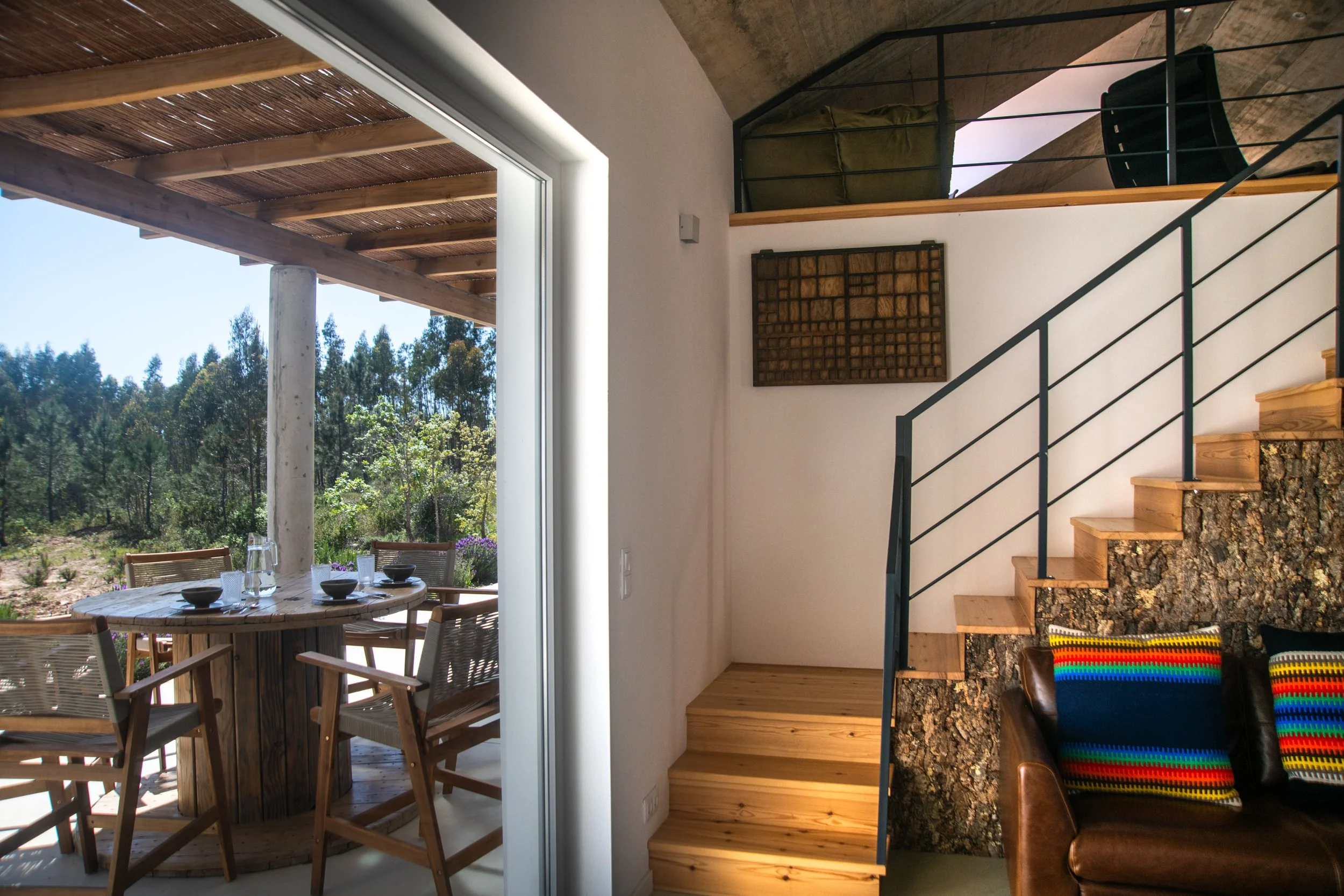
Above and below, the accommodation at Vale das Estrelas (photo: Cia Jensen)