A collective legacy
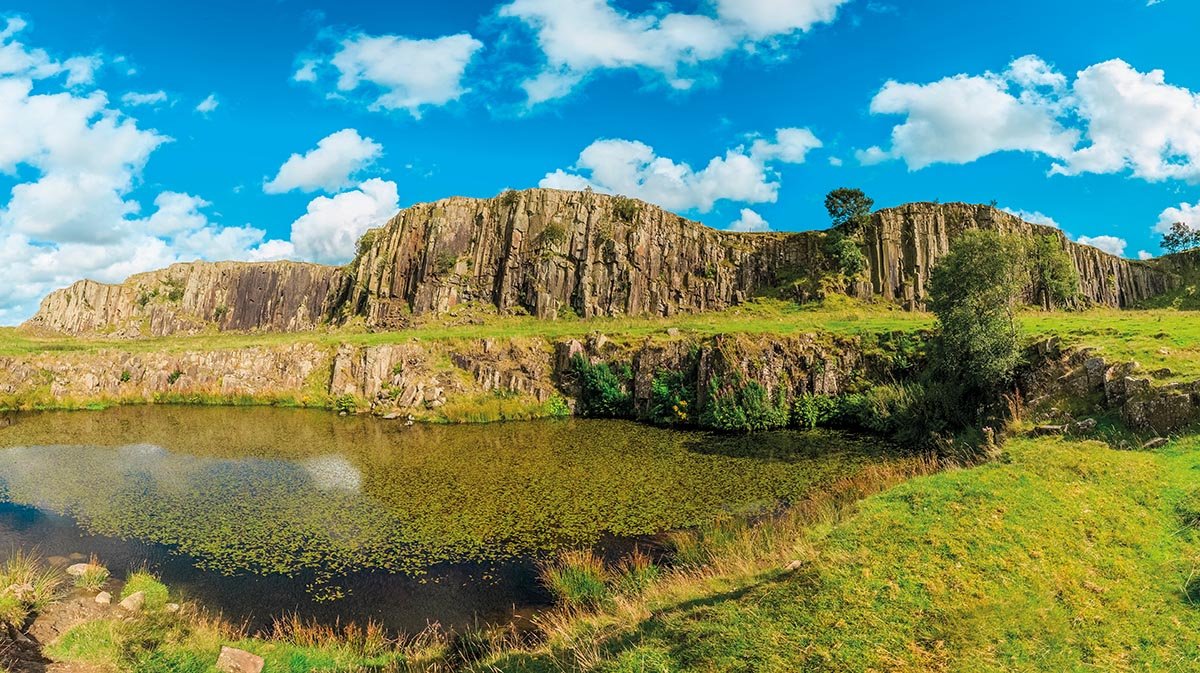
Walltown Craggs
First published in edition 206 of The Northumbrian, June/July 2025
Northumberland Wildlife Trust chief executive Mike Pratt salutes the volunteers and conservation professionals whose work continues to inspire a new generation working for nature
The landscape of Northumberland has been forged by the elements and Earth’s forces for millennia, while people have and continue to make their mark both positive and negative.
Northumberland Wildlife Trust is currently undertaking an extensive State of Nature study to assess the work necessary to secure our region’s natural health. We know Northumberland is in slightly better shape than most wild places, but there is a long way to go yet to reach the target minimum of 30% of land being protected and managed with nature in mind.
We do, however, have large-scale opportunities to link natural areas and reconnect nature’s blocked systems. For at least a century, naturalists and conservationists have fought to get these natural assets noticed and valued. Hence our national park, the national landscapes in our region, the Border Mires, coast and marine habitats, nature reserves and estates that form the fundamental character of Northumberland.
We can help nature flourish as we enter a new phase of recovery, and I was reminded of this recently when I attended an event at the Great North Museum in Newcastle for an evening with the Wildlife Trust’s vice president, Angus Lunn. As a young PhD student, Angus, now aged 92, discovered and alerted people to the internationally important bogs of the borders, mostly covered in sitka, and it was both elucidating and moving to hear his perspective on saving nature today, informed by all his decades dedicated to the natural world.
I was also recently at Walltown Country Park, at the far end of the county near Hadrian’s Wall. The spectacular setting was bathed in spring sunshine for the unveiling of a seat dedicated to volunteer rangers Dorothy and Trevor Hardy, whose lifelong work earned them each an MBE for their voluntary efforts for the Wildlife Trust, doing all they could to nurture nature and connect people to it.
Angus Lunn was also there, and he spoke eloquently alongside Northumberland National Park chief executive Tony Gates and the Hardys’ son, John. As we heard more about the combined 100 years of voluntary service given by the Hardys, I gazed out across the horizon extending from Walltown to the North Pennines, hill after hill disappearing into the far view beyond acres of open land, woods and waterways, vast expanses of moor and bog with green valleys between.
Around us was the Great Whin Sill, Hadrian’s Wall upon it. In the late 19th century it was quarried here, creating the man-made gorge in which we stood. No-one today would consider such vandalism, but following decades of natural regeneration this is again a natural haven, full of wild orchids and other species, and rich in bird and insect life.
The ridge above the wall is a superb viewpoint from which it feels like you can see the whole of the Cumbrian and Northumbrian, even the Scottish border in the distance; a world of hill lands and montane habitats, part of the largest remaining area of semi-wild land in England, much of it in the National Park, the North Pennines National Landscape, and other protected areas.
Much of this is only there because people like Angus Lunn, Dorothy and Trevor Hardy, and many others have worked over decades to have it recognised, appreciated, and finally, mostly, protected. Though even they could not stop the intensification of farming and land management; industrial-scale game shoots, drainage, afforestation, and the widespread use of agri-chemicals. But volunteers are making their mark in its repair.
The event at Walltown brought home to me how people have created – sometimes purposely, at times accidentally – a unique and dynamic landscape and nature legacy. Through the efforts of many, people value these places and work to conserve and manage them for wildlife and nature.
The Wildlife Trust alone has 500 active volunteers, and more across the north are working in red squirrel and water vole conservation, water quality monitoring and other conservation efforts.
But still many habitats and species remain in jeopardy, despite continuing efforts from volunteers, farmers and landowners to keep everything from curlew to black grouse, hen harrier to golden eagle, pine marten and red squirrel alive.
This collective and often voluntary effort has held back the tide of loss seen in some places, but there is much still to do to bring nature back to where it should be. We need a new generation of people with the passion to push on and ensure future generations can enjoy the natural world in its rich abundance. Nowhere else in the country can this be done as well as here in Northumberland; along the Wall, up the borders and through Kielder to Kielderhead and Whitelee, to the Cheviots and back down Redesdale to Coquetdale and Rothbury and back to the coast at Druridge and the coastal National Landscape.
None of this can happen without people making it so by putting in the time and the graft, just like those who have gone before. This week, I met a 17-year-old who wants to be a politician and conservationist; one of a clutch of passionate young people on our Young People’s Forum we may elect soon to our Board as full trustees. It is time to encourage the spirit of the pioneer conservationists and create a new momentum to keep Northumberland truly a place of nature in balance.
Mike’s books of prose and poetry about the natural world, including Infinite Wonder, Loving Nature Back to Health, are available via Northumberland Wildlife Trust at www.nwt.org.uk and at selected bookshops, and online at: www.livingmindfullywild.com