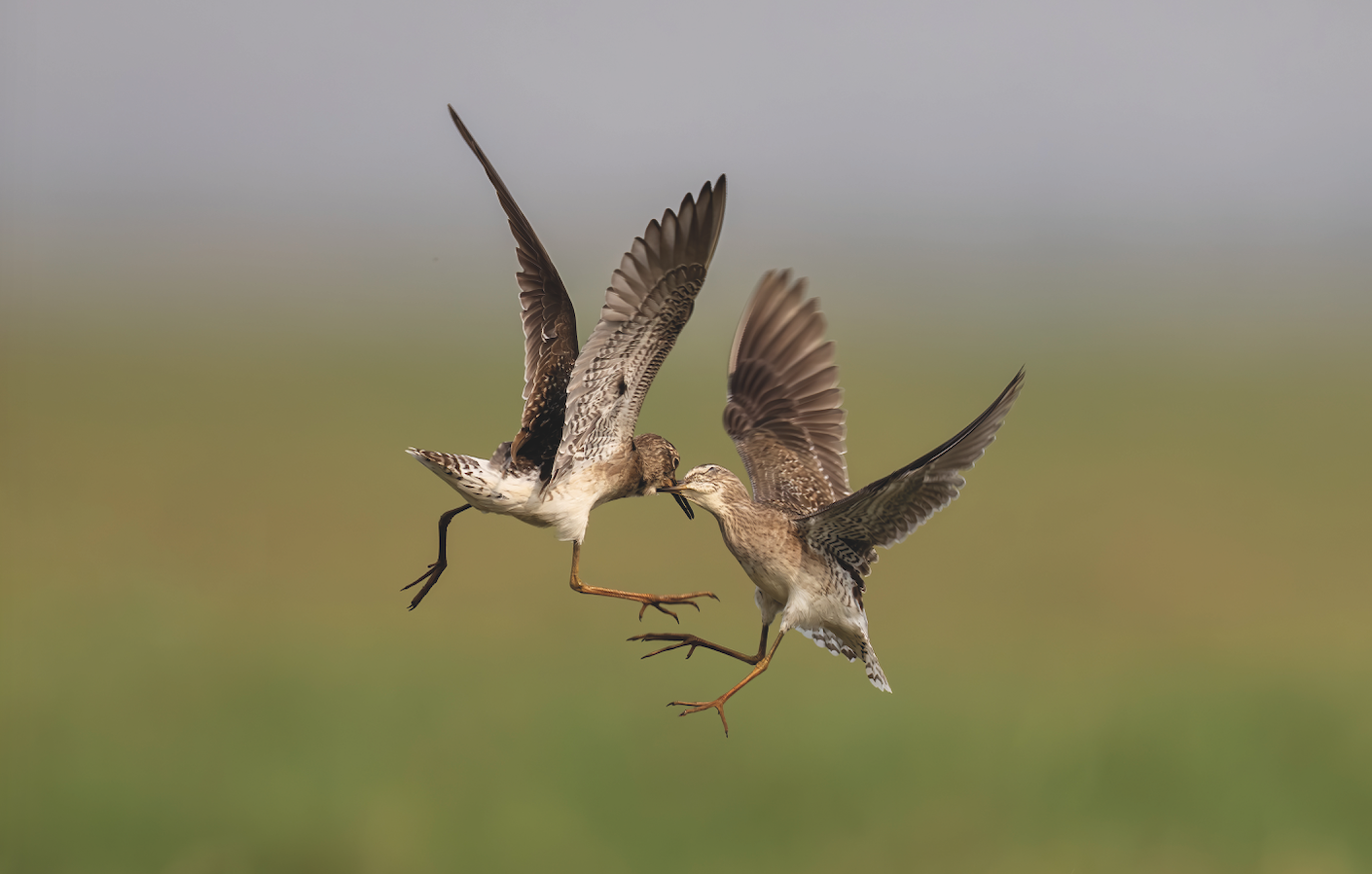
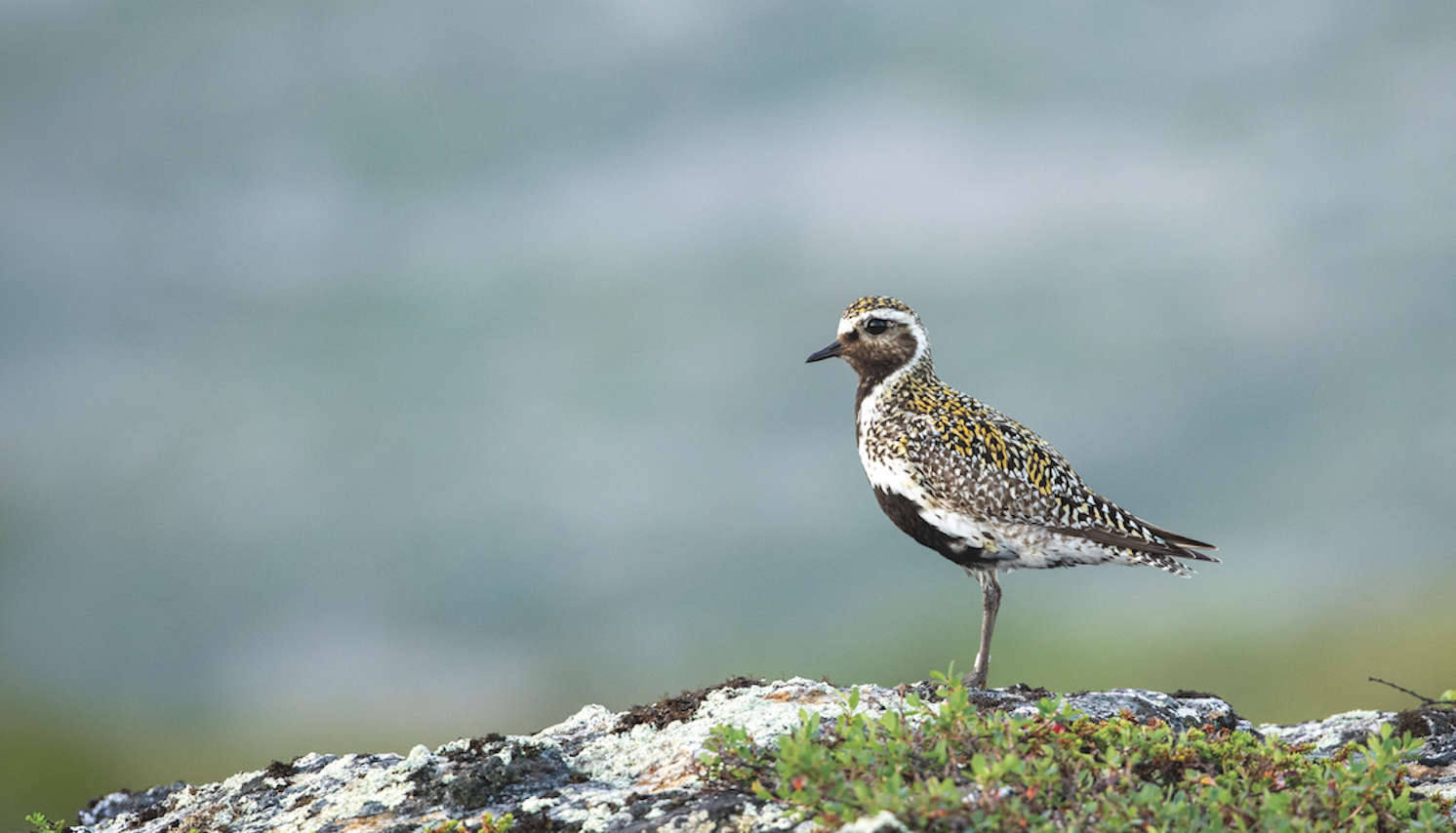
A European golden plover in spring plumage
First published in edition 214 of The Northumbrian, October/November 2026
As autumn takes hold, vast flocks of golden plovers pour south to spend the winter in our fields and on our coast. Ian Kerr looks at the remarkable journeys and seasonal rhythms of one of our most beautiful waders
Every autumn a golden horde invades Britain, sweeping in from the north to provide us with one of our finest spectacles of the colder seasons.
Unlike Genghis Khan’s original and terrifying golden horde which burst out of the steppes of Mongolia in the 13th century to wreak havoc across Asia and much of Europe, this is an entirely peaceful invasion involving a delightful species of wader, the golden plover.
On sunny autumn and winter days these plovers really do look golden as the light catches their mottled yellowish backs and wings. In flight the gold also shows, often alternating with the white of their underparts as they bank and turn.
Golden plovers seem to spend a lot of time on the wing, moving around their feeding areas in tight flocks or sometimes in chevrons before dropping into the fields or flats with a wonderful trilling chorus. They always tend to feed in tight flocks, a case of safety in numbers with some individuals always standing tall and alert for danger from both ground and aerial predators.
Here in Britain we have only around 30,000 breeding pairs of these very attractive plovers, thinly spread across the uplands of the north and Scotland. Locally, they are mainly concentrated in bare and open heather and grassy stretches of the Pennines, Cheviots and Simonsides. Like all waders, they nest on the ground, their eggs laid in nothing more than a scrape with a thin lining of grass and other vegetation.
Their salt-and-pepper downy young are able to run and feed within hours of hatching and have an inbuilt instinct to crouch motionless in hiding in response to warning calls from the adults.
Our own breeding birds can often be located by their rather plaintive call; a high-pitched alarm whistle which always strikes me as so different from their neighbours in those upland areas. It sounds positively mournful compared with the wonderful bubbling songs of curlews as they indulge in their display flights. It also contrasts sharply with the sheer exuberance of the local skylarks as they rise and fall, and the songs of meadow pipits in their parachuting display flights.
The calls on the breeding grounds are also very different from the wonderful trilling chorus of sound as wintering flocks drop en masse into their favoured fields, mudflats or sandy roosting areas.
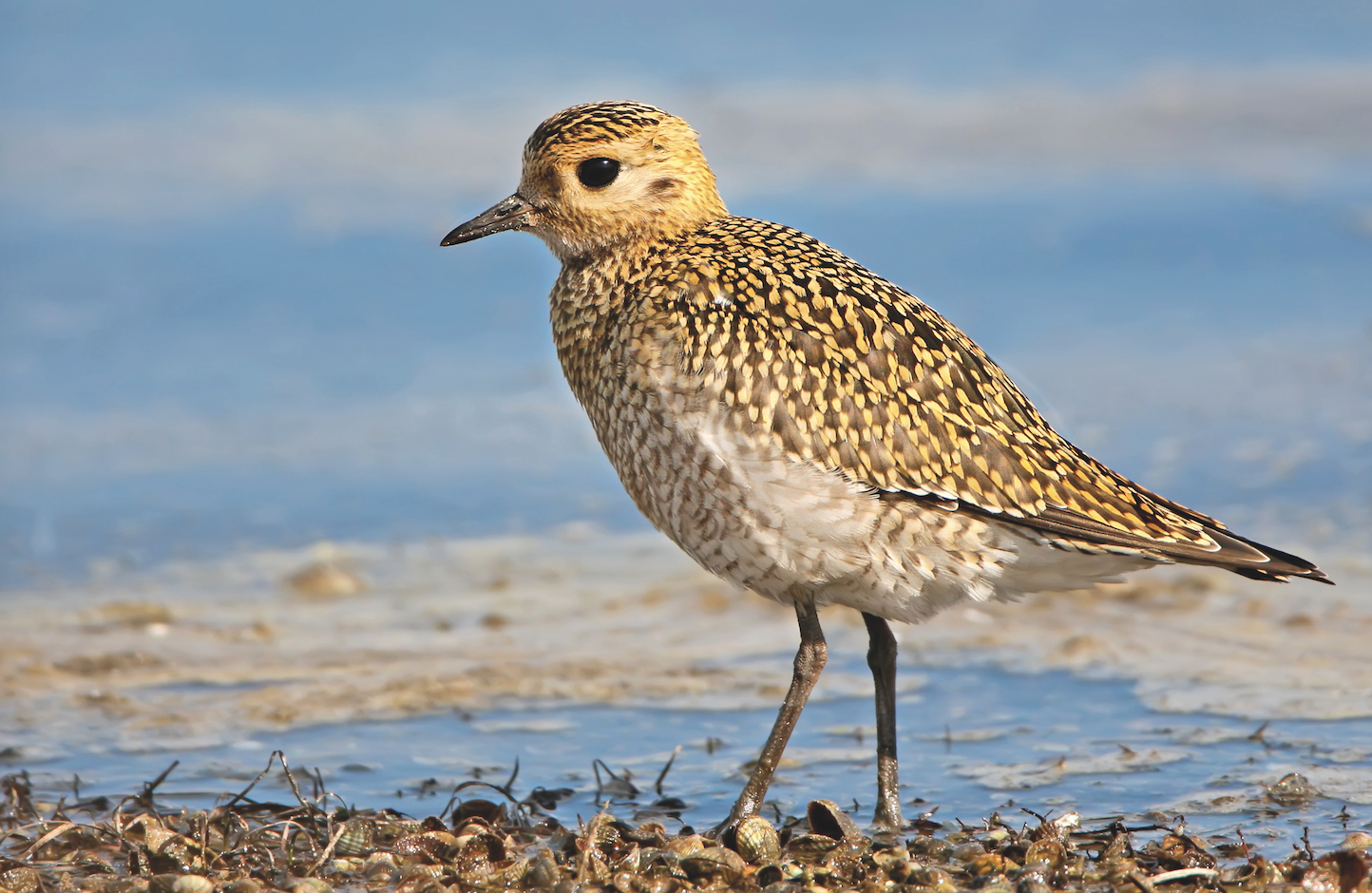
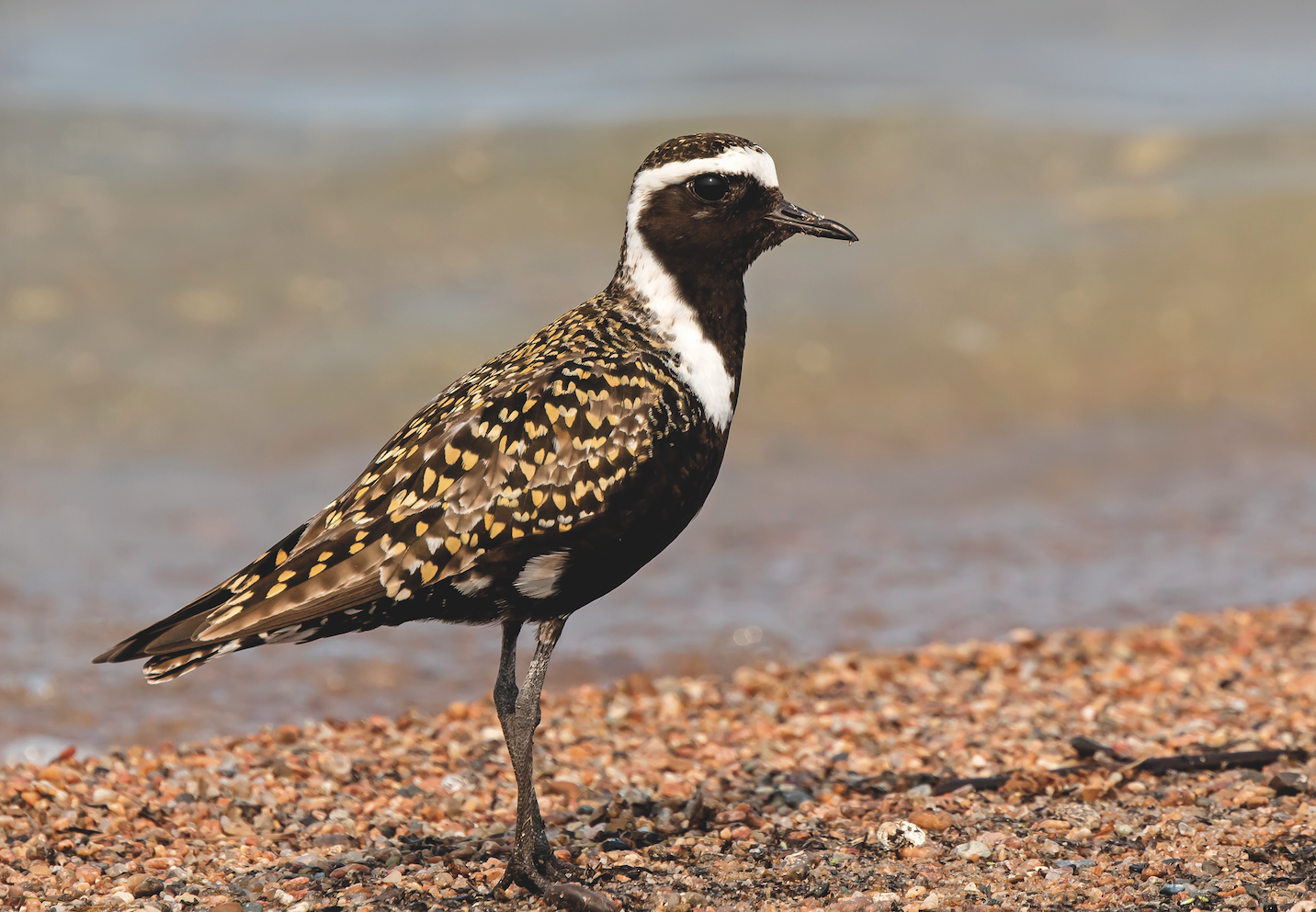
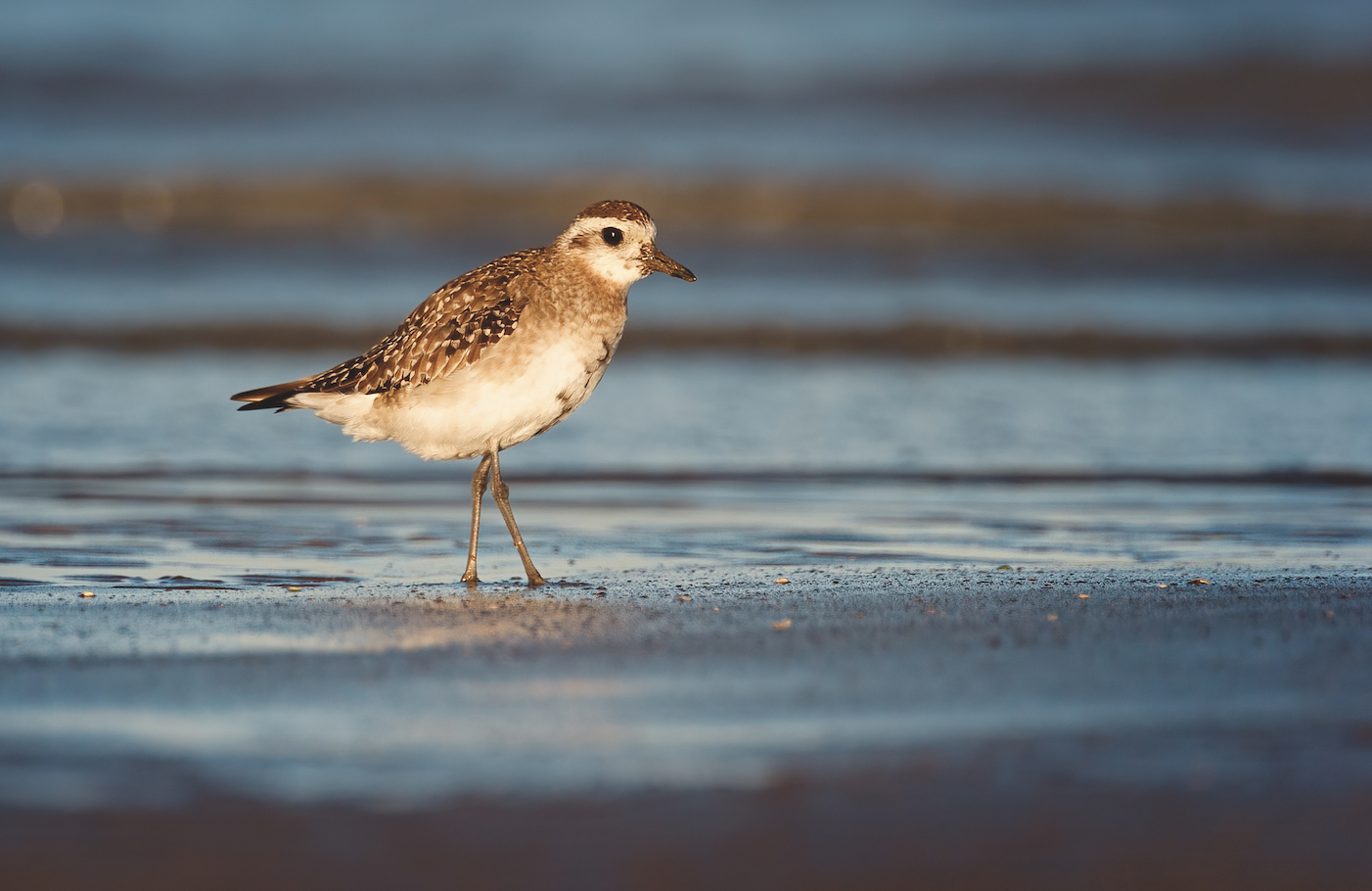
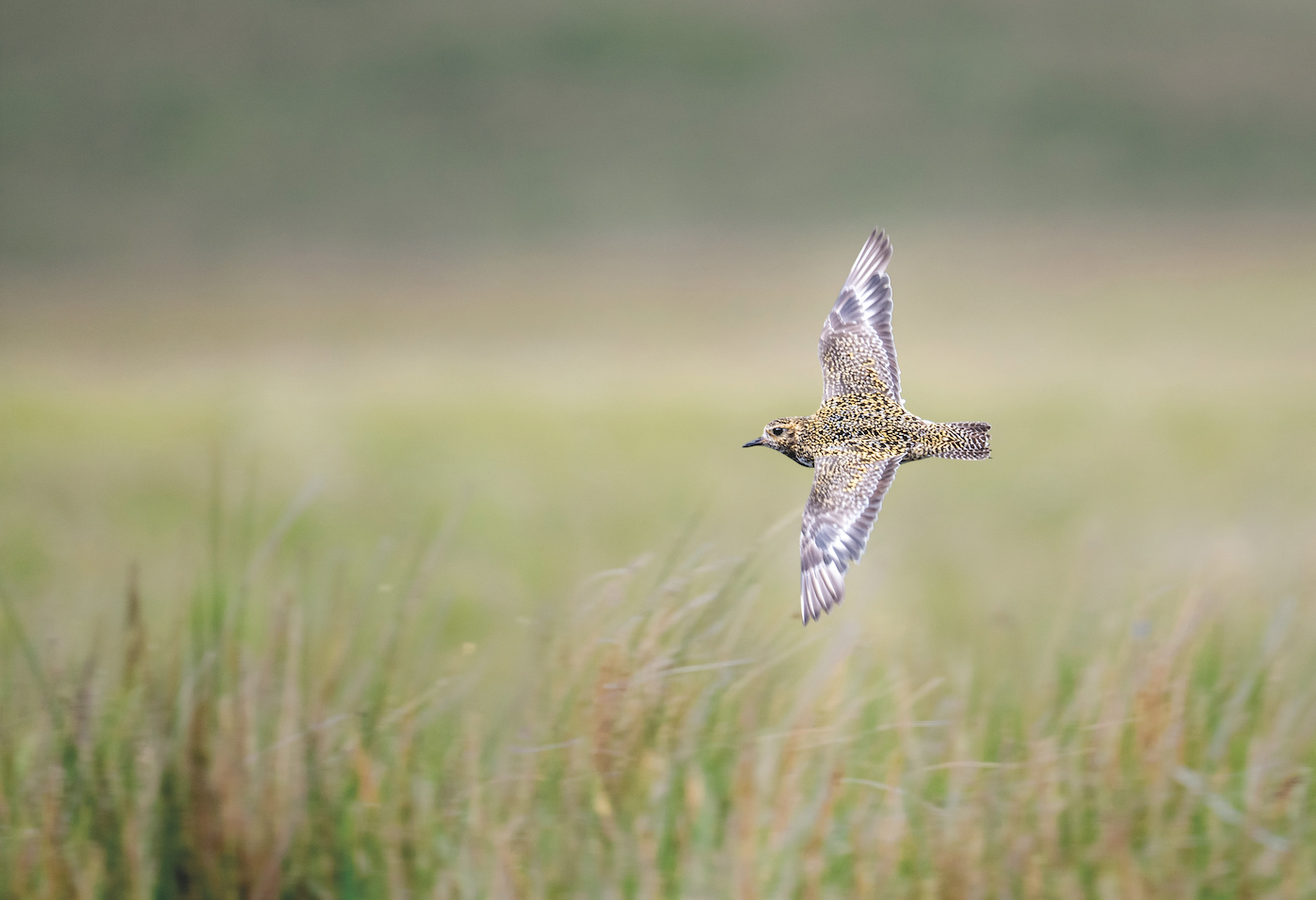
Above: European golden plover in winter plumage; American golden plover in spring plumage; American golden plover in winter plumage; In flight
Like most other upland breeders, they move to lower ground and coastal areas after their young have been raised. In autumn this comparatively small local population is suddenly expanded by more than half a million others pouring southwards from their main breeding grounds in Iceland, northern Scandinavia and the bleak tundras of Russia stretching along the edge of the Arctic Ocean eastwards to Siberia.
Our local breeders are regarded as birds of the southern race, whereas those arriving for winter are, as their breeding areas accurately indicate, birds of the northern race. Affectionately referred to by most birders as “goldies,” they spend the winter with us concentrated on meadows with short grass, coastal mudflats and similar areas providing abundant food.
Unlike many other waders which feed by delving deep into mud or sand and locating their prey by touch, these are short-billed birds and they detect their food by sight, taking it from the surface. Our familiar lapwings, whose numbers are also greatly swelled in winter by immigrants from the continent, feed the same way and mixed flocks of lapwings and golden plovers are a common sight.
Flocks can range in size from handfuls to dense populations of thousands of birds which provide a wonderful spectacle to cheer up any winter day. In prime wintering areas such as Lindisfarne, flocks of 5,000 or 6,000 are regular. Roosting flocks can often be so tightly packed that they can create the appearance of a golden island.
These wintering flocks are always carefully scanned by keener birdwatchers because they can occasionally attract American and Pacific golden plovers, which are closely related and very similar, but these days are regarded as separate species. A few of these rarities usually occur annually in Northumberland, to the delight of finders.
While golden plovers are still an abundant winter visitor to Britain, their numbers have declined by around 20% this century, something which has also affected most of our other wintering waders.
The difference between the southern and northern races is not obvious during winter when the birds retain their golden backs and wings but have grey or white breasts and underparts. The differences become clear in early spring as the birds moult into their glorious black, white and gold spangled breeding plumage. Northern birds develop more extensive areas of black on their faces and breasts compared with our British breeders which tend to have less and more mottled black plumage.
But birds, like us humans, are individuals and it is often difficult to assign some of them to one race or the other.
By late April most golden plovers have vanished from our coast and lowlands. Like most Arctic and northern breeding species, they try to time their arrival back on nesting grounds to coincide with the disappearance of the snow, meaning that food and nesting sites are again available.
The return of the first golden plovers to Iceland, probably the origins of most of our wintering birds, is a time for celebration, their arrival being regarded in much the same way as we welcome the sight of our first swallows or hear the first cuckoo.
It even gets coverage in the Icelandic media, a fitting welcome return home for a species which has done so much to cheer us over winter.