
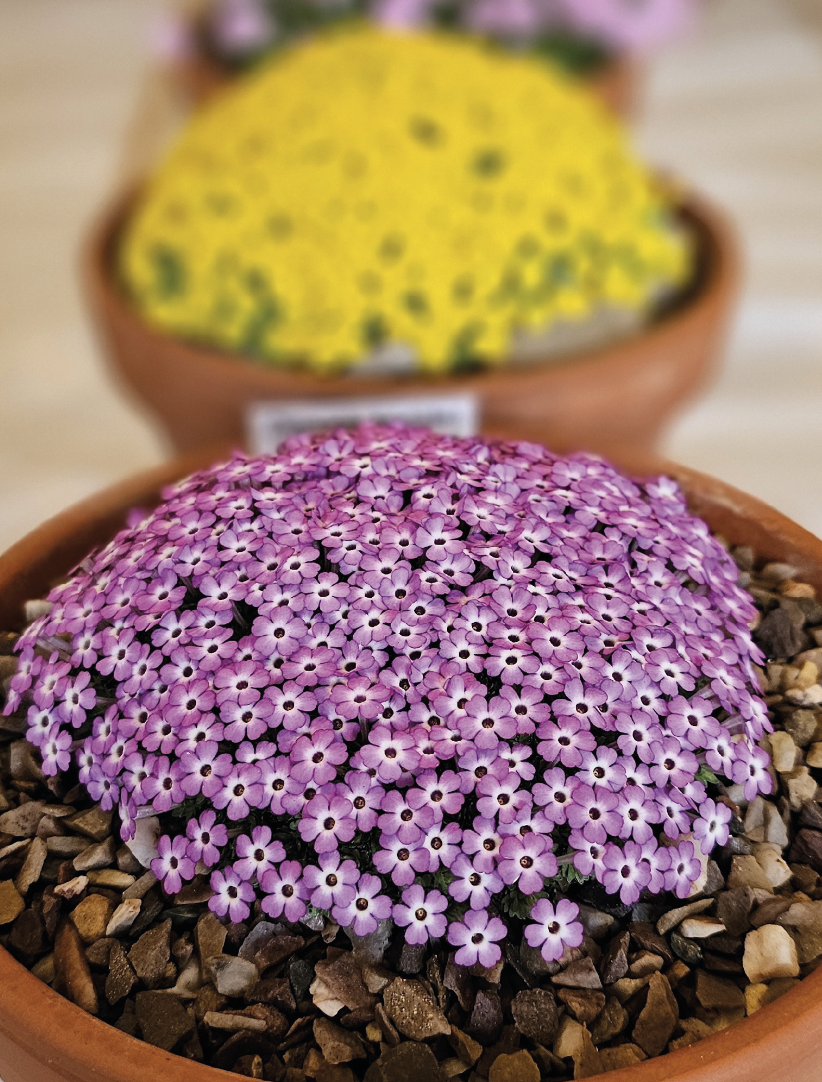
Petal perfect, the pink flowers of Dionisia bryoides (Photos by Susie White)
First published in edition 210 of The Northumbrian, February/March 2026
Each March in Hexham, spring announces itself in miniature. At the Alpine Garden Society’s Spring Show, plants from around the world are displayed at the peak of perfection, as Susie White reports
It’s one of the highlights of my gardening year, an event that makes me feel spring has begun, and it takes place every March in Hexham. The Alpine Garden Society’s Spring Show is an opportunity to see some of the best-grown alpines in the country. The plants are dazzling in their range and beauty, and I visit to marvel at how growers have brought these jewels to the peak of perfection.
The Alpine Garden Society began in 1929 so it’s nearing its centenary. Members can compete in shows, source seed through an annual seed exchange, take part in a photographic competition, and receive an excellently produced quarterly journal. The society also organises worldwide tours exclusively for members which are led by experts in the field.
The AGS organises many national shows and plant fairs across the UK and Ireland. There are two every year in Hexham, in spring and autumn, at the Auction Mart on Tyne Green. The annual Hexham Alpine Spring Show is hosted by the AGS and the Scottish Rock Garden Club, and as well as seeing award-winning plants, you can buy from specialist nurseries selling alpines and hardy plants. There are so many tempting treasures that it’s easy to overspend!
Professor John Richards is a former lecturer in botany at Newcastle University and a renowned expert on several plant groups including dandelions and primulas. He lives in Hexham and has been exhibiting alpine plants for more than 50 years, so I asked him about the definition of an alpine. “It’s not really a botanical term, but I would say that they are small hardy plants that grow in mountainous areas,” he says. “There’s a complete range to be seen at shows, from bulbs to cushion plants, ferns, woodlanders, and even some cacti.”
At the show, they are lined up along rows of tables the length of the room, each class in their separate sections, a spectacle of colour and form.
There were 161 classes at last year’s spring show and John was one of the judges. “The first thing I look for,” he explains, “is the health and quality of the exhibit. You want it to be flowering well but not too leafy, that the exhibitor has tidied the plant up properly by taking off dead leaves or flowers, and how well this particular exhibit fits the description of its class. Rarity and difficulty of growing might come into it, but a fairly straightforward plant that is really well shown will beat a rather struggling plant that is rare.
“Then there’s the defining character. If it’s a cushion plant, you want it to be a tight cushion, and one of the things the judges will do is lay a hand on it. You
can tell immediately if it’s the sort of thing you could tread on without leaving a footprint.”
Plants can be grown in troughs or pans, top-dressed in gravel, stones, or slate chippings, or growing from horizontal slates in imitation of rock crevices. The backgrounds keep the plant clean and enhance the look, some mimicking alpine conditions. The AGS stipulates specific pan sizes for shows and a perfect cushion plant, grown to precisely the inner diameter of its terracotta pot, makes you completely awed by the skill of the grower.
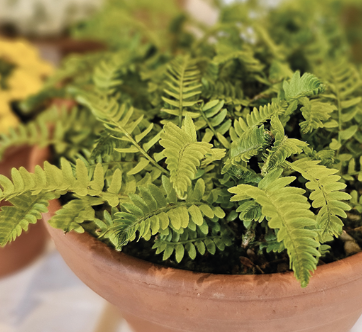
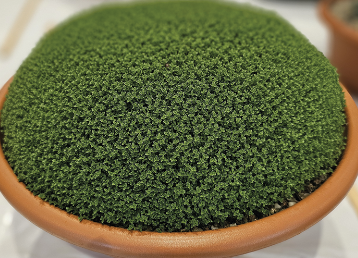
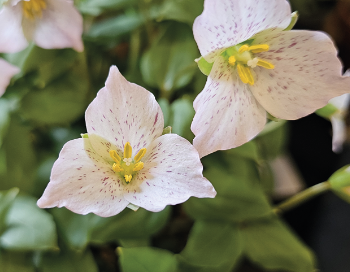
Above: Tiny ferns make perfect plants for pots; A perfect cushion of tiny-leaved Arenaria alfacarensis; Trillium rivale, a woodland plant; Grey mound of Raoulia eximea set in vertical slates
Bulbs are naturally popular for their great variety of form and beauty. There are fritillaries hanging in nodding bells, delicate narcissi and grape hyacinths, hardy cyclamen and crocus. Colour comes from velvet red Pasque flowers, glamorous orange irises, free flowering pleiones, violas, rich red anemones and neat mounds of mossy saxifrages.
Miniature gardens are a microcosm of natural landscapes and offer a range of growing conditions within a single pot: alpines clinging to diminutive rock faces, tiny plants growing in gravel, scree, and moraine, or sheltered by shady overhangs. In a class of their own, these exhibits are miniature worlds with year-round interest that express the creativity of their maker.
In one of these, John was very pleased to see a rare aubrietia that he introduced to cultivation, Aubrietia glabrescens. This was on the 1999 AGS seed collecting expedition and he discovered it high up on the second largest mountain in Greece, Mount Smolikas, the only place where it grows in the world.
That may seem the epitome of an alpine plant, but there are others to be seen among show exhibits whose natural habitats may be more surprising. “There’s the pretty yellow Primula palinuri,” says John, “which grows on the sea coasts of Calabria in southwestern Italy. It’s a very rare endangered species in the wild, though it is more common in cultivation. And from the other side of the world, the Pterostylis is a genus of orchids from Western Australia that grow at quite low altitudes.”
The plants come from all over the world: the Cape cowslip, Lachenalia aloides, a delightful small bulb from South Africa; Trillium rivale from wooded riverbanks in Oregon; saxifrages from the Pyrenees; primulas from European mountains; and tulips from Turkey.
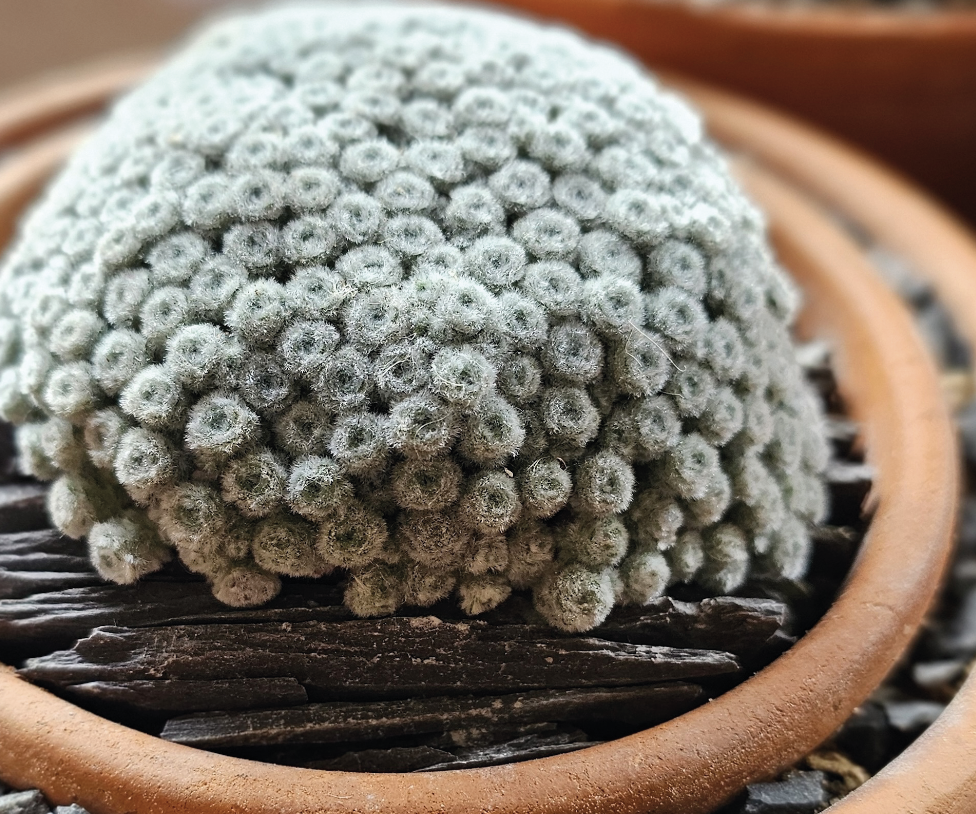
There are even cacti from South America. “There used to be debate about whether or not to include cacti,” says John, “but the more we got to know particularly the flora of the Andes, the more we got to know there were lots of high-quality, cushion type, high-altitude plants. They grow way above the tree line, so they are very different from desert cacti.”
The top award for the Best Plant in Show went to Peter Hood, earning him the Farrer Medal for his Corydalis sewerzowii, a semi-desert plant from the mountain foothills of Central Asia. And the Sandhoe Trophy for the best plant in a pot not exceeding 19cm went to Bob Worsley for Fritillaria bucharica, the beautiful Turkestan fritillary with white flowers in a green centre.
Once the judging has taken place, the public are allowed in. The specialist plant sellers, some such as Ryal Nursery from Northumberland or others from further field, do a swift trade. The Alpine Garden Society members’ plant stall is packed with a mixture of rare and common plants, as well as packets of seed – a lucky dip where you never know what you’ll find. These are plants that by their very hardiness are suitable for growing here in the north.
• The Alpine Garden Society Hexham Spring show is on Saturday March 28, 2026. The North East of England Group of the AGS is a friendly group that meets on the second Monday of the month in Ponteland, September-May. Contact secretary Martin Hughes via email: neegroup@agsgroups.org
• Susie White is a gardener and naturalist and writes a regular Country Diary for The Guardian. Author of Second Nature: The Story of a Naturalist’s Garden, her latest book The Gardener and the Moth: Planting for Moths and Butterflies, is out now, published by Saraband
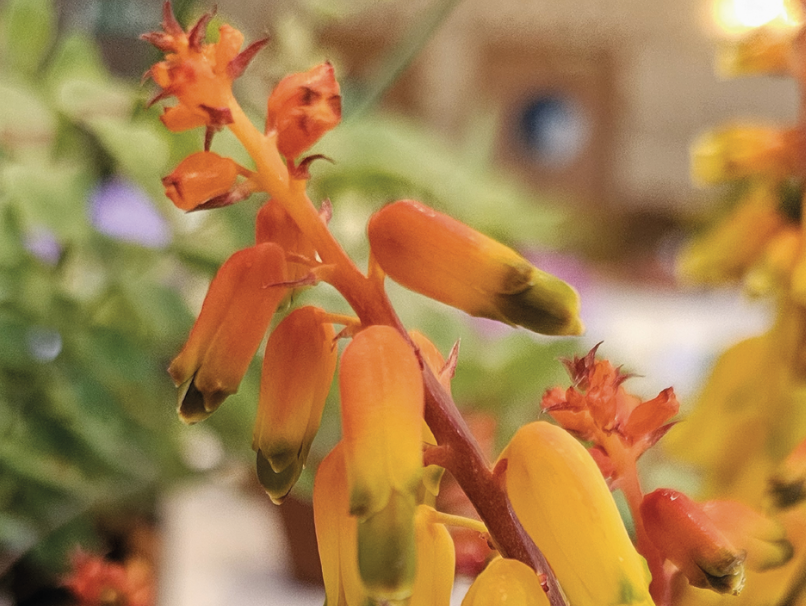
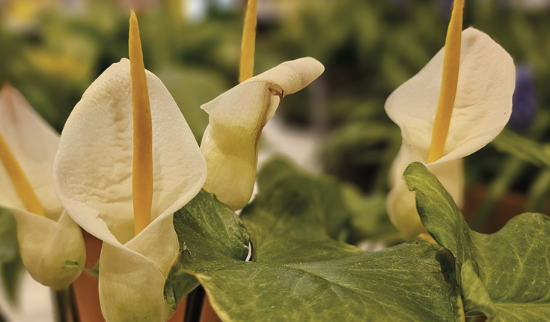
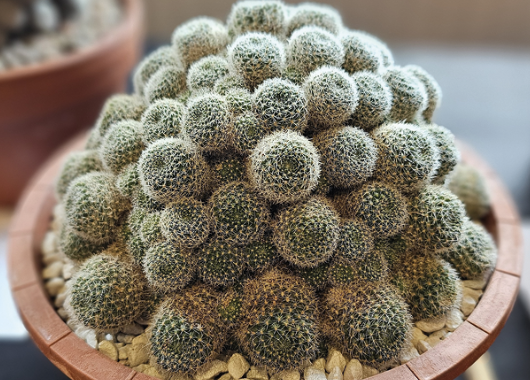
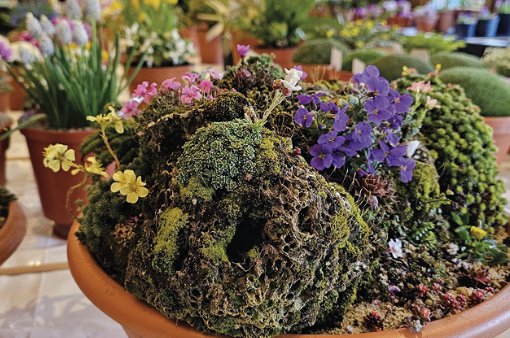
Above: The Cape cowslip, Lachenalia aloides, from South Africa; Arum idaeum from the rocky mountain slopes of Crete; Rebutia ‘Ruby’, a small cactus from the Andes; Miniature garden including Aubrieta glabrescens