
Northumbrian Greats: Rev’d Robert Lee
First published in edition 208 of The Northumbrian, Oct/Nov 2025
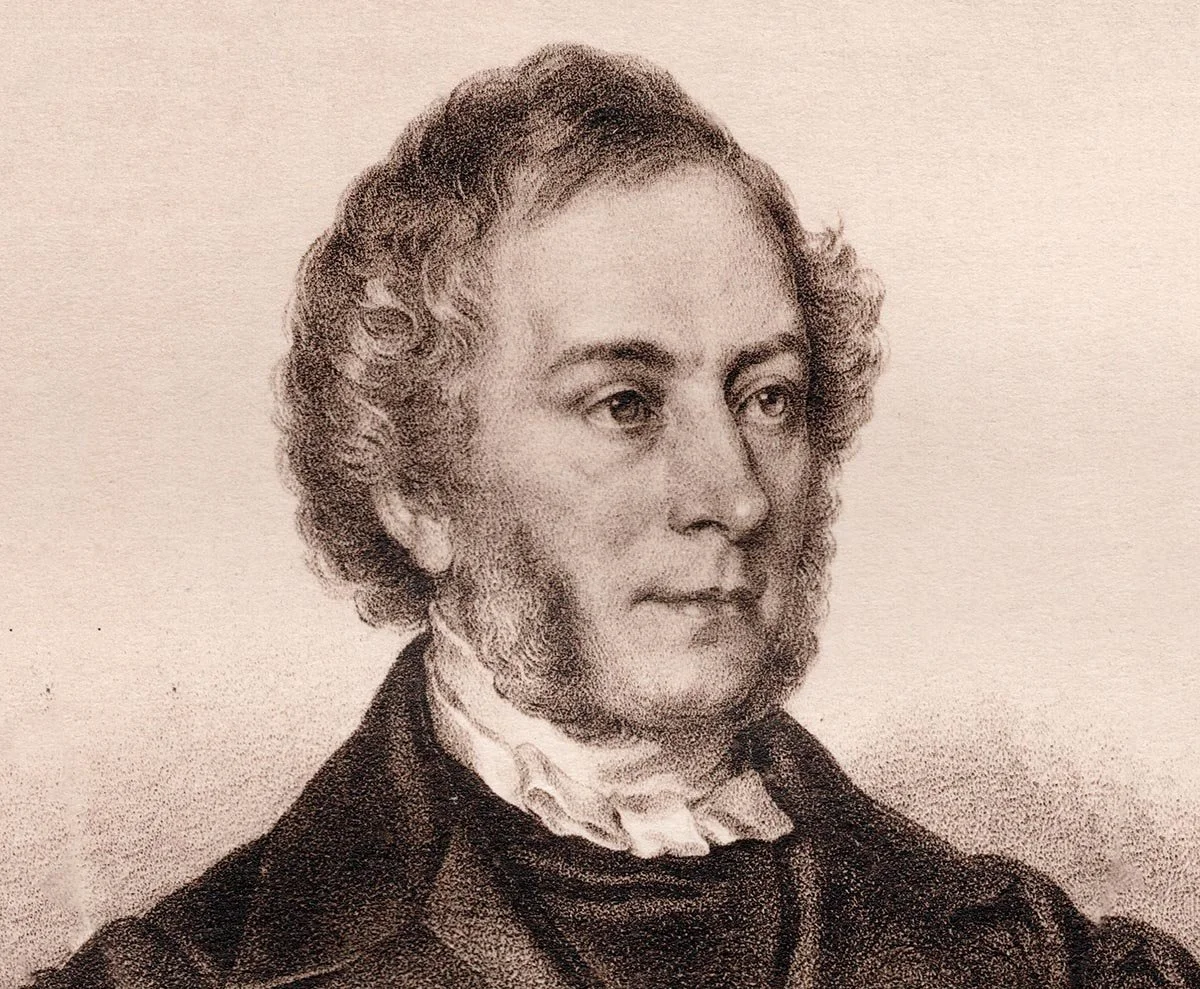
Stephen Roberts documents the fascinating life of the Northumbrian-born modernising Church of Scotland minister Rev’d Robert Lee, who did not shy away from controversy
Not to be confused with his contemporary Robert E Lee (1807-70), the Confederate general of the American Civil War, our Rev’d Robert Lee (1804-68) led a slightly more tranquil life, if not without its fair share of controversy.
The first Professor of Biblical Criticism at the University of Edinburgh, Lee became Dean of the Chapel Royal, where he dutifully served Queen Victoria. My biographical dictionary refers to him as ‘Scots’ which is debatable, and a ‘divine,’ which is fair enough as he was a DD (Doctor of Divinity). Just the fact that he appears in my hefty compendium of bios means he’s worthy of this article.
Born in Tweedmouth on November 21, 1804, the eldest of three sons to boat-builder George Lee and his wife Jane (née Lambert), Lee would have appreciated his birthplace’s situation on the south bank of the Tweed, where it is firmly Northumbrian and English, and across the river from Berwick, which has proved more schizophrenic over the years – sometimes Scottish, sometimes English, and periodically warred over.
Lee would have had loyalties in both camps, as he became minister of Old Greyfriars Kirk in Edinburgh’s Old Town. He qualified, however, as a ‘Twempy’, the local vernacular for folk from Tweedmouth. With three bridges now connecting Tweedmouth and Berwick, we can assume that he walked across the 15-arch Old Bridge to reach the neighbouring settlement, as the Royal Border Railway Bridge was built towards the end of his life and the Royal Tweed Bridge came after his death.
Educated at Berwick Grammar School, Lee was apprenticed into the family firm, joining a long line of boat-builders on the Tweed and serving six years in this capacity. But he had academic potential, and in 1824, aged 16, the family invested in his education in the classics at the University of St Andrews. It was his first foray north and he excelled there, earning a little money by tutoring the young St Andrews-born George Whyte-Melville (1821-78), the future poet, author and Crimean War veteran.
Then, licensed by the Presbytery of St Andrews in 1832, he was ordained a minister of the Church of Scotland in 1833, his first congregation being at a chapel of ease near Arbroath. In 1836, he was transferred to Stirlingshire, and that June he married Isabella Buchanan. The couple would have five children, four of them daughters, and Isabella would go on to outlive her husband by some 30 years.
In 1843, Lee became minister at Old Greyfriars, Edinburgh, in what was a prestigious calling. The same year, however, saw the Great Disruption, a bust-up within the Church of Scotland which saw 450 ministers break away to form the Free Church of Scotland. The schism occurred over who – Church or State – controlled clerical positions and benefits, which all sounds very Henry II and Becket.
The Disruption was a big thing, the culmination of a bitter dispute that left a legacy on both Church and community in Scotland. Lee was not among those who defected and in 1844 he was awarded his DD (Doctor of Divinity) at St Andrews. The following January, his church burned down, forcing him to preach in the nearby Assembly Hall until the restored church re-opened a dozen years later in 1857.
In 1846, Lee was appointed Chaplain in Ordinary to Queen Victoria, an appointment to the sovereign in Scotland. A few months later, he was appointed Regius Professor of Biblical Criticism at the University of Edinburgh, taking on his professorial duties with all earnestness. It had been quite a stellar two to three years for him. His residence in the Scottish capital at this time was an impressive town house at 24 George Square, which was handy for his church of Old Greyfriars.
He went on to be elected a Fellow of the Royal Society of Edinburgh in 1853 and then in 1857 he began his reform of Presbyterian worship, restoring the reading of prayers and the practices of kneeling for them and standing for singing. Then in 1863 he introduced a harmonium, then in 1865 an organ, into his church.
These changes, which some saw as overly innovative, brought much criticism. Protestant churches had traditionally engaged only in plain-song (in this context meaning without music) so reintroducing music was bound to go down badly with traditionalists. It was his lifelong quest, however, to endeavour to make the Church of Scotland a freer, more open-minded church, and another of his innovations was to introduce stained glass into the restored Old Greyfriars in 1857.
His modernising quest would continue for a decade, leading to him being charged with Unlawful Innovations before the Presbytery of Edinburgh in February 1859 in a case which went all the way to the General Assembly, which found in his favour. Passions were running high, however, and there were further proceedings against him in the mid-1860s. In December 1865 he was in bother for presiding over a marriage ceremony in his church, which strictly speaking was not permitted, and Lee was duly censored; and he was in trouble again in 1867 for distributing printed prayer books among his congregation.
While these proceedings were in progress Lee was to suffer a personal catastrophe, falling from his horse on Princes Street in Edinburgh on the evening of May 22, 1867, after an evening out with his fellow ministers. This, most likely incorrectly, makes it sound like he’d been living it up on a rowdy night out, though I’m sure it was nothing of the sort. It did mean, however, that the last nine months of Lee’s life would be spent battling serious ill health.
It had been the eve of the General Assembly of the Church of Scotland and would mark the beginning of the end of his lengthy association with the northern nation. In autumn that year, Lee quit his ministry and headed to the far southwest to reside with his close friend Alfred Edersheim (1825-99) in Torquay, where presumably it was hoped the more benign climate would serve him well. Edersheim was an interesting figure himself; a Jewish convert to Christianity and, like Lee, a Biblical scholar and author.
Rev’d Robert Lee died aged 63 in Torquay on March 14, 1868. His body was returned to Edinburgh, which had played such a major role in his life, for burial in the city’s Grange Cemetery, his headstone sculpted by John Hutchison (1832-1910), the Edinburgh sculptor who was so eminent he received commissions from Her Majesty Queen Victoria.
That headstone records the deceased as: Robert Lee, DD, Professor of Biblical Criticism and Minister of Greyfriars Church, Edinburgh. Born 11 Nov 1804. Died 14 Mar 1868.
Lee was published, his dozen or so works including A Handbook of Devotion (1845) and Prayers for Public Worship (1957). His life was written by RH Story (1870). Two memorials to him are found in the Greyfriars Kirk, while his portrait by the Edinburgh portraitist/landscapist James R Edgar (c.1819-76) hangs in the National Gallery of Scotland.
CHRONOLOGY
1804 Robert Lee born in Tweedmouth on November 21.
1833 Ordained a minister, having been licensed by the Presbytery of St Andrews in 1832.
1836 Married Isabella Buchanan, a marriage that would bestow five children.
1843 Became minister at Old Greyfriars in Edinburgh, pictured above.
1844 Awarded his DD (Doctor of Divinity) courtesy of St Andrews.
1846 Appointed Chaplain in Ordinary to Queen Victoria in Scotland.
1847 Regius Professor of Biblical Criticism at the University of Edinburgh.
1857 Began controversial reform of the Presbyterian Church.
1868 Death of Rev’d Robert Lee DD in Torquay, March 14, aged 63.