
First published in edition 209 of The Northumbrian, December 2025/January 2026
Martin Dufferwiel marks the onset of darker nights with stories of mysterious, yet welcoming apparitions
When we think of ghosts, if indeed we do, our thoughts may be populated with traditional images of ill-defined figures; transient residents of a supernatural world where, as Longfellow wrote in his poem Haunted Houses: “Harmless phantoms on their errands glide.”
Chillingham Castle claims for itself the singular distinction of being Britain’s most haunted castle; an assertion which doubtless elicits howls of indignation from representatives of the other houses which would lay claim to the title. Nonetheless, Chillingham is notoriously ghostly. In 1925, Leonora, Countess Tankerville, recorded that one of the castle’s resident shades was Lady Mary Berkeley, an earthly resident in the days of Charles II. In life, her husband had run off with her sister, and it is said the deserted lady still roams the corridors of Chillingham, witnessed as she passes by a chill and the rustle of silken skirts.
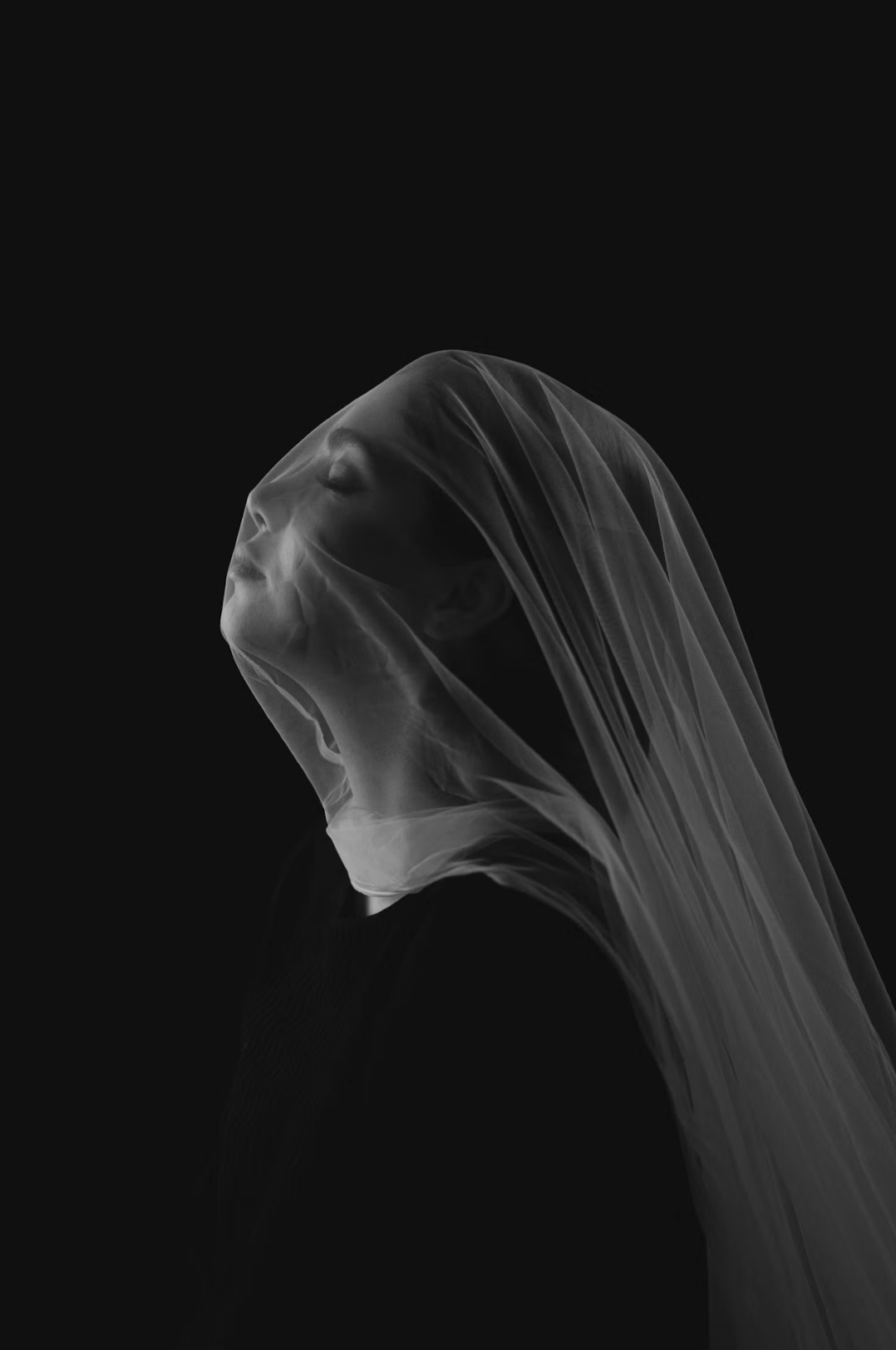
A distinct form of ghost, always female, silkies have been described as searching for, guarding or protecting something lost to the mortal realm. They have also been reported as supernatural agents of welcome, and more alarmingly, suggested to be dark harbingers of danger.
At a time between the two world wars, like many young women of her generation, my Great Aunt Sally was, as they said in those days, sent away into service. She was probably about 14 when she travelled from a small, terraced house in a coal mining district to a far-off castle in Scotland, and it would be a life-changing experience in more ways than one.
On arrival, she was greeted by senior members of the domestic staff. All seemed well, but one morning a couple of days later, she ascended the stairs to a half-landing from which corridors and rooms swept both left and right. “Sally!” a voice cried. Looking instinctively to her right, she saw nothing. Then the voice cried again from the left: “Sally! Sally!”
It was a bright, friendly-sounding female voice, with a curious tone. Sally turned to face a youngish woman standing smiling at her. She looked grand, resplendent in an obviously expensive gown of silk, but she also looked odd, her dress somewhat old-fashioned. She said no more, but simply stared and smiled. Then, literally in the blink of an eye, she was gone.
Shaken, my great aunt sought out the housekeeper to enquire about the woman. The castle’s owners, she had been told, were not in residence. Was she a relative who resided with them, or perhaps a family friend enjoying temporary hospitality?
“When she spoke, did she smile?” came the question. My great aunt replying in the affirmative, the housekeeper asserted: “That’s all right then; she’ll not bother you again.” Curious, my great aunt enquired further and was informed that the welcoming vision in silk was in fact the castle’s resident ghost. She appeared, the housekeeper said, to every newcomer. If she smiled, a warm welcome and a happy stay were guaranteed; if she did not . . . “Well, then . . .” Only the housekeeper’s thoughts filled the pause that followed as she turned away.
A century perhaps before my great aunt’s encounter, another young lady, about 18 years of age but of very different circumstances, had her own strange experience. A guest at Denton Hall in Newcastle, one evening shortly after her arrival she was taken by her hosts to a ball at the home of another prominent member of society. The evening was a success, and the party returned home in the early hours. In her bedroom, she settled into one of two armchairs at either side of the fire and began to muse upon the evening’s events. How glittering it had been; how elegant the ladies and gallant the gentlemen. She began to dream a little; perhaps she had been given a glimpse of her future life – after all, had she not received particular attention from a handsome young guest? Oh, how she wished to become part of that world . . .
A sudden spark from the fire broke her reverie. She was instantly aware of an old lady sitting opposite. Her initial feeling was of surprise rather than alarm. Who was she? Perhaps a family member she had not yet met, or less likely, a fellow guest who had wandered inadvertently into her room. The visitor’s appearance was curious. She was dressed in a gown of flowered silk with a stiff, silken hood. The apparel, it seemed, of a time gone by.
The figure’s face was distinguished, if stern and wrinkled, with deep-set, grey eyes. On her bony fingers, jewelled rings of obvious value glistened in the firelight. She spoke: “Well, young lady, so you’ve been at yon hall tonight; and highly ye’ve been delighted there. Yet if ye could see as I can see, I guess your pleasure would abate. Pride and poverty are an ill-matched pair . . . ‘Tis well, young lady, ye see not with my eyes.”
Then, unnervingly, her eyes shone with a light “so severe and strange that the effect was unpleasant in the extreme,” and unbidden, she began to describe scenes of long ago, as if witnessing them in the waking world. “’Twas not all hollowness then! That which seemed, was! ‘Tis all hollow now! All false! Away with such make-believe finery.”
To the young lady, it seemed that her visitor was cautioning against her own thoughts of moments ago. “I tell ye, ‘tis falsehood all and ‘tis on ashes ye tread. Beware! Trust them not! They are fair without, but the core is bitter ashes. I rede ye, young lady, beware! Trust not all that glisters. That pearl in your hair that shines in the mirror yonder is more precious than all ye’ve seen tonight.” Glancing into the mirror on the wall, the girl’s eyes then flicked back to the armchair opposite. It was empty, and only the rustle of silk and the sound of light footsteps crossing the room were to be heard.
At breakfast, the young guest could not hold back, breathlessly describing the curious event the previous night. Contrary to the amused but polite pretences she expected, her hosts replied that alas this was not the first time the old lady had been seen. The spirit, or whatever it was, was familiarly known by the name Silky. In her later years, the narrator of the story occasionally recounted her experience, an episode so remarkable: “That to this hour it is as fresh in my memory as the day after the vision; or whatever the wise may please to call it.”
She would add that the cryptic words of caution uttered by the old woman proved prophetic. The host of the ball had, as she put it, “filled an untimely grave.” His prosperous family had fallen into poverty and were long gone; their splendid mansion with its “tinselings, gildings and flauntings,” lost to them. It had since become a place, she would say: “From which sordid strangers have lorded it.”
She also said that during their breakfast table conversation the morning after the encounter, her hosts had said that although Silky had been seen many times, her visitations, whatever they were, seemed to be confined to newcomers.
As for my Great Aunt Sally, she never again saw her own welcoming lady. But on occasion, like other members of the household, and perhaps like the residents of Chillingham Castle, she heard the rustle of a silken gown and the sound of gentle footfall passing down a quiet corridor.