
City slickers
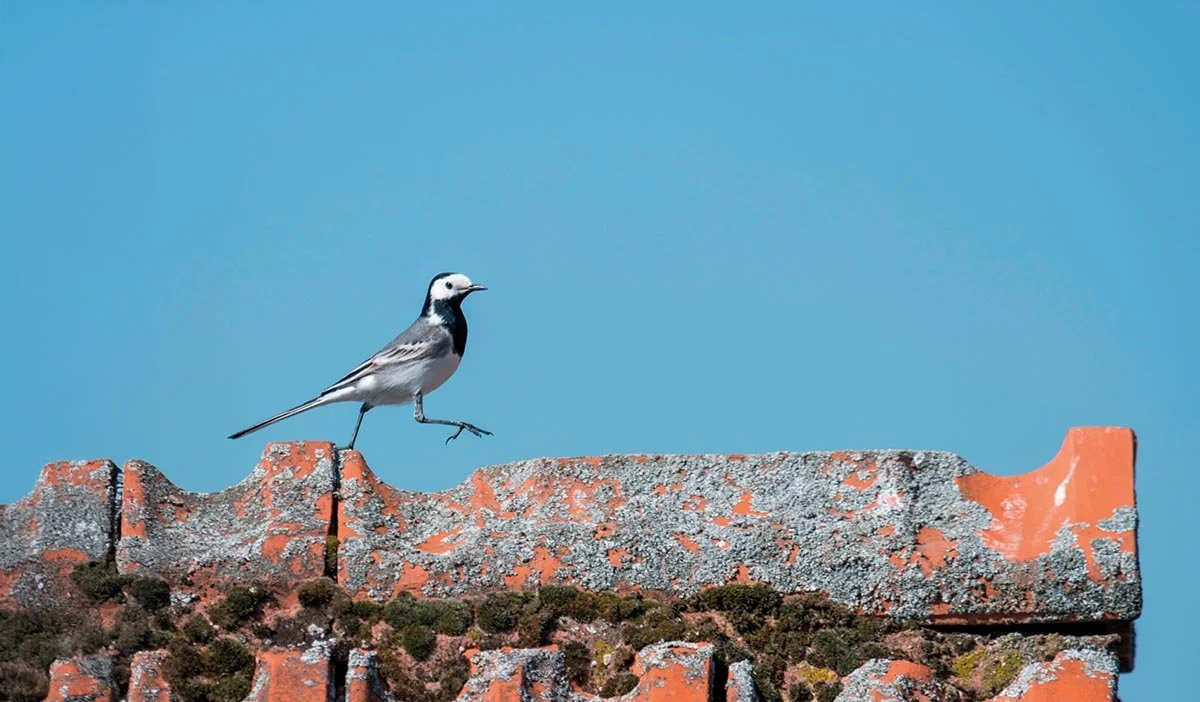
A city-loving grey wagtail
First published in edition 209 of The Northumbrian, Dec 2025/Jan 2026
Ian Kerr discovers the birds which head into the city during the winter months, there to savour the bounty provided on the streets
Some of our birds adopt very strange strategies to cope with winter and the challenges it brings in finding enough food to survive.
Summer visitors including swallows, martins, swifts, cuckoos and most warblers simply migrate southwards to Africa and the Mediterranean when conditions for insect eaters here become impossible with the onset of cold weather.
Others, particularly upland breeders like curlew, golden plover, lapwings, pipits and skylarks, drop down into more sheltered valleys or lowlands for their less extreme temperatures, or just head straight for the coast. There, in largely frost-free fields, mudflats and estuaries, they find rich and ample food to cope in the bleakest of conditions.
The same applies to upland birds of prey – the peregrines, merlins and hen harriers which largely winter on or near the coast where they can find abundant prey in the form of those same wintering small birds, waders, wildfowl and mammals such as voles and mice.
So far all of that is well studied and entirely predictable. But can you imagine a beautiful little species, commonly found along pristine fast-flowing upland streams and rivers, opting to spend winter in the seemingly inhospitable streets of urban Tyneside? That’s what some grey wagtails are doing. As their name implies, they have pale grey backs and wings, grey and white-streaked heads and in summer the males have black chins and striking bright yellow breasts. Females and young birds are duller, but all of them have bright yellow feathering under their tails.
They’re among the most colourful of our resident birds and they spend most of their lives against a soundtrack of running water. As you’d also expect from the name, they continually pump their long tails as they walk or delicately balance on stones and spots surrounded by rushing waterways. This movement is so noticeable that often the whole back end of the bird is in constant motion.
They’re active little birds, constantly flitting low over the water from stone to stone or on gravel beds and similar areas, pausing to search for small insects before moving on. Against the background of running water their simple songs and calls are often drowned out.
Their preferred nesting sites are along fast-flowing streams and rivers. They seek out hidden cavities in rocky and earth banks, ledges under bridges, waterside walls and other buildings. Pairs nest alongside slower-flowing wider rivers, particularly in the cleaner upper reaches of the Tyne, Blyth, Wansbeck, Coquet, and Tweed. Others occasionally nest in more urban waterside settings, including the Ouseburn running through Jesmond Dene in Newcastle.
Like other upland birds, those breeding on the higher, wilder reaches of our streams and rivers move downstream in autumn and winter, only returning to their breeding sites in spring. But a few have taken this a step further and are wintering away from rivers, in spots which at first sight seem to have little to offer in the way of food during hard times. I refer to the city centre of Newcastle and other busy town centres where they seem to thrive, finding sufficient food to see them over winter.
I was reminded of this recently when a friend encountered a grey wagtail on Dean Street, a main thoroughfare running down from Newcastle city centre to the Quayside. This bird was happily running on the pavement, seemingly oblivious of passers-by, searching in the gutter for food before rising over the rooftops.
In a previous existence, between the 1960s and late 1990s I worked in an office high in Milburn House, the huge early 20th Century office block fronting Dean Street and backing onto St Nicholas Cathedral. Our office was virtually in the attic, so far up that the lifts stopped on the floor below and we had to climb two final flights of stairs to get there.
The office window offered a bird’s eye view across that part of the city. In summer, the local rooftops provided the spectacle and sound of herring and lesser black-backed gulls rearing their young on food discarded by the previous night’s revellers or from bags and bins left outside restaurants, cafés and pubs.
They proved what we’ve since come to recognise: Gulls are great opportunists and we humans really are their best friends when it comes to providing food.
On winter afternoons the window also gave grandstand views of huge murmerations of starlings which flooded in to enjoy the comparative warmth, shelter and safety of high ledges around the city centre for roosting sites.
The window also looked out on the flat roof of the eastern end of the cathedral with its drainage channels and gutters where moss had formed on accumulated years of soot, grit and other urban debris. Each winter we had a grandstand view as these drains and gutters provided feeding areas for grey wagtails living in the vicinity.
My friend’s recent encounter with that grey wagtail in Dean Street shows nothing has changed. It might appear strange at first that birds accustomed to living and breeding alongside clean streams and rivers should choose an urban setting. But is there really much difference between search for food among mossy waterside rocks and gravel and doing the same in mossy gutters and channels in the city centre? I don’t think so, and obviously, the grey wagtails don’t either.
The birds in the city centre aren’t alone. A quick search through recent editions of Birds in Northumbria, published annually by Northumberland & Tyneside Bird Club, reveals numerous records of grey wagtails wintering in towns and urban areas where we’ve unwittingly provided suitable spots for them. And fortunately for us, the occasional sudden sight of one of these beautiful little grey and yellow birds can brighten up the dullest and most miserable winter days.