
First published June/July 2026
Janet Hardie explores the unusual and fascinating quarry gardens at Belsay.
Photos: Alastair Hardie
English Heritage have a wonderful treasure tucked away in Belsay, near Ponteland, which offers so much to the visitor, whether adult or child. There’s a unique 19th century Greek Revival mansion with stables, the remains of a medieval castle complex, and picturesque Grade-1 listed landscape with formal gardens. But the real prize for me is the fascinating quarry gardens. We visited several times as a family group in the Spring this year and took so many photographs in the quarry that I was inspired to write this piece.
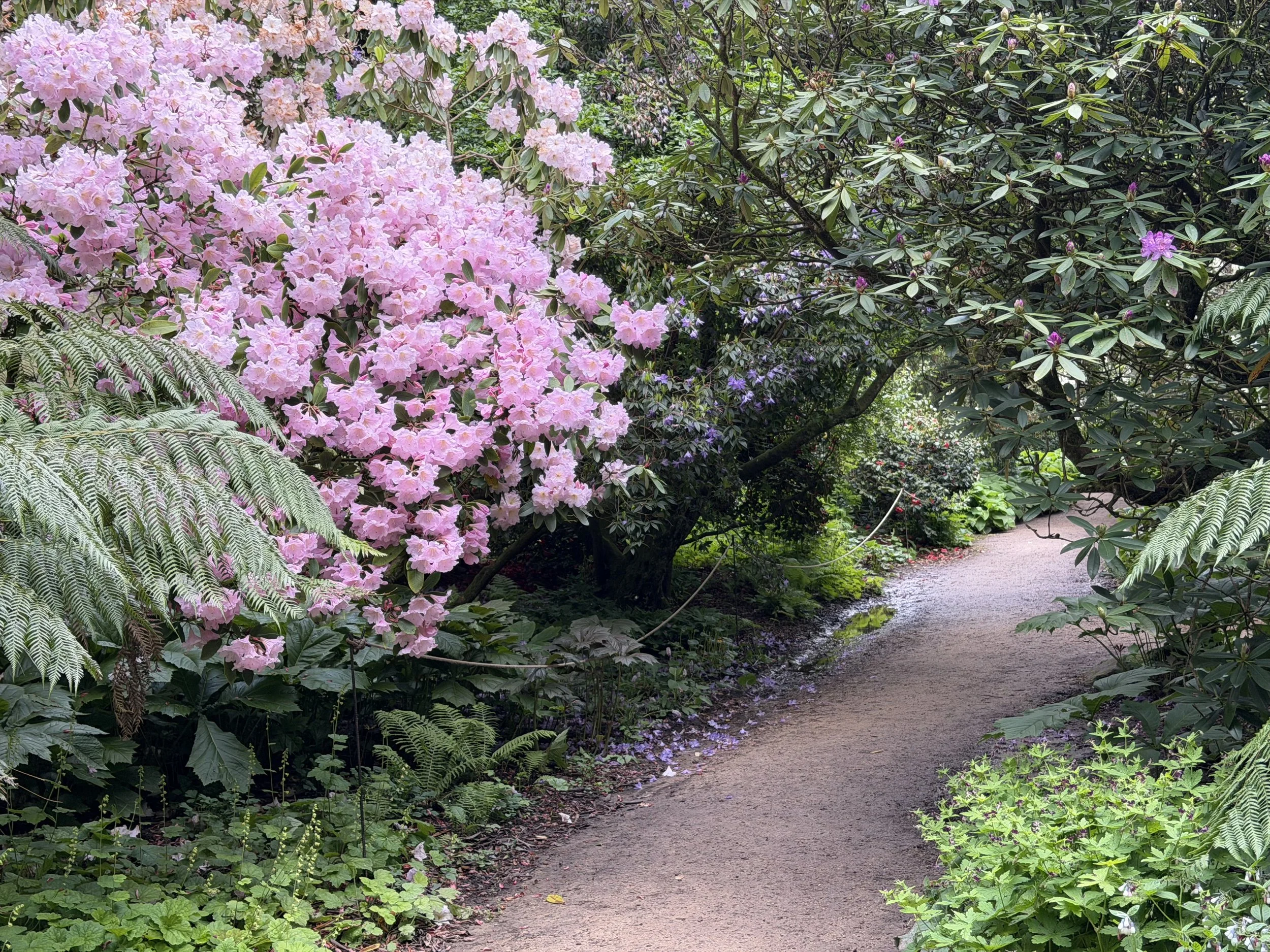
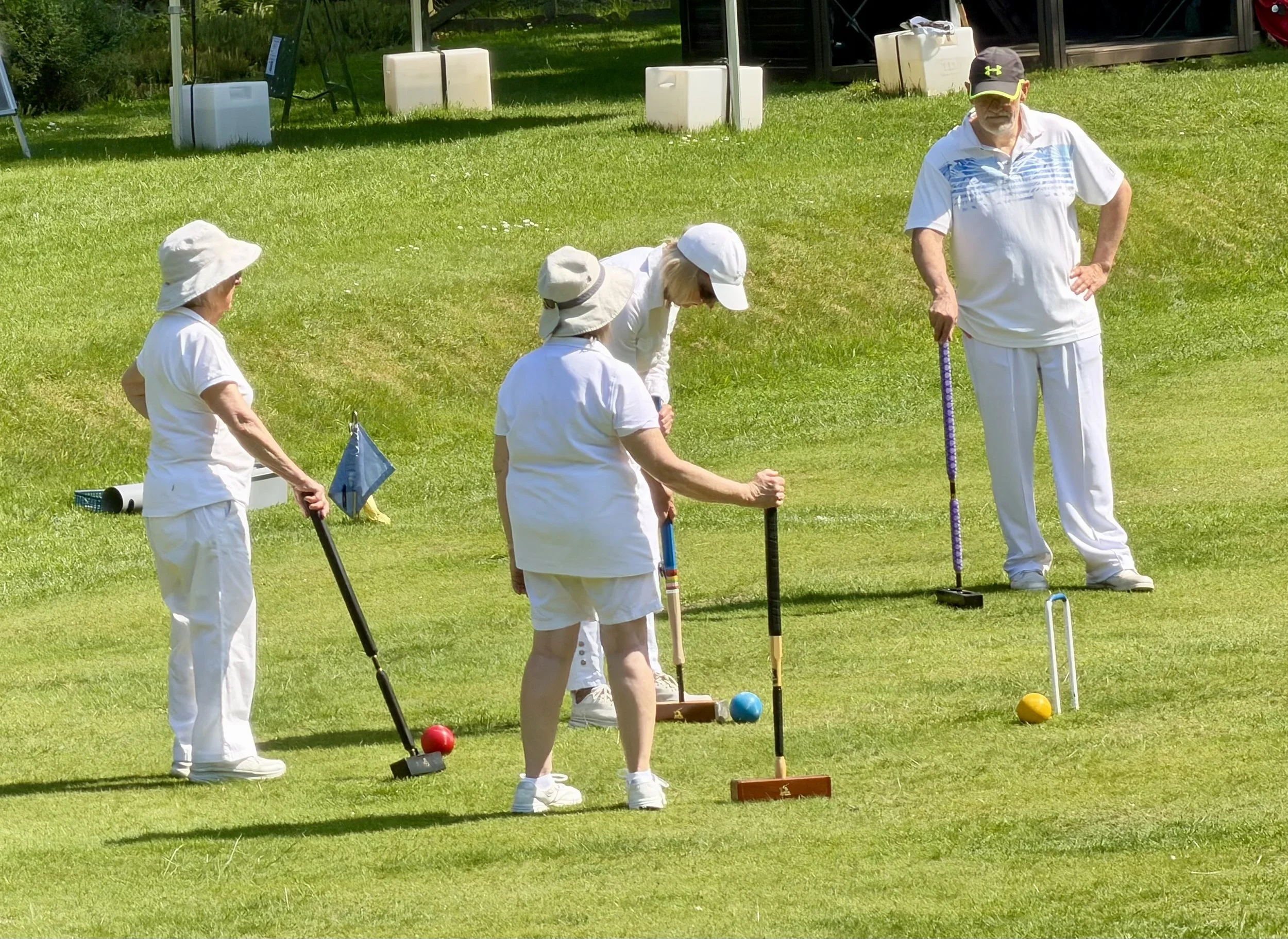
Before reaching the quarry, you pass the unique Belsay Hall, standing proudly but empty. Broad terrace walks take you past immaculate flower beds, recently replanted, with distant woods ablaze with colourful rhododendrons in May and June. This is all part of the fashionable 19th century picturesque landscape, created by the then-owner of Belsay, Sir Charles Monck. His extensive travel journals indicate he was a well-heeled gentleman with a love of dramatic scenery and gardens who was inspired by visiting the quarries at Syracuse in Sicily. The path to the quarry continues past an immaculate croquet lawn in a sunken recess, where sometimes players can be seen, clad in their perfect whites whilst concentrating on their hoops and balls. Ahead, at last, is an inviting garden door with a notice proclaiming ‘Quarry Gardens’.
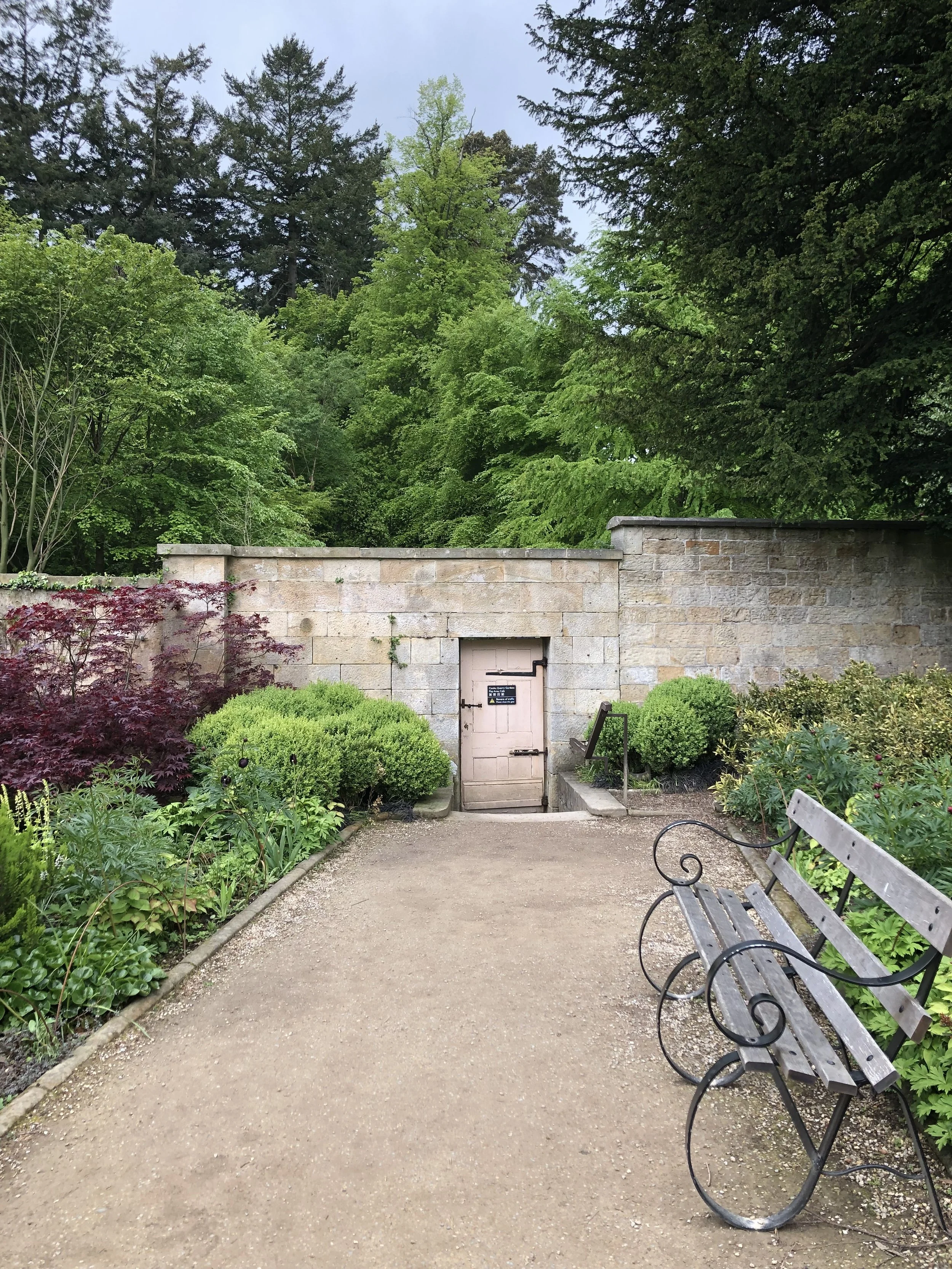
Croquet door
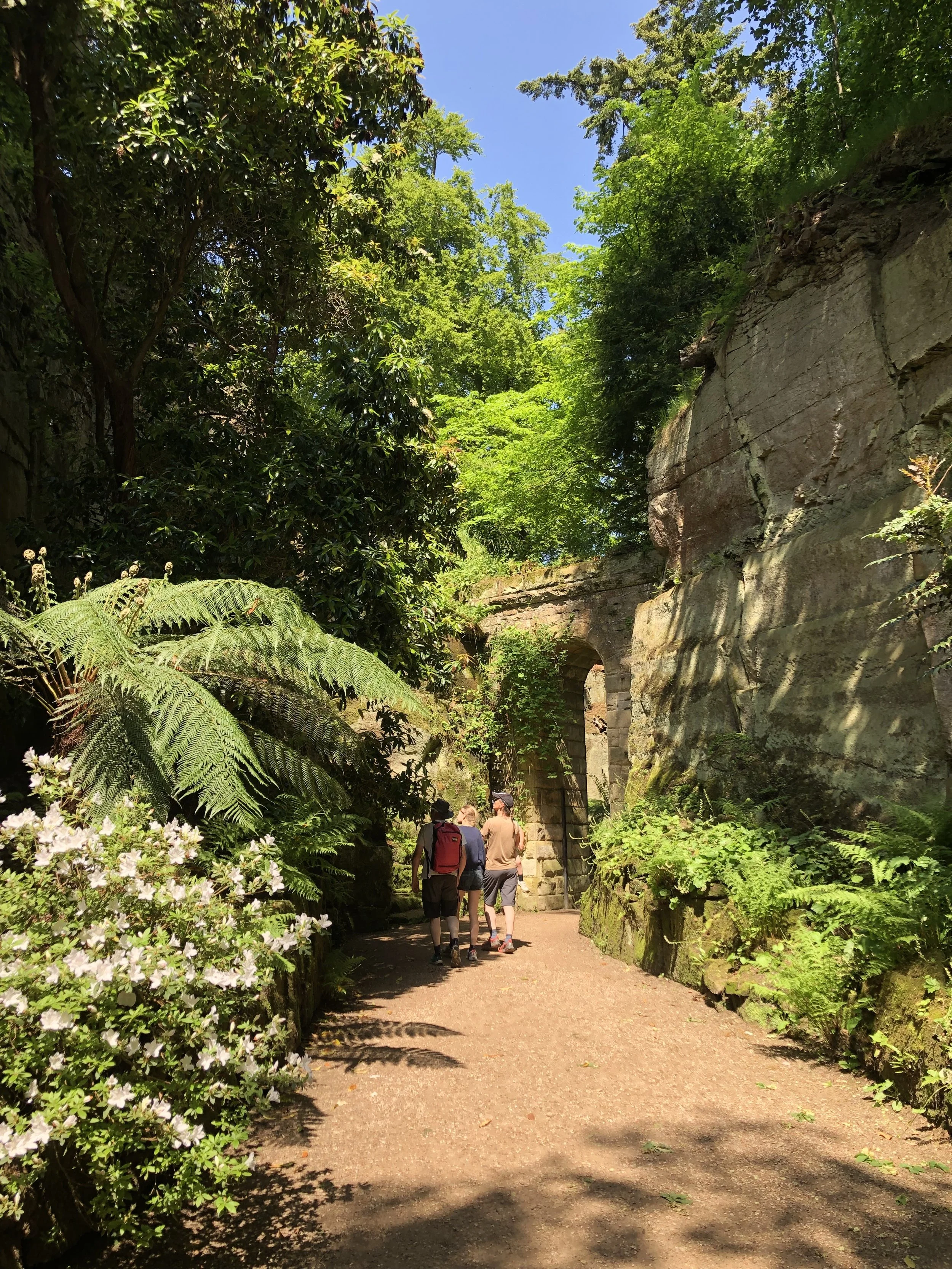
Once through the door, first impressions are of luscious growth and greenery, rocks and stones covered in moss and lichen and tiny flowering plants, with tall trees perched high up on the top of quarry walls. Immediately there is a sense of enclosure and quietness. The path leads past a massive conifer (Thuja plicata) looking uncannily like an upturned monstrous octopus – definitely a must-climb tree for children. It is easy to let the imagination run riot – whether child or adult – as there are so many unexpected and quirky corners and weird plants in the quarry. The curator of English Heritage gardens told me there are photographs of the children of past owners, the Middletons, taken in the early 1900s enjoying the estate and surrounding landscape but I wonder if they found the relatively underdeveloped quarry as exciting and dramatic as it is now?
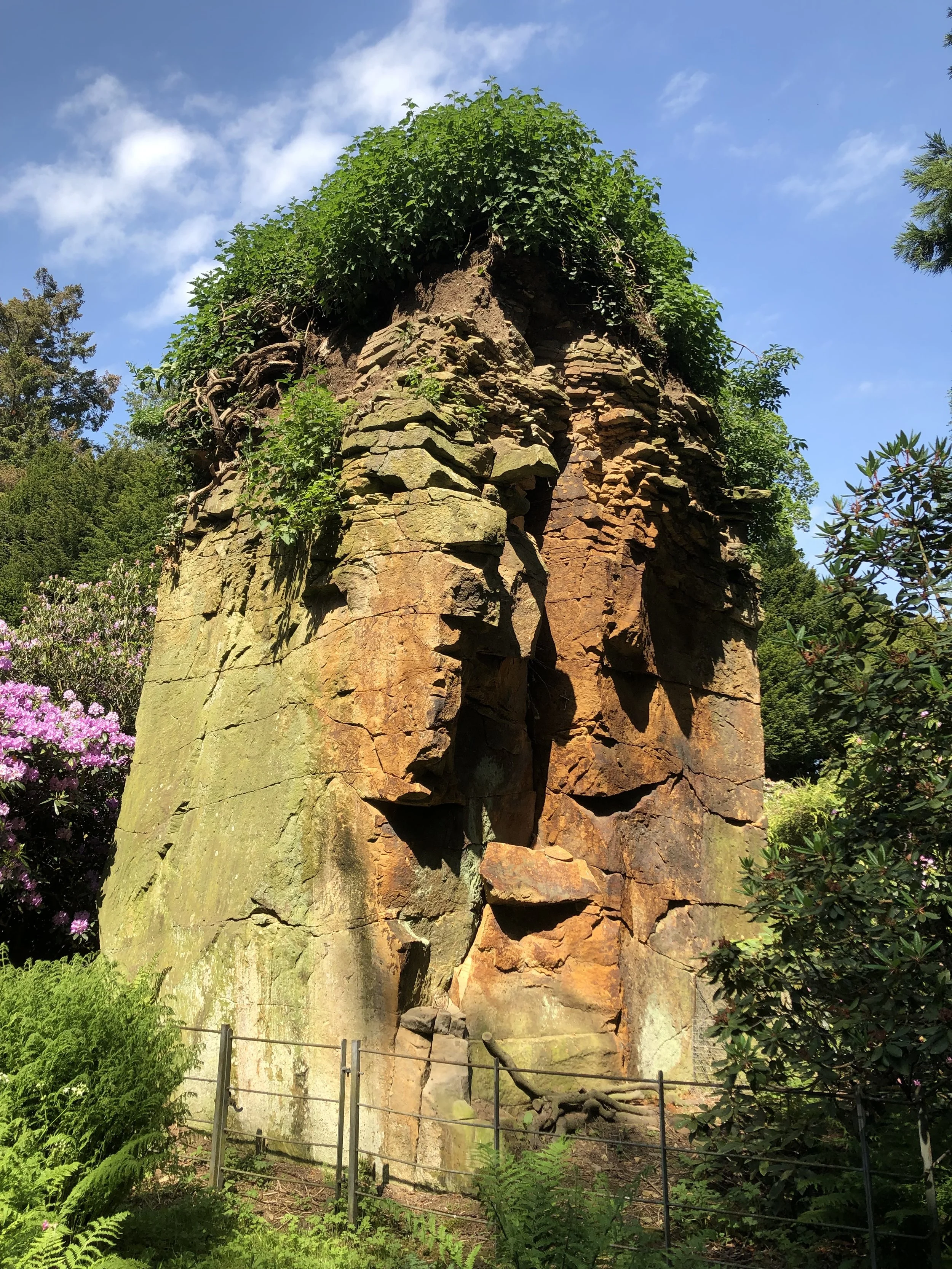
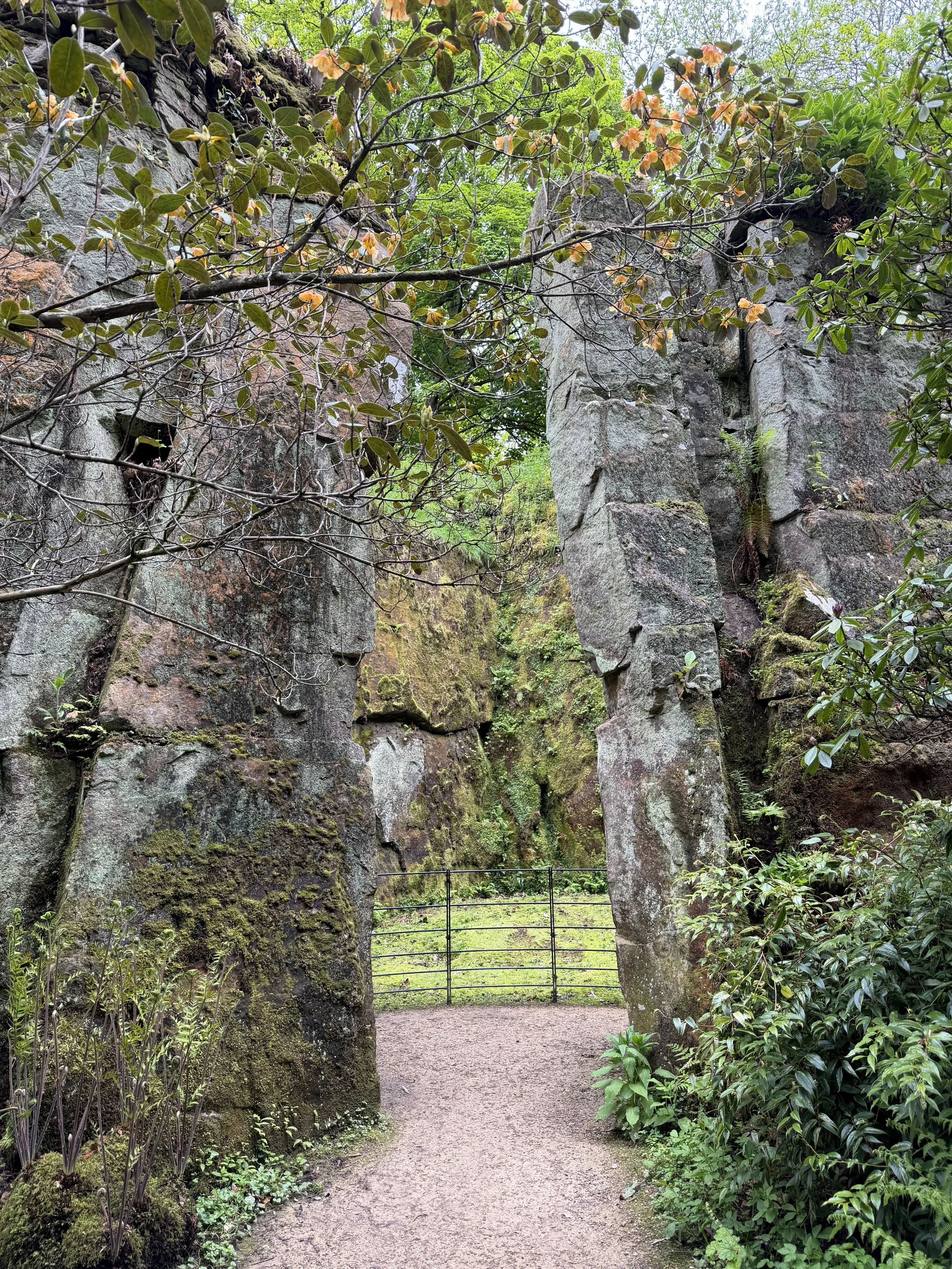
As you wander further into the quarry there are so many shapes to be seen in the rock faces – some natural, others carved. We saw a notice inviting us to find the carved names of three beloved pets buried nearby – we found the names and also saw a couple of newts swimming in the murky water of a little pond. On the return path I suddenly came across a tiny goblin face staring at me. The sheer rock faces lend themselves to cracks and ledges leading upwards, but I only saw one polite slate notice requesting ‘No climbing’. There were a pair of intriguing steps – one set going down, the other on the opposite side of the path going upwards, neither of which went anywhere except to a small dark crack where one had to wonder what or who inhabited those secret hideaways?
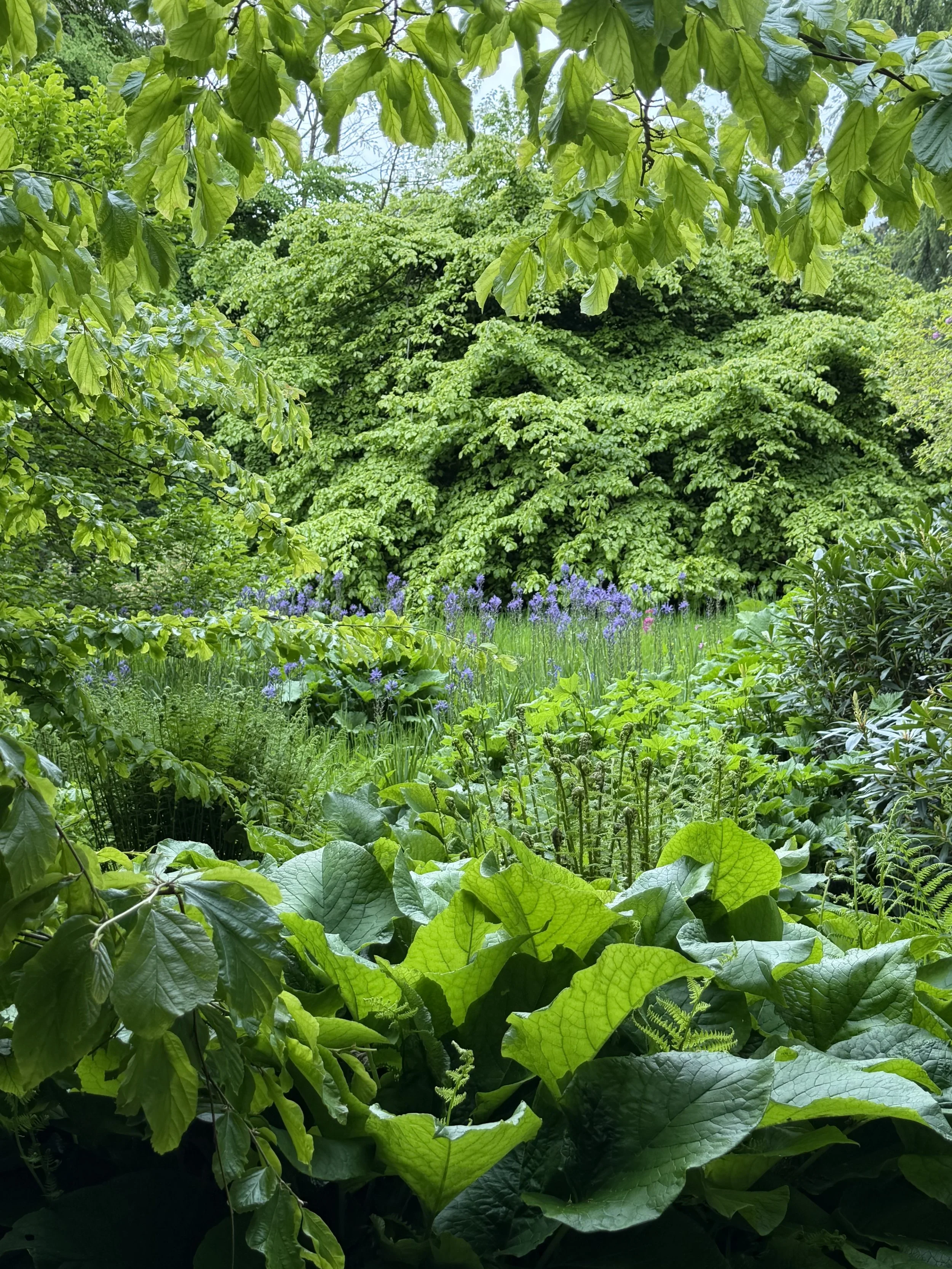
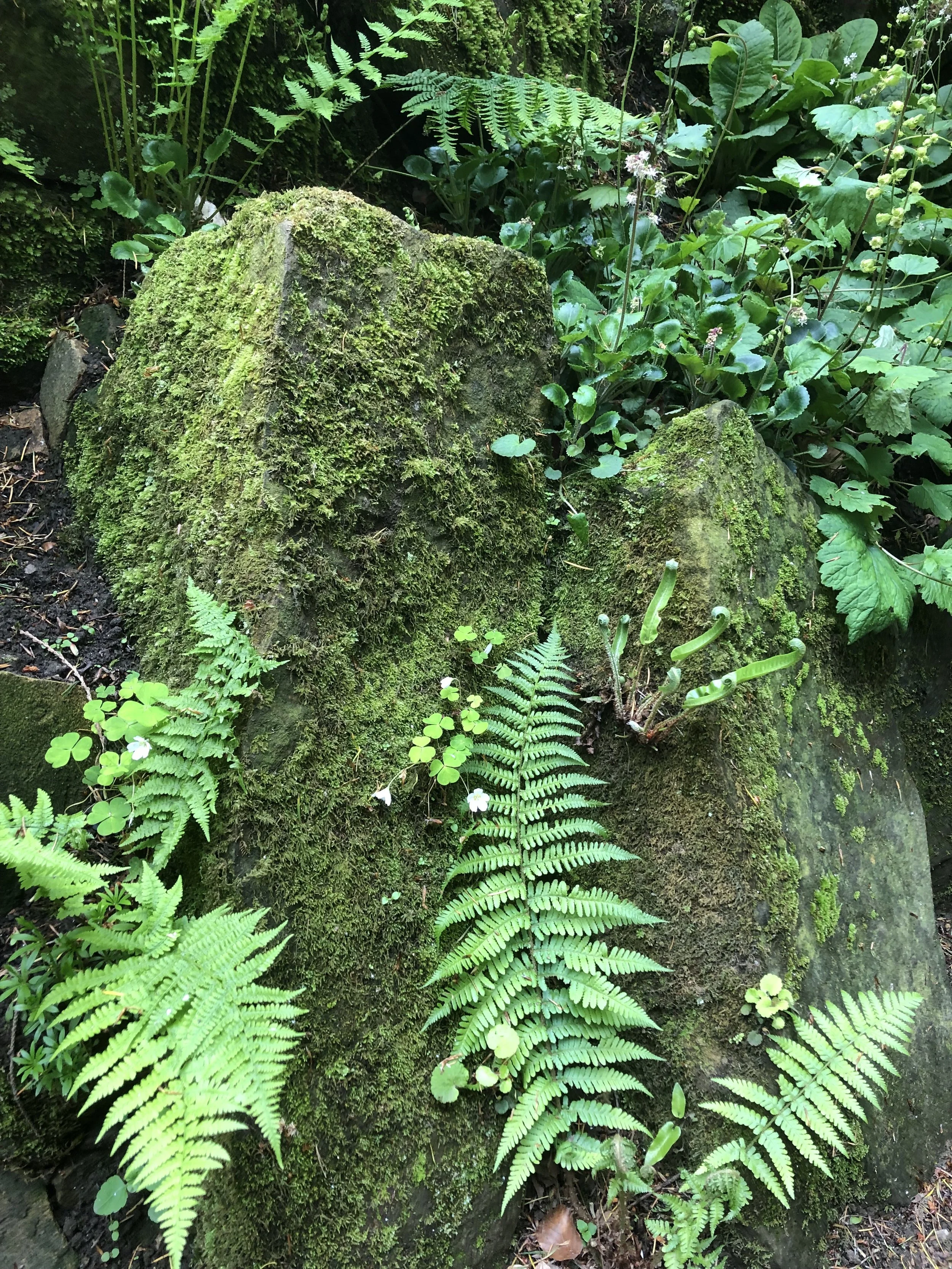
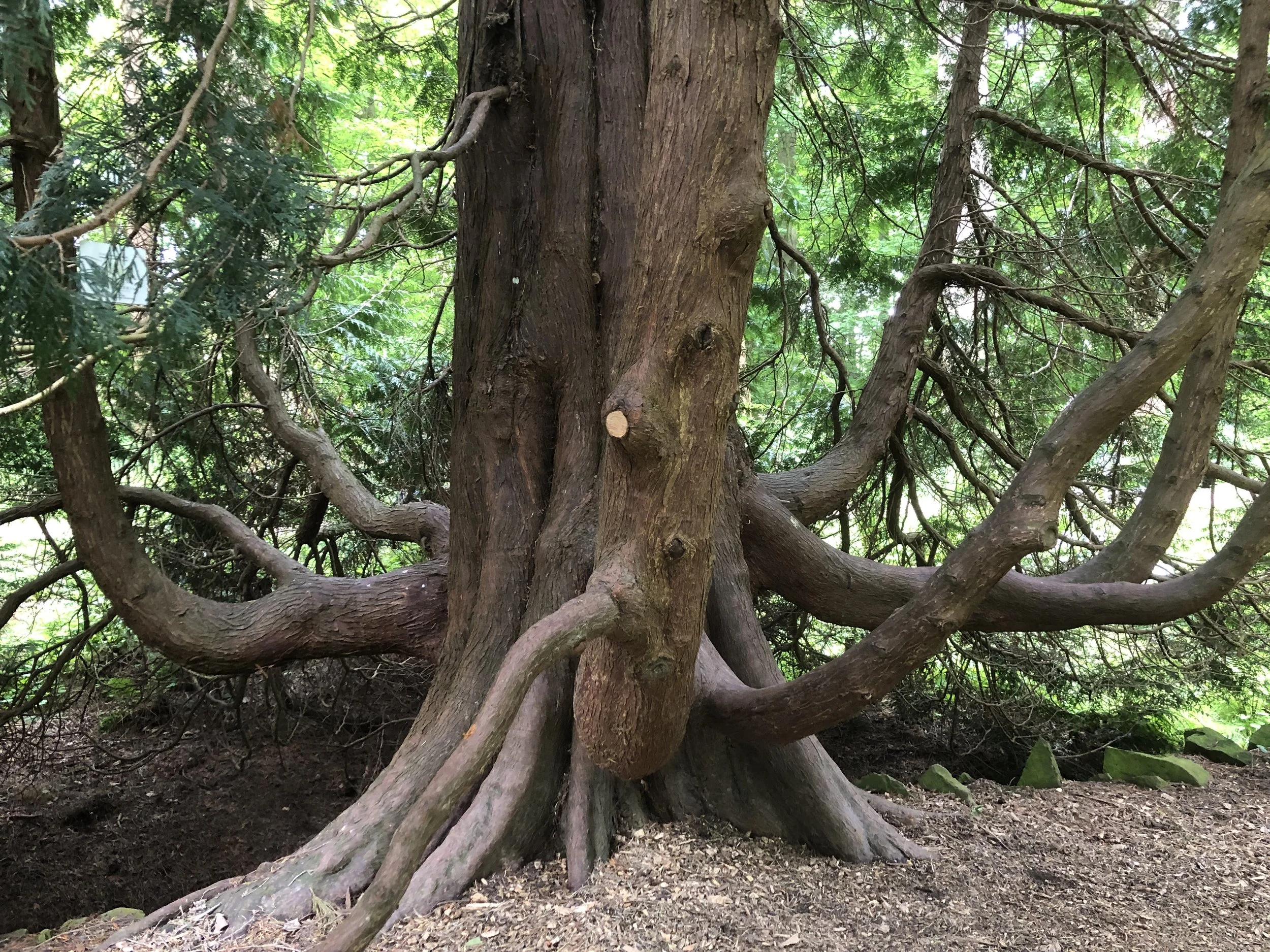
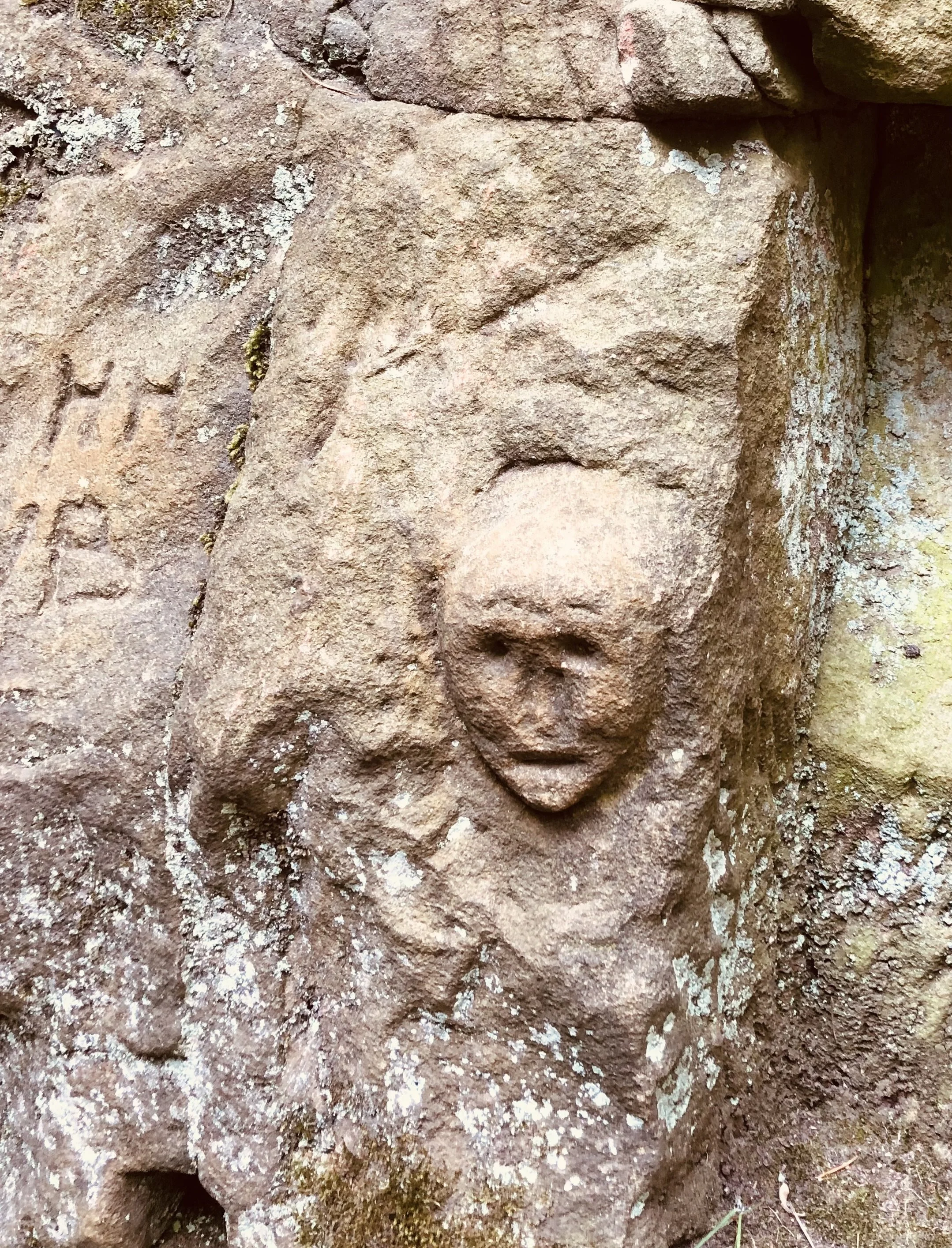
Above: Camassia field; Quarry rock; Thuja; Goblin
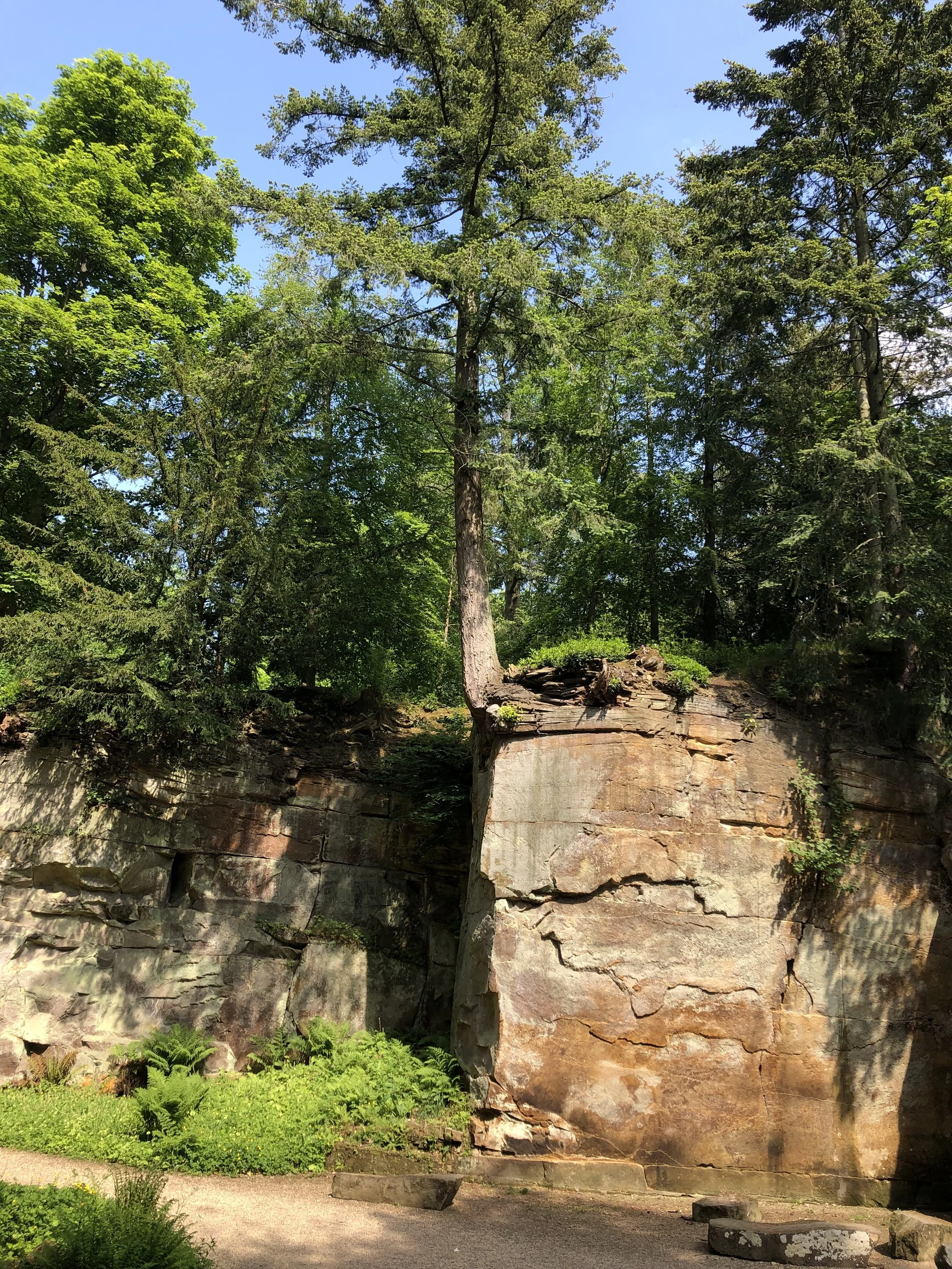
There are tall narrow arches and man-made bridges across the paths with mature trees looking remarkably stable in very little soil. I noticed a small beech tree growing at a right angle from a crevasse high up the vertical rock face and wonder what will happen to it, or the rock, as it increases its girth over the decades. The massive sandstone walls of the quarry are a vibrant mix of warm yellows, orange ochres, browns, white and black which contrast beautifully with the flowers and foliage – it’s quite an artist’s palette of colour. As the sandstone was quarried, a dark ‘room’ was left behind and the visitor seems to be encouraged to look-see through the ‘doorway’, only to find a metal fence blocking further entrance. Moss, lichen and ferns in the damp enclosure reach upwards to a ceiling that does not exist. On the return path we saw the remnants of a fireplace presumably there for the quarrymen to warm themselves at some stage during their efforts.
The unique microclimate means that plants do well and there are several unusual specimens for knowledgeable botanists to observe and children to giggle over. The gigantic rhubarb (Gunnera Manicata – nicknamed ‘dinosaurs food’) is indeed a dangerous looking beast and lives up to its nickname with hard pointy prickles on thick stems and enormous leaves and flowers. On the return path there is also a rare handkerchief tree (Davidia involucrata), one of two in the quarry, and in May the creamy white leaves flutter in the breeze looking disarmingly like hankies. Apparently, they are not flowers, but bracts or modified leaves positioned either side of the actual flower.
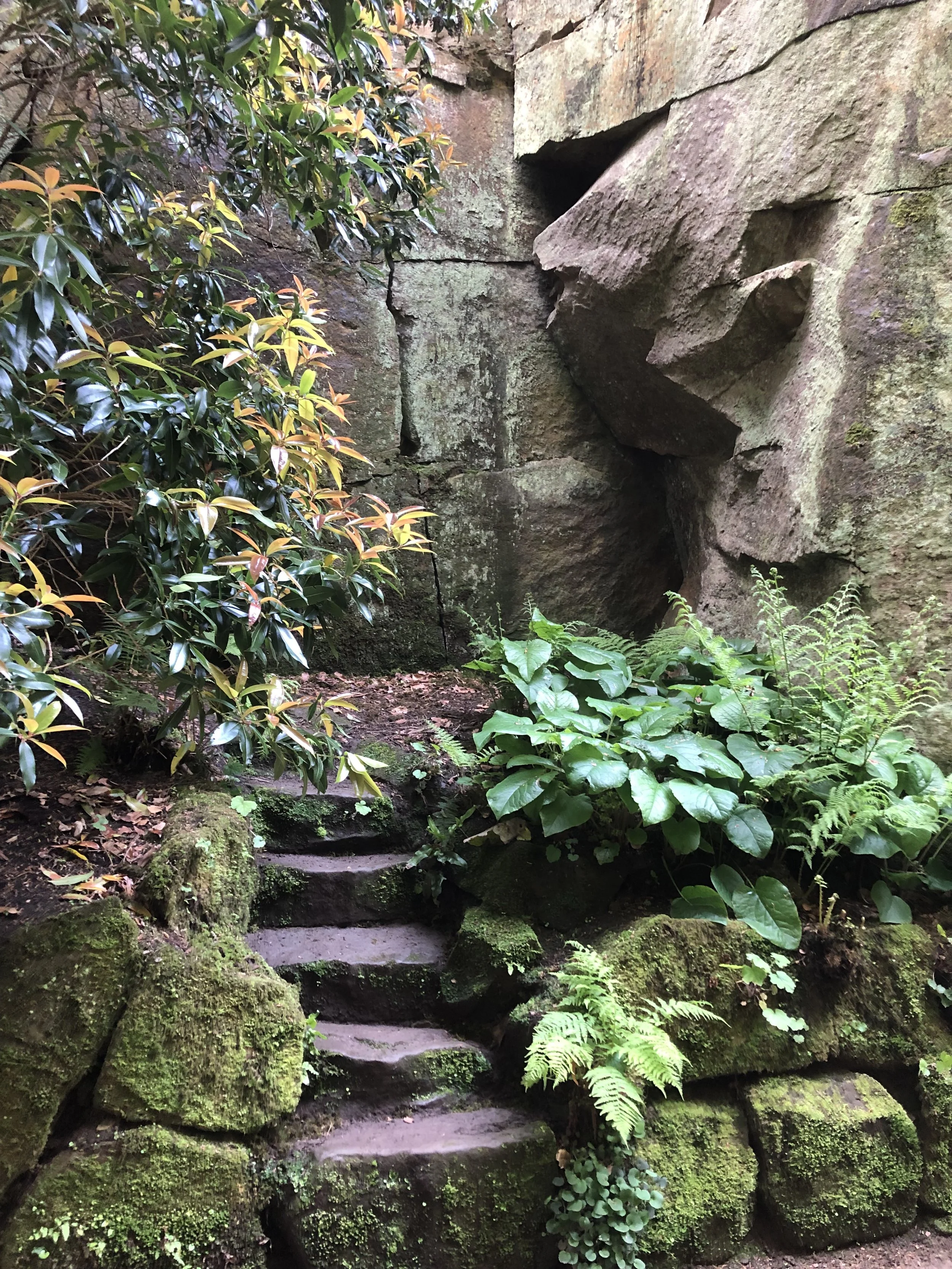
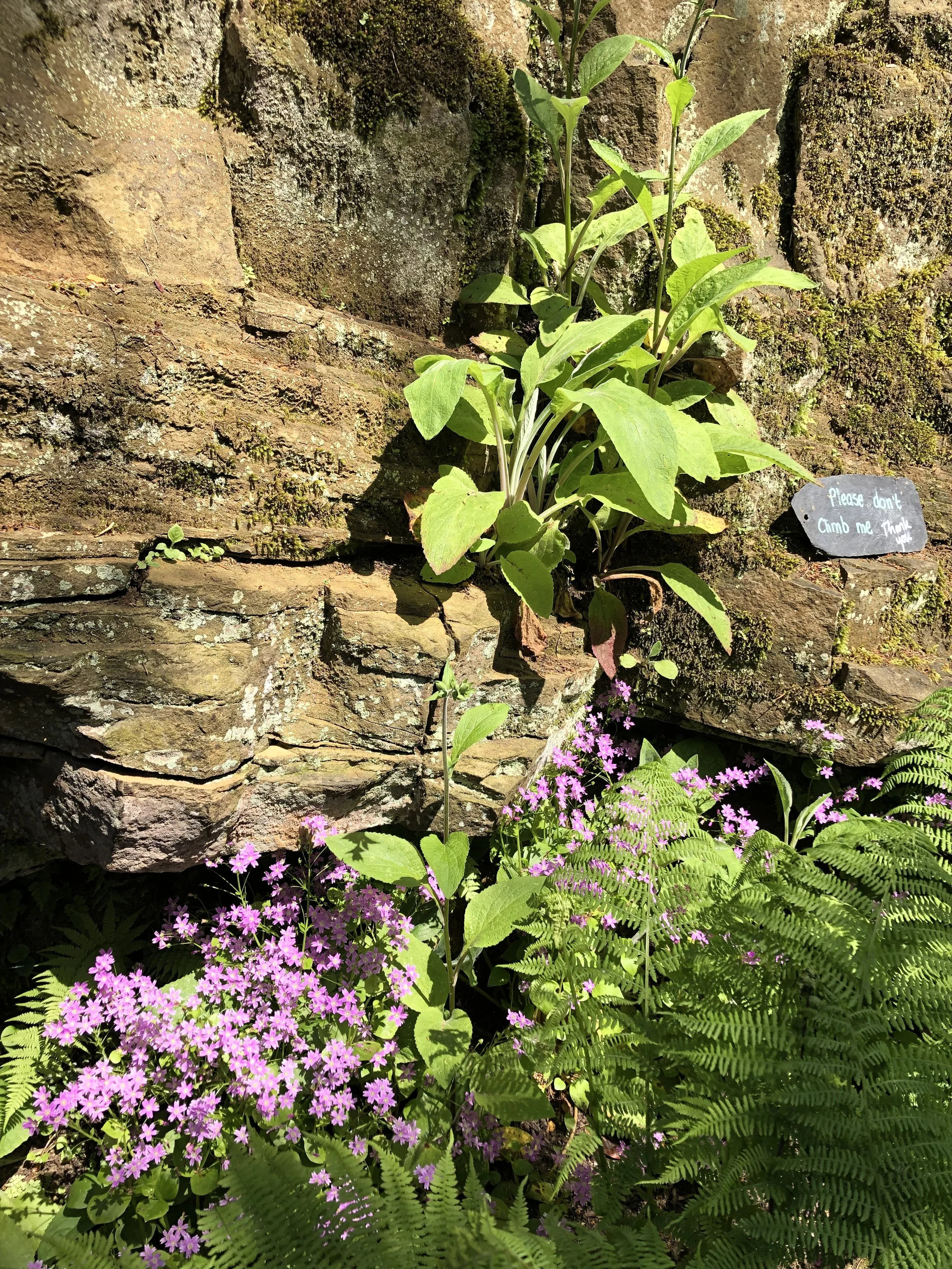
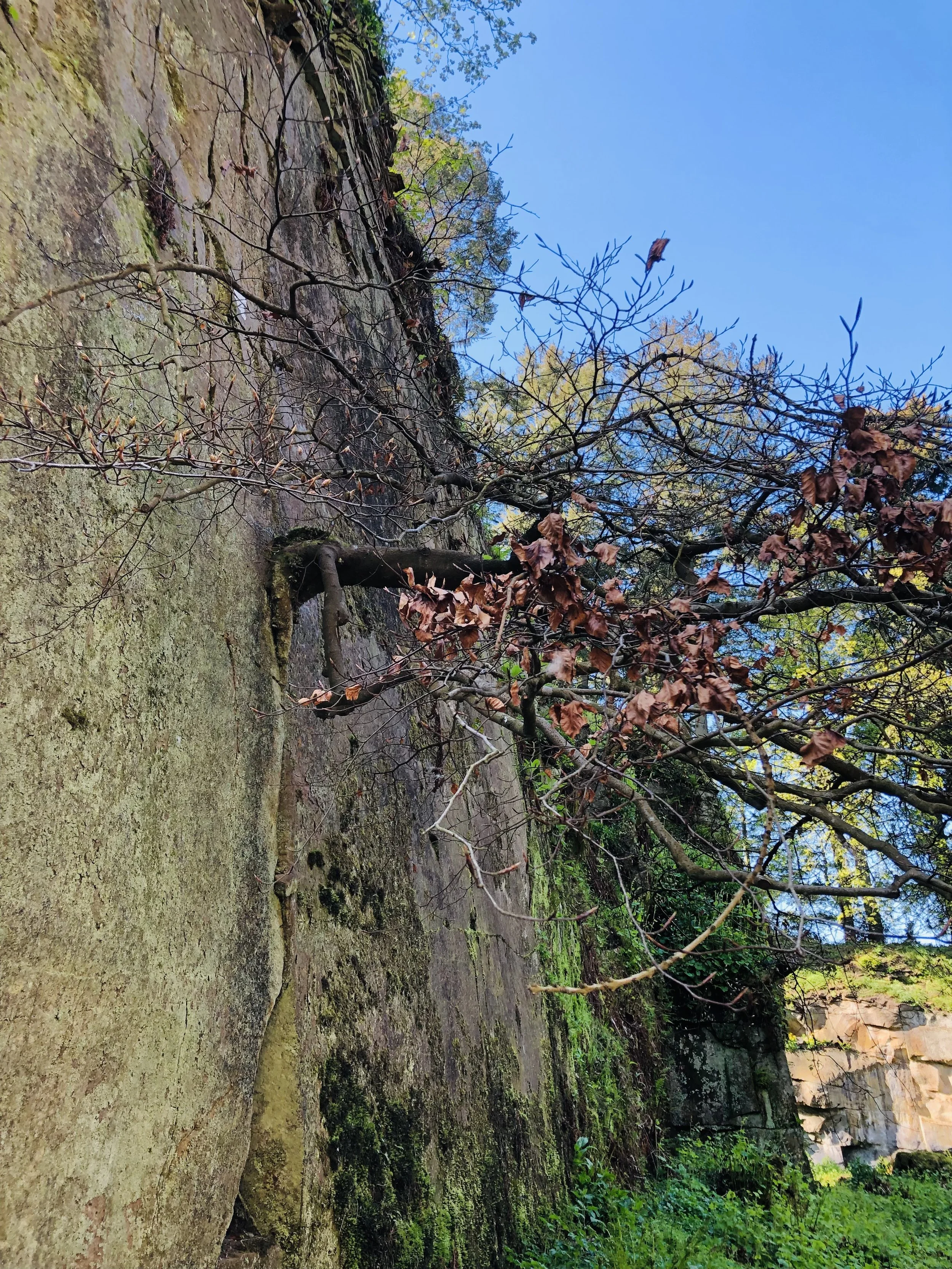
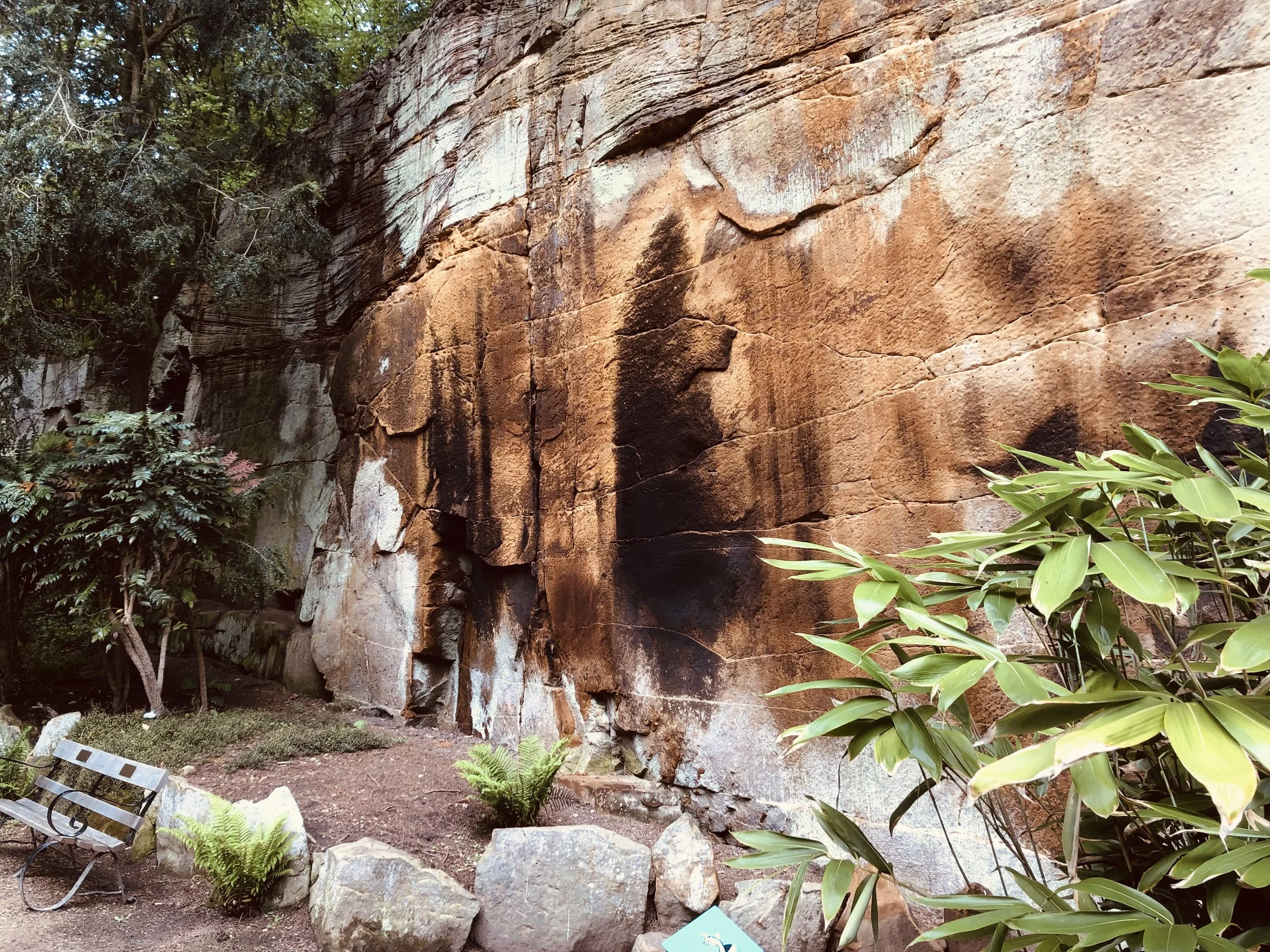
Above: Steps; Polite notice; Beech tree; Wall colours
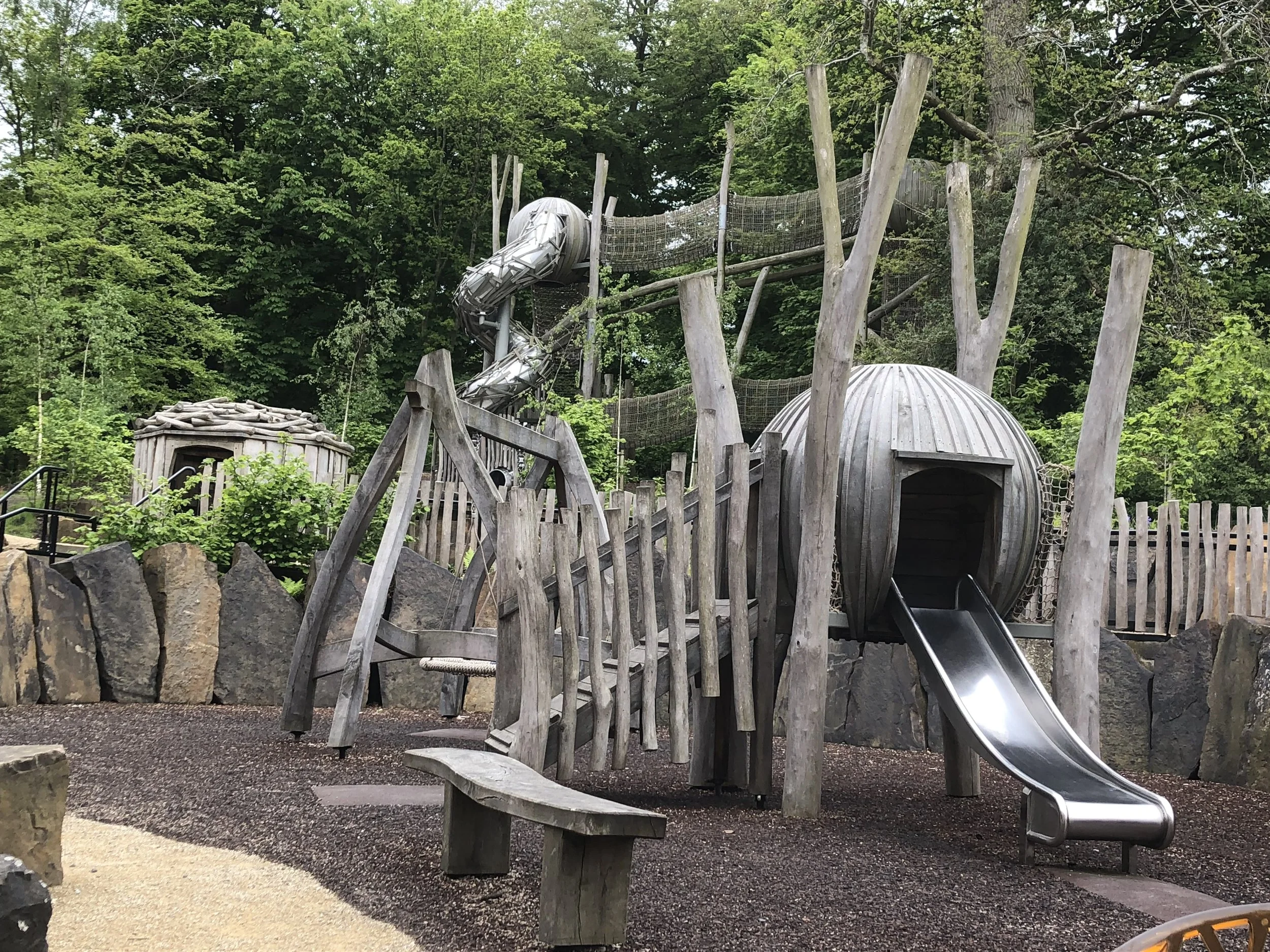
The path winds on through huge wooden gates and a dark ravine where it divides and either you can turn left and take the return path through the quarry or walk on to the new café and adventure playground with its Wild Man themed play area. This has all been thoughtfully landscaped with plenty of sitting areas.* One person I chatted to came to the quarry gardens throughout the year and season is very different - in winter it is very quiet and calming. It is certainly a lovely place to explore, and you never quite know what is round the corner – in places it’s like finding the hidden, lost world described by Jules Verne in ‘Journey to the Centre of the Earth’.
*English Heritage received a National Lottery Heritage Fund grant of £3.4million in 2017 which has been spent on progressing the gardens, led by garden designer and plantsman Dan Pearson, with conservation and restoration of the Hall and Castle. This was completed in 2023.
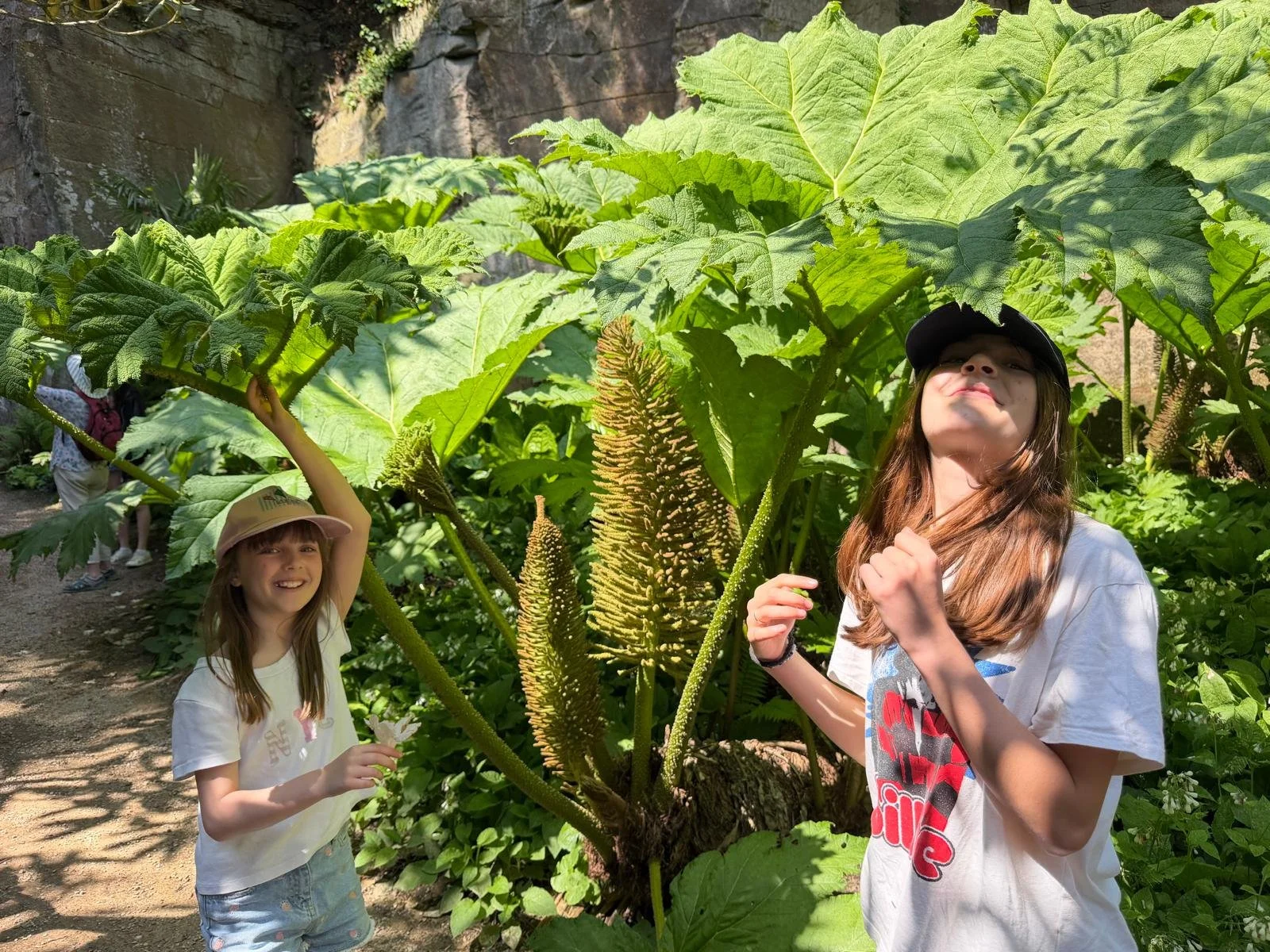
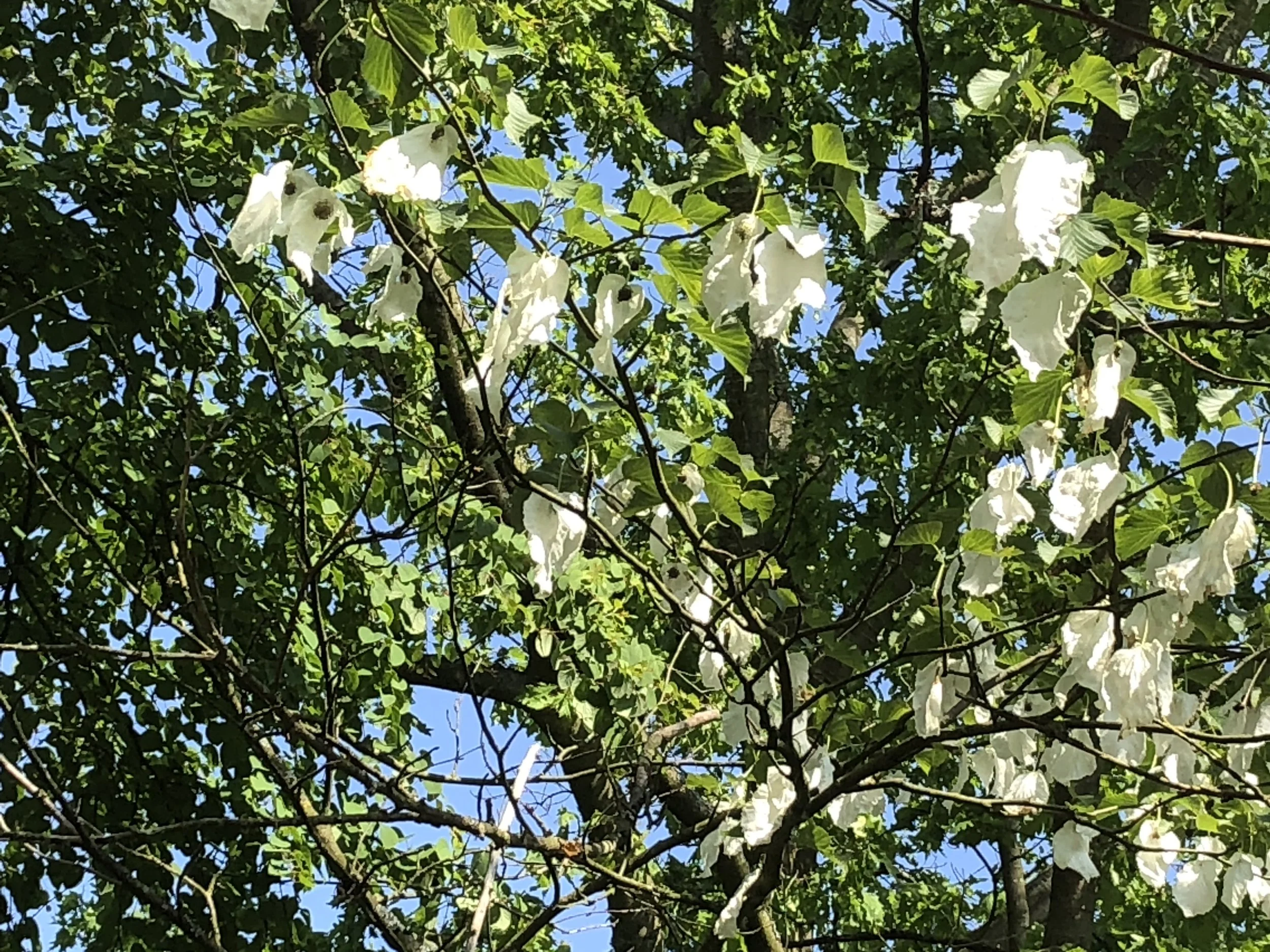
Above: Janet’s grandchildren with a gunnera; Davidia tree; Winding paths; The playground; Rock face; Quarry room; Croquet