
Northumbrian Greats: James Redpath
First published in edition 207 of The Northumbrian, Aug/Sept 2025
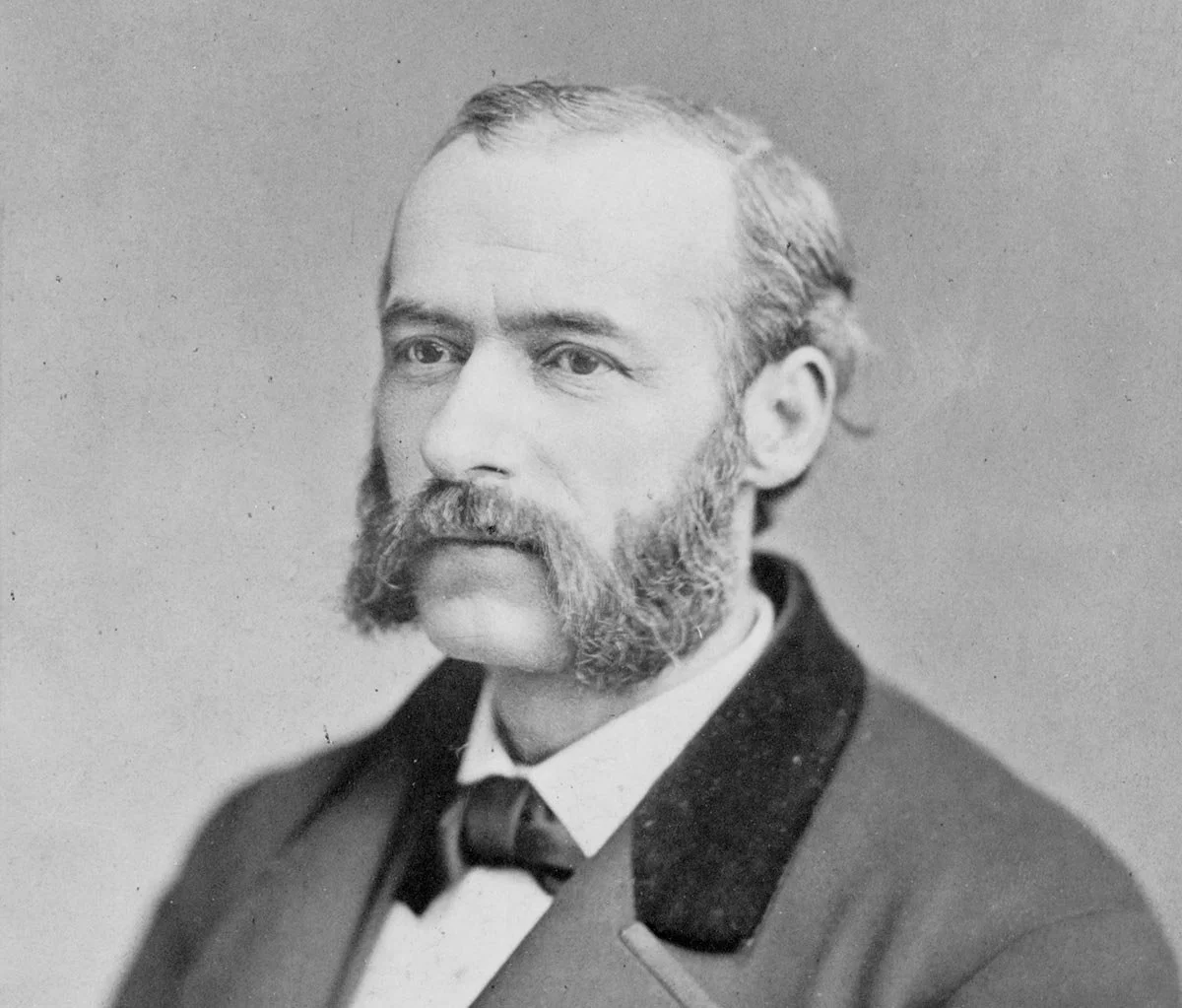
In the latest in his series celebrating great Northumbrians through history, Stephen Roberts profiles James Redpath (1833-1891), journalist, anti-slavery campaigner and activist
He is noticeably absent from my normally trusty and hefty biographical dictionary, the only Redpath there being the Scottish painter by the name of Anne. I consider this something of an injustice to James Redpath (1833-91), a social reformer and anti-slavery champion who was Northumbrian through and through.
A journalist, publisher and activist, Redpath, was born in August 1833 in Berwick-upon-Tweed, reportedly the eldest of seven. The son of teacher Ninian Redpath and dressmaker Maria (née Main), he was baptised at Golden Square Presbyterian Church aged one month. He would grow up to be small of stature, as an adult achieving just 5ft 4ins and weighing in at a fairly feeble 7½ stone.
We know the family moved to the northern Northumberland village of Spittal in 1839 when James’s father became schoolmaster there. This is where James would grow up and receive his education, finally leaving his father’s school when he was 13. A religious sceptic, he resisted his father’s desire for him to join the clergy, instead embarking on a career in printing while penning articles for the local press. He began his career as an apprentice printer and journalist with the Berwick and Kelso Warder. In 1848 he collaborated with his father on a new version of the Border History of England and Scotland first published in 1776 by a Redpath ancestor, George Ridpath (his surname a variant of Redpath).
We know little about Redpath’s early life. The family may have moved across the border into Scotland at some point as some sources say it was from here that the Redpaths emigrated to the United States in either 1848 or 1849, when James was around 16, arriving in the state of Michigan in Great Lakes America.
Around a decade later another family would move to Michigan, albeit only from the neighbouring state of Wisconsin; this being the family of Harry Gordon Selfridge, the future retail entrepreneur, who’d do his growing up in Redpath’s adoptive state. It’s quite possible they would have become aware of one another, the influential journalist/publisher and the retailer who came to appreciate the power of the press.
Just before the Redpaths emigrated, work had begun on the Royal Border Bridge in Berwick, a major engineering project to span the Tweed which was eventually completed in 1850. Designed by Robert Stephenson and officially opened by Queen Victoria, Redpath must have been aware of the big story back home that he’d missed out on.
In the US, Redpath rejected another family career path, farming, and took up work as a printer, including in Detroit where he contributed anti-slavery articles under a pseudonym, ‘Berwick’, a nod to his home town. He’d also use the penname ‘Tweed’, the pull of his place of birth again evident.
Later (1852-54), as a reporter for the New-York Tribune (the New York Tribune from 1914), he worked on a series of articles, Facts of Slavery, becoming an editor by the end of his stint. Then from 1854 he set out to experience slave regimes for himself, travelling extensively around the southern states and no doubt facing some animosity along the way. His accumulated research later appeared in 1859 as The Roving Editor: or Talks with Slaves in the Southern States. Yes, he actually interviewed slaves and gave them a voice, and then related uncomfortable questions for his readers such as: “Have any of your children been sold?” – echo of a question he’d posed to a black mother who’d seen three sons sold into slavery.
The book was dedicated to the abolitionist John Brown (1800-59), of John Brown’s Body fame, executed that same year for inciting a slave rebellion in the state of Virginia. Redpath would acquire a piece of the scaffold on which Brown had perished and treated it like a religious icon: “A bit of the True Cross, a Chip from the Scaffold of John Brown.”
Something of a bohemian, Redpath made friends easily among the literati, including the conversely idealist/realist poet Walt Whitman (1819-92). For Redpath, writing in all its forms was his first love.
In 1855, Redpath moved to the Kansas/Missouri border, where he began reporting for the Missouri Democrat on the ongoing slavery dispute in Kansas as well as turning his hand to poetry. In 1856 he interviewed Brown and would become his most committed publicist. As well as banging the drum for abolition, Redpath advocated slavery reparations, an issue which has become a debate in our own time. By 1858 he’d also set up his own newspaper, Crusader of Freedom, which launched with the evocative words: “I enrol myself a Crusader of Freedom until slavery ceases to exist.”
But Redpath was nothing if not eclectic in terms of his passions, and during a Gold Rush of 1859 he was busily bashing out a guidebook for aspiring prospectors, the pithily entitled Hand-book to Kansas Territory and the Rocky Mountains’ Gold Region – essential bedtime reading if you fancied getting rich quick. He’d also contribute the first biography of the executed Brown, The Public Life of Capt. John Brown (1860), which had been advertised the day after the abolitionist’s death with a percentage of profits destined for Brown’s family. More than 40,000 copies were sold in its first few months.
Redpath’s tour of Haiti in 1860 led to his Guide to Hayti (sic) published in the same year, and his interest in Haitian affairs. The American Civil War fought 1861-65 – a conflict between the Union (northern states) and Confederacy (southern states), primarily over slavery and states’ rights – resulted in a Union victory and abolition of slavery. Redpath must have taken a keen interest in all of this, though his activities during this time are rather shrouded in mist, or possibly gun smoke. His Boston-based publisher had gone to the wall, perhaps because of the exigencies of war, so he branched off on his own, setting up his own firm and beginning a new series, Books for the Times, which included a work by the children’s writer Louisa May Alcott (1832-88), she of Little Women and Good Wives, who contributed Hospital Sketches based on her letters written as a volunteer nurse for the Union during the Civil War.
Another series followed in 1864, Books for the Campfires, which were cheap paperbacks aimed at Union troops. Redpath would also operate as a war correspondent for a while, then became a superintendent of public schools and founded an orphan asylum. Yes, his interests were certainly eclectic. In May 1865, the month that the Civil War finally ended, he organised one of the first memorial services to honour Union dead (perhaps the wounds were still too raw to remember Confederate dead as well).
In 1868 Redpath branched out once more, establishing one of the earliest professional lecturing bureaux in the US. The Boston Lyceum Bureau, later the Redpath Bureau, it provided speakers for lyceums, or adult education programmes, all over the country. Among many illustrious speakers was Samuel Langhorne Clemens, aka Mark Twain (1835-1910), the printer turned author who created Huckleberry Finn and Tom Sawyer. Redpath sold this enterprise in 1875 and then lived alternately in Washington DC and New York, always close to the movers and shakers. His health was in decline by the end of the 1870s, but that didn’t stop him taking up another cause and reporting on famine and the land war in Ireland 1880-81, a period of intense agrarian agitation that had first begun in 1879. Redpath was sufficiently affected by what he witnessed that he zealously took up the cause of Irish nationalism. He went on to publish Talks about Ireland, and Redpath’s Weekly, both devoted to the Irish cause.
Redpath’s final venture was to become editor of the ‘North American Review’ (1886). He died, aged 57, in February 1891, shortly after being hit by a horse-drawn trolley in New York. Doubtless, had his life not been so cut short, there would likely have been many more causes he would have felt the call to fight.
CHRONOLOGY
1833 James Redpath born in Berwick-upon-Tweed, August 24.
1839 The family moves to the north Northumberland village of Spittal.
c.1848 The Redpaths emigrate to the United States.
1852 Redparth is a reporter for the New-York Tribune (until 1854) where he works on Facts of Slavery.
1858 He sets up his own newspaper, Crusader of Freedom, an anti-slavery vehicle.
1859 Publication of The Roving Editor: or, Talks with Slaves in the Southern States.
1860 The first biography of the executed John Brown: The Public Life of Capt. John Brown.
1865 Redpath organises one of the earliest memorial services as the Civil War ends.
1868 Establishes the Boston Lyceum Bureau which attracts the likes of Mark Twain.
1891 Death of James Redpath in New York, USA (February 10) aged 57.