
Northumbrian Greats: Josephine Butler
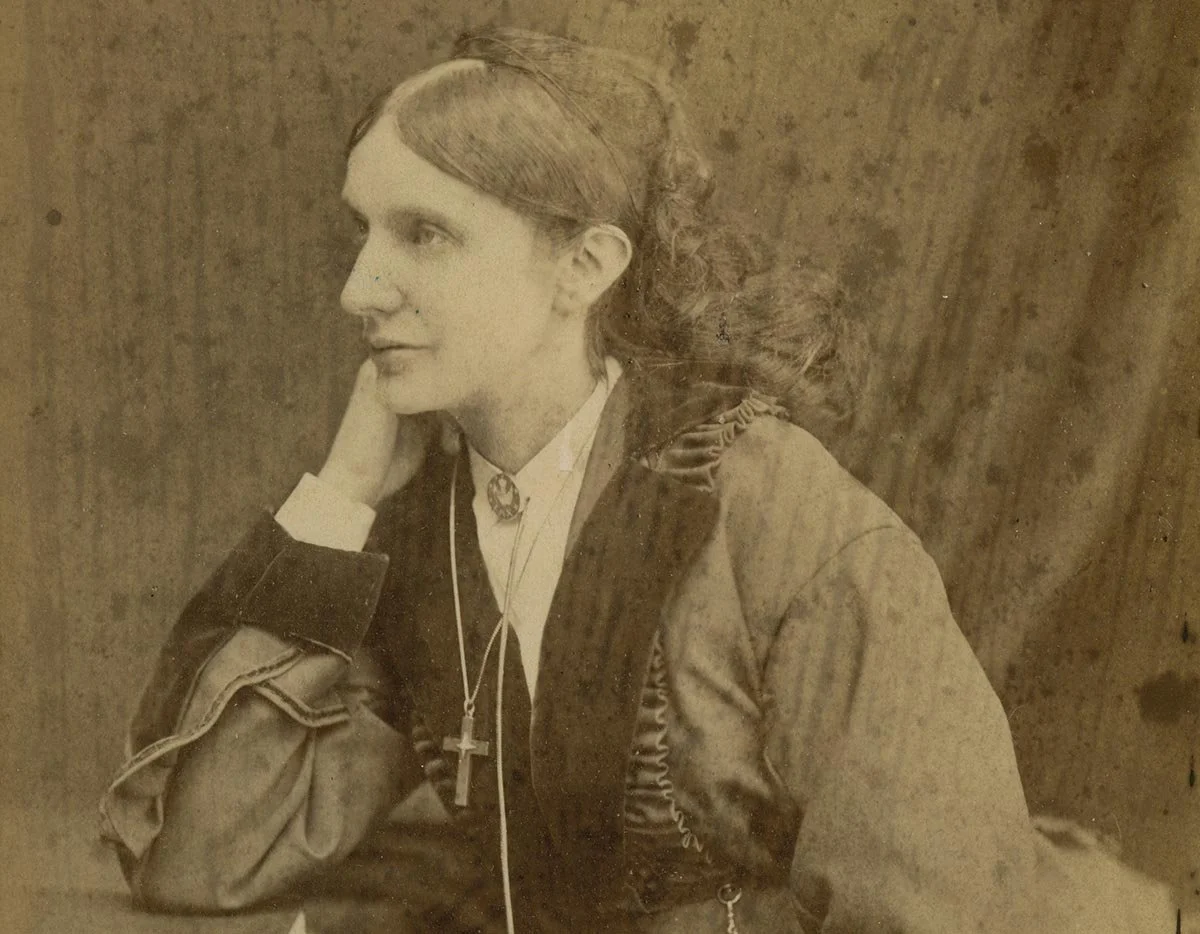
Josephine Butler (author – Downey & Mendelssohn, Newcastle, source LSE Library / Flickr)
First published in edition 205 of The Northumbrian, Apr/Mar 2025
In the latest in his series profiling great names through history, Stephen Roberts considers the life and legacy of the feminist pioneer Josephine Butler (1828-1906)
A social reformer, feminist, women’s rights and public health campaigner who crusaded successfully against white-slave traffic and the Contagious Diseases Acts, Josephine Butler did much to eradicate the social evils of the 19th century. She was also an advocate of votes and improved educational opportunities for women, urged that women should be granted legal independence from their husbands, and demanded the eradication of child prostitution.
Born in April 1828 at Milfield House, about six miles from Wooler, Josephine Elizabeth Grey (1828-1906), was one of ten siblings born to John Grey (1785-1868), land agent, agriculturist, and cousin of the reforming prime minister Earl Grey, and his wife Hannah (née Annett). This was a well-to-do, enlightened family, headed by a man who believed in social reform and the abolition of slavery, and who presumably influenced the development of his daughter’s social and religious conscience.
In 1833 John Grey, by now his cousin’s chief political agent in Northumberland, was appointed manager of the Greenwich Hospital Estates in Dilston, near Corbridge, prompting the family to move to the Tyne Valley. Josephine was home taught before completing her schooling as a boarder for two years in Newcastle. In mid-1847, when she was 19, she visited her brother in Ireland. This was the most severe year of the Great Famine (1845-52) and the first time Josephine had witnessed widespread suffering among the poor, and it affected her deeply.
In January 1852 she married Rev’d Canon George Butler (1819-90). An academic who shared his wife’s social conscience, he was a schoolmaster and author of educational works, principal of Liverpool College and then canon of Winchester. They had four children – civil servant George Butler (1852-1935), university professor Arthur Butler (1854-1923), and mining engineer Charles Butler (1857-1929). They also had a daughter, Evangeline (Eva) (1859-64), who tragically died, aged five, in a fall over the banisters on the top landing of the family home.
Sometimes personal calamity fuels determination, and the little girl’s death proved to be a defining moment for Josephine, who set out to improve the lives of others, beginning with the inhabitants of a local workhouse. She also employed a lass recently released from Newgate Prison, where the girl had served a sentence for infanticide.
In 1869 Butler began campaigning against the Contagious Diseases Acts, which placed ‘loose women’ in seaports and military/garrison towns under police jurisdiction. I use the term ‘loose women’ with some sense of outrage as this is how the ladies were regarded under the acts, with no heed to the part played by the men who sought them out. That double standard was about to be challenged, however, and for the first time by women.
Successive Contagious Diseases Acts (1864, 1866, 1869) required that prostitutes be registered, licensed and medically examined. Butler’s campaigning led to the legislation being suspended in 1883 before finally being repealed in 1886. During her campaign, she toured the country making speeches, more than 100 in a year, and travelling nearly 4,000 miles, smashing the taboo that the fairer sex did not talk in public about such a subject and displaying courage in the face of sometimes violent intimidation.
She also formed the International Abolitionist Federation to campaign across Europe, and fought against the trafficking of women to overseas brothels. She also maintained her assault on the unfair treatment of women as the Contagious Diseases Acts, while repealed in the UK, continued to be operational in India.
Butler’s efforts to eradicate child prostitution saw her form an alliance with the campaigning journalist WT Stead (who was profiled in The Northumbrian, June/July 2023) and eventually led to the Criminal Law Amendment Act 1885, which raised the age of consent from 13 to 16 and introduced protections to prevent children being lured into prostitution.
Butler was also an advocate for women’s education and she cajoled Cambridge University into providing courses which eventually resulted in the foundation of the all-female Newnham College. In a sense there was something holistic about Butler’s campaigning, as women often fell into prostitution for a lack of an alternative and better education. Her campaigning strategies would also become a direct influence on the campaigners who followed, including the Suffragists.
Butler was also a prolific author with more than 90 books and pamphlets to her name, most of them in support of her causes. To discover more about her, I recommend her magnum opus, Personal Reminiscences of a Great Crusade (1896), and the numerous studies and lives that have been devoted to her, for example by Fawcett and Turner (1928), GW and LA Johnson (also 1928), and Bell (1963). Butler’s work continues to resonate and a college founded in 2006, a century after her death, was named after her at Durham University. There is a student block there named Milfield after her birthplace and others named Kirknewton and Wooler. Even the college motto, Comme Je Trouve (As I Find), is that of the Butler family, its meaning to face challenges head-on and overcome adversity.
A couple of churches have Josephine Butler windows and her name appears on the Reformers’ Memorial in Kensal Green Cemetery in London. For Josephine Butler, taking on the patriarchy was a cause that needed no justification, and its relevance is as apparent in early 21st century Britain as ever. She died aged 78 on December 30, 1906 in Wooler and was buried in Kirknewton churchyard, which is overlooked by the twin peaks of Yeavering Bell. Shortly after her death the feminist leader Millicent Fawcett would proclaim her “The most distinguished Englishwoman of the 19th century.”
High, and deserved praise indeed, you will agree...