
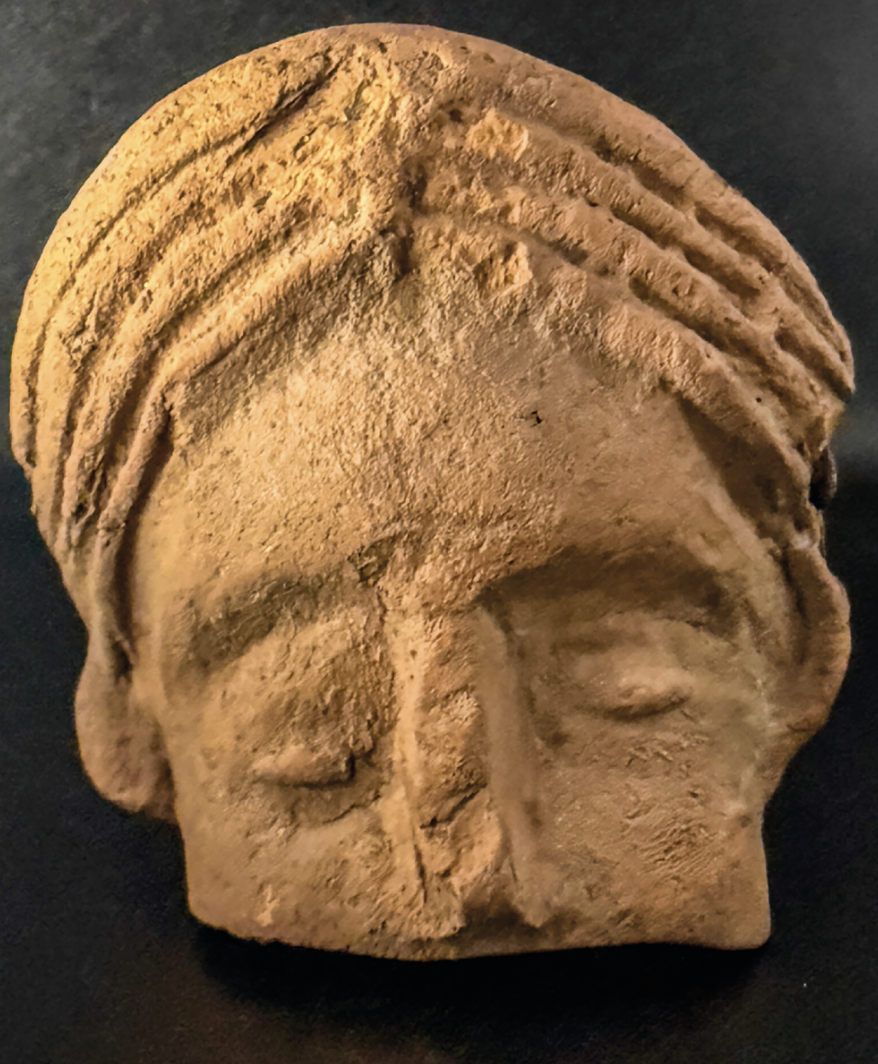
The terracotta head found at Magna
First published in edition 211 of The Northumbrian, April/May 2026
A tiny terracotta head found at Magna Roman Fort inspires John Grundy to consider how women, from goddesses to fishwives, have been portrayed across Northumberland’s past
Back in February I was tickled to come across an article on the BBC News website entitled A wonderful Roman terracotta head found during dig. It was found at Magna, formerly known as Carvoran, the Roman fort near Greenhead in the Tyne Valley, and where the recently discovered head is, I believe, now on display, or soon will be.
It’s not a big head; in fact, as heads go it’s quite titchy, about 3 inches high, and it appears to be either a copy or a trial-run for a similar piece found a few years ago at Vindolanda and now on show at the Great North Museum, Newcastle. Rachel Frame, an archaeologist on the Magna dig, said she thought it “. . . is a locally made copy of the earlier example,” while historian Lindsay Allason-Jones suggested it was “. . . a practice piece made by an inexpert hand.”
Copy, practice piece, inexpert hand or whatever, I like it and would have been blown away if it had emerged into my hands after more than 2,000 years in the Northumbrian soil. It was made c.100AD, shortly after the Romans arrived and before Hadrian’s Wall was built. Magna protected the Stanegate, the Roman road connecting Corbridge with Carlisle.
When you imagine invasions and army camps on the edge of unconquered wildernesses with nothing but hordes of hairy Scots out to biff you, you may not imagine that women were part of the picture, but they were. The Vindolanda writing tablets reveal women doing what they have always done, if it’s not a sexist thing to say; being mothers and social organisers. One wrote to her son, a soldier at Vindolanda, hoping he was well, enjoying army life, and, knowing how useless men are at looking after themselves, enclosing a few pairs of underpants to keep him warm in the ghastly Northumbrian weather.
Probably the most famous of the letters, certainly the most touching, was written by a commander’s wife, Claudia Severus. She invites Lepidina, wife of Cerialis, Vindolanda’s commander, to her birthday party: “I give you a warm invitation to make the day more enjoyable for me by your arrival,” she writes, adding, “my Aelius and my little son send him their greeting.”
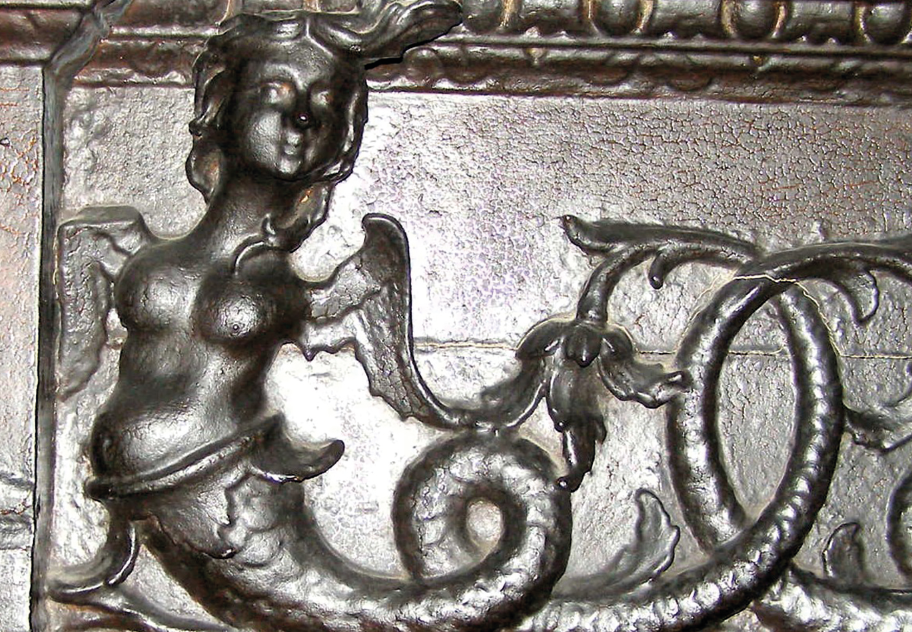
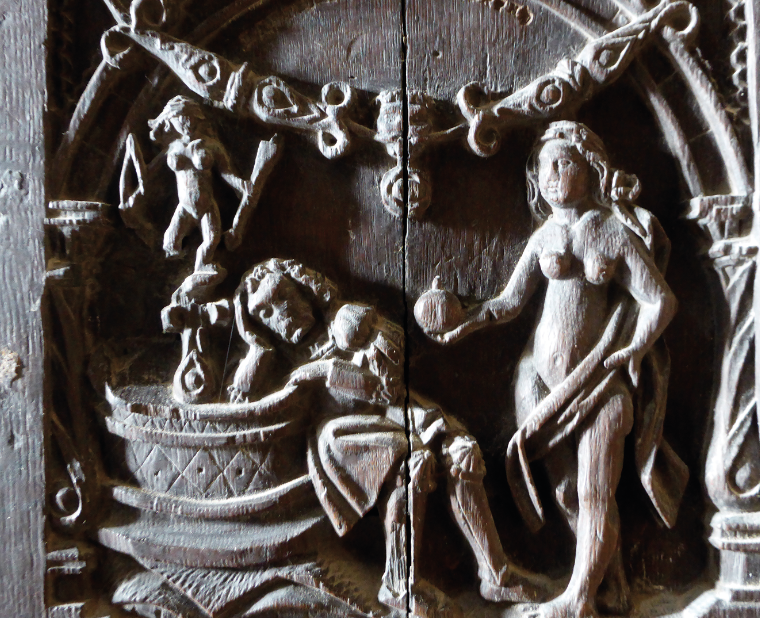
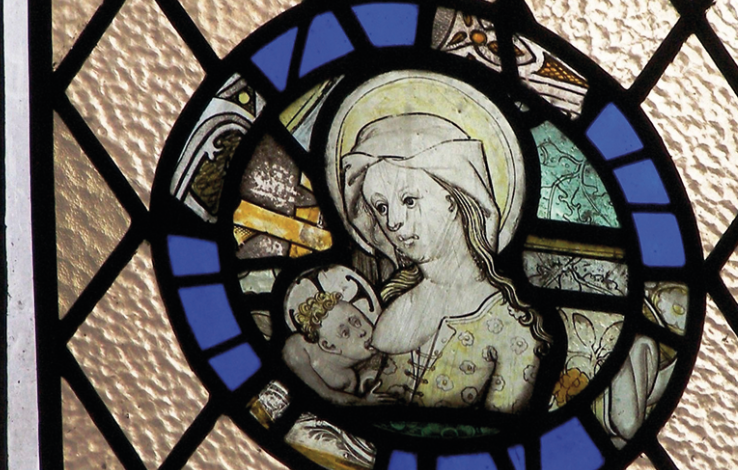
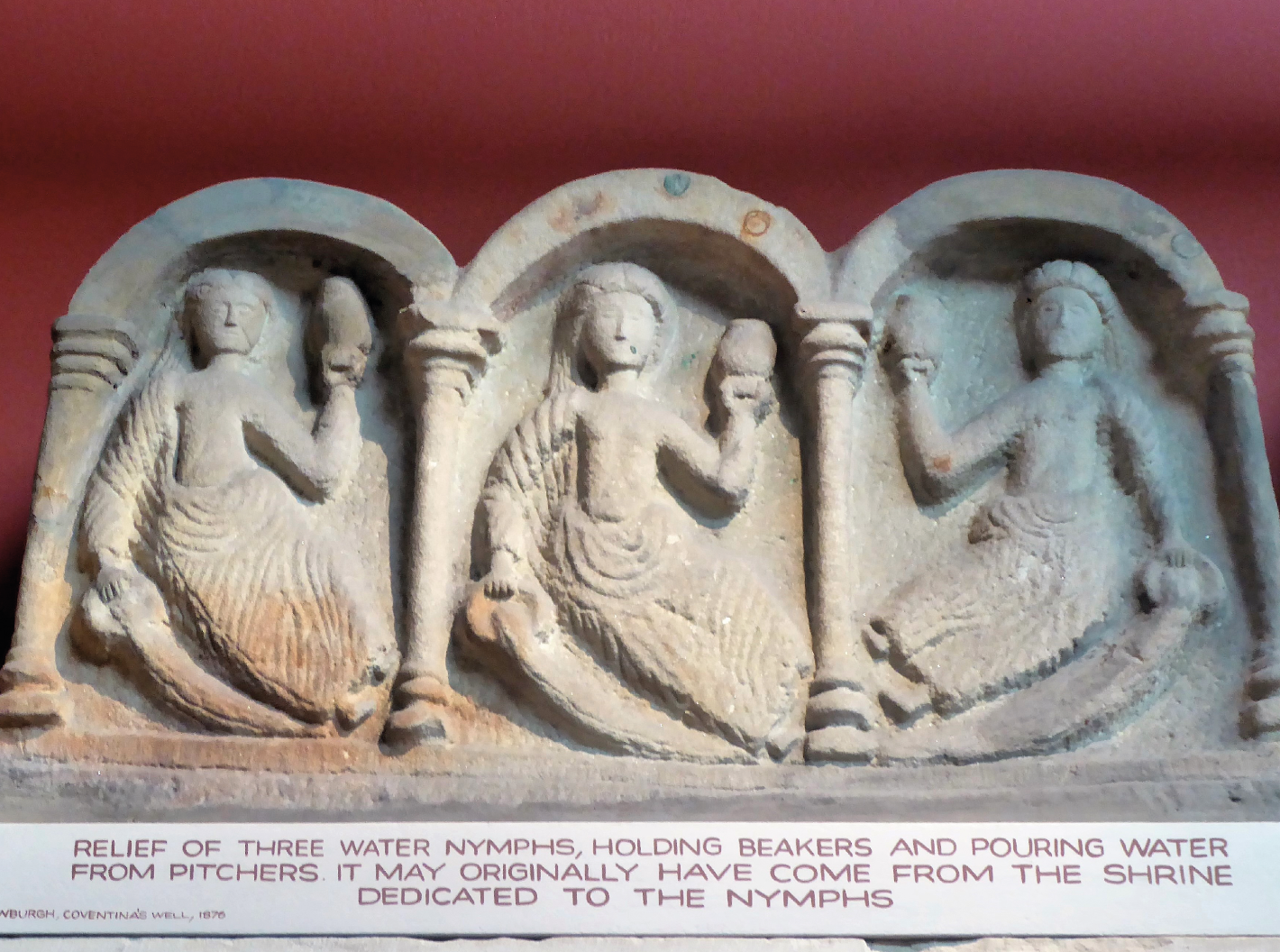
A Trinity House mermaid; Adam and Eve, Hartburn Church; Madonna and Child, Newcastle Cathedral; Three Nymphs, Chesters
The Magna terracotta head depicts a young woman. She looks nice, with a neat, sophisticated hairstyle with a central parting and neat plaits either side. Because she’s a woman and a statue there tends to be an assumption, as Tom Burgess, author of the BBC article put it, that she is regal or a goddess. It seems likely; the only other local Roman depictions of women I can think of represent goddesses, notably a carved relief of three water nymphs at Chesters (above). Being nymphs, they are minor goddesses and pour beakers of presumably life-enhancing pure water. If only we had water nymphs today; they wouldn’t be putting up with the rampant pollution of our rivers. I imagine these three given new life as a logo for the Green Party. The carving is worn, so it’s difficult to be sure, but like our terracotta lady, they seem to be pretty girls with nice hairstyles, though they aren’t entirely accurate anatomically. The nymph on the right, for example, has tiny feet and very short legs; it’s also noticeable that they all have bare bosoms, with not a vest between them. I don’t know where to look.
You have to get used to that sort of thing with historic representations of the female form. At St Nicholas Cathedral in Newcastle, for example, there’s a fragment of 14th century stained glass depicting the Madonna and child (right). He’s not sitting decoratively on her knee but rather desperately sucking on her very exposed breast. There’s none of that sweetly coy hiding behind a blanket; this baby has slightly mad eyes and is really going at it, while his mother has a rather resigned and faraway look as if there were all sorts of other things she’d rather be doing – ironing perhaps, or meeting friends for coffee.
The other image that springs to mind is a little carved wooden panel at Hartburn church (right). Depicting Adam and Eve, it was probably made in the 1500s, perhaps the early 1600s. I love it for many reasons, mainly because it’s quite funny. It’s not going too far to say that it is wondrously badly carved and very revealing about attitudes to men’s and women’s bodies. This is because he’s dressed in full armour, lolling oddly against a barrel; she, on the other hand, is not fully dressed, in fact she isn’t dressed at all. She’s offering him the requisite apple, of course, and is starkers but for a casually draped scarf around her nether regions, while higher up, all is on display, if rather oddly shaped – a tempting sight, I might imagine, for many inquisitive young boys in times gone by.
Having once been just such a naughty little boy I could go on in this slightly salacious manner – but I won’t, save to recommend the beautifully carved early 18th century mermaids at Trinity House on Newcastle Quayside (above right). Because of their watery lifestyle, vests would be just an irritation, so they boldly and beautifully reveal all.
Elsewhere, the county abounds with beautiful images of fully dressed women. They are a tremendous group and I have written about many of them in this magazine. In 2021, for example, I wrote about the exquisite early 19th century statues by Francis Chantrey at Hartburn and Bamburgh churches. In other articles I have celebrated my favourite Percys, in particular the 1st Duchess of Northumberland and her characterful profile on the splendid Brizlee tower at Hulne Park, Alnwick. I might even have written about the paintings by the Marchioness of Waterford in the old schoolroom at Ford (top). Tenants from her estate were models, so you can be pretty confident the paintings depict real women.
In some examples, women are idealised, symbolic versions of real people. The Madonna and Child by the Pre-Raphaelite artist Henry Holiday at Hexham Abbey (opposite) might lack the realistic personality of the glass in Newcastle Cathedral, but she is lovely and so is her son; an almost symbolic image of perfect motherhood.
But just occasionally you come across pictures which break the mould. Down on the river bank immediately below Newcastle Cathedral, beside the Swing Bridge, is Newcastle’s former fish market, built in 1880. Its use is celebrated by a three statues on the roof (above left). Standing in the middle is magnificent Neptune with his trident (though he is wearing a surprisingly short skirt with wrinkly tights). He’s quite a conventional image for a public statue, while at his feet are two female figures which are a bit more unusual in public art and are wholly fitting for this hard-working city. They are fishwives; not especially pretty, not noticeably young, but definitely not comic or grotesque – just Geordie lasses hard at work, and in their quiet industry, they say more than any grand heroic figure ever could.
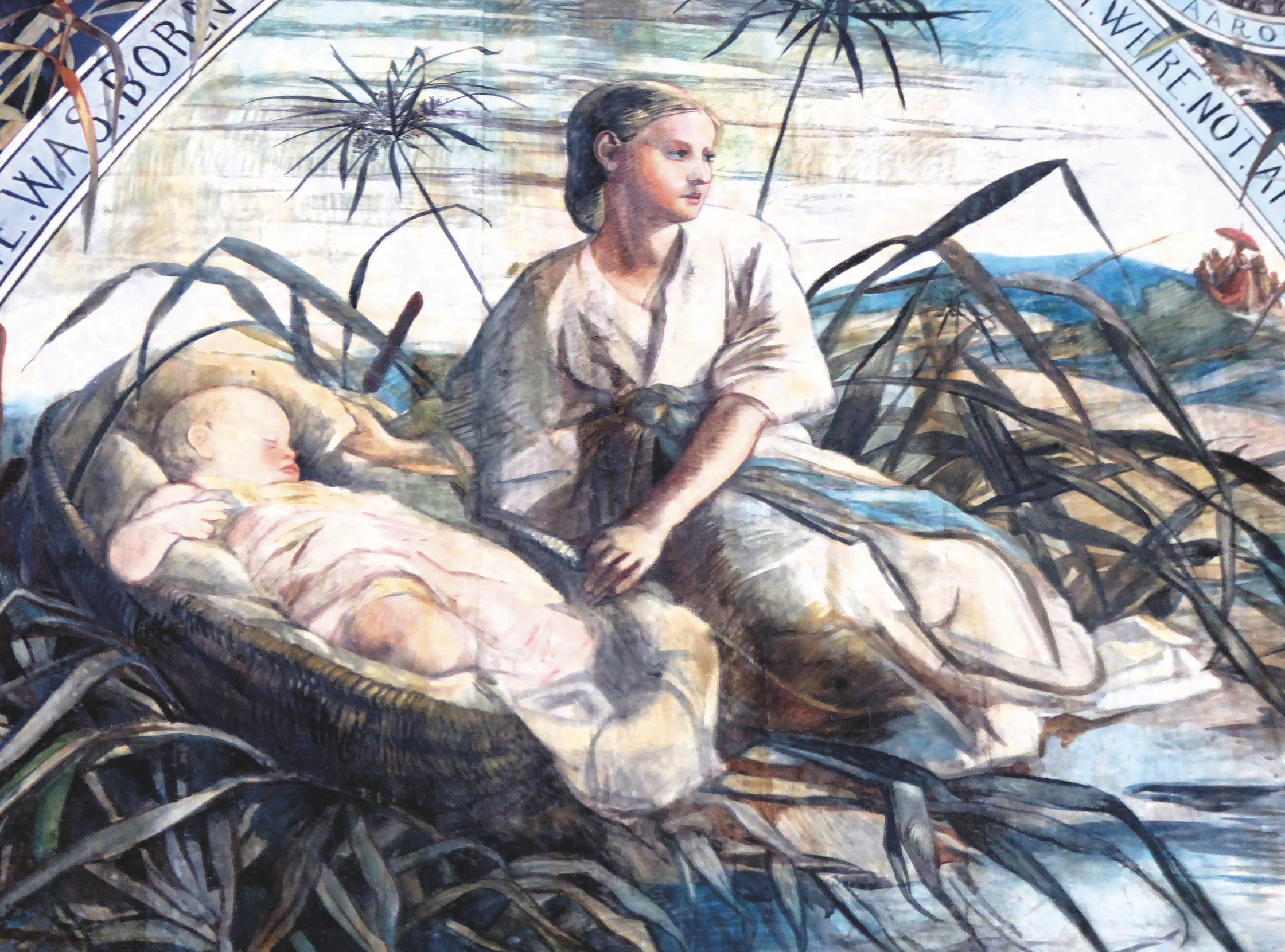
One of Lady Waterford’s paintings at Ford
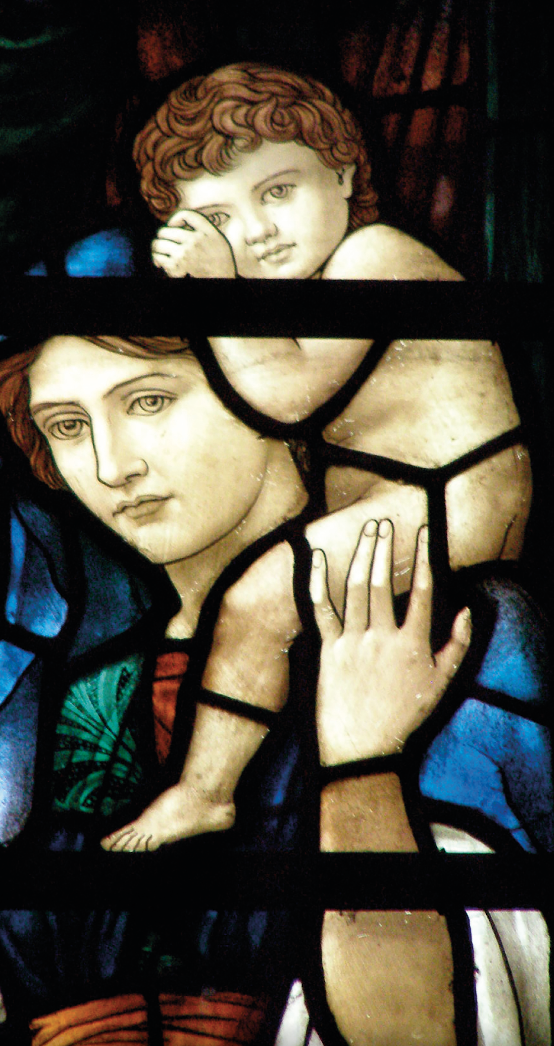
Madonna and Child, Hexham Abbey