

Sir Edward and Lady Dorothy Grey (by kind permission of Adrian Graves)
First published in edition 212 of The Northumbrian, June/July 2026
A century since Viscount Grey of Fallodon wrote the classic The Charm of Birds, Conor Mark Jameson remembers Grey the statesman and his beloved wife Dorothy, whose love of birds so inspired him
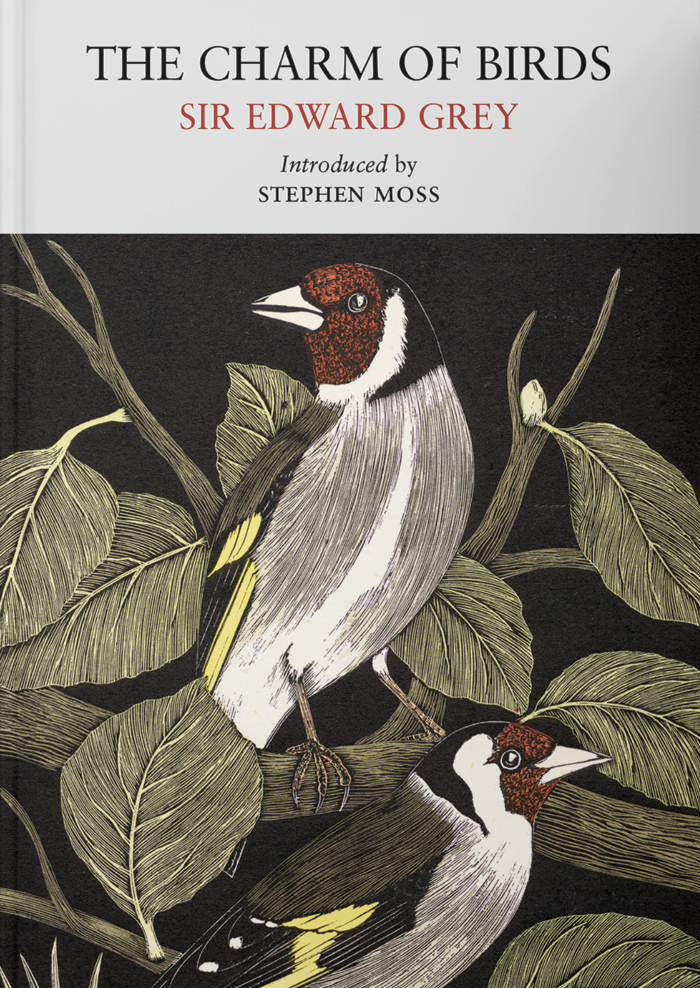
Viscount Grey of Fallodon warned readers in his preface that The Charm of Birds was “something modest”. The description was typical of his character, but readers loved the book, which sold in its thousands then and endures as a classic, often named, almost 100 years since it was published, on all-time favourite reading lists.
Edward Grey is a fascinating figure – yes, an aristocrat, but also an ornithologist, fisherman, highly accomplished sportsman, and a much-admired statesman, first elected Liberal MP for Berwickshire in 1887 aged just 23 – then the youngest member of the House of Commons.
Throughout subsequent decades of service to his country, most of them in high political office, he seemed to be perpetually caught between his profound sense of public duty and his deep-rooted instinct to exist as much as possible outdoors in nature – a calling which is to the fore in The Charm of Birds. His other great passions were fly-fishing and real tennis, at which he was Oxford University champion as a student and then British amateur champion, 1896.
Although he had always been an outdoors man and kept wildfowl at his Fallodon Estate near Alnwick, Grey came to the cause of wild bird protection a little later, finding a knowledgeable mentor in his first wife Dorothy. “I arrived at the age of manhood knowing only the songs of two birds,” he wrote. One of these was a robin, he said, before he progressed to distinguish between the voices of the blackbird and song thrush. His wife went on to teach him numerous more and most of what he knew.
Lady Grey, born Dorothy Widdrington in January 1865 at Newton Hall, Alnwick, was by location practically the girl next door and she and Grey were married on October 20, 1885, two years after he had inherited his title and estate from his grandfather. She was an active support to his burgeoning political career, backing his electoral campaigns, serving as president of the local Women’s Liberal Association, and an avid supporter of social reform movements.
The couple also kept a fishing cottage on the River Itchen in Hampshire – their bolthole from the pressures of London political life. It was an idyllic spot, the tin-roofed property festooned in roses and flowering climbers. Birdwatching there was rich, and they recorded shrikes, wrynecks, nightingales, kingfishers and cirl buntings nesting on or near the cottage. A diary they kept there provided much of the groundwork for The Charm of Birds.
Dorothy was the more knowledgeable of the two at that time, Edward writing in the diary in 1902: “I hardly dare write anything about birds, I am so overshadowed by D.”
The couple generously gave their friend, the internationally acclaimed naturalist and ornithologist WH Hudson, a set of keys to the cottage, where he wrote his 1903 classic Hampshire Days. It was dedicated to the Greys, who he described as “Northumbrians with Hampshire written in their hearts.”
Meanwhile, Grey’s political career flourished and in 1905 he was appointed Foreign Secretary in the Liberal Government. However, early in 1906, just a few weeks after her husband took high office, Lady Dorothy sustained a serious head injury in a fall from a carriage at Fallodon. Her husband was interrupted in a meeting at Westminster to be given the news. He rushed to be by Dorothy’s bedside, where she remained unconscious for several days. Their friend Hudson feared the worst, as he confided in a letter: “The last two days I have been miserably anxious about poor Lady Dorothy. Her death would be a frightful blow to him. . . No two that I have ever known were more like one.”
His fears proved founded, and Lady Dorothy died having never regained consciousness. “She was a glorious woman,” Hudson wrote. Sadly, the Greys’ cottage diary would see no more entries, and was privately published in a limited edition of just 20 copies to be gifted to close friends.
Grey might have been content to retreat in his grief to the countryside, but he was a popular MP and his electorate would have none of that. He went on to be re-elected several times and remains the longest continual serving Foreign Secretary in history (1905–1916).
He was occasionally able to combine work and pleasure, however, and famously in June 1910 he hosted former US President Theodore Roosevelt, who had left office the year before, for what became a widely documented birdwatching walk along the Itchen Valley near the Greys’ cottage. Roosevelt, an avid ornithologist, had requested an expert on English birdsong to accompany him to identify the birds they heard, and Grey was an able guide, naming all the species they heard that day.
However, dark days were on the horizon, and as June 1914 neared its end, news came that Archduke Franz Ferdinand and Princess Sophie had been shot dead in Sarajevo. Later that summer, Grey, looking out from his Westminster office above Birdcage Walk, made his now immortalised comment: “The lamps are going out all over Europe. We shall not see them lit again in our lifetime.” Thus began four traumatic years of conflict in Europe and beyond.
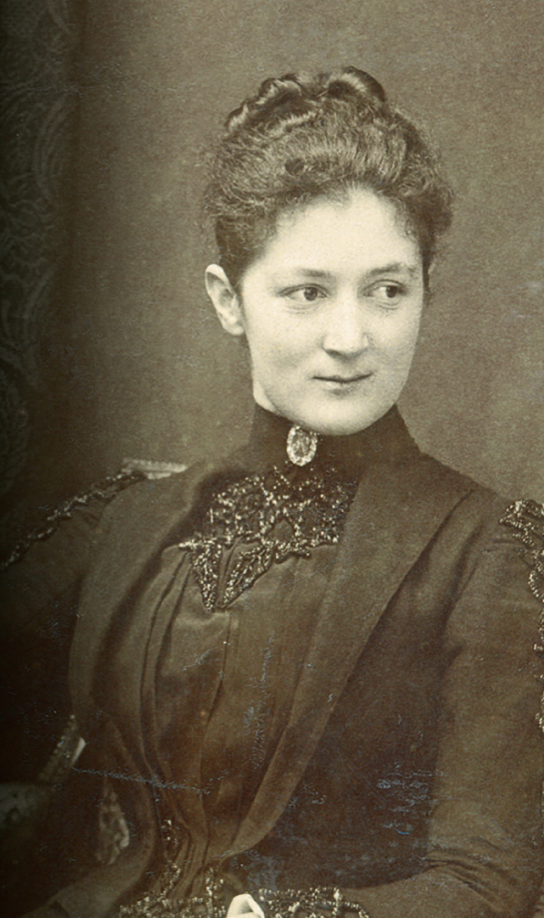
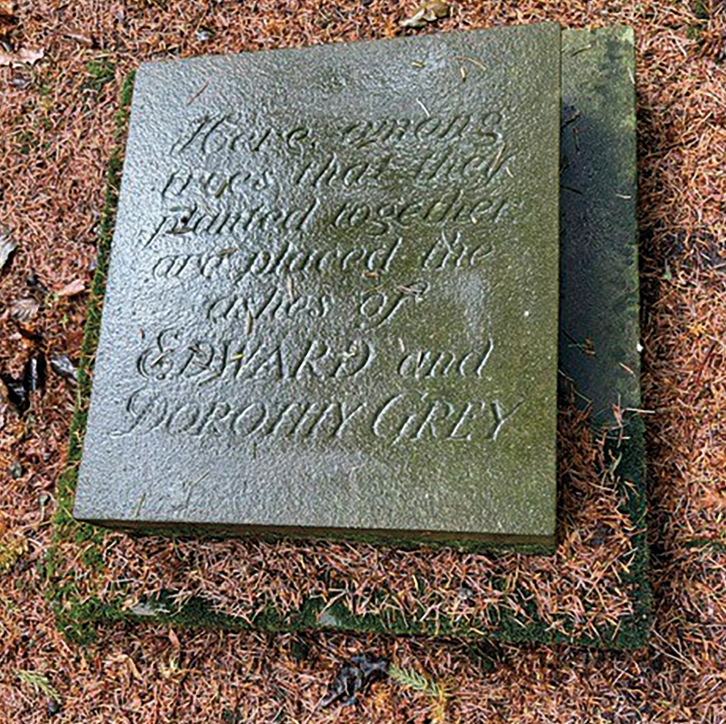
Lady Dorothy Grey (by kind permission of Adrian Graves); The memorial stone marking where Sir Edward and Lady Dorothy’s
ashes are interred at Fallodon (with thanks to Adrian Graves); The Charm of Birds by Sir Edward Grey
Two years into the war, Grey’s sight and health were failing owing to overwork and stress, while the death toll mounted on the Western Front. “Poor Grey,” Hudson wrote, “how I pity him in a darkened world when he wants to see so much. He feels it most in London.”
Grey stepped down from the Cabinet in 1916 and was appointed to the Lords as Viscount Grey of Fallodon. These were not easy times, but as ever, his solace came in the natural world. “It is difficult in these dark days not to become disheartened and discouraged,” he wrote to his sister in 1917. “I find that what helps me most is watching the stability of nature and the orderly procession of the seasons.”
But there was to be no retirement, and when the war ended Grey found himself in the thick of efforts to disentangle Europe and rebuild its ruins. He was appointed ambassador to the United States and in 1919 he embarked on an ambassadorial mission to bring the USA into the League of Nations, on which he believed the future stability of the world to depend. “I love the Americans,” he wrote. “I spoke at Harvard to a thousand people I’m told, I could hardly see them. About birds and so on.”
Alongside his diplomatic commitments, Grey continued to work for the cause of bird protection both at home and abroad. In 1921, the Home Office appointed the Wild Birds Advisory Committee for England and Wales with Grey as chair; part of a long process to establish effective laws to protect wild birds. The long-running plumage campaign had reached a successful conclusion and in 1922 Grey was present at a historic gathering of conservationists in London to launch what we know today as BirdLife International.
More sadness was to come, however, when in February 1923 Grey’s housekeeper went to the Itchen cottage only to find a smouldering heap of metal and glass. She sent a brief letter to Grey, which he read at his desk in Fallodon. “My Lord, what can I say to you?” she wrote. “I am sore vexed, but your pretty cottage is burnt to the ground. What will you say, my Lord?”
The Hampshire chapter of Grey’s life now firmly closed, he cherished his memories of Itchen and its birds. Now when writing, he would sit in his study at Fallodon, with red squirrels appearing at the window. “Have just had a long letter from Lord Grey about his blindness,” Hudson wrote. “He can’t read at all; he says he’s having my book [Far Away and Long Ago] read to him. He sees just well enough to walk and cycle but everything appears like a blurred photograph. He can also fish.”
Grey’s vision held up well enough for him to write the book, however, with the help of his second wife Lady Pamela Glenconner, whom he married in 1922. She was his reader, and he dedicates The Charm of Birds to her.
Grey passed away in September 1933. The Charm of Birds serves best as his epitaph, capturing the simple comfort, joy and inspiration this man, who carried the weight of so much responsibility, found in the natural world.
Conor Mark Jameson is a naturalist and author of books including Finding WH Hudson and Looking for the Goshawk, both published by Boomsbury. Conor’s book, Finding WH Hudson, brings to life the role of the Greys in early conservation campaigning.
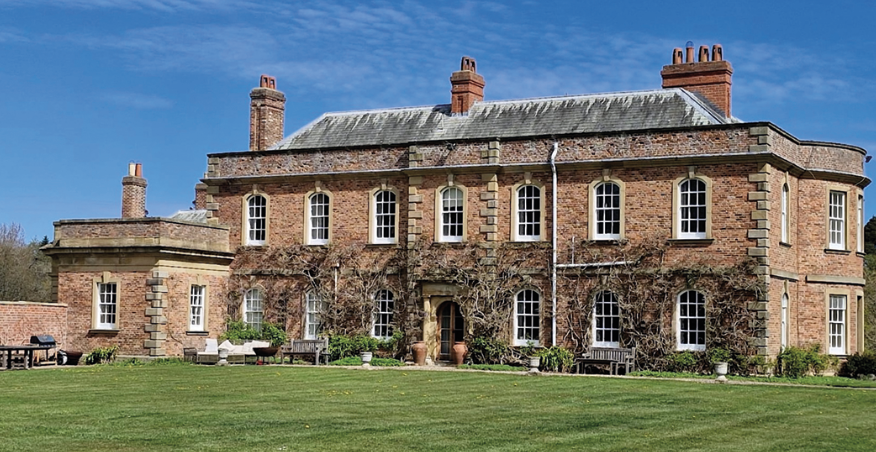
Fallodon Hall