
Village people
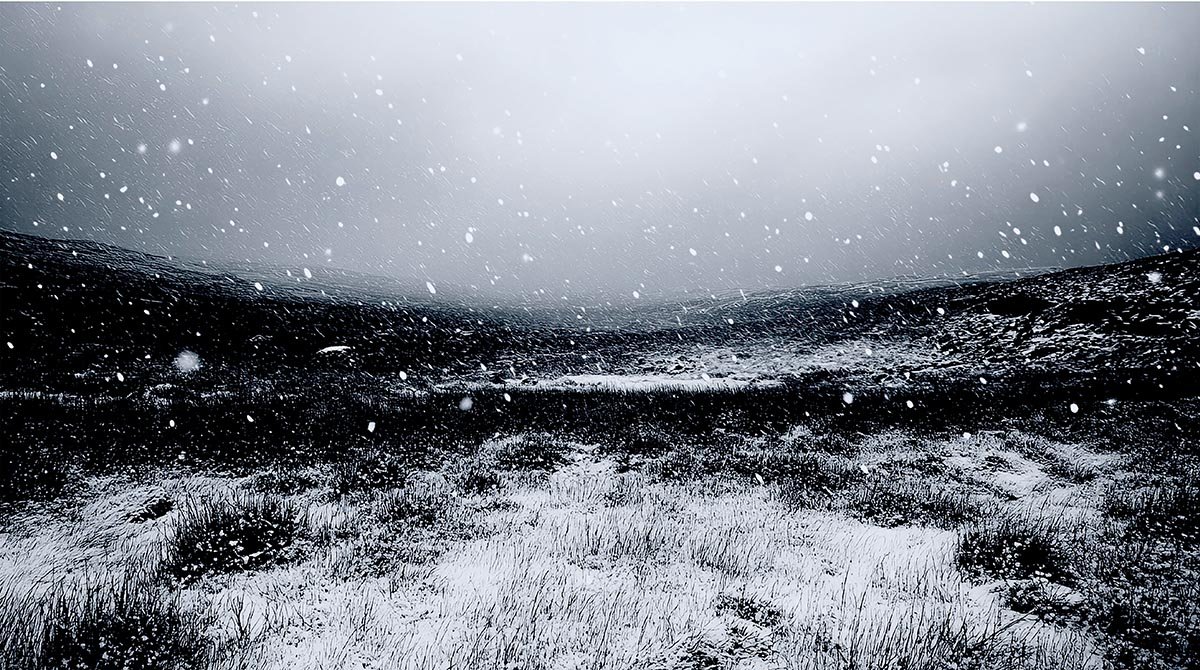
Goodness knows what poor nurse Nellie endured on her last night out on the moor in the snow
First published in edition 207 of The Northumbrian, Aug/Sept 2025
Margaret McAllister recounts the stories of deaths in the snow and more curiosities from the village of Whittingham, which is small, but mighty in stories
Not long ago, a reader of The Northumbrian asked about a 19th century nurse who died tragically on her way home from tending to a patient. I recalled Helen Dinsdale, former churchwarden at Whittingham, telling me this story, so I asked her to remind me of it. It turns out that Whittingham, which sits comfortably in the Aln Valley, is full of stories, so Helen and I arranged to meet in St Bartholomew’s churchyard to talk about them. We started with the nurse, Nellie Heron, by her gravestone.
In 1863, Nellie (Eleanor) was 50 years old, resilient and hard-working, and a nurse and midwife around the local villages. She was married to a shepherd and had 10 children. On December 3 she had been in Alnham caring for a sick shepherd, and left at about 3pm to walk the 5 miles home to Hartside. Snow was falling, daylight was fading, and the way led across a bleak moorland with nowhere to take shelter, but Nellie knew the way and was determined to get home.
Seeing her go, a neighbour ran out and implored her to stay the night. The vicar, too, asked to persuade her, hurried into the snow and begged Nellie to stay at the pele tower vicarage, but she refused. Singing a hymn, her shawl around her shoulders, a basket and stout walking stick in her hands, she strode away uphill across the moors and into a blizzard.
Helen took me to Alnham and showed me the route Nellie would have taken up to the wide, exposed moorland. It would be demanding at the best of times, and on that December night unspeakably harsh. Nellie never reached home. Her frozen body was found about halfway to Hartside, seated, her basket on the ground beside her and her stick across her knees. It seems she had stopped near the path for a rest and died from hypothermia. A stone marks the spot in Shiel Bog at OS NT 979 136, but it is difficult to find.
Only about a mile away there was another tragedy on the moor in November 1962. Shepherds Jock Scott and Willie Middlemas tried to get home from the market at Rothbury in a blizzard. In worsening conditions, they hoped to get the tractor to the farmhouse at Ewartly Shank. There was no great panic when they failed to arrive home, as their families assumed they had stayed elsewhere. Eventually, a search began, and they were found dead very near to home. This led to the establishment of the Northumberland National Park Mountain Rescue Team.
Looking at the landscape around Alnham I was struck by the unevenness of the ground. Helen told me it isn’t a natural feature, but the result of the pounding the land took from drovers herding animals across the moor, finding a route wherever they could and wearing down paths. Not for the faint-hearted.
Not all Whittingham’s stories are sad. This village is small but it has been punching above its weight since 883, according to the chronicler Symeon of Durham. Guthred, or Guthfrith, was a Viking nobleman sold into slavery and owned by a Whittingham widow. At a time when Northumbria was without a king, St Cuthbert appeared in a vision to Abbot Eadred of Carlisle, telling him to find Guthred, pay to free him and make him king. Let’s hope the widow of Whittingham got a decent price for him, as he held the kingdom together until his death in 895.
Speaking of Cuthbert, Bede tells us that he was taken from his quiet life on Inner Farne and in 684 appointed Bishop of Lindisfarne at a synod at a place called Twyford. Twyford is usually assumed to be Alnmouth, but this isn’t certain, and Whittingham is a strong contender.
David Dippie Dixon’s book Whittingham Vale details the prosperity of Whittingham when it was on the main north-south Edinburgh-London route. In Nellie’s time there were joiners, a shoemaker, grocers, tailors, a surgeon, a cooper, and a post office. There were stables where coachmen could change tired horses for fresh ones, and a blacksmith. The annual Bartholomew’s Day Fair on August 24 attracted market stalls, entertainers, and locals with money in their pockets and plans for a good day out. What could possibly go wrong? Quite a lot, as the drink flowed. And by the end of the day the prison, ‘The Kitty’, was full, and the army was boosted thanks to the local recruiting sergeant who got young men drunk enough to take the Queen’s Shilling.
Back in the churchyard, Nellie Heron lies in esteemed company. There is a plot occupied by members of Lord Alan Beith’s family, and a stone bearing the name Jean Elizabeth Leuckert. She is better known as the famed fashion designer Jean Muir, who lived nearby at Lorbottle Hall. There are more stories inside the church. This is a little jewel with Anglo-Saxon origins, though it has had rather less of the Anglo-Saxon about it since 1840, however, when the Rev’d Goodenough and his architect friend John Green blew up the Saxon tower and rebuilt it to their liking. Goodenough was popular among parishioners, however, and some of his alterations revealed a medieval piscina (priest’s washing bowl) set in a wall.
Of the many memorials in the church is one dedicated to Charles Ogilvy, who died in 1777 in his 32nd year. This marble slab lists his father, his mother and her worthy forebears. It notes that on August 24, 1777 he married his cousin, Miss M Maitland (it doesn’t give her first name), but that he died at Whittingham two weeks later, on his way to Scotland with his wife and, yes, his mother. This may have been a honeymoon, but mother came too. No prizes for guessing who paid for the memorial.
The church book stall occupies a flat wooden cart with large wheels – formerly the bier, or funeral cart, which carried the village dead. The eagle-shaped lectern is of interest, too. A church lectern often rests on the back of an eagle, but unusually, the Whittingham eagle turns its head to the left with a quizzical expression, as if something interesting is happening in the south transept. He’d be right, too – the church runs a café there every Thursday morning with delicious home baking.
To discover more, I recommend the book Whittingham Vale by Dippie Dixon, if you can find a copy (they’re as rare as sunshine on Cheviot). Helen also introduced me to Reflections - The Breamish Valley and Ingram by the late Sarah Wilson, published by Northern Heritage. I’m indebted to Sarah Dalrymple for her blog and her posts on www.geograph.org.uk, and to Helen herself. Finally, don’t take my word for it. Treat yourself to a day out in the Breamish valley. Admire the views. Dawdle around the village. Then step into Whittingham church and pay your respects to the redoubtable Nellie Heron.