
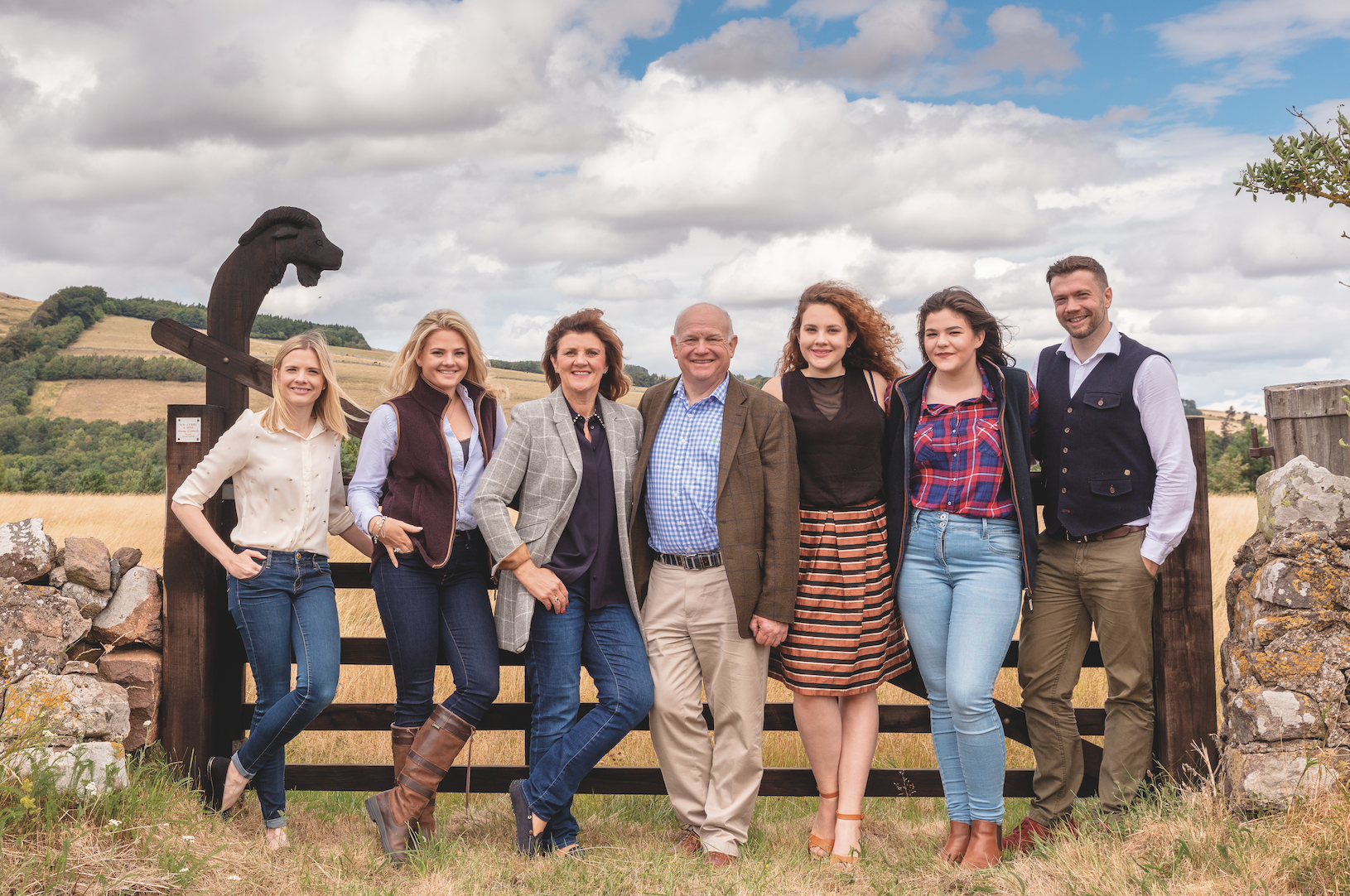
Eileen and Alan Ferguson with their children at the announcement of their vision for Ad Gefrin in 2018
First published in edition 212 of The Northumbrian, June/July 2026
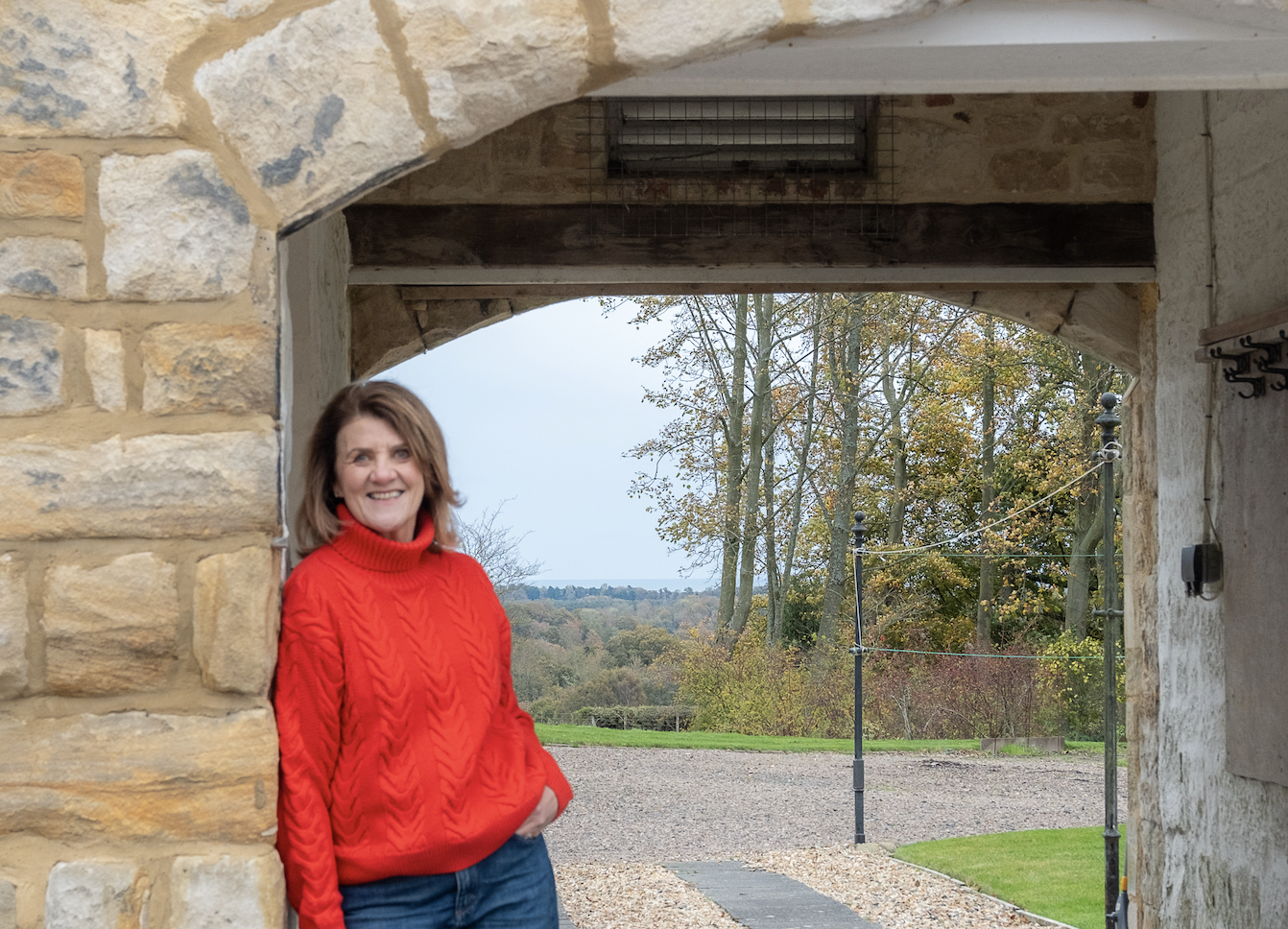
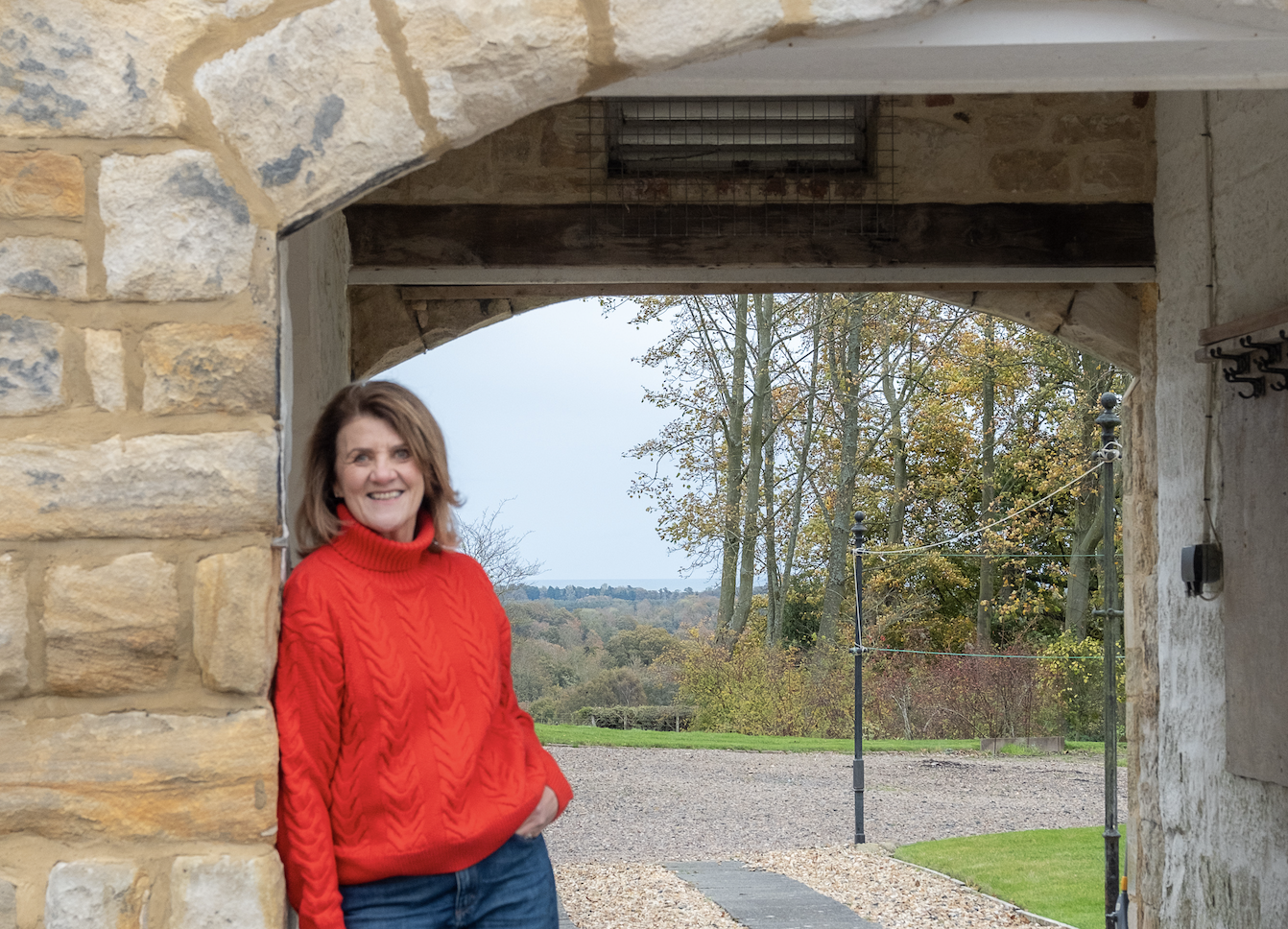
Jane Pikett meets Ad Gefrin co-founder Eileen Ferguson, whose vision for the distillery and Anglo-Saxon experience is rooted in the legacies left by the generations which have shaped Northumberland
There are places in Northumberland where time seems almost tangible, folded upon itself; where centuries feel less like distance and more like the layers beneath your feet. Glendale in northernmost Northumberland – a country of hills, moorland and weather-worn hillforts – is one of them.
The Cheviots rise over this land, broad-backed and watchful, while nearby Yeavering Bell has kept a vigil over Glendale for thousands of years. Beneath that hill, on land where sheep now graze, once lay one of the most important royal sites in Anglo-Saxon Britain: Ad Gefrin.
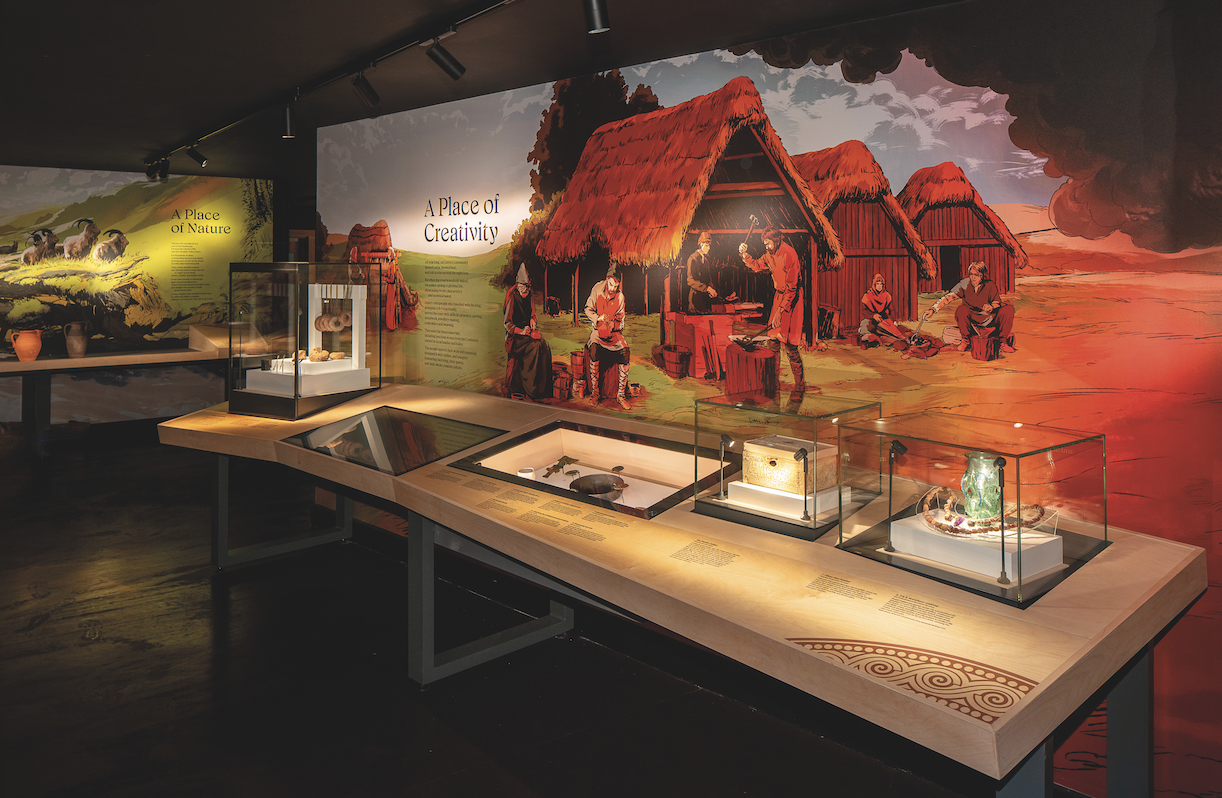
The extraordinary scale of the site only became clear through excavations in the 1940s and 1950s, revealing what had once been the court of Northumbria’s golden age. In his Ecclesiastical History of the English People, Bede records King Edwin holding court here, and Paulinus baptising converts in the River Glen. Saints and rulers walked here, shaping a vast realm that stretched from the Humber to the Forth; a centre of power, learning, and international trade.
Great halls stood at Yeavering, assemblies gathered, laws were made, and for a time, Northumbria stood at the heart of Britain’s story. Then, over centuries, that extraordinary chapter slipped into the shadows – well-known to historians and archaeologists, but often eclipsed in the popular mind by the Romans who came before and the Vikings who followed. That was until a deeply rooted Northumbrian family decided to bring it back into the light.
Eileen and Alan Ferguson are people of this place. Their families have been in Northumberland for generations – Eileen tracing her lineage back to the early 1500s and Alan’s family reaching into the 12th century. Farmers, shepherds, and in more recent generations hauliers through their family firms, Fergusons Transport and Redpath Bros, these are lives woven through the county.
So when the Fergusons founded Ad Gefrin at Wooler in 2023, they were not simply creating the whisky distillery and visitor destination that is here now. No, they were attempting something more ambitious: a place where Northumberland’s past, its present, and its future might meet.
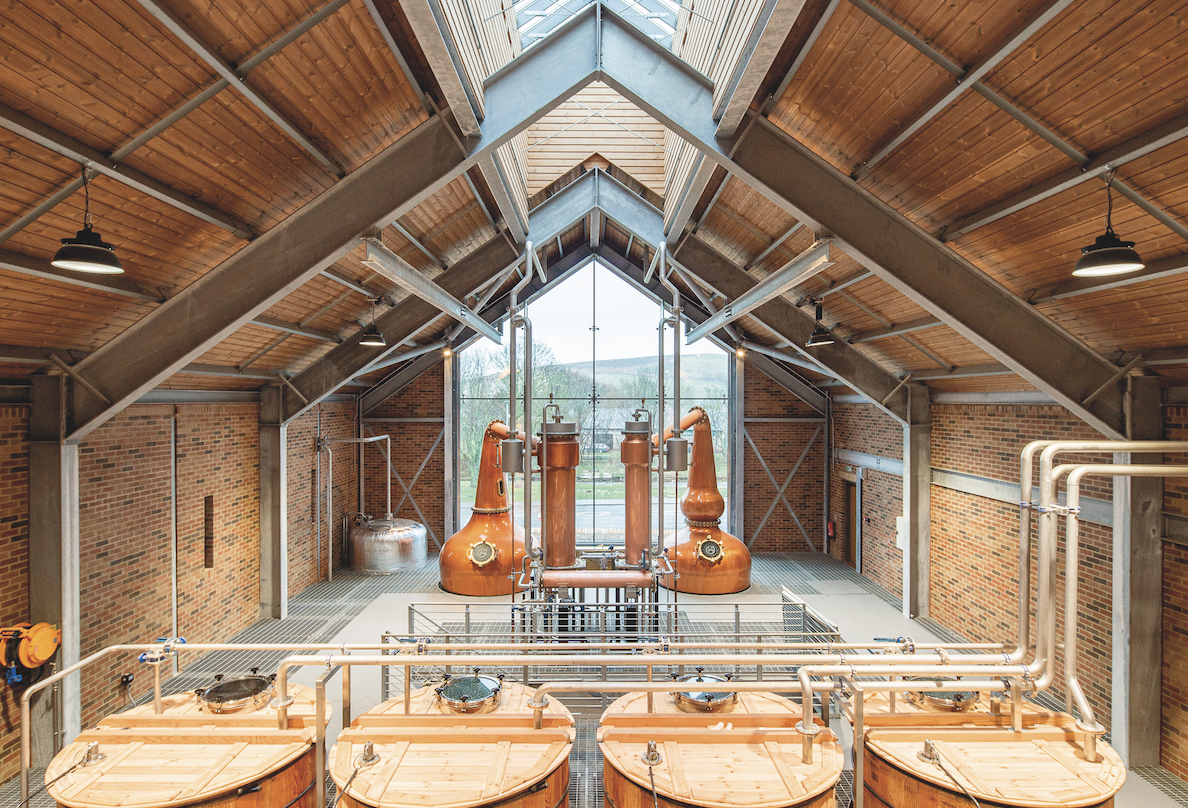
Part distillery, part museum and part gathering place, Ad Gefrin sits at the gateway to Wooler. Here, visitors are drawn into Northumbria’s golden age, alongside a contemporary whisky distillery producing spirits which carry the Ad Gefrin name, and with it something of the soul of Northumberland, far beyond the county.
People come here for the whisky, for the history, for the architecture; for the bistro, the shop, the experience. And at its heart remains a remarkably simple idea: to give voice to a chapter of Northumberland’s past Eileen felt had waited too long to be heard. “The Romans and Vikings get all the attention,” she says. “But what about the Anglo-Saxons? Their story isn’t told enough, but Northumbria was incredibly important. Bede wrote about them, so why wouldn’t we tell their story too?”
Fittingly, she decided to tell the story of this place not just through history, but through people, place and belonging. Because for her, Northumberland has never been just somewhere to live – it is who she is. Eileen speaks of the county not as a place, but as an inheritance. “It’s in our bones,” she says, and continuity matters deeply to her, perhaps because she grew up hearing stories of the women who came before. Not queens or famous names, but strong, practical women shaped by land, work and family. “Earthy women,” she says. “Working, practical northern women.”
She recalls a story her mother told, of Eileen’s great-grandmother at a graveside at Ford, pregnant and widowed, two small children beside her. Before that day she had already buried three infants, and now her husband, a shepherd, had died. Life might have collapsed around her, but she carried on. She took in washing, ground grain, worked relentlessly, and slowly rebuilt a future for her family. “I think if you need inspiration, go back into your family,” Eileen says, and listening to her, you sense that what she inherited from the women before her was determination, resilience, and Northumbrian grit.
Life, of course, eventually asks us whether the strengths we inherit are truly our own. For Eileen, that test came unexpectedly. Twenty-five years ago, shortly after the birth of her youngest child, she suffered a stroke caused by a previously undetected hole in her heart. There followed surgery and 18 months of specialist rehabilitation while young children and family life carried on around her.
One memory remains especially vivid. Before she went into hospital for a major operation, one of her young daughters asked her: “Mummy, are you definitely coming back?” Eileen pauses at the memory. “I said, ‘I don’t know’,” she remembers. “I couldn’t tell her a lie because if I’d said, ‘of course I’m coming back’ and died, she would never believe anything anyone ever said to her again.”
Faced with her own mortality while raising young children, she could have allowed the experience to define her. Instead, she did what the women before her had done – she set her face forward and ploughed on.
Years later, when Ad Gefrin was being built through Covid, labour shortages and spiralling costs, that same instinct would return. Construction began in 2021. Lockdowns disrupted schedules, workers disappeared into isolation. Then came war in Ukraine and the cost of steel soared. Budgets that had been carefully planned quickly became almost meaningless.
“You’ve committed, you’ve started, so you’ve got to continue,” Eileen says simply. “I thought at the time, well, we’ll get through this; we just need perseverance.” Compromise was never an option – they knew that projects like this often begin with great ambition before corners are cut as costs rise. She was determined that would not happen here. “If you build something, you build it to last,” she says. “I don’t think a job’s worth doing unless you do it properly.”
Ad Gefrin was never just about building a distillery; it was about creating something lasting – a home worthy of the place that had shaped it. “We wanted to do something good for north Northumberland. I thought, if I’m on this earth, and this is where I’ve been put, I want to make a difference. You have to bloom where you’re planted, and leave something good behind you.”
The site had belonged to Eileen’s family, the Redpaths, for a century, and had sat empty for some years. “We could have sold it twenty times over for houses which would doubtless be retirement or holiday homes,” she says, and she couldn’t bear the thought. “That would have been death for the community. No, I’d always known we could do something that would help to regenerate the area. It just took a while to realise what it was.”
An idea sparked years earlier on holidays in France lingered. There, Eileen and Alan enjoyed vineyard experiences where tastings, conversation and whole afternoons unfolded. “I used to say to Alan, ‘if only we could have a vineyard with a visitor attraction at home’, and every time he said, ‘Yes, but grapes don’t grow in Northumberland’.” So they looked instead at what was here; barley, good water, and Simpsons Malt – one of the biggest maltsters in Europe, down the road in Berwick. In other words, they had what they needed to make whisky. There was, however, one obvious complication. “We’re not distillers,” Eileen says, laughing. But the idea grew, and in 2018 they gathered their five children around the Easter Sunday lunch table and announced a plan. “We’ve got a business opportunity,” Eileen told them. “And it’s going to use up all your inheritance.” Then came the pause. “If one of you says no, we won’t do it.”
‘You’ve worked hard’, the children said, ‘so go ahead and spend it’. Then Eileen asked whether any of them wanted to join them. The eldest, Chris, spoke first. An archaeologist with an Oxford doctorate and a deep understanding of how people experience history, he became the bridge between family ambition and Northumbria’s deeper past. “He brought something nobody else could have brought,” Eileen says. “He had all the knowledge, all the contacts. He gave us credibility.”
It was Chris who helped to draw the ancient name Ad Gefrin – the Anglo-Saxon name for nearby Yeavering recorded by Bede – back into the light. Suddenly the project was more than a distillery; it was a means of reconnecting place, memory and identity. And so, the pieces began to come together. Whisky, history, hospitality – not just a museum or distillery, but something alive; somewhere past and present might sit comfortably alongside one another.
Today Ad Gefrin is one of the region’s most striking modern buildings. There is something of the great hall about it; a quiet nod to the Anglo-Saxon timber structures that once stood beneath Yeavering Bell. Grounded in the landscape, it feels both contemporary and ancient; a place of glass and timber, warmth and light, its clean lines softened by its sense of welcome.
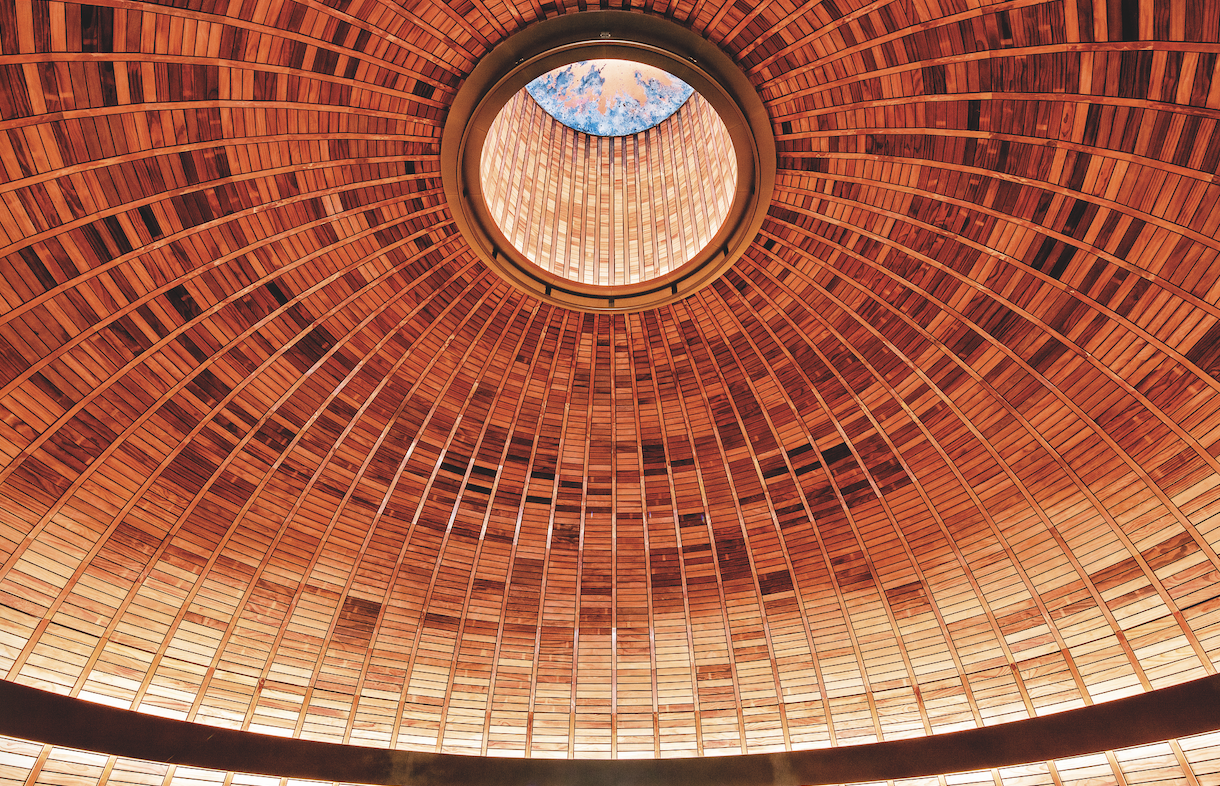
For Eileen, quality was never negotiable, because this was never a fleeting attraction or fashionable project. It was something she knew would endure; built by local tradespeople using local materials, worthy of both its purpose and the county that inspired it. That determination explains why visitors pause on entering the entrance hall and atrium – an awe-inspiring, light-filled space designed to evoke the interior of a massive oak whisky barrel and an Anglo-Saxon great hall. It features a soaring dome which embraces all who come here – the Northumbrian spirit in architectural form.
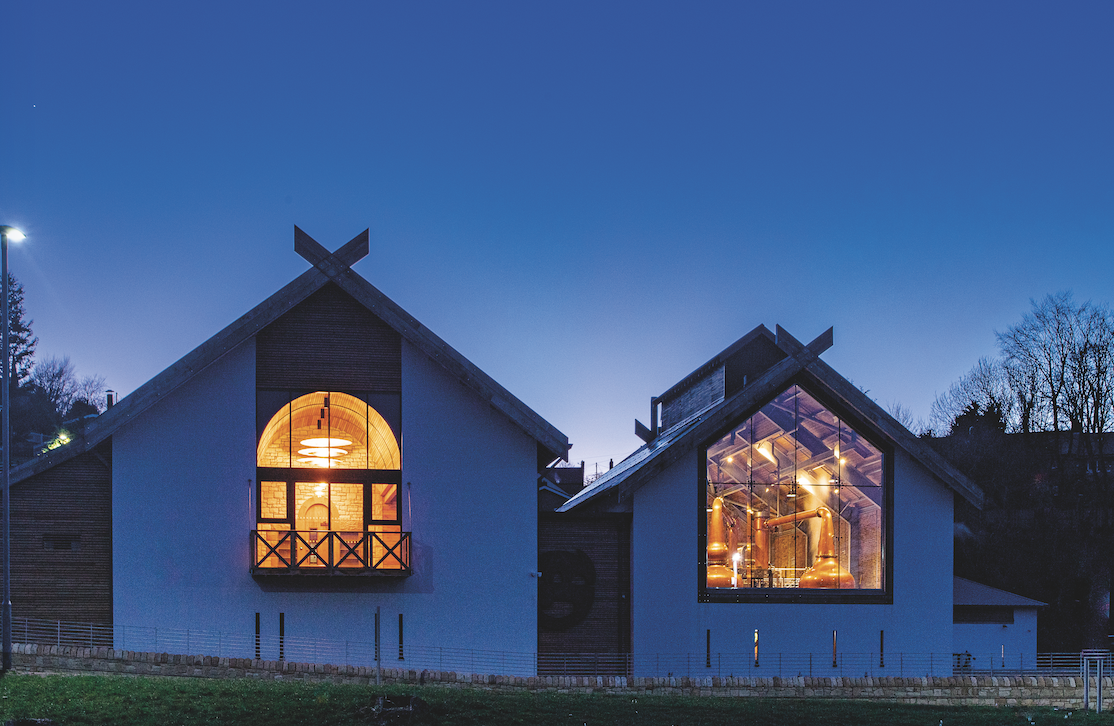
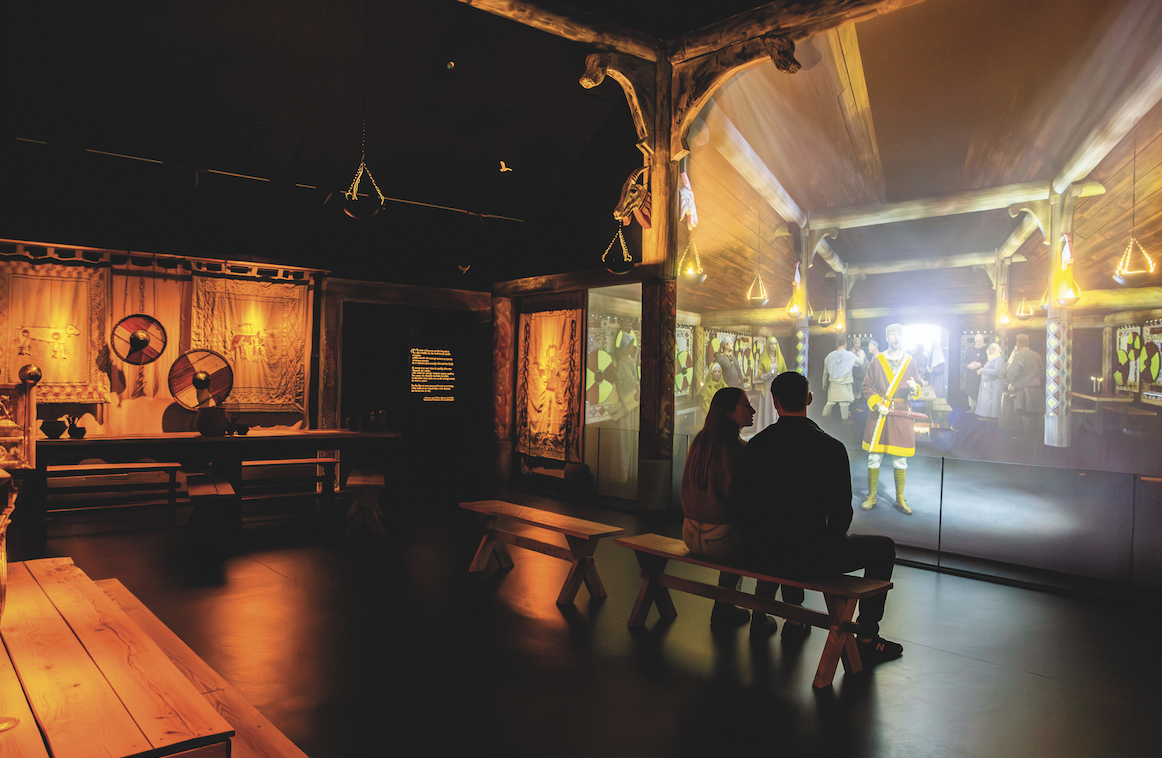
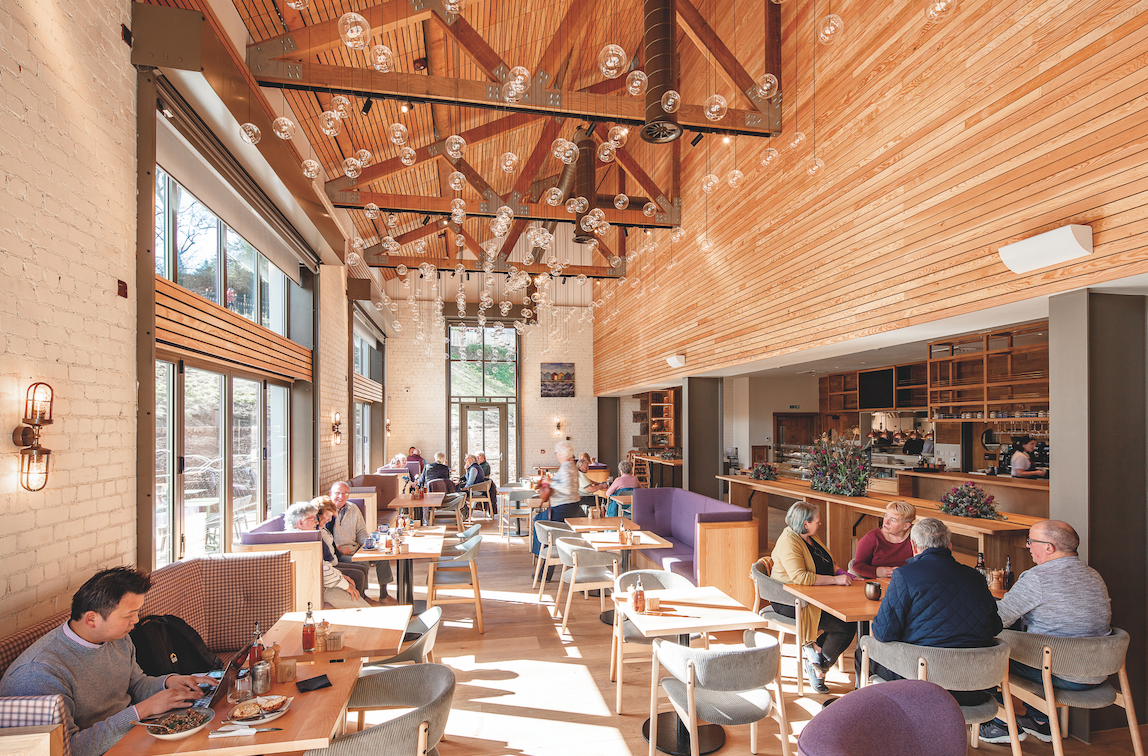
The building reveals itself in oak, stone and carefully considered detail, and feels at once contemporary and deeply connected to its past. Here, Northumbria’s golden age emerges through sound, image and atmosphere, drawing visitors into a world many may not know existed. Great halls rise again, voices echo, the lives of kings, saints and ordinary people feel less distant. Visitors emerge feeling not only informed, but transported into this land and its people. “It’s a living story,” Eileen says. “Because these were real people; people who helped to shape what we are now.”
Beyond the visitor experience, gleaming whisky stills rise behind glass, while the bistro is somewhere to linger – a place shaped by Northumbrian hospitality and warmth. Eileen talks about returning home from her student days in Edinburgh, where she trained as an accountant: “I used to love coming back because it was like stepping into a warm embrace,” she says. “You’d go to anyone’s house and there would always be time for a cup of tea.”
By her own description she is naturally quiet; more accustomed to being behind the scenes than in the spotlight. For years she saw herself as the support act alongside Alan, whose role in business placed him at the forefront. Ad Gefrin changed that. Suddenly, she found herself recognised; expected to speak, represent and lead. It did not come naturally. “I wake up sometimes and think I’m the wrong person for this,” she says. Yet somehow she discovered that perhaps she had been gathering the necessary skills all along. Slowly, reluctantly, the person happiest in the background became a public face of something she cares about deeply.
Today Ad Gefrin’s Tácnbora whisky blend and Flýte whisky cream spread the name Ad Gefrin beyond the county, while its flagship single malt takes its time to mature until the point, sometime in the future, it is ready. Tácnbora means “standard bearer” in Old English, so it leads the way. “One day, we want people all over the world to know the name, and when they choose a whisky, to say, ‘let’s have a glass of Ad Gefrin’,” says Eileen. Because for her, whisky is never just a drink; it is a means of carrying Northumberland into the world, an ambassador for a county she believes has remained overlooked for far too long.
Like the single malt maturing in the distillery’s casks, this will take time; time Eileen is happy to take, with a patience shaped by generations rather than years, in inheritance rather than milestones. “I want to leave a legacy; a legacy I won’t live to see, and that doesn’t matter, because the only thing that is important is that this place lives on.” Meanwhile, she speaks of Thursdays with her baby granddaughter Isabella, of adventures still to come, and the quiet joy of raising another generation. This, for her, isn’t about buildings or accolades; it’s about people, family and continuity. And through it all, her Christian faith daily reminds her, she says, that, “I just need strength for today and hope for tomorrow.”
And as for tomorrow, she says quietly: “If I can, I just want to leave the world a little better than I found it.”