
Cow whispering
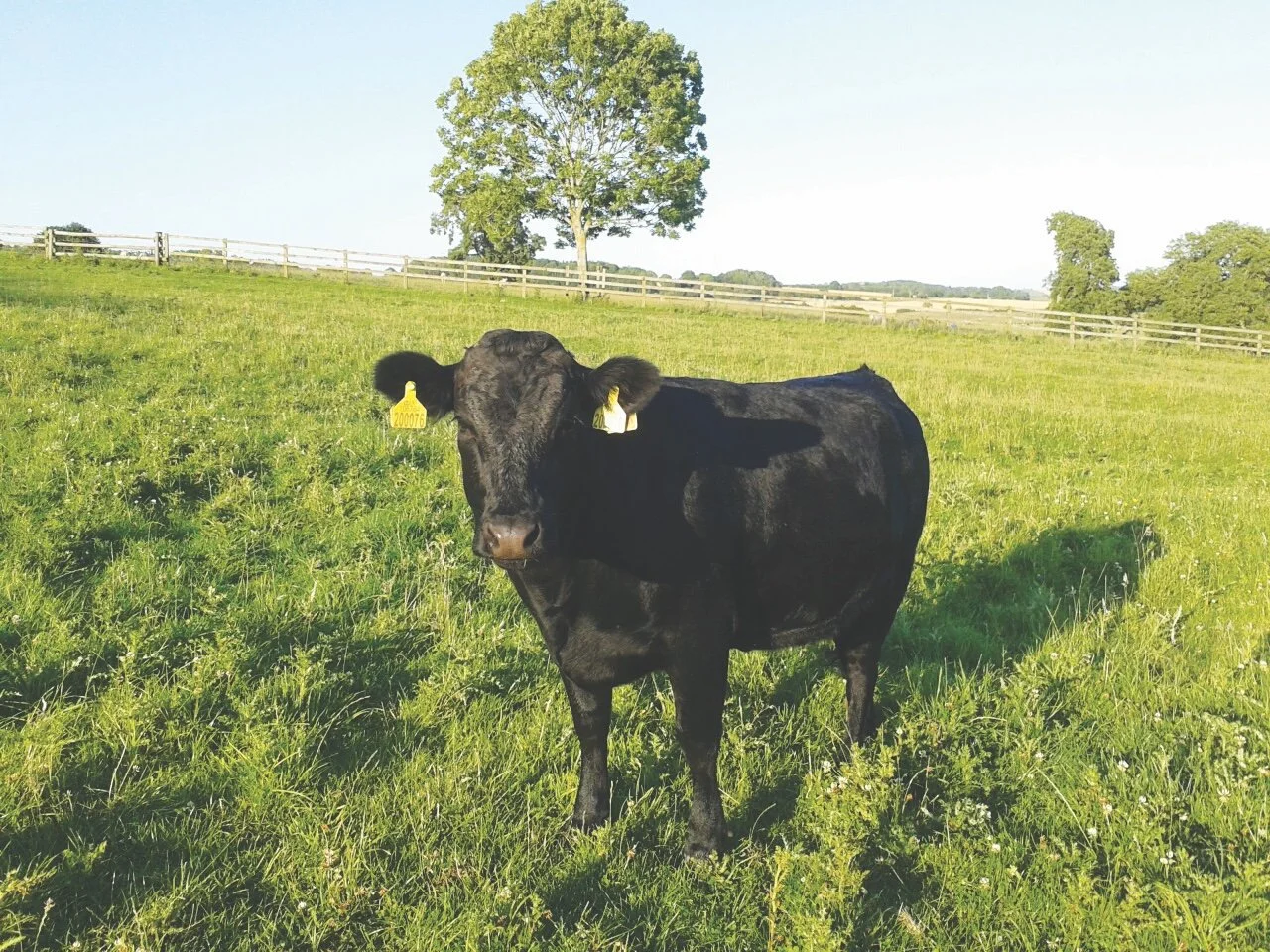
This week, Charlie is mostly conversing with cows
When I was at boarding school, my housemaster would gather us together at the end of each term to run through the notable events of the period. He would have a tear in his eye if we had won the house cup in the rugby (the hardest matches I have ever played in, and I was often left in tears of frustration on the pitch if we were defeated), and he would leave some space in his thoughts for the more unusual moments of the term.
Once he told us: “I was walking down the field at the back of the house and saw a herd of cows gathered by the wall. A boy seemed to be talking to them. It was Charlie Bennett. Deep mooing noises were being made by him and the cattle seemed to be enjoying the chat, with the odd moo and rumble coming back over the wall. I enquired what he was doing, and Charlie replied: ‘Talking to the cows, Sir,’ so I left him to it. The founders of this school [Oundle] said that every boy is good at something and it would appear that Charlie has found his forte.”
I had learnt from an early age that cows are not stupid, cud-chewing milk or beef machines, but intelligent, intriguing animals. Over time I have studied them, and whenever possible I still have a chat. Thus, I thought you might like a few tips in cow whispering.
Sadly, one sometimes reads about accidents with cattle, and I would say that many of these incidents may be prevented if folk understood how cows work. Cattle are herd animals and usually when you come across them, they will be in one of a few different kinds of mob: cows with calves, cows on their own, cows with calves and a bull, heifers (a cow that has not yet given birth to a calf), and bullocks (young castrated males). Each group has to be treated slightly differently, but a few essential tips before entering any field with them should help you find safe passage.
Cattle are particularly protective and if they feel you’re threatening their young, they will do something about it. So, if you encounter a field of cows with calves, stay as clear as possible. This is where a bit of cow whispering comes in. Cattle communicate with their ears. If a cow, bull or bullock looks at you with its ears pricked forward, it is interested in you. They are inquisitive animals, and I think they’re often bored. Generally, a cow looking at you with its ears pricked forward is okay. If, however, it starts revolving an ear, it’s time to back off because it is not happy. And if it starts pawing the ground, then definitely retreat.
This behaviour is often triggered by dogs. Dogs (wolves, as cows see them), are the cow’s natural predator. If you have a dog on a lead, you’re putting yourself in danger, because the cattle will want to move the dog off and you with it. So, if instructed to walk your dog on a lead, then stay well away from the herd. If they get too close for comfort, let the dog off and it will usually scarper with the cattle in pursuit. You can then retreat to a safe place and call your pet back. If your dog likes chasing things, don’t ever take it near cattle; it’s unfair on the cattle and on the farmer.
Other factors can rev cattle up. In mid-summer they can be plagued by flies. If they’re being badly bitten, they will start charging around the field with their tails up in the air. They have herd mentality, so once one gets its wind up, they will all tend to follow suit, and again, I would give them a wide berth.
It’s not all about keeping away, though. If the cows are calm like the ones on the Town Moor in Newcastle, you can be a bit braver. These cattle have seen everything: joggers, dogs, drunks, running drunk dogs, you name it. I tend to stand about 20ft from a small group and they will usually ignore me. But one might start sniffing the ground and look at me slowly, coming closer with ears pricked forward, in which case I will stand very still.
Have you ever swum with dolphins? I know, it’s a chilly experience if you find a pod at Boulmer, but I’ve done it in New Zealand with Dusky Dolphins. They will swim within 10cm of your body, so by keeping my arms at my sides, the dolphins would swim right up to my face. That’s quite unnerving, as they really look into your soul, and at the same time you can feel their clicks going through your body, so it feels as if they see you both inside and out. It’s an invigorating experience.
Cows are very similar. If you stand still, they will sniff you and often lick you. If they are very relaxed, you can sometimes scratch them between the ears, where their horns should be. I know they like this, as it’s a place they can’t easily get at. They may try to rub their head on you for this reason. If you don’t like it, just take a step back.
They don’t click like dolphins, but their moos are often a deep, loud note that can carry for long distances. This allows them to tell other cattle if there is danger about or to tell the farmer they’re hungry.
Does this have any practical use? I would say it does. In addition to understanding cow language, you need to know that they are usually led by a matriarch. If you get to know her and follow her lead combined with a bit of cow whispering, you can often get the herd to do your bidding without having a rodeo on your hands.
If her ears are going round like a helicopter and she’s charging about with her tail at 12 o’clock, then leave them be. But if she’s enjoying a scratch between the ears or on her rump, then she is content. Cows lick calves on their rumps to encourage them to suckle, and they never forget how nice this attention is. If this is all possible with her, then you are in with a chance of bringing her and the rest of the herd in for whatever job needs doing.
But it is not just handling cattle where you need to whisper. One summer evening I was fly fishing, casting a longer and longer line. Suddenly, my reel started to sing – I’d caught a Friesian cow on my back cast. It didn’t like a large mayfly in its neck (who would) and took off galumphing around the field. Her friends all joined in the fun. Eventually, it took me down to the backing on my reel and snapped the line.
“Eek,” I thought. “I’m going to have one unhappy farmer on my hands.” It was then that I remembered my schoolboy cow chat (here I should say that if you want to have a go at conversing with cattle, hold your nostrils closed between thumb and forefinger and say “merr” in your deepest, loudest voice. Cows love it) and I sat in the middle of the field crossed legged and started “merring”.
Shortly, I had all the cows jostling around me, including the one I had caught on my mayfly. However, she was still skittish and wouldn’t let me take the fly out. Reluctantly, I had to do the walk of shame to the farmhouse. A friendly face answered the door. “Catch oot, Charlie?” asked the farmer. “Er yes,” I replied. “It was this big” (holding my arms out as far as they would go) and another bottle of whisky was soon dispatched into the rural economy.
I hope this lesson in cow whispering has been useful. It will hopefully keep you safe on your wanderings through the fields. But more so, I hope you come to love a bit of cow conversation. They are wonderful creatures to be among and will add a new dimension to your life, especially if you are trying to shake off the stresses and strains of the daily grind.
“Merr . . . ”