
In the still of the night
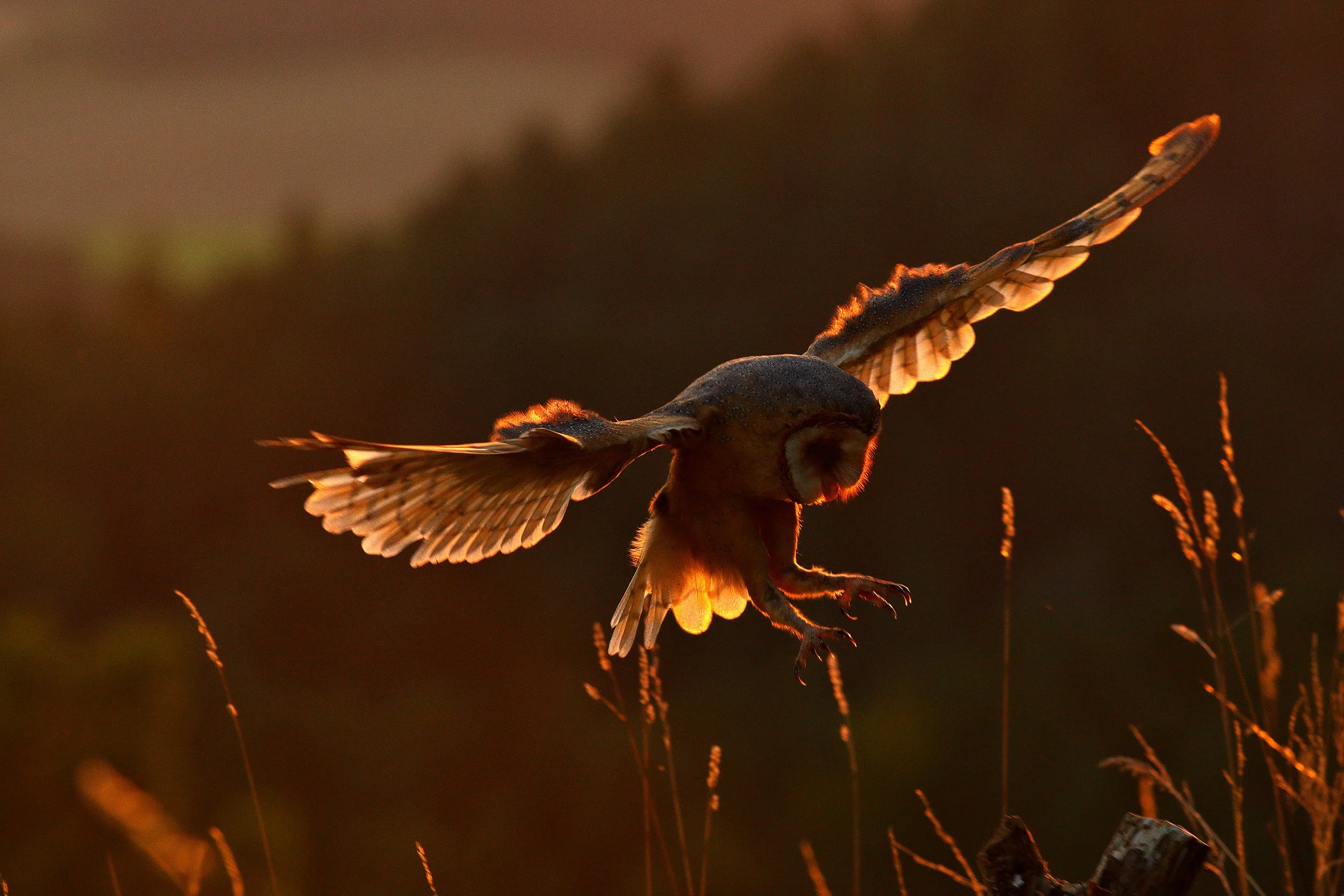
A barn owl at sunset
Northumberland Wildlife Trust chief executive MIKE PRATT reflects on the joy to be found in immersing oneself in the natural world
It felt like a cross between an evening stroll and a pilgrimage. There was a hushed silence, a sense of expectation. Not of anything specific, but somehow, in the tranquil atmosphere and golden evening light, anything seemed possible, so we watched and waited for the spectacle that would surely come.
It started one early June evening at Hauxley Nature Reserve as I led a walk and talk in and around the wildlife discovery centre. A group of about 15 had gathered and the idea was for me to read extracts from my book, reflecting on the wildlife we can still enjoy despite the undeniable loss of biodiversity and abundance of which we are all aware. Afterwards we would wander and wonder at the life around us as we immersed ourselves in the sights and sounds of Hauxley on a quiet and beautiful evening.
I began by reading an extract from my book describing thousands of painted lady butterflies that descended on this coast a couple of summers ago. The massive fall of so many in one go had tipped me into a state of almost ecstatic overload, and it felt surreal that day in the heat with all those insects.
I then reflected on a strange incident – one of many I’ve experienced over the years, when it seems as if my will to see some animal or other somehow manifests it. Usually of course, the reverse happens, for if we try too hard, we very often see nothing. But if we relax and let things come to us, we can be pleasantly surprised.
On this occasion, I had been keen to see foxes, having been reading a novel featuring a fox. Minutes after I finished the last page, put the book down on the car seat and jogged to the cliff edge path for some fresh air, I looked down into an old quarry and was astonished to see a fox which I then watched for an hour.
Odd and serendipitous things can happen in nature, with a certain sense of synergy and synchronicity about them. The more we are in the flow of nature the more this happens.
At Hauxley, after the readings we went out to explore. We stopped in several places, focusing on adopting a meditative pace and noticing our surroundings with all our senses; perhaps to connect with our inner hunter gatherer, seeking close encounters and impressions of whatever lived nearby.
We heard and saw many things, smelt the wild roses, felt the prickly viper’s bugloss, heard the loud proximity of blackcap and song thrush, noted the gracile sharpness of overflying terns.
As we approached the new hide at the south eastern corner of the site, I asked everyone to be extra slow and quiet, to carefully open the windows, relax and wait. Thus, there was a sense of entering a sacred space as we settled down. In Native American tradition, this is called ‘still hunting’, allowing things to come to you, to observe their habits and see what we might learn from other creatures.
I did this once more purposefully, on an RSPB reserve with a big group of birdwatchers, who snaked their way silently through a reedbed and ensconced themselves similarly in a hide as dusk approached.
As we settled quietly in twos and threes and then more, one after another, large raptors came in and circled over the reeds. Every so often one would close its wings and parachute angel-like into the roost below. In sequence, as many as 30 marsh and hen harriers folded like origami into the twilight, which had by now changed to copper and gold as the sun set. It was magical and later, as we filed out in the semi-dark, we felt as if we had taken part in a strange ritual. Indeed, we had.
I thought we could try something similar on this Northumbrian summer evening, just to see what, if anything, would reveal itself. Firstly, we noticed the quite ordinary and everyday, each person perhaps having their own unique view of what was of interest. And even little happenings seemed special in the moment; lapwings calling and displaying, oystercatchers tooting and squealing, a heron asleep in a tree gently adjusting its position. Swallows and martins whirring and dipping down to drink, the patterns of insects and birds on water and in the air, vegetation moving in a breeze.
After about 15 minutes sitting taking it all in, a white whisp of a barn owl glided in front of us. It was clutching something and flew into an owl box on the island across from us. After moments the owl came out and perched on the outside, before flying off and over the bushes, hunting the long grass for the next vole. It was a lovely surprise.
Then there was a flurry of movement and sound. Across the stream with its trees and bushes on both sides, the oystercatchers were calling manically and flying back and forth, dipping down at something we couldn’t see. Other birds were flushed from nests and bushes and a heron woke up and took off, its trailing feet only just clearing the trees.
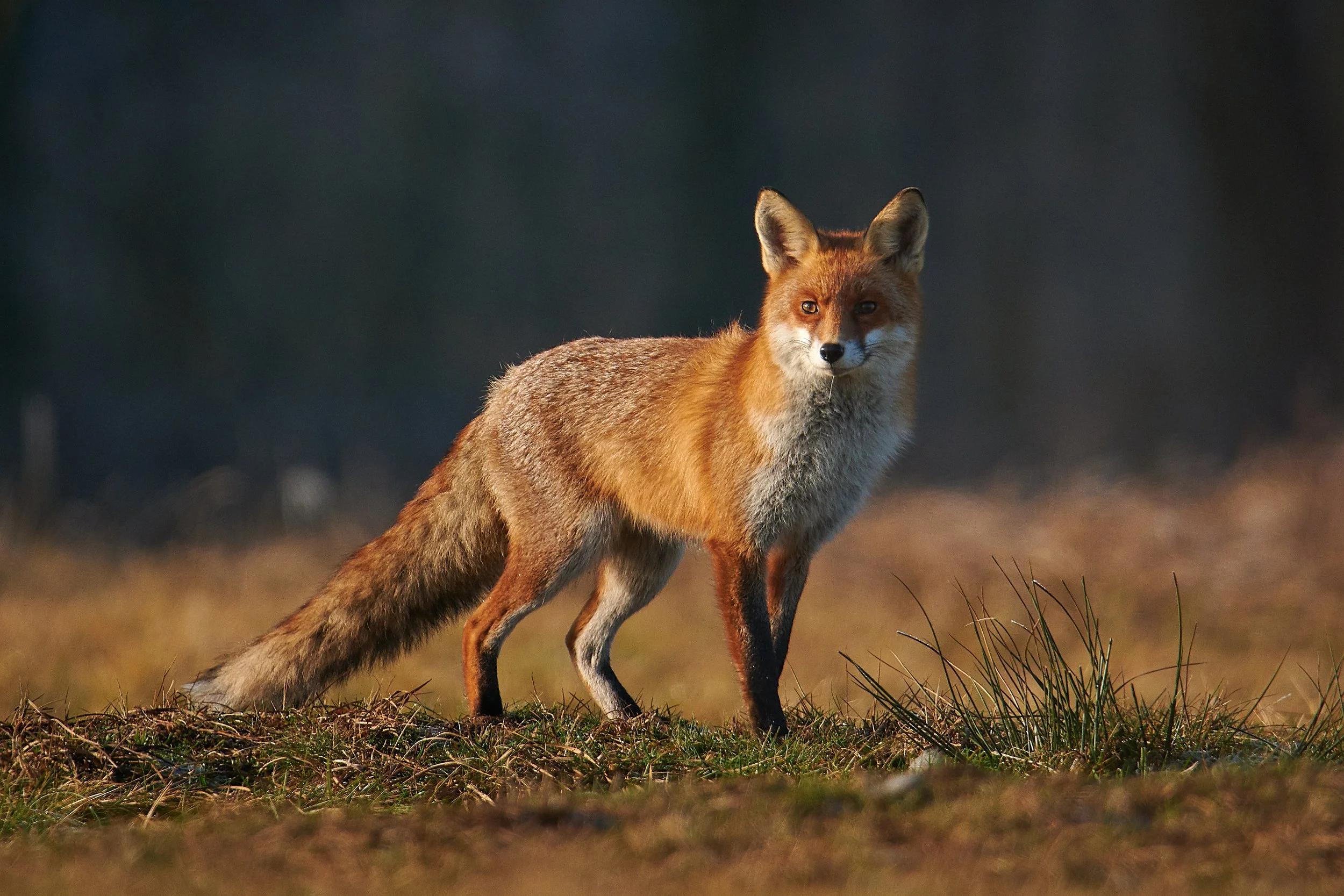
Then a fox was glimpsed between branches and we watched as a thin vixen emerged fully, seeming to bounce around, her brush pointing straight out behind for balance, trying to startle anything she could toward her hungry mouth. Probably, she had cubs somewhere. It was a dynamic and amazing little scene, elements of a local ecosystem interacting before us.
All of this reminded me that allowing nature to unfold around us, taking in its living dynamism, grounds us in the moment and in our lives, seeing how connected we still are to everything around us if only we let it in.
Many people don’t get the chance to find natural experiences like this. They live in places and circumstances where that isn’t easy and maybe have no habit or example of enjoying the outdoors, if indeed they have the time or opportunity. People in inner urban areas can live very de-natured lives.
So, one thing we are focusing on at Northumberland Wildlife Trust, more than ever, is to help young people, particularly in inner-city communities, to link with nature on their doorstep and, where we can, also with places like Hauxley and Northumberlandia – urban parks, green spaces and beyond, so that they too can have these wild chanced experiences.
Our Wild City programme in Newcastle is doing just that, and we have set up a Youth Forum to enable young people to lead on connecting new audiences with nature and wildlife. More so, we are helping groups and communities to explore for themselves.
For while nature can be magical, even a serene and spiritual experience and certainly a refilling one, however many events and activities we might provide, there is no substitute for just finding time and the means to immerse oneself in wildness for a while and just see what happens. We want to give people the skills, confidence and knowledge to do that. The resulting encounters are often memorable, as the examples here show, and can even be life and planet-changing. Hauxley and other sites we work on are truly centres, or pathways, towards deepening our experience and relationship with life as a whole.
Mike’s new book, Infinite Wonder, Loving Nature Back to Health, is available via Northumberland Wildlife Trust at www.nwt.org.uk at selected bookshops, and
via Mike’s own website: www. livingmindfullywild.com