
A village green
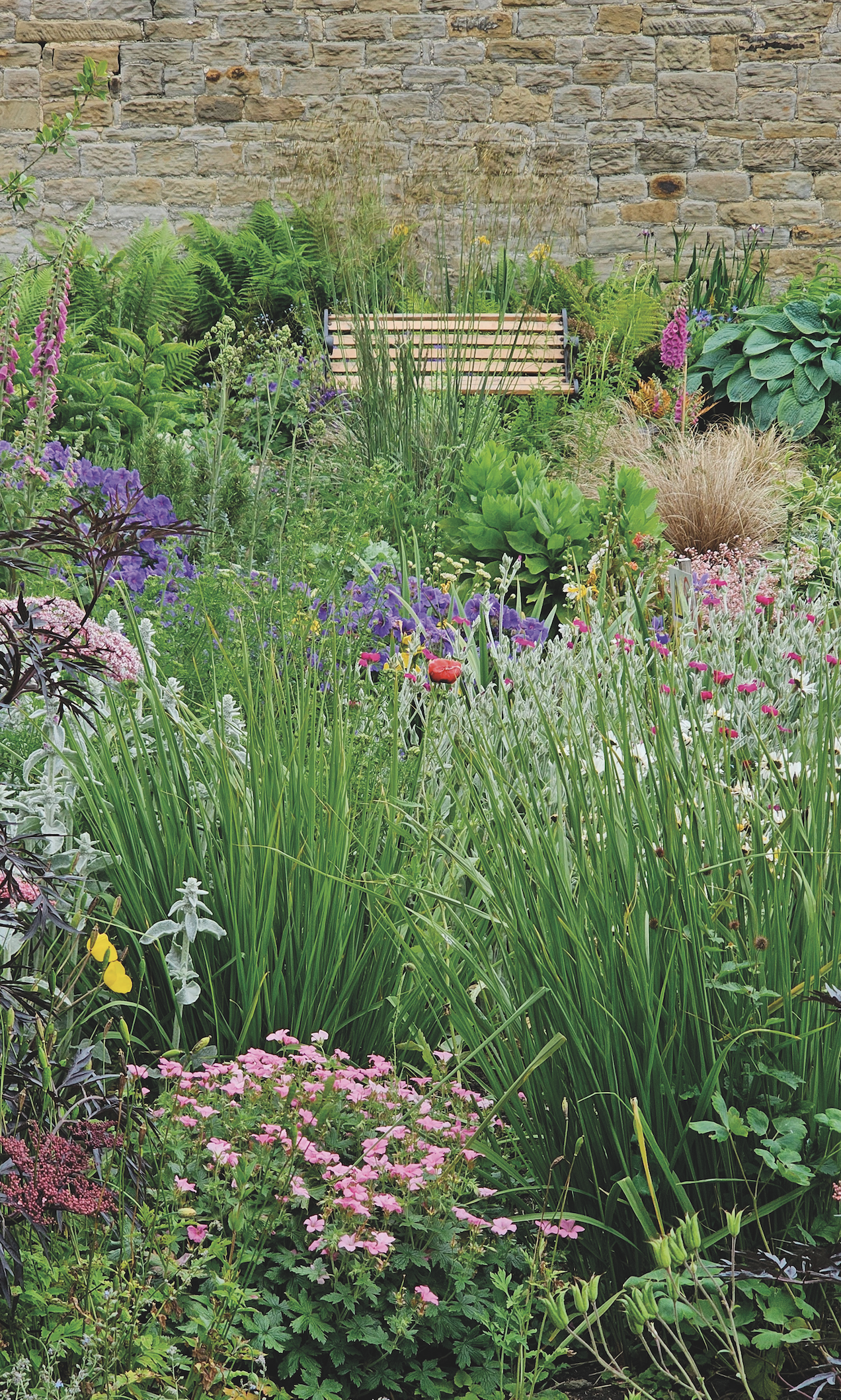
A lovely place to sit
First published in edition 207 of The Northumbrian, Aug/Sept 2025
Susie White visits the coastal village of Cresswell to explore a beautifully restored walled garden where colour abounds in a thriving community space
The village of Cresswell stands at the southern end of the sandy sweep of Druridge Bay. With its two caravan parks, café and ice cream shop, there’s plenty to attract visitors, including a recently restored 14th century pele tower and its adjacent walled garden. Both were on the Cresswell Hall estate, which was broken up and sold after the house was demolished in the 1930s. All that remains of the Hall is the skeleton of the stable block half lost in trees.
Crossing Cresswell village green, you enter the wood surrounding the pele tower. Rooks caw in the trees above and swallows sweep across the coastal fields. The shelter belt is underplanted with wildflowers: red campion, wood avens, buttercup and Jack by the hedge in spring, vipers bugloss and hogweed later on – all important plants for insect life.
The path leads to a small door in a very high wall – just the kind of doorway that entices you into a walled garden. Opening out before you is an unusually shaped space, a triangular garden protected from the salt-laden winds by 14ft high walls. Flower borders hug the walls and a curving path snakes across a central lawn, linking a wildlife pond and raised vegetable beds.
There is a large wooden gazebo, a place to sit whatever the weather, and three rose-covered pergolas span one of the long paths. There are benches everywhere, for this is a well-used community space where people chat over cups of tea, wander quietly or join in volunteer days.
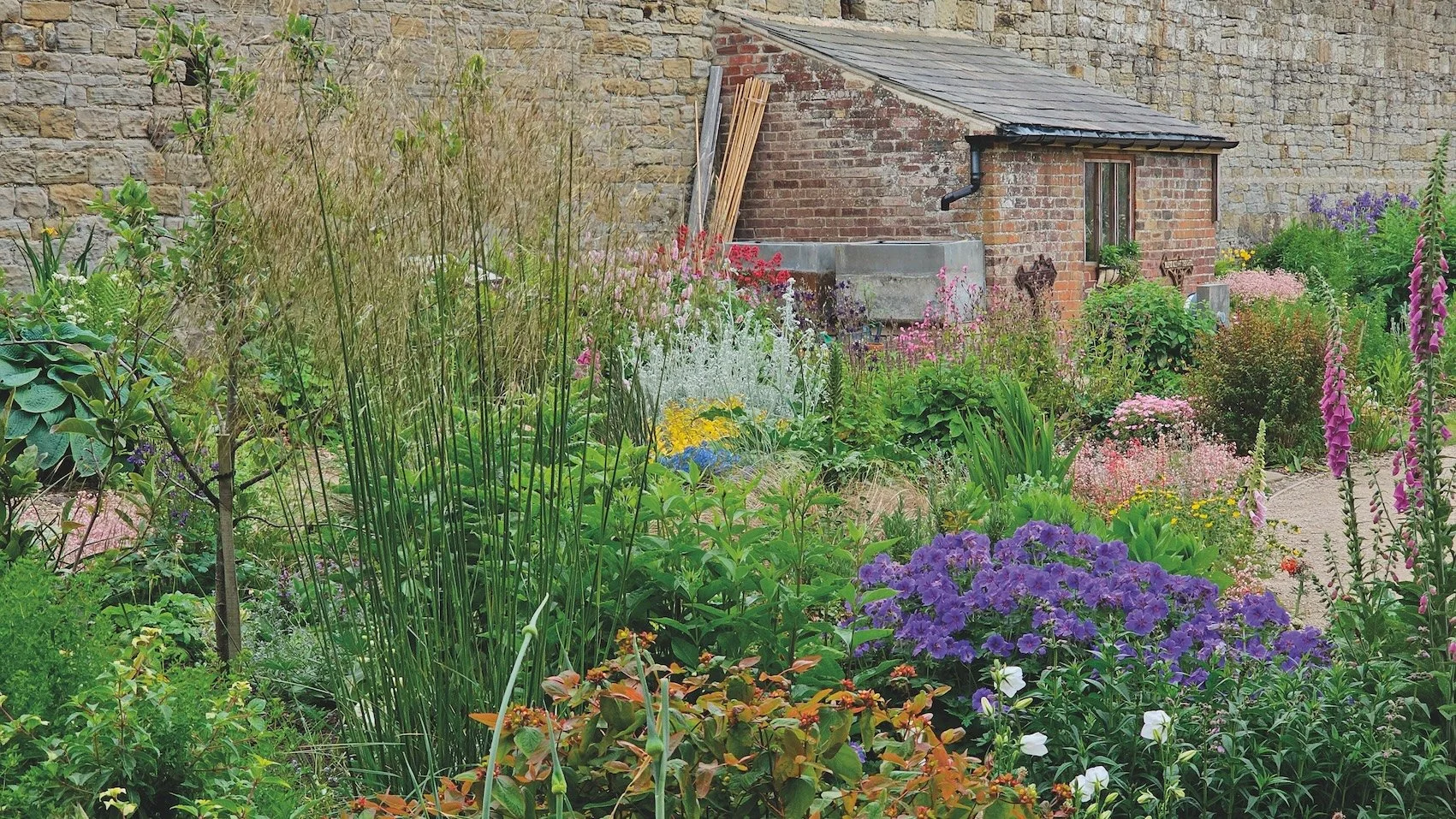
The potting shed, which was rebuilt by volunteers
Steve Lowe has been involved with the restoration project since 2016. “I took part in the initial archaeological digs before becoming the volunteer coordinator and events officer,” he says. “Basically, I’m responsible for everything, including fundraising and managing volunteers, though we all chat through garden decisions. The original prime mover was Barry Mead, who was named Community Archaeologist of the Year in 2019 for leading the restoration of the pele tower, which was paid for by the Heritage Lottery Fund.”
Formerly head of conservation at Northumberland Wildlife Trust, Steve manages the garden on organic lines. He set up a Green Gym with Newcastle Health Trust, which was especially valuable for outdoor work during lockdown. Volunteers, sometimes as many as nine of them, come two days a week. Some are local, some are from Morpeth or Ashington, and some have been here since the project started.
“It was a wilderness,” says Steve, “with head-high rosebay willowherb and an odd mixture of rubbish that included prams and a total of 207 bin lids! It was so bizarre that we started counting them. It was possibly from the time the council went over to wheelie bins. The volunteers worked incredibly hard to bring the garden back to life, clearing ivy from the woodland, digging brambles and weeds.”
There is evidence that the garden was originally rectangular and was reduced to a triangle to accommodate a long greenhouse on the outside of the south wall. It was all part of a 6 acre kitchen garden complex that produced food for the house and the estate.
Steve works 10 hours a week, paid for by donations and events ranging from samba bands and blues singers to plant sales and garden activities. The Living History group assists with events such as medieval fairs and World War II displays. There are also the proceeds from an excellent booklet about the garden written by Philip Hood and funded by the Heritage Lottery Fund, which funded the original landscaping.
People donated plants from their gardens and some unusual varieties came from a specialist nursery, Perennial Favourites, that was closing. The borders are laid out with a mixture of shrubs such as hardy fuchsias, purple elders, roses, buddleias and two remaining old fruit trees trained against a wall. Perennials range in height from globe thistles, angelica and hollyhocks down to sun-loving osteospermums and London pride. Plants for insects abound. Butterflies love Inula hookeri’s yellow daisies, bumblebees forage in lupin flowers, and lychnis is a food plant for moth caterpillars.
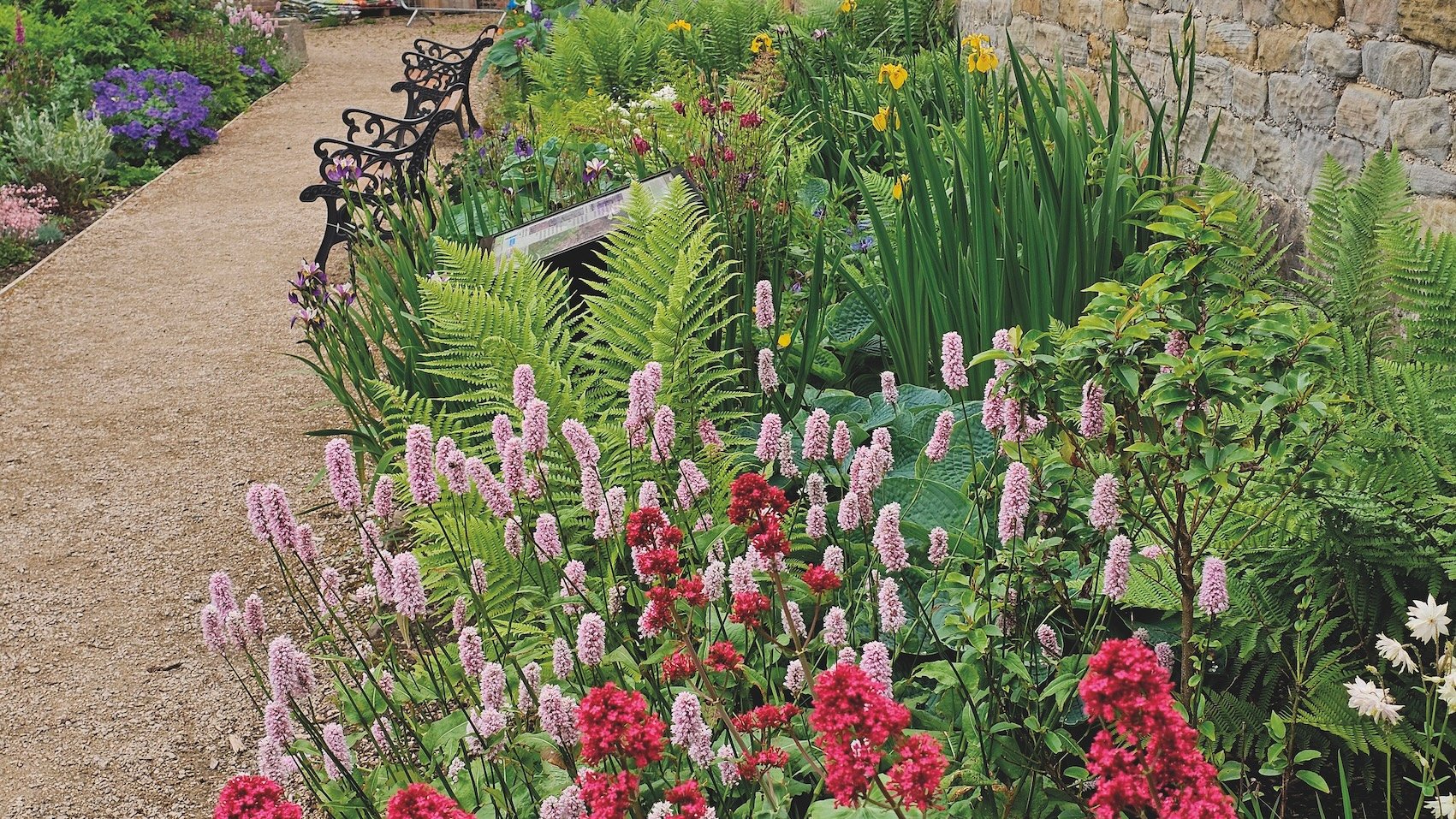
Luxuriant ferns and yellow flags, bistort and aquilegia
As you enter the garden, there is a wall to the left built of local sandstone, which was an economical building material in the 18th century. The other two walls are made of narrow handmade bricks. More expensive at the time, they absorbed heat in the day and gave it off at night like a storage radiator. Against the wall is a little potting shed, which was derelict and roofless until it was rebuilt by volunteers. Bistort and red valerian flourish next to it, set off against the silver of galvanised rainwater tanks and a neat stack of bamboo canes.
The border mixes large leaved hostas in bold shapes with choice irises and self-seeding yellow and orange Welsh poppies. There are some special colour combinations, such as near-black Iris chrysographes with acid green lady’s mantle, orange geums with purple lupins, and purple heuchera with the pale lemon of Sisyrinchium striatum.
At the far end of the triangle a little area of birch trees creates a shady walk between hazel hurdles as well as a medieval orchard of cobnut, medlar, greengage and cordon fruits. Beneath is a wildflower meadow with ox eye daisies, birdsfoot trefoil and white clover for the bees. There’s an excellent composting display with signage by Garden Organic and examples of techniques using plastic green cones, tumblers, wooden compost bins, leaf mould and how to make comfrey feed. In a nearby lean-to greenhouse with an attached cold frame plants are propagated, some of the surplus sold to raise funds. Tomatoes are grown here and appropriately a bottle of home-made comfrey fertiliser reads ‘Dilute to use’.
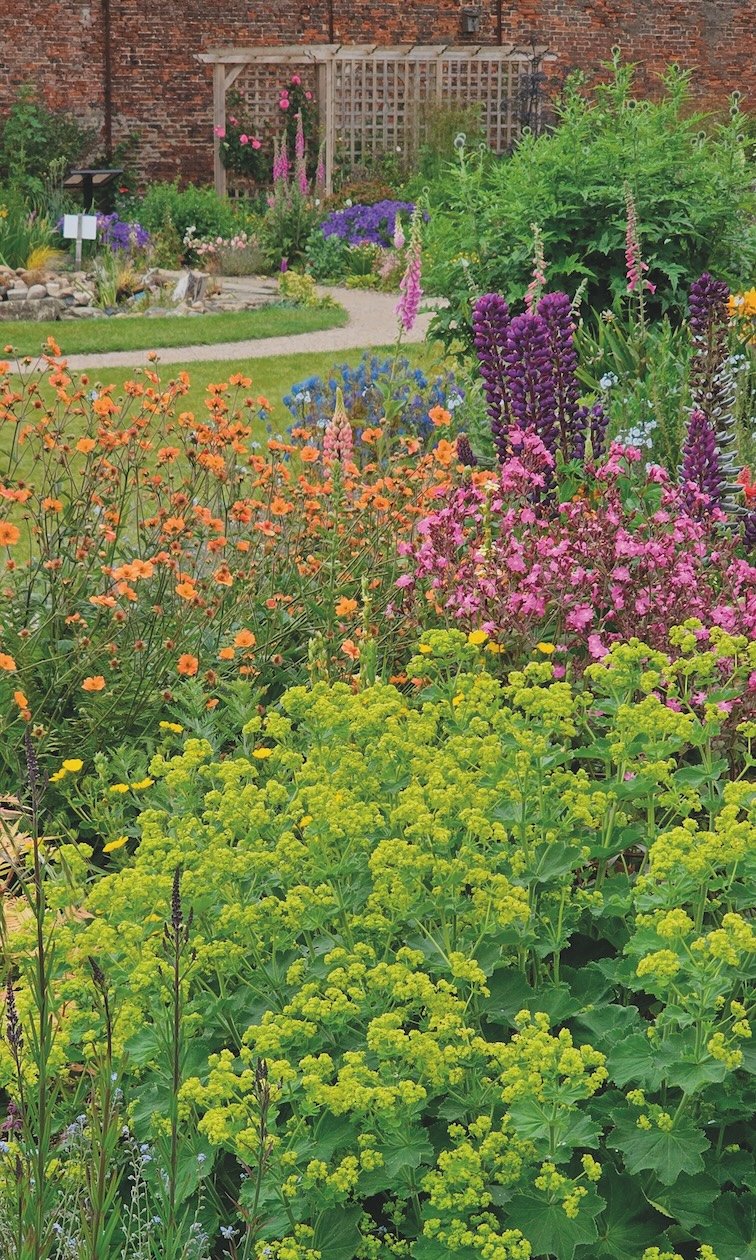
Acid green lady's mantle, orange geum and purple lupins
Against the brick wall next to it the border is full of hot colours making the most of its south-east facing position. A Mediterranean cistus shines vivid pink. Cerinthe, chrysanthemums, calendulas and a fig tree revel in the sun. Amongst the dazzling salvias, ‘Nachtvlinder’ is a rich, deep purple, surviving the winter in this sheltered garden. The purples, reds and deep blues are punctuated by the pale yellow spires of sisyrinchiums.
Walking around the garden there is a pleasant hum – the low-key, happy sound of people enjoying its special atmosphere. This is what it is all about – the shared experience of bringing something back to life, or discovering a beautiful garden near the sea. “When we began,” Steve says, “we asked people what they wanted here. They said an orchard, beehives, a pond and places to sit, and we’ve achieved that. My mission this year is to label everything so that visitors can see plants growing and be inspired to grow them at home. We get lots of very positive comments.” From an ivy-covered, inaccessible, hidden garden it has become a place for the whole community and a place of joy.
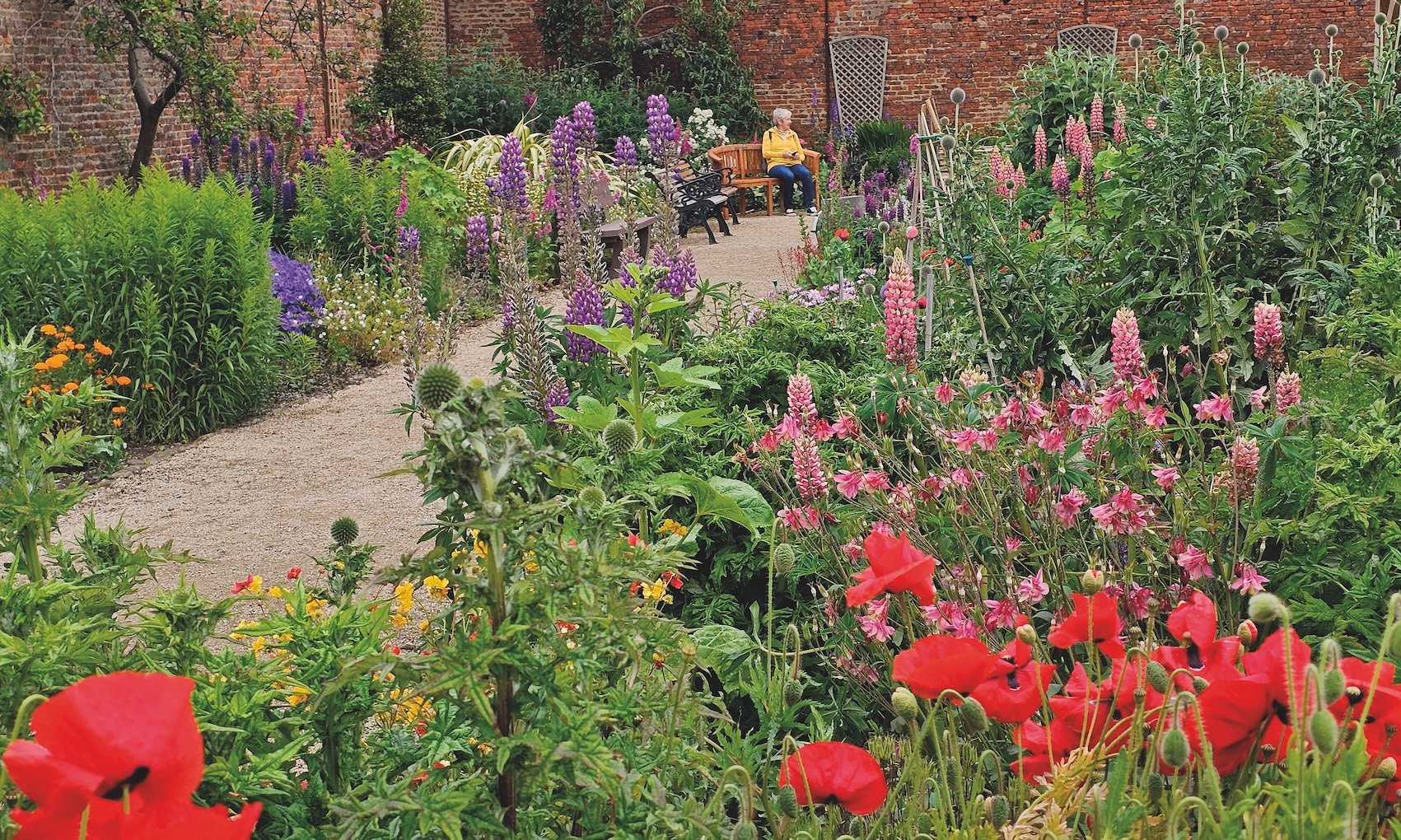
A place to sit amongst globe thistle, Lupin and poppies