
The good life
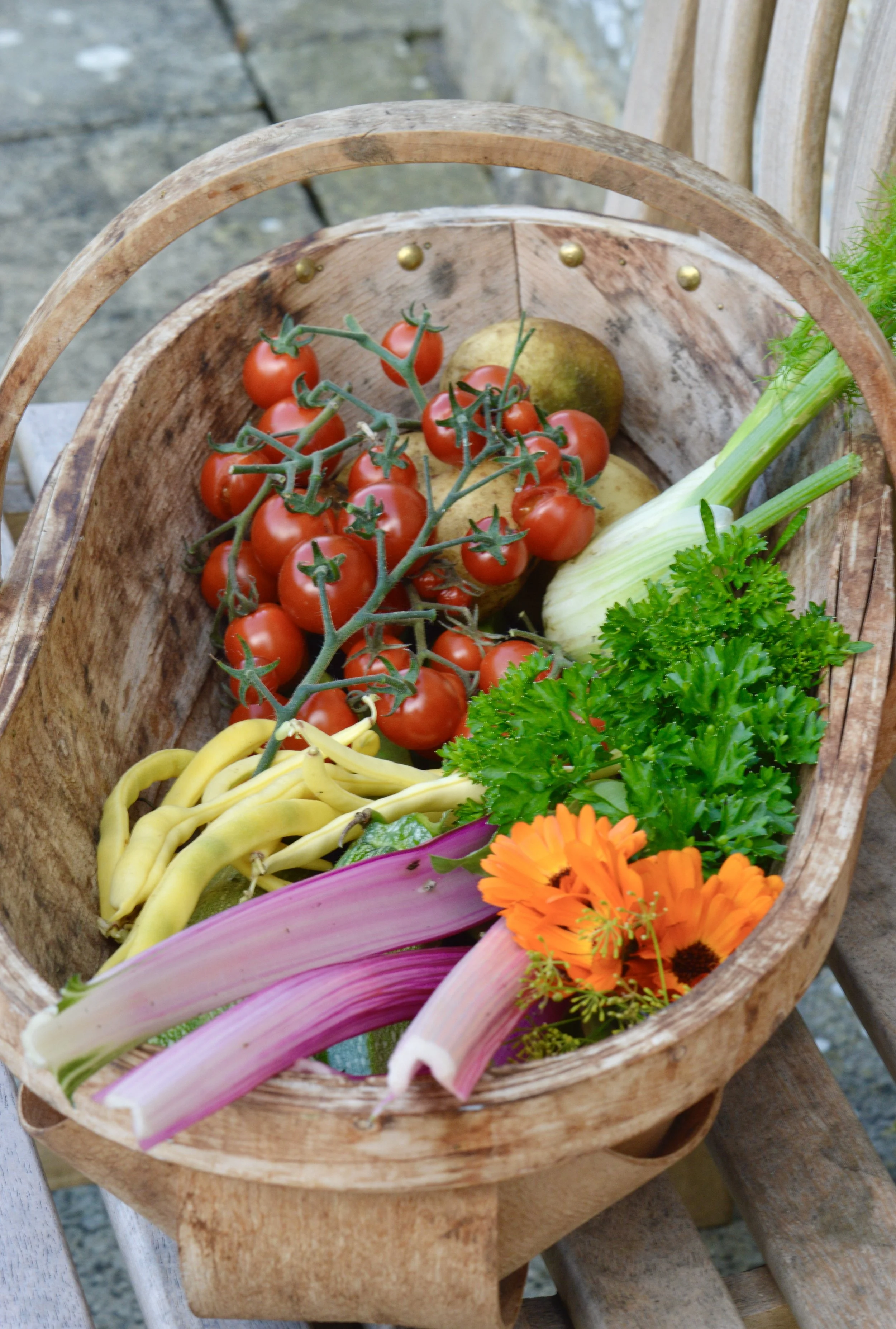
A trug of vegetables from Susie and David’s garden
First published in edition 198 of The Northumbrian, Feb/Mar 2024
Now’s the time to turn our thoughts away from winter to vegetable seed catalogues and thoughts of home grown produce all summer long. Here, Susie White shares expertise and inspiration for a season rich with home-grown flavour
The relentless weather this winter has made gardening very difficult. I’ve had to grab the odd hour between bands of rain to work from paths or under trees. So it’s been with more pleasure than normal that I’ve spread the seed catalogues out on the table, visualising sunny days and what to grow.
Although all the seed companies are online, I still get paper copies of their catalogues. It’s easier to make comparisons, scribble X’s and compile a wish list. Each year we try out different varieties of vegetables and flowers as well as our regular favourites, testing, experimenting and enjoying the new ones.
Our vegetable garden is divided into four plots around a central diamond-shaped bed of lavender, alliums and a William Shakespeare rose. Having four beds means the crops can be rotated, and the overall size is about the same as an allotment. There is a greenhouse for seed sowing and bringing on young plants, which is essential as this garden is in a frost pocket.
Each vegetable border is edged with flowers including annuals such as poppies, calendulas, flax, zinnias and seed-grown dahlias. We want it to look beautiful as well as be productive, and to bring in pollinators and beneficial insects. There are three wooden compost bins, which are vital for recycling and creating healthy soil. When we moved here 14 years ago the soil was so lifeless and compacted that there were no worms! Now it’s rich with life.
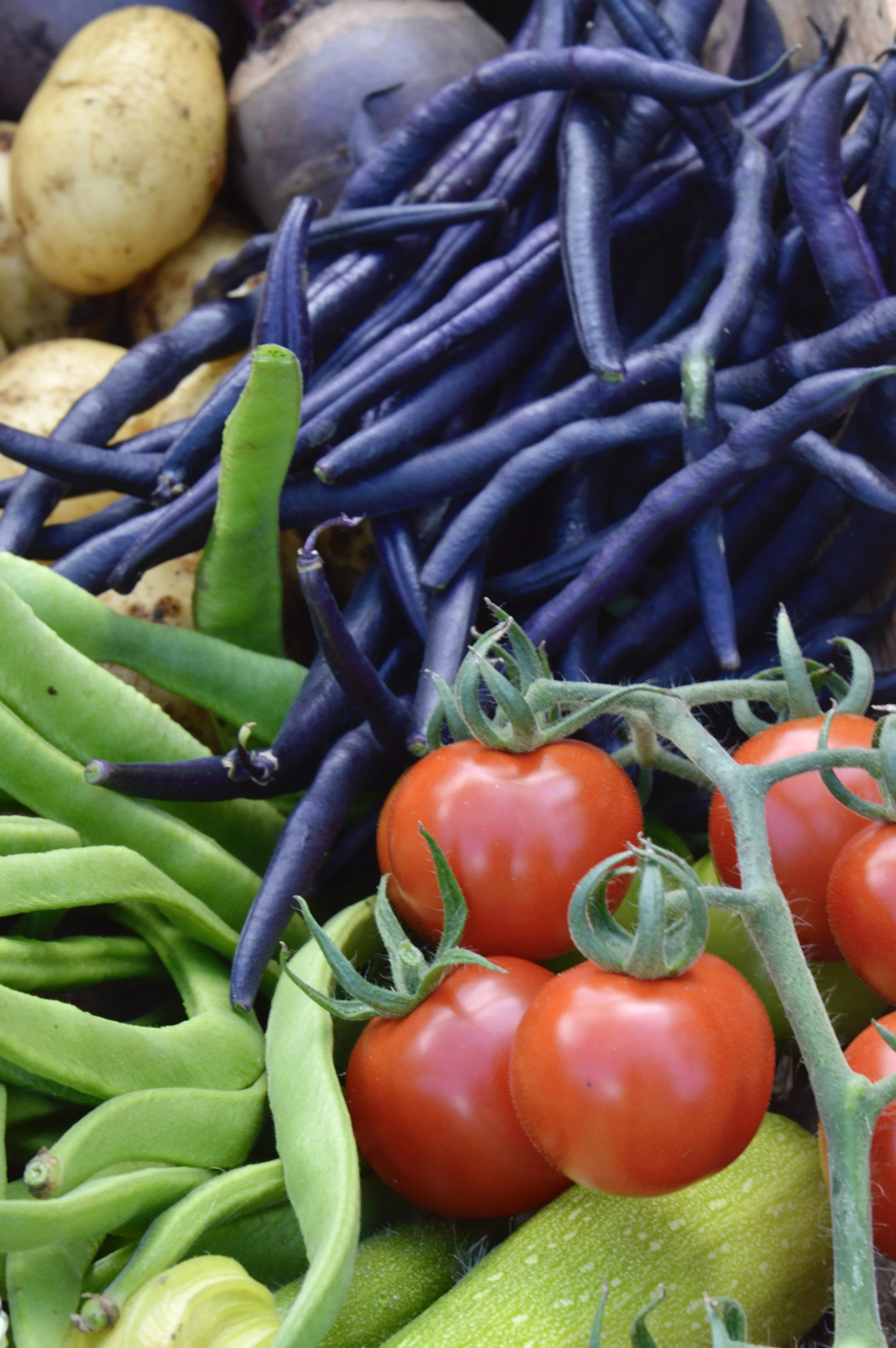
My husband David grows the vegetables while I concentrate on the flower garden. He’s learnt not to begin too early with seed sowing and that plants catch up quickly. Many are sown in the greenhouse using plug trays – plastic trays that we’ve been re-using for years – so there’s very little root disturbance when the young plants are set out. There is a cold frame for hardening off and cloches for extra protection.
By February, the garlic, having been set out in November, is a line of hopeful greenery. Winter cold is necessary for garlic to split into cloves, and the bulbs will be harvested in July and laid in the sun to dry. Garlic grows really well in the north; there’s even a garlic farm up near Inverness. We began with seed garlic from the Isle of Wight farm, varieties being ‘Early Wight’, ‘Purple Wight’, and ‘Picardy White’, and we now save our own.
Broad beans are one of the earliest vegetables to go in, planted directly in the soil. Potatoes are planted out mid to late March, ‘Charlotte’ being particularly reliable in this area. From then on it’s a continual round of seed sowing, planting out and harvesting, with quick crops such as lettuce, spring onions and salads in succession.
We like the vegetable garden to look colourful and last year the most striking plant was rhubarb chard – a vivid variety with pink striped stems. The crimson flowered broad beans had beautiful flowers and attracted bumblebees too. There were lines of ruffled and colourful lettuces such as ‘Lollo Rosso’ and purple leaved ‘Intred’, oak leaf varieties, and the tasty crisp lettuce ‘Maureen’.
Dwarf French beans are prolific producers yet take up very little space, and a trug filled with veg is an uplifting sight: purple podded beans, sun-warmed tomatoes from the greenhouse, carrots, peas, emerald parsley and yellow courgettes. We don’t have a lot of room for permanent plantings such as asparagus, but we do grow globe artichokes for their grey-green leaves and sculptural heads, leaving some to flower for the bumblebees.
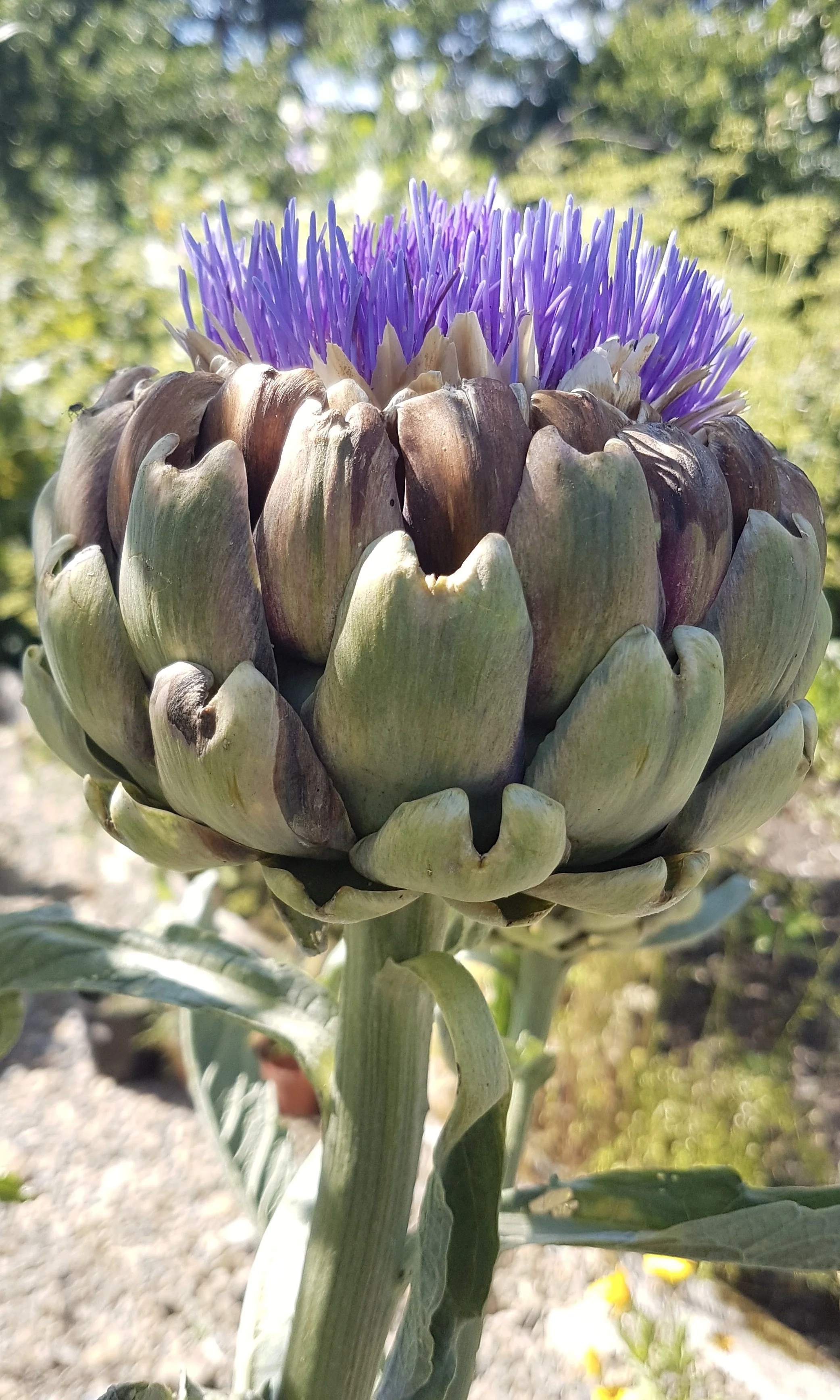
A globe artichoke left to flower for the bees
Just as in the flower garden, a layered approach is best for wildlife, so you can use different levels for growing. Step over apples to line paths, varying heights of vegetables and tunnels and archways over which to grow runner beans, hops, sweet peas or unusual veg such as lablab.
To see a wide range of vegetables and fruit being grown, many of them unusual, the garden at Capheaton Hall will be open in aid of the National Garden Scheme in July. The hall has magnificent views of the Northumberland countryside, a Georgian folly of a chapel, expansive parkland, a delightful 19th Century conservatory, and an outstanding productive walled garden.
Colourful vegetables grow alongside espaliered fruit; there are burgeoning flower borders, roses, ornamental grasses and a sunny bench by a raised lily pond; and at the heart of the garden a long Victorian glasshouse packed full of produce. Head gardener Jane Armstrong grows many kinds of interesting vegetables both outside and under glass.
Peaches, nectarines, figs and apricots luxuriate against the high, white-painted wall of the glasshouse. Vines laden with bunches of grapes climb to the roof. Bay after bay, the large beds under glass are filled with different varieties of tomatoes, cucumbers and chilli peppers in containers. There are unexpected shapes and colours; one year Jane grew a round cucumber ‘Crystal Lemon’ which has tennis ball sized, pale lemon, round fruits. High yielding, this heirloom variety is sweet and crisp and is said to be more digestible.
There’s a rainbow of colours in the glasshouse, from the red, voluptuous trusses of ‘Britain’s Breakfast’, a mini plum tomato; the orange sweet cherry tomato ‘Sungold’; and the yellow form of the sweet pointed pepper, ‘Corno de Toro’. Add to that the prolific green of the mini cucumber, ‘Socrates’; a purple bell pepper called ‘Tequila’; and the black chilli, ‘Nosferatu’, and it’s a colourful mix of traditional and modern cultivars, a key objective for Jane and her assistant Ryan Scott.
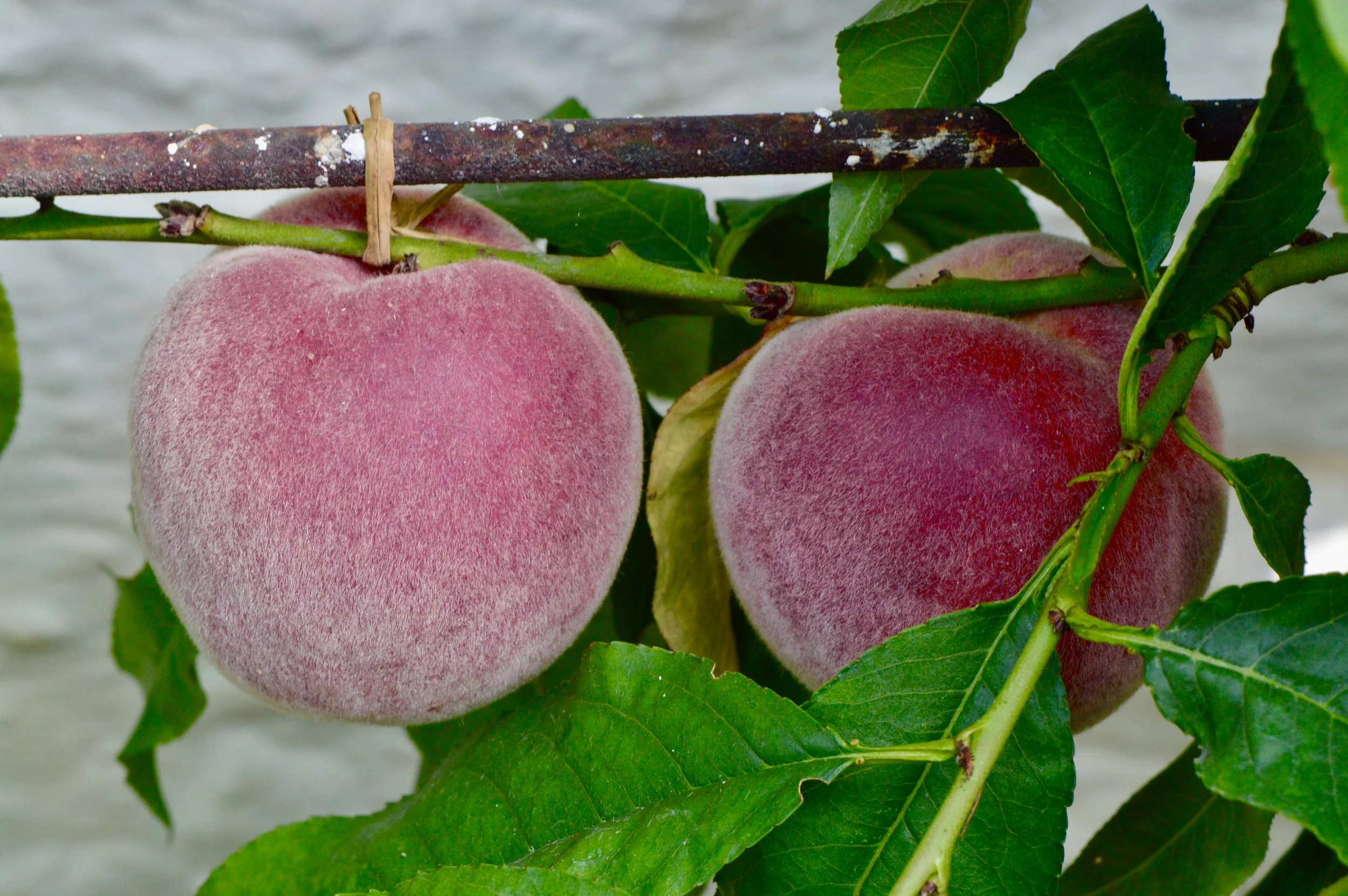
Peaches in the Victorian glasshouse at Capheaton
The garden is not strictly organic, but chemicals are kept to a minimum, with physical or biological controls used wherever possible. Digging is also kept to a minimum. Instead, a layer of organic matter such as leaf mould or spent hops is spread under a sterile blanket of Hadrian Soil Conditioner, composted garden waste from Codlaw Farms near Hexham. The worms draw the goodness down into the soil and weed seed is no longer brought up to the surface, with the added benefit of buffering the soil against drought and flood. The dark brown colour of the compost beautifully shows off the neat lines of fennel, chard, onions and asparagus, and there’s not a weed to be seen.
Successional sowing is used to prolong harvesting and reduce gluts of the crops favoured by the Browne-Swinburne family who own Capheaton. This has worked well for beetroot, salads, peas and some of the brassicas. The number of pests attracted to brassicas can put off many gardeners, but Jane feels it is worth persevering for the delight (and vitamins) of crisp, fresh cabbage and the range of new varieties such as the purple cauliflower ‘Graffiti’ and the beautiful ‘Kalette’, harvestable as frilly sprouts or broccoli-like shoots.
Several different potatoes are grown at Capheaton, from heritage to modern blight-resistant cultivars such as ‘Sarpo Axona’, which survived the warm, wet weeks of last summer. An excellent multipurpose is the piebald ‘Apache’. ‘Mayan Gold’ is great for roasting, and for the more adventurous, ‘Salad Blue’, which has purple flesh and, despite the name, is multi-purpose. Jane sources these unusual varieties from the annual Borders Organic Gardeners Potato Day in Kelso, which this year opens at 11am on Sunday March 3.
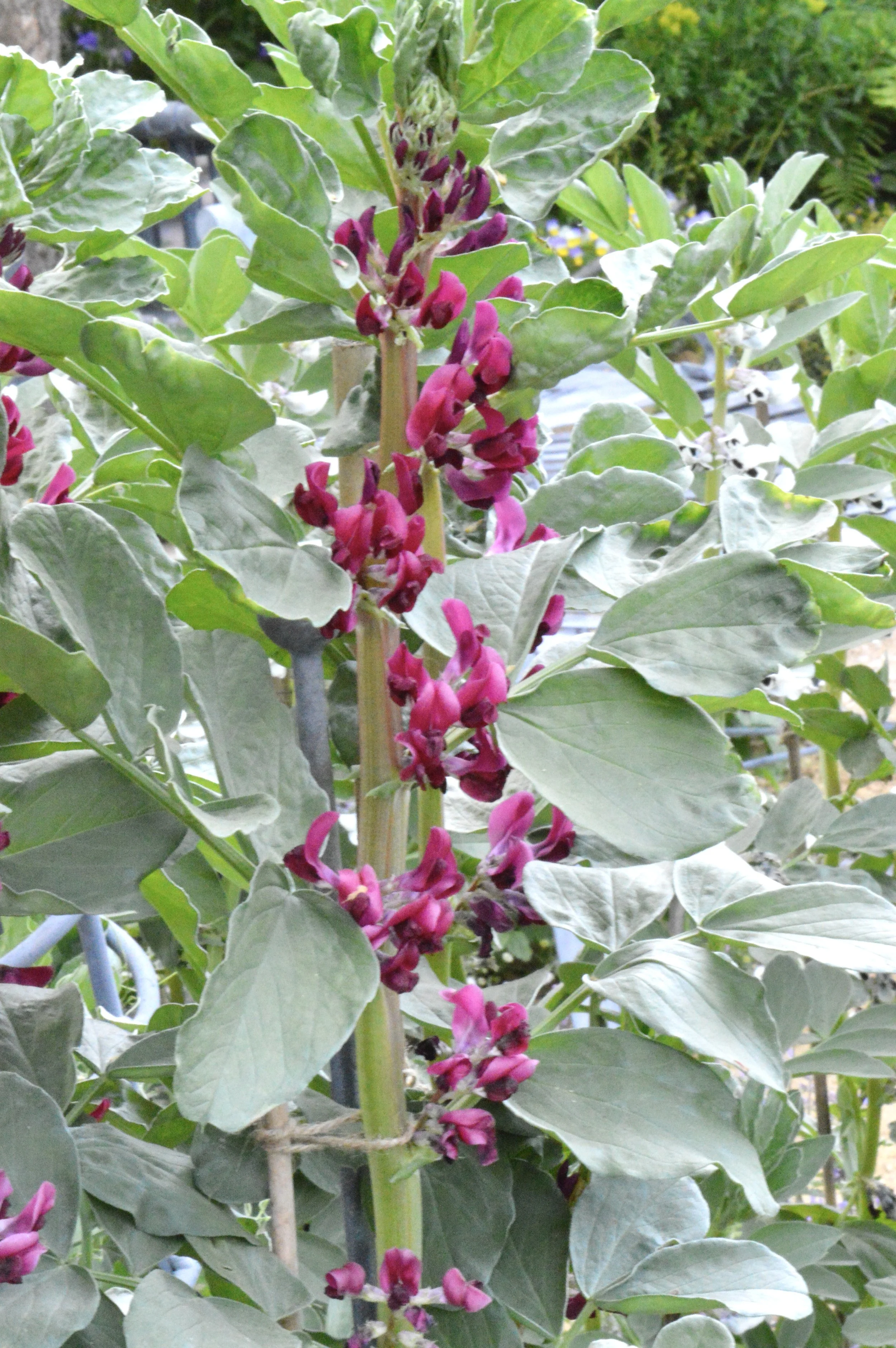
Crimson flowered broad beans
Other vegetable varieties recommended by Jane include: ‘Chioggia’, a beetroot stripped like seaside rock; the flat climbing French bean ‘Hunter’, whose pods remain crisp for longer than other varieties; and if you have the space, the pumpkin ‘Crown Prince’, which stores well into winter. For something a little different she suggests the climbing (or trailing) courgette ‘Tromboncino d’Albenga’, which has a firm texture and buttery flavour. And, she says, don’t forget edible flowers like peppery nasturtiums and borage, whose lovely blue flowers the herbalist Culpepper claimed were a cure for melancholia.
It’s the sheltering walls of the garden at Capheaton and the impressive glasshouse that make it possible to grow such a wide range of vegetables and fruits. I envy the growing conditions and the soil that has been cared for over so many years. A visit to Capheaton is an inspiration to try something a little out of the ordinary and to go for colour and beauty as well as productivity.