
Rocks of ages
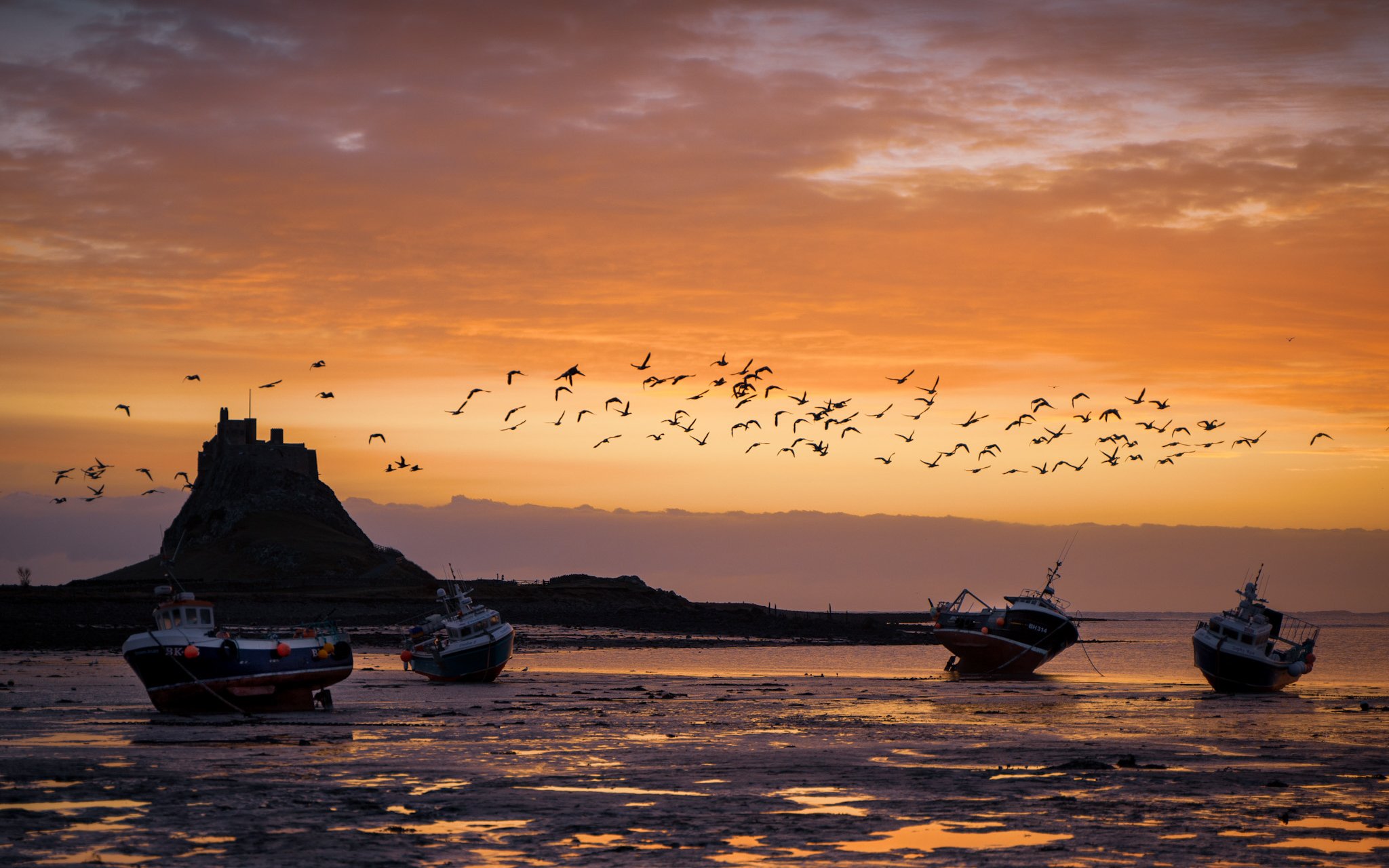
Early birds over Lindisfarne
JANE HALL meets photographer Jim Scott, who has set himself the challenge of capturing the first photographic record of all Northumberland’s 70 castles before time and tide take their inevitable toll
When a knee injury forced Jim Scott to give up his regular fitness training, he began looking for a new active pastime to get him out and about.
The 47-year-old eventually alighted on photography, perhaps spurred on by fond memories of the cameras his dad once owned. “When I damaged my cartilage I couldn’t train in the same way, so I was looking for something to get me out of the house,” Jim explains. “I’ve always been an early riser, and I thought what better way to fill my time than to get out first thing, go to the coast or wherever, see the sunrise, and capture it on camera.”
His new hobby swiftly turned into a passion and within months of picking up a camera for the first time, Jim scooped a prestigious award in autumn 2022 for his image Early Birds of Lindisfarne. Depicting a stunning sunrise at Holy Island, fishing boats are grounded on the tidal causeway as a flock of seabirds take flight silhouetted against the orange-gold sky and Lindisfarne Castle.
Last year, the photo was shortlisted in the History Hit online TV channel’s Historic Photographer of the Year awards. It was one of three images Jim entered for the competition, two of which a publisher has asked to use in a new book being written by the TV historian Dan Snow. The image has also featured in an exhibition at The Biscuit Factory in Newcastle and various photography magazines.
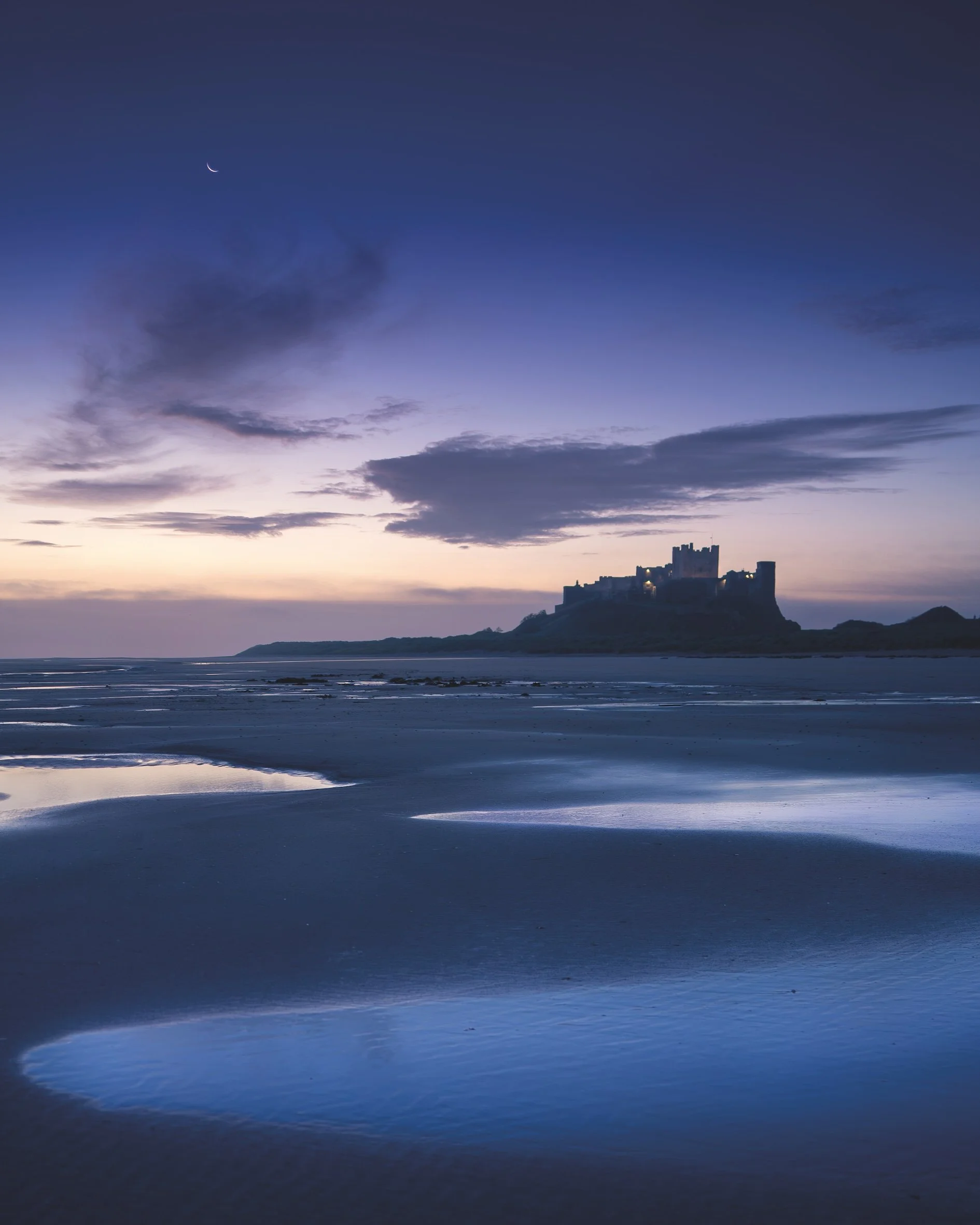
Bamburgh
The world is full of talented photographers who will never see their compositions attract public acclaim, yet just two-and-a-half years after taking up photography, Morpeth-based Jim has an impressive list of plaudits. Not bad for a self-taught ‘hobbyist’ photographer who when he’s not “thinking about photography gear, where I can go to take pictures, or the shots I want to take,” is a managing director at the online property giant Rightmove.
Jim has now undertaken a unique project to photograph all 70 of Northumberland’s recorded castles. He launched the Northumberlander Project in March last year and has so far photographed 50 castles, from the iconic fortresses of Bamburgh and Alnwick to isolated ruins like Harbottle in the Coquet Valley, and Tarset in the Upper North Tyne, of which there is now little left other than earthworks. He hopes to have the project, which can be viewed online, completed by the end of this year.
Northumberlander began with Jim’s obsession with Bamburgh Castle. “It was a Sunday morning and I was off to get some shots of Bamburgh Castle – I’ve done hundreds of images of it now – and I said to my wife, “I wonder which other castles I could take photos of?” So I googled castles in Northumberland, and the same five kept coming up: Bamburgh, Alnwick, Dunstanburgh, Warkworth, and Lindisfarne. I dug deeper and kept seeing this figure of 70 castles, but struggled to find a list of them all. I eventually discovered two sources online, along with one or two images, but nowhere could I find – and if it does exist then the internet is hiding it incredibly well – a repository or a catalogue of photos of all the castle sites. That was the genesis of this project to record them all.
“I’m passionate about it because as time passes the historic value of these sites is probably not as appreciated as you might think. I don’t think many people realise how many castles Northumberland has, yet it’s said to have more than any other county in England. You tell people that and they’re genuinely surprised. I decided to record them because many sites are in quite a bad state and aren’t going to be around forever. I felt it was vital to document them.”
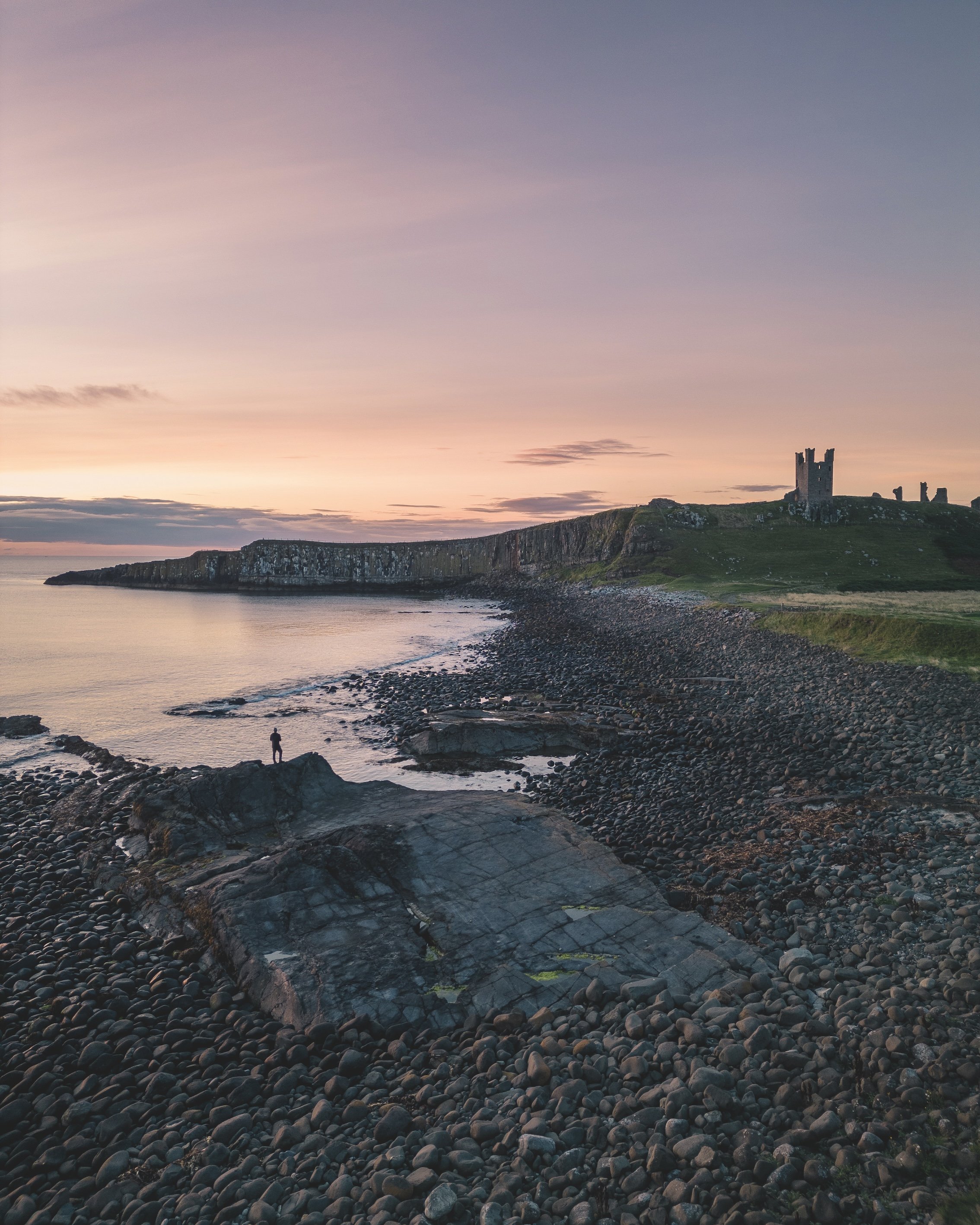
Jim at Dunstanburgh
In addition to taking photos of the castles, Jim is researching their history, which he shares on the Northumberlander Project website. He has also created an interactive map showing all the sites. “That has proved extremely popular,” he says. “Initially I did it for my own purposes, so I could plan my journeys and try to do two or three in a day. Then I put it on Facebook and it went nuts. Within about 48 hours, 1,000 people had opened it.”
Compiling the map was an eye-opener. “When I laid out the map, I saw an obvious pattern. You’ve got castles down the coast, a bunch along the southern edge of the county along the A69 corridor, and others along the Scottish border. It’s an outline of the county in castles, which makes perfect sense as they were there to protect against invaders, but I hadn’t thought of it until I plotted them out.”
The map also highlighted once important castles that have dropped from public consciousness, such as Mitford near Morpeth. “I think I could stop 100 people on Morpeth high street and ask them if Mitford has a castle, and probably only 50 of them would realise that it does. I think there are many hidden gems across the county that people don’t know exist.”
Jim has been surprised himself. “There’s a bunch of them I didn’t know about. Some that are of the most interest to me are the ruined castles, or the motte and bailey sites. The likes of Tarset, for instance. I’ve driven past that site numerous times, and not for a second did I think the rise by the side of the road was a castle. The same with Elsdon and Wooler Green. For all intents and purposes, you might just think you’re looking at a hill rather than a castle with all the history that goes with it. I never knew there were two castles in Morpeth. I always assumed there was only one. People are unaware of some of the breadth and depth of the history and how all of this interacts.”
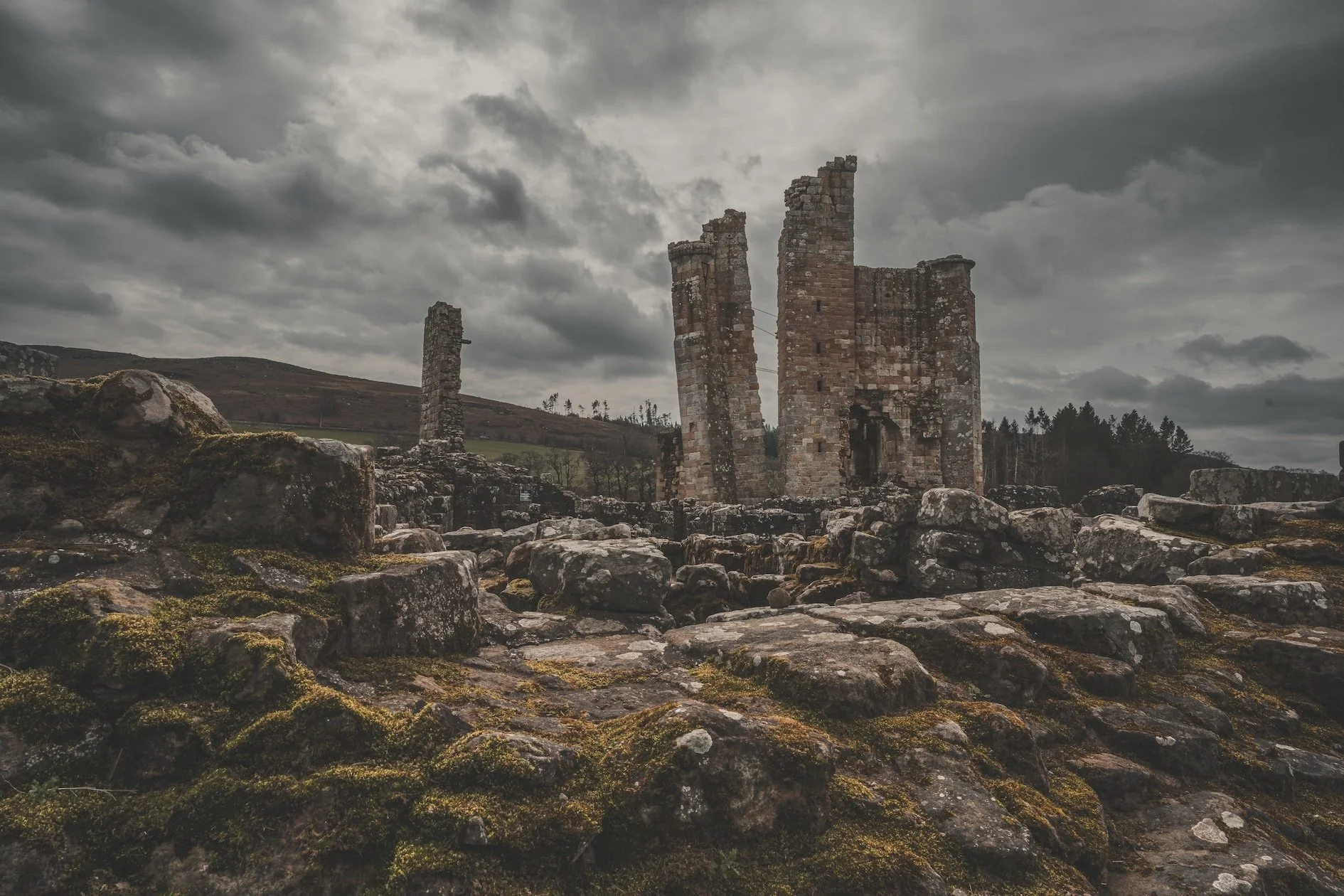
Edlingham
Jim is sticking with the old Northumberland county boundary for the project, so both Newcastle and Tynemouth castles make an appearance. He is keeping the aesthetic of his images the same, their moody skies representing Northumberland’s most common weather. “I thought if I wait for nice sky days, I’d never finish it!” Jim says with a laugh. He also wants to re-shoot some. “I want to get through them all, then I plan to re-shoot the ones I’m not entirely happy with.”
Gaining access to some sites is complicated as many are privately owned or have restricted access. “I’m going to have to approach owners and ask for permission to photograph them so progress is going to slow a bit, but I’m hopeful I will complete the project by the end of this year.”
That begs the question of what Jim plans to do next. Not surprisingly, people have suggested a book, or that the Northumberland Archives might be interested. “I would happily consider that,” Jim reveals. “In and of itself, it is a bunch of photos, and of those castles that are still standing, some are quite iconic. But in some cases, I have taken a picture of a lump of earth, which probably doesn’t have the same appeal for a lot of people.
The point though is that the castles are recorded, mapped, and seen, so it makes no sense for me not to share the project so that people can learn, enjoy the images, and hopefully the beauty of Northumberland.”
To see the photos, go to www.jimscottphotography.com/northumberlander-project
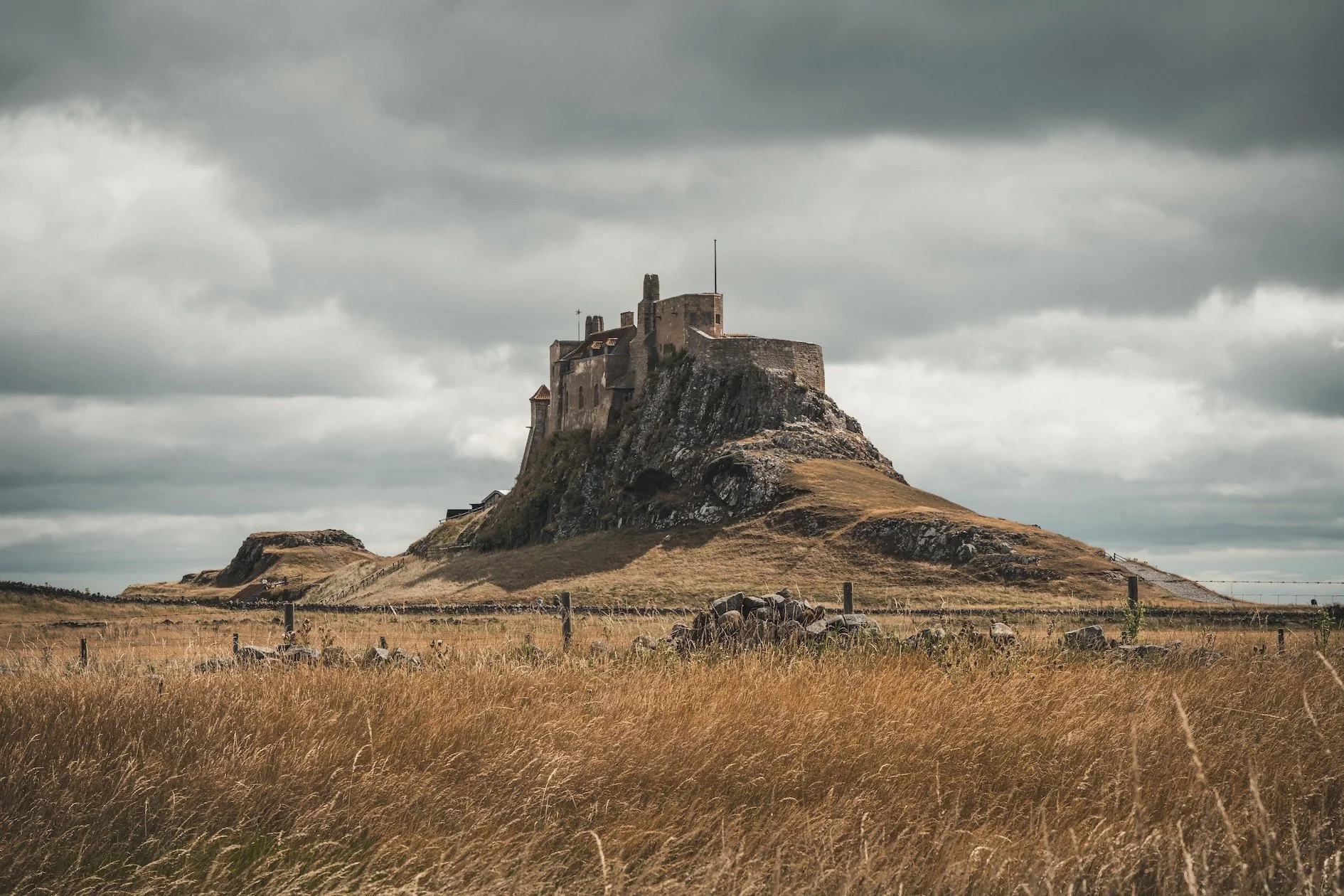
Lindisfarne