Ewe beauty!
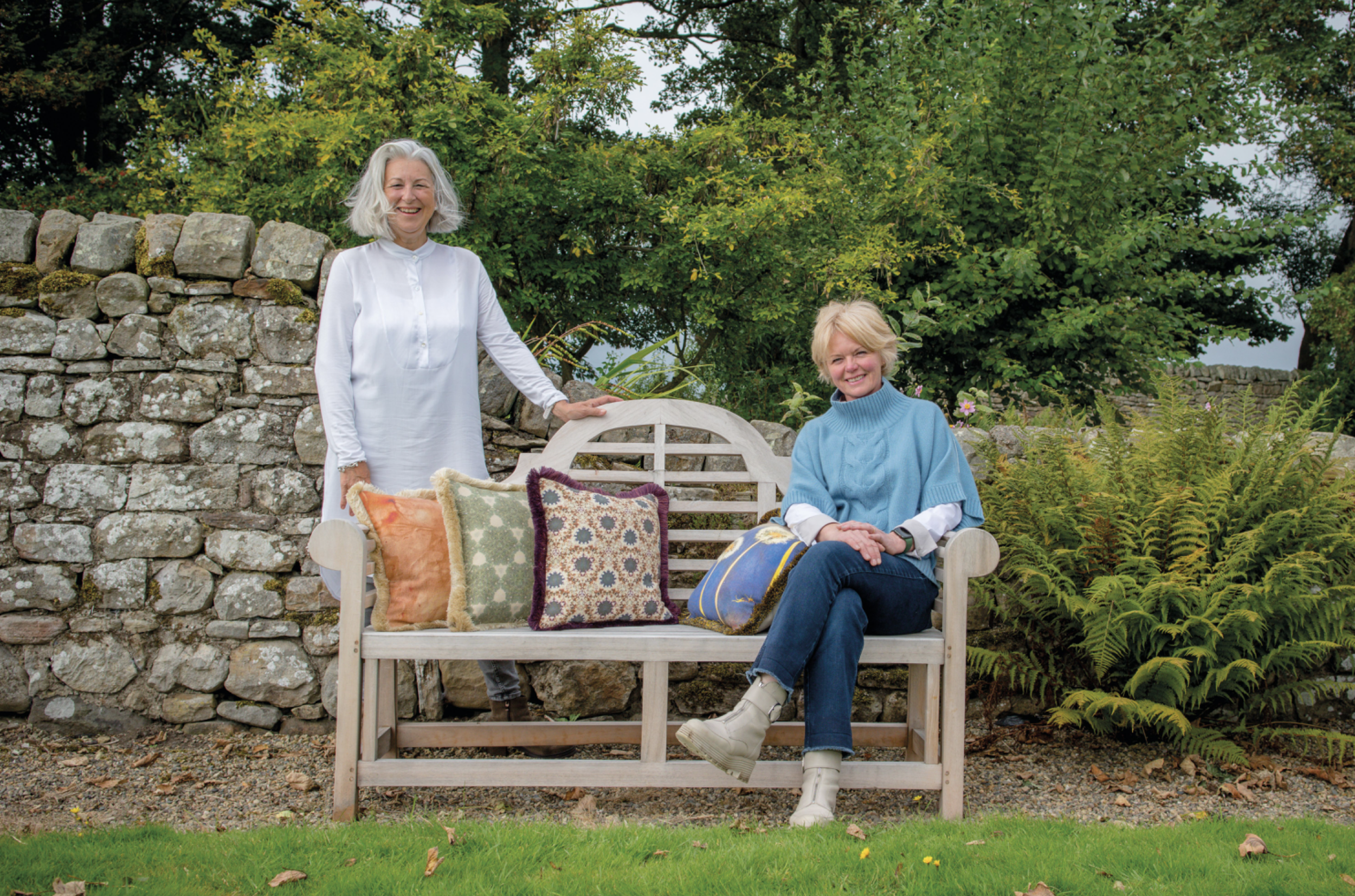
JANE PIKETT meets a traditional upholsterer and a printmaker who are combining their creativity to do their bit for British wool – Cheviot wool, no less – and in the process create furniture and homewares that are both unique and exquisitely beautiful
Have you ever considered where the sheep which produced the wool for your favourite jumper came from, or indeed said creature’s breed or the grade of its fleece?
No, me neither, but a couple of minutes in the company of Jayne Dods and Sara Thomas and I defy you not to follow them down the rabbit hole that is all things wool. That is, British wool, where it comes from, where it goes, how valued (or not) it is, and why we all need to give it some love.
Jayne, an artisan upholsterer, and Sara, an artist and printmaker, have got big into wool in the last few months, to the extent that they are now going into business with furniture and homewares covered in their own specially woven and printed Cheviot wool fabric. Their wool is carefully sourced, traditionally woven, and expertly printed with Sara’s designs, which is why we are now gathered in Jayne’s farmhouse dining room oohing and aaahing over the natural beauty of their first small collection.
Their venture, named From Ewe, began, as all good ideas do, at the kitchen table. It is genuinely a labour of love, and this cloth – the product of their combined creative talent and commitment to craftsmanship – is exquisite. Traditionally woven by a small family firm, it is a rich shade of white coral with a natural grey fleck. It has a pleasing, fluid weight to it, a distinctive grain, and is a thing of beauty in its own right. Printed with Sara’s designs, it takes on the life of her work, which is created from wildflowers, ferns, lichens, blueberries, brambles, botanicals and the like.
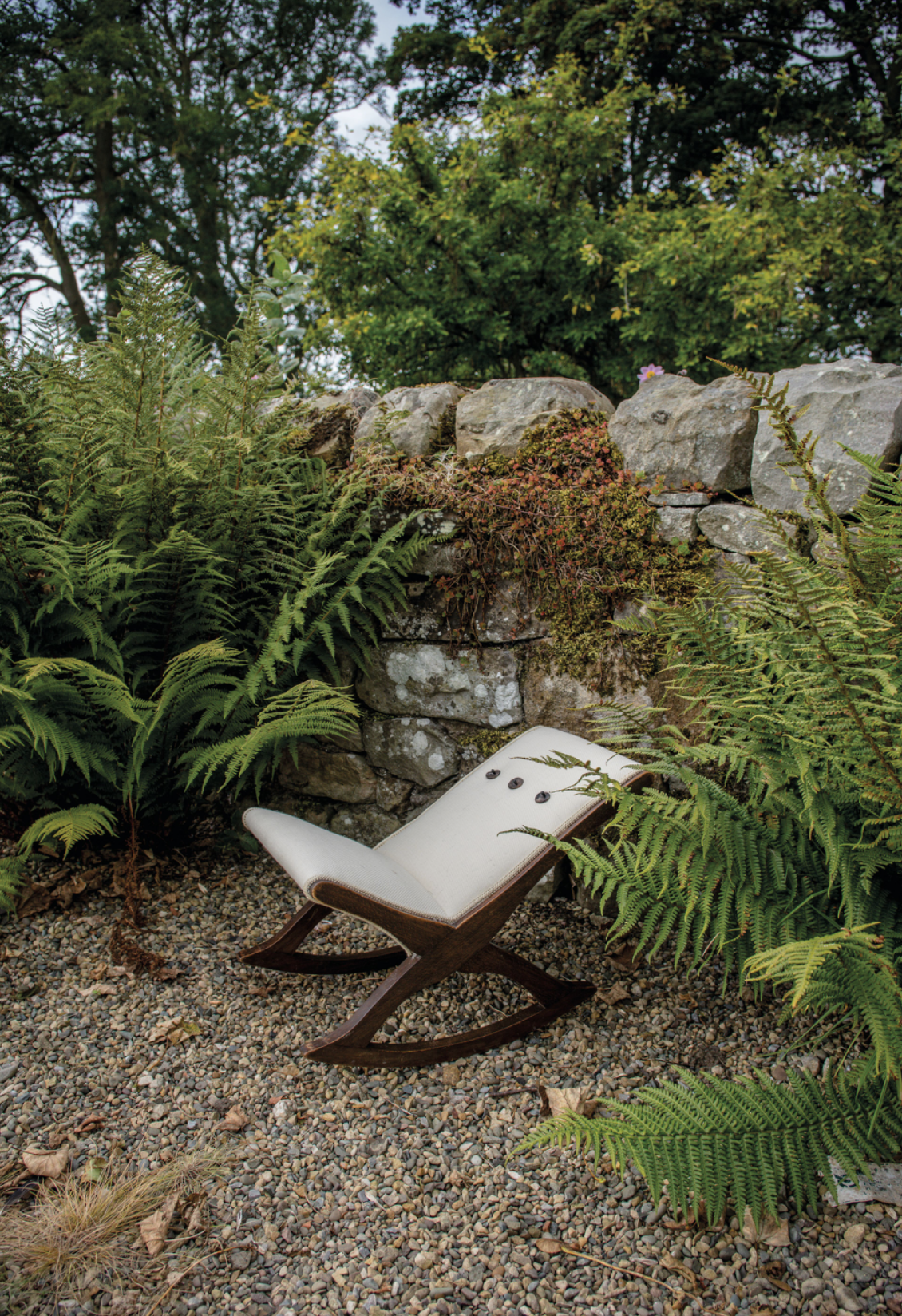
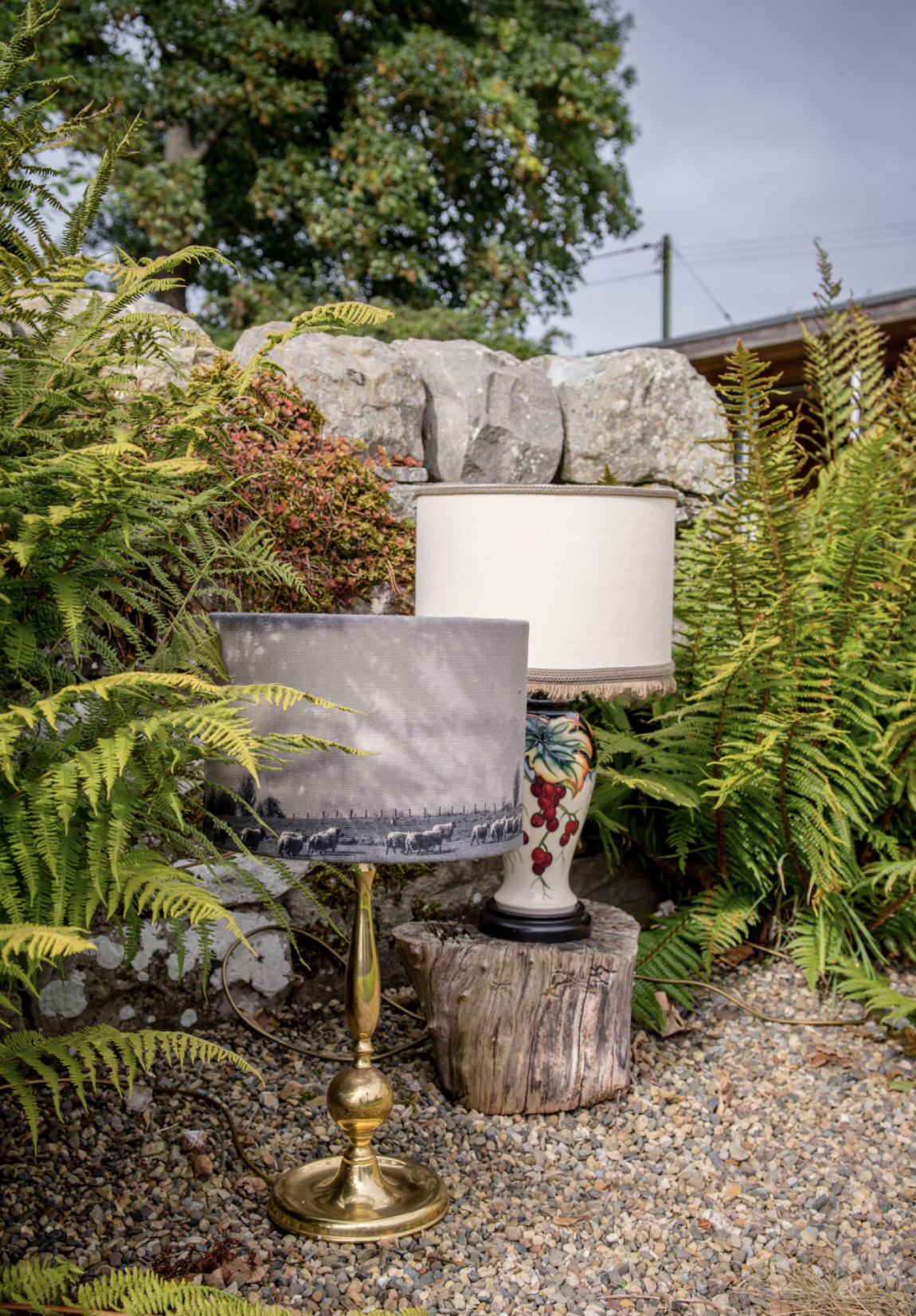
These fabric bales, cushions and lampshades are the result of months of work researching wool types, weights, grades, weaving and printing techniques to achieve the first small batch of fabric and transform it into a small initial collection, which they will launch at the end of November. They already have their first commission – the reupholstery of an old chair for Hexham Abbey. Jayne will cover it in From Ewe fabric bearing an image by Sara of a Northumberland celandine.
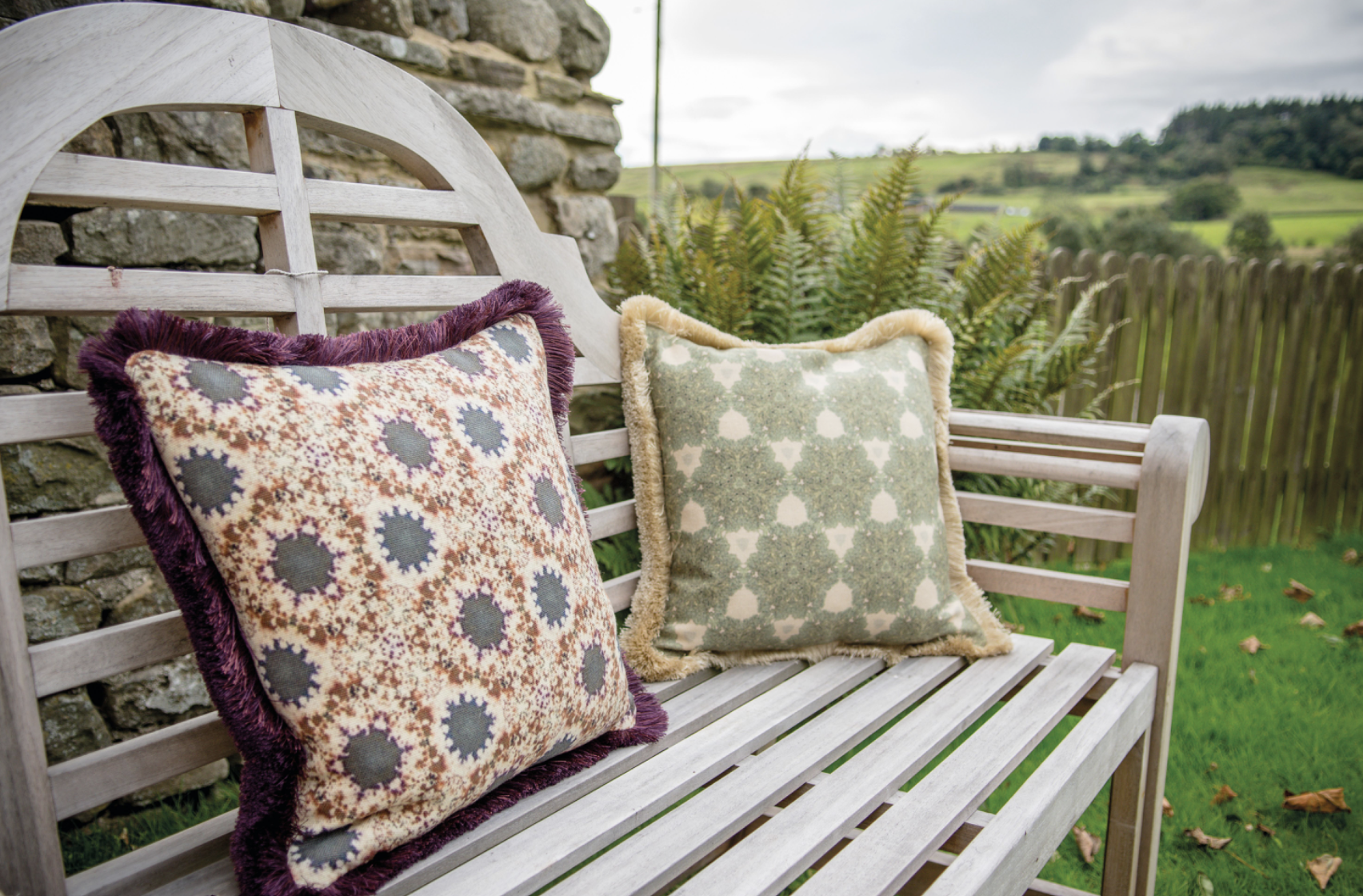
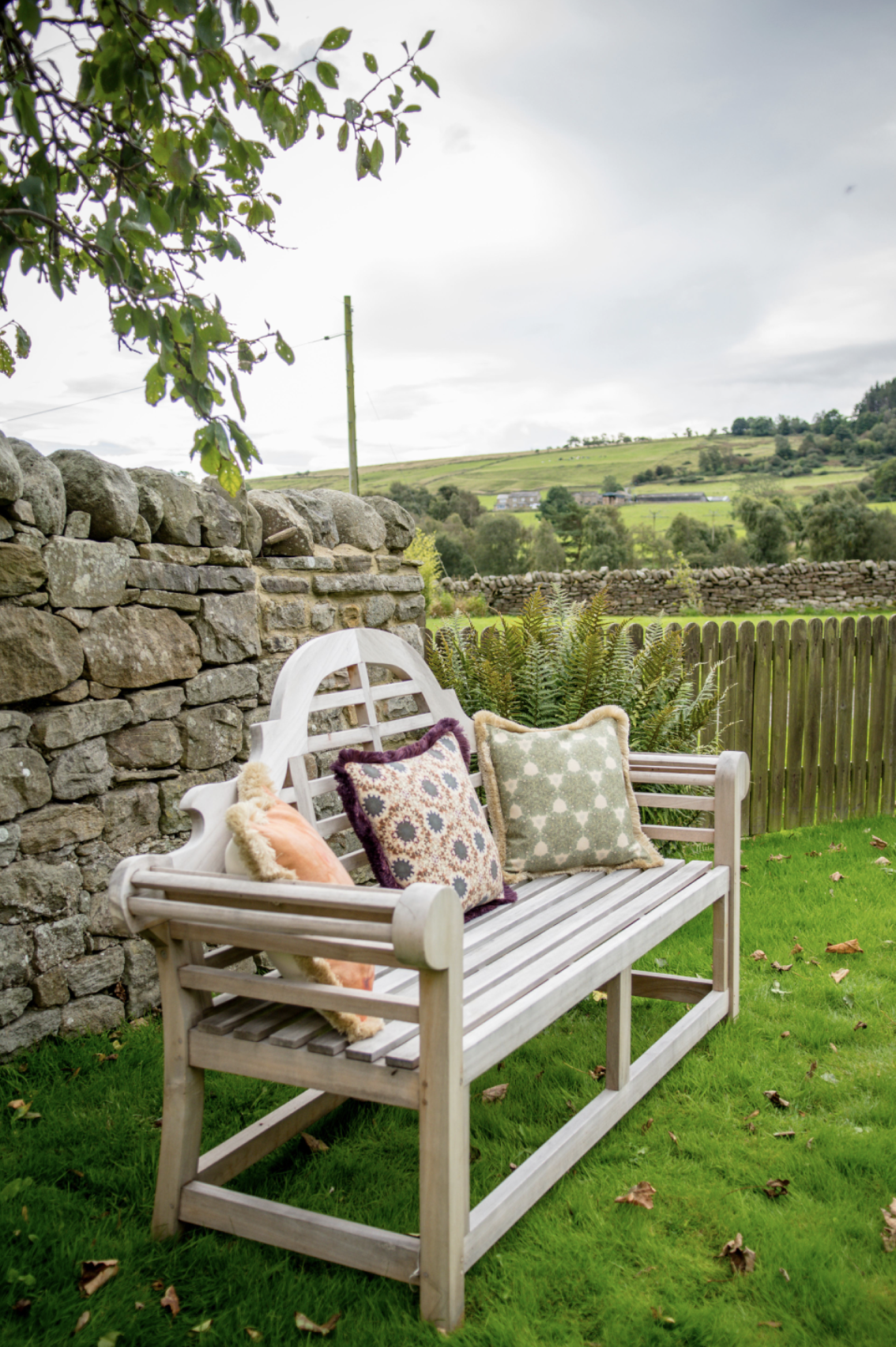
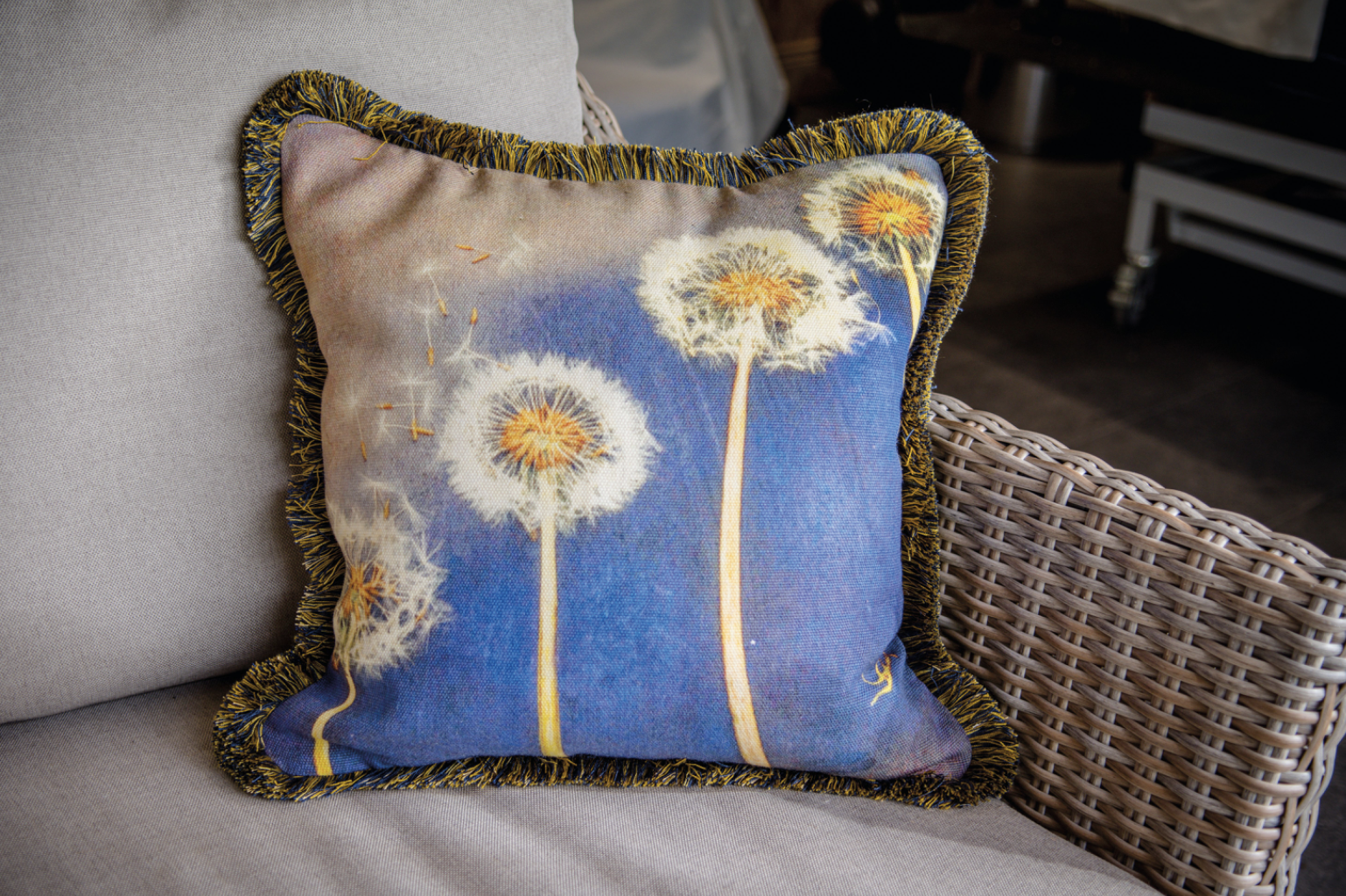
From Ewe cushions
The idea for their venture was hatched during one of Jayne’s regular trips down to Cornwall to stay with her old friend Sara, who moved there from Northumberland some years ago. Jayne would stay with Sara in six-week chunks as she worked through a course with the Association of Master Upholsterers in Cornwall. She’d come home all fired up after a day’s training to find Sara immersed in printing techniques, and one evening there was, as they say, a Eureka moment, and the seed was sown for From Ewe.
“Jayne was going through my sketchbooks one evening and suddenly stopped at a print of a dandelion that we now have in our range and said, ‘that would look amazing on fabric’,” says Sara. “She has an amazing talent for visualising a finished product, and now, all these months later, here it is, which is lovely.”
They will launch their collaboration in November at the old chapel in Wall, near Hexham, where they will host a launch party and then open a two or three-day pop-up shop. They will have a selection of small items of upholstered furniture, lampshades, cushions and so on, and will be taking orders for commissions and items from their forthcoming 2025 collection.
Jayne and Sara go way back and have an easy chemistry, as old friends do. Jayne lives in the countryside near Haydon Bridge, where she bases her upholstery and furniture restoring business, the Funky Little Chair Shop. Sara grew up in the Tyne Valley and has retained her links here, though she has been based in Falmouth for almost 40 years. After a lifetime in healthcare, she swtiched to art a few years ago and is now an accomplished mixed media artist.
Theirs is a natural synergy – Jayne’s growing interest in the use of British wool in upholstery growing as Sara has honed her own craft. When their fabric first arrived, it was quite the moment, they recall. “It came and I said, ‘right, sit down and I’ll open it, with some trepidation,” says Jayne, “and you know when you see something and you just think, ‘oh, wow, that is so lovely’? That’s how it was. We were so pleased.”
Jayne has a talent, Sara adds, in knowing how a print will work on a piece and this gift has stood them in good stead when deciding which imagery to print. For this collection, they have sourced Cheviot wool from British Wool, while next year they will use fleece supplied by Jimmy and Claire Walton’s Cheviot sheep near Rothbury.
This means that, in essence, you will be able to trace the fabric on your chair, lampshade etc, to the flock which produced the fleece for it. Now they have a farmer on board, Sara will also forage the flora for her art in the fields where the sheep graze, which, it has to be said, takes provenance to quite another level.
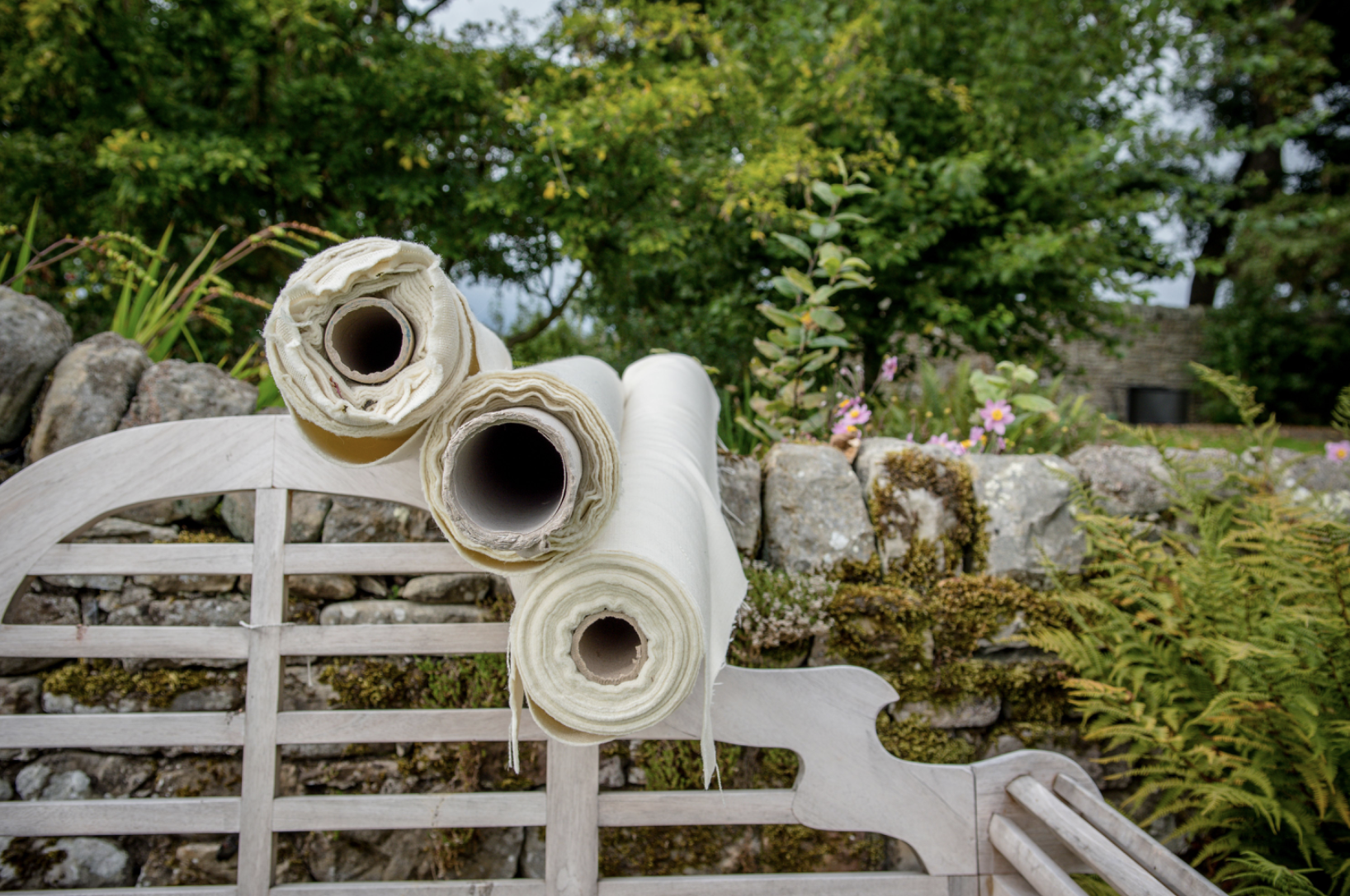
Bales of From Ewe fabric prior to printing
“I think people appreciate provenance, don’t they?” says Jayne. “It’s about a unique product. There’s a principle behind it which is important to us, and we hope people will appreciate that in these products.”
British Wool has told them it knows of no-one else working to such provenance; no-one using identifiable sheep from identifiable fields to make cloth printed with images created from identifiable fauna gathered where the sheep graze.
Quite aside from the craftsmanship which Jayne and Sara themselves bring to the table, the production of the fabric itself passes through the hands of dozens of artisans at businesses in England and Scotland. The journey to this point began months ago, when Jayne first contacted British Wool for advice. There, she was recommended Cheviot wool for the upholstery-grade fabric she required, and was pointed in the direction of the fourth generation family-run yarn producer Laxtons, in West Yorkshire.
The present incumbent of that company, James Laxton, then directed Jayne to Bute Fabrics (founded in 1947 by the Marquess of Bute to provide employment for service personnel returning home from the war). Further experimentation followed with the weave, and from there, they were recommended Schofield Dyers & Finishers in Galashiels to have the fabric washed, pressed, and flattened (finished).
Then, they headed to RA Smart in Macclesfield who experimented with digital printing techniques to achieve the fabric’s distinct character. “Everyone has been so helpful,” says Jayne. “Taking time to show us the processes, which are phenomenal, and this first batch of cloth is just gorgeous.”
Now Jayne and Sara are fine-tuning things in advance of their launch, while at the same time working towards their 2025 collection.
When the sheep whose wool will create that collection are clipped, their fleeces will be collected by British Wool, which will send them to Bradford to be hand-graded by specialists (about half a dozen men who have been doing this for decades, it seems). They grade fleece into six categories according to the staple length, crimp, fineness, handle and lustre.
From there, the fleece, which is filthy and greasy, goes off to be cleaned at another Bradford business, Haworth Scouring. This part of the process is fascinating, watching the fleeces start greasy and come out, says Jayne, “as gorgeous wool tops, like Mr Whippy!” This will then go to Laxtons to be made into yarn, thence to Bute to be woven, and to Galashiels to be finished before heading to Macclesfield for printing. It is exhausting just thinking about it.
Jayne and Sara will produce items for sale and take on commissions, including furnishing full rooms or properties for domestic and commercial customers. The uniqueness and the provenance of these products, in addition to their beauty, guarantees they stand out. As Jayne says: “This has a very different character to other woven wool. We can’t physically do huge quantities, but this is special. It truly is unique, and you know, no-one has really done this before.”
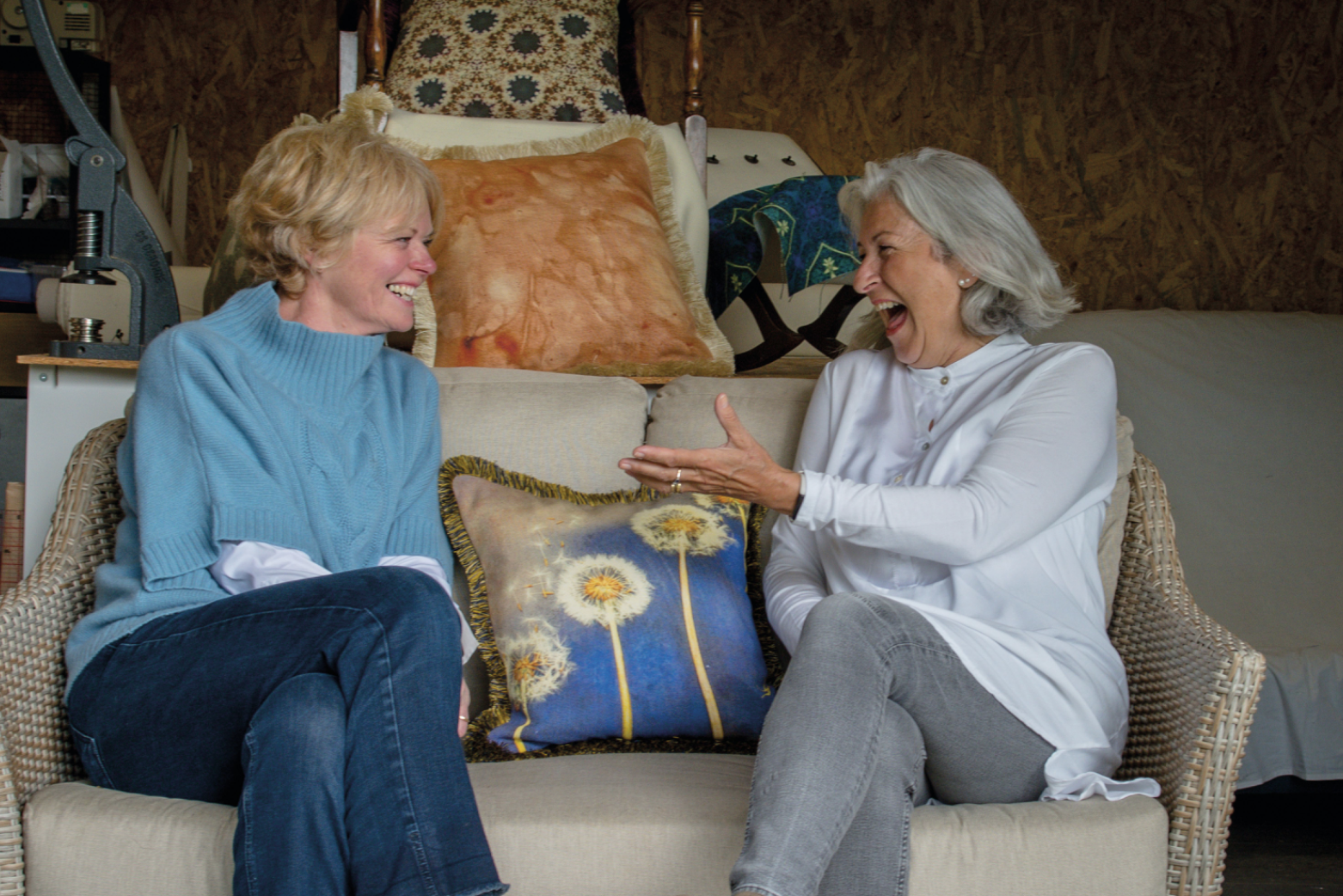
Jayne and Sara are country girls, fond of sheep, and sad that a good deal of British wool doesn’t stay in this country, while we import it from the other side of the world. Some British fleece is worth so little that farmers are looking at new breeds of sheep that self-cast so don’t need shearing, adds Jayne. That, and the idea that some farmers get so little for wool that they discard it is a scandal she says, and she hopes one day to work with British Wool to educate people and perhaps do a little to turn the tide.
We three agree that it is high time for a return of those lovely pure new wool TV ads featuring the sheep wandering across a studio floor to a soundtrack of Pachelbel’s Canon. In fact, as the afternoon wears on, we find a lot in common over sheep and their wool. Shouldn’t we all be supporting it? This is a good start...
www.fromewe.com