
Coming up roses
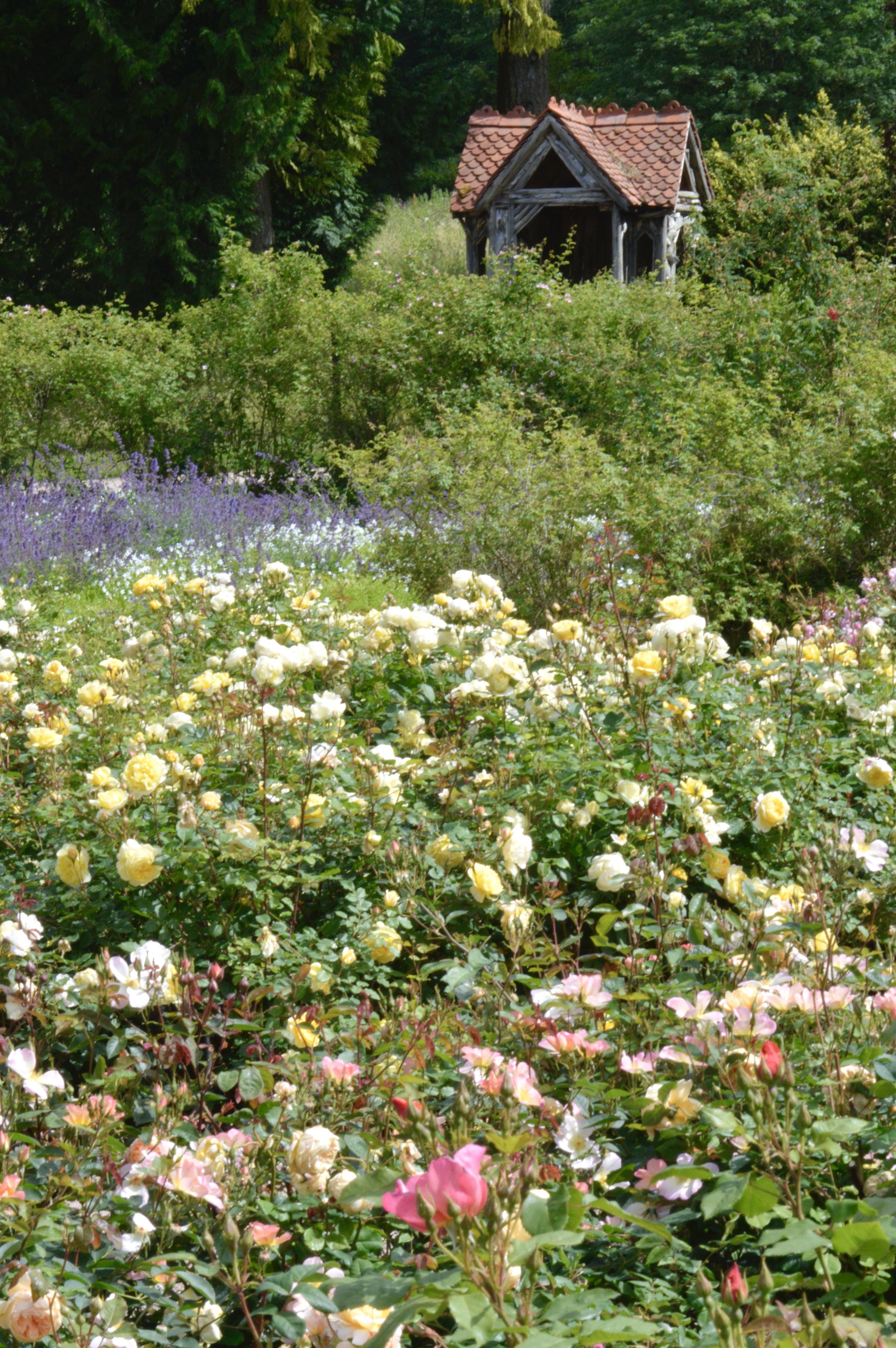
The rose garden with Matilda’s Summerhouse
Susie White celebrates the rose in its many beautiful forms both in her own garden and in Dan Pearson’s rose garden at Lowther Castle
The roses in my garden have flowered particularly well this year thanks to the June heatwave and a mulch keeping the soil moist. I grow them amongst the meadowy abundance of geraniums, catmint, sweet rocket and alliums. It’s a far cry from the rigidly pruned hybrid tea roses of my childhood that lined the path to the front door.
My favourite is one of the oldest roses known to cultivation, Rosa gallica ‘Officinalis’, the Apothecary’s Rose. Grown in the 13th Century near Paris, this highly scented rose was at the centre of a famous perfume industry. Its petals keep their colour well after drying and can be added to potpourri. Because it has a suckering habit I’ve been able to propagate it easily and repeat it around my garden.
The most prickly roses I grow have a wild nature. Rosa spinosissima, known as the Scottish briar or burnet rose, can be used for hedging because it suckers freely. It has many old cultivars and they were planted in country gardens; I was told that a yellow one often seen in Allendale was planted by miners. I have a lovely variety called ‘Single Cherry’, a vivid once-flowering red that grew for many years in Chesters Walled Garden.
Last month I visited the new rose garden at Lowther Castle, designed by Dan Pearson and part of his masterplan for the gardens. The vast castle was demolished in 1953 to avoid death duties leaving only a shell, but this gave Dan the opportunity to create a romantic, mysterious interior space, draping the ruined walls in climbers and running meandering paths through lush leafiness.
Outside the castle he designed a parterre that echoes the warp and weft of a threadbare tapestry. This is especially lovely in early autumn when white Japanese anemones and spires of Actaea simplex ’James Compton’ rise out of tall grasses and staggered blocks of yew hedging. His overall vision is a reimagining of the once-abandoned gardens and the rose garden is the latest development in a 20-year landscape masterplan.
Dan took his inspiration from William Morris’s quartet of poems on the Sleeping Beauty myth, poems written to accompany a series of paintings by Sir Edward Burne-Jones. The design is in the shape of an Old English Rose and is encircled in thorny briar roses. You enter through one of the kissing gates and are immediately aware of the scent of 2,000 roses. It’s a rich sensory experience where you are enveloped in the perfume, light and colour of the garden in its large woodland glade.
The borders are shaped like petals that curve inwards around a central Victorian fountain, its water jets mimicking the stamens at the heart of a rose. There are 29 different varieties ranging from clear white, through shades of pink and red, to orange and yellow. Rosarian Michael Marriott of David Austin Roses gave advice on the best choices for Cumbria’s wet climate. David Austin Roses have been breeding roses since 1961, growing them on the family farm in Shropshire. Among their many introductions, their award-winning English Roses combine old-fashioned charm and scent with repeat flowering.
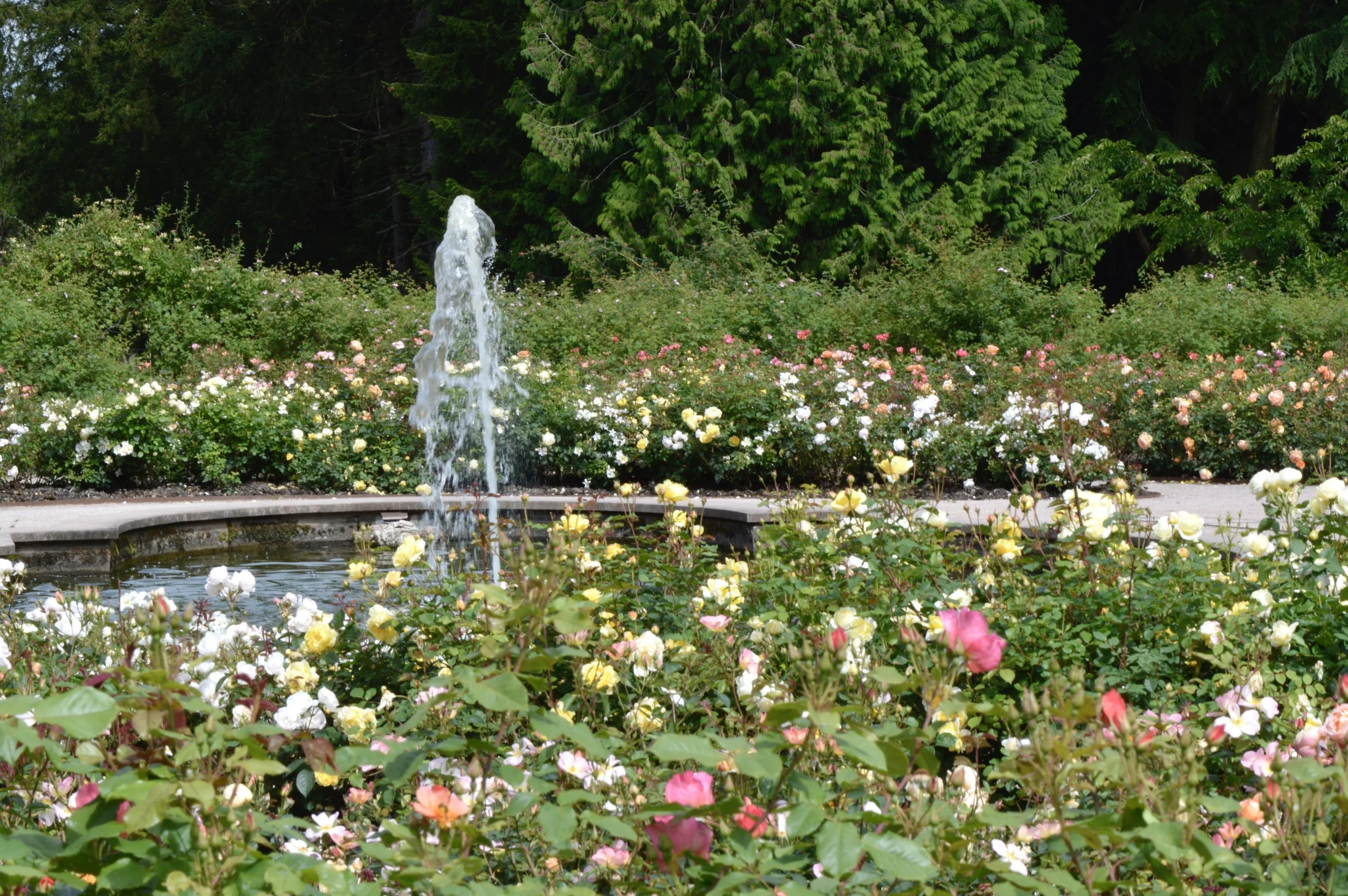
The central foundation in the Lowther Castle rose garden
To begin with I just took it all in, revelling in the sweet heady scents and the warmth of the sunny day. The air was busy with meadow brown butterflies, small skippers and hoverflies as well as honey bees and bumblebees collecting pollen from the single varieties. Then it was out with my notebook, taking photographs of each variety and trying to relate the different beds to the plans in each quarter of the garden.
Here was a host of characters with roses named after people, books and music. It is these associations that can make roses feel personal, as if you know them. Some remind you of places you’ve visited. There was ‘Harlow Carr’ named after the RHS garden near Harrogate, a place that I’ve visited many times. And ‘Port Sunlight’, an English Shrub rose named after the model village in the Wirral.
Among the English Roses at Lowther were many well-known figures: deep crimson ‘Darcey Bussell’, red-pink ‘Benjamin Britten’, apricot ‘Roald Dahl’ and white ‘William and Catherine’. Drawn from history were Nelson’s mistress ‘Lady Emma Hamilton’, ‘Charles Darwin’ and ‘Vanessa Bell’, the sister of Virginia Woolf and founder of the Bloomsbury Group.
Suitable to the theme of myth and romance were ‘Maid Marion’, a many petalled fragrant pink rose, and the rich orange of Tennyson’s ‘Lady of Shallot’, the subject of the pre-Raphaelite painting by Waterhouse. The free-flowering and healthy rose ‘The Mayflower’ was named after the pilgrims’ ship and the soft pink of ‘Scarborough Fair’ after the Simon & Garfunkel song.
The motif of the thorn was cleverly used as the footing for simple wooden benches and to add drama to a series of black metal arches that created a tunnel of white roses. Scrambling over these hoops were a trio of 20 footers: Rosa mulliganii, Rosa Francis E. Lester and the well-known ‘Rambling Rector’.
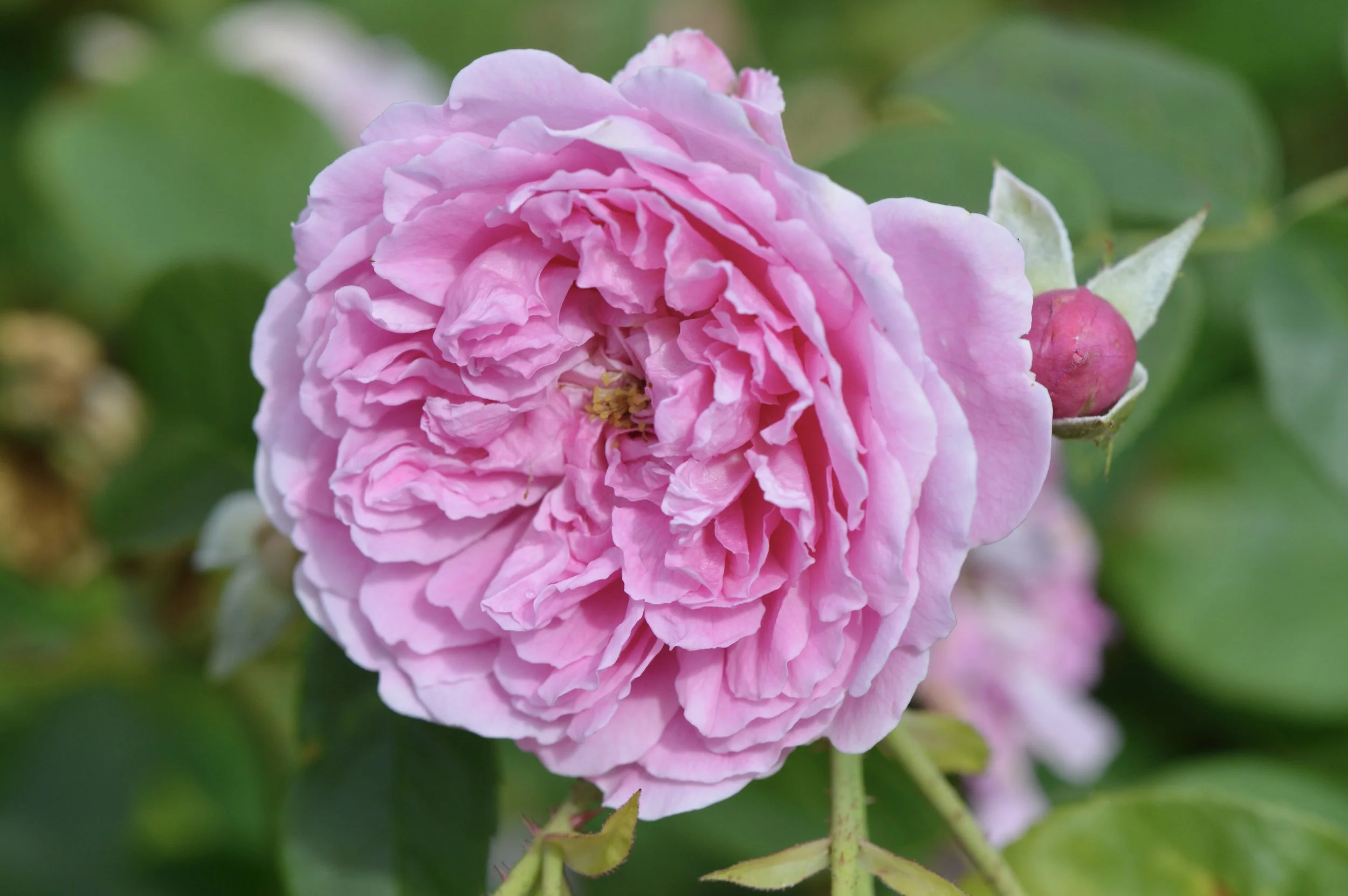
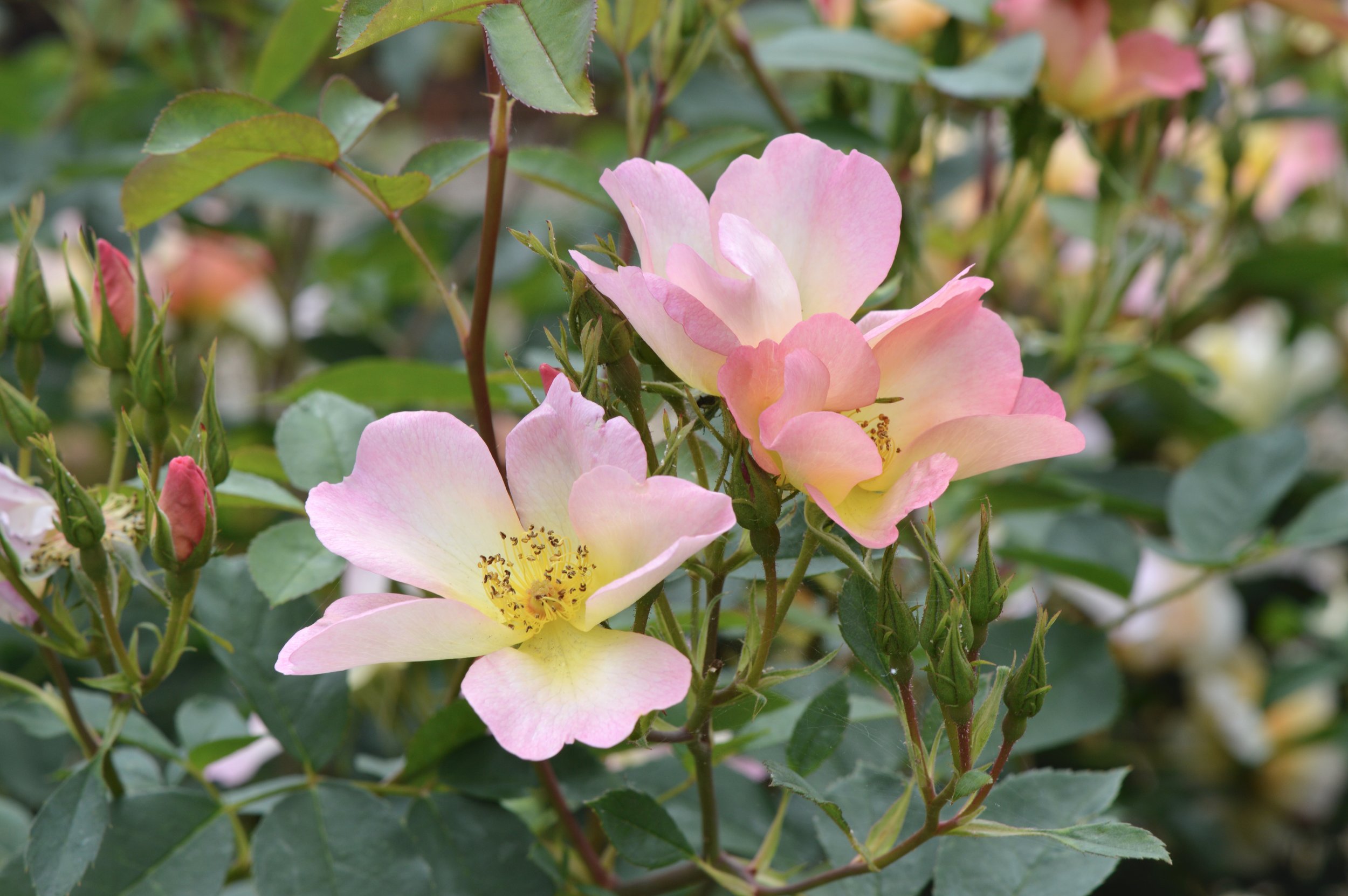
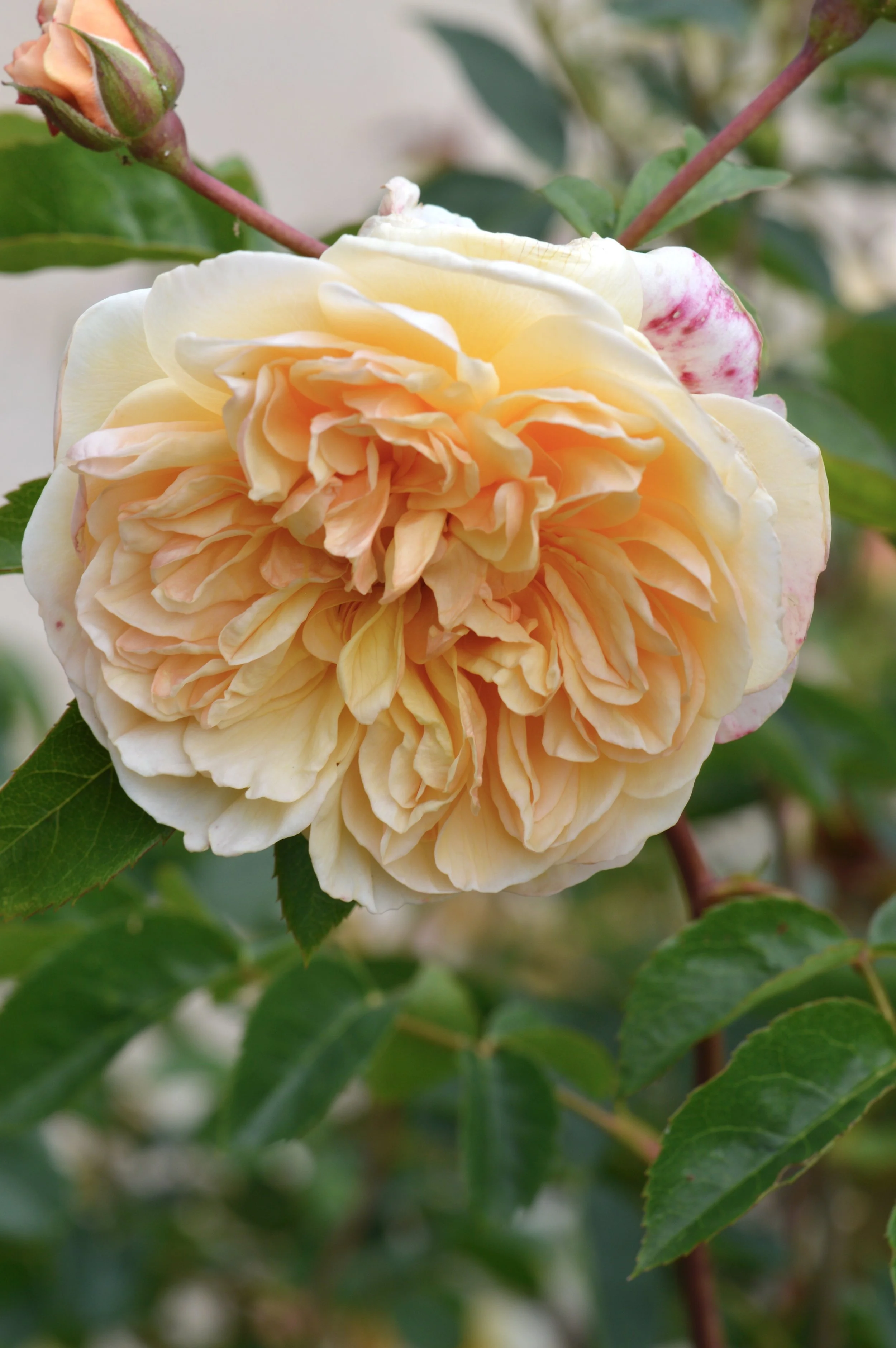
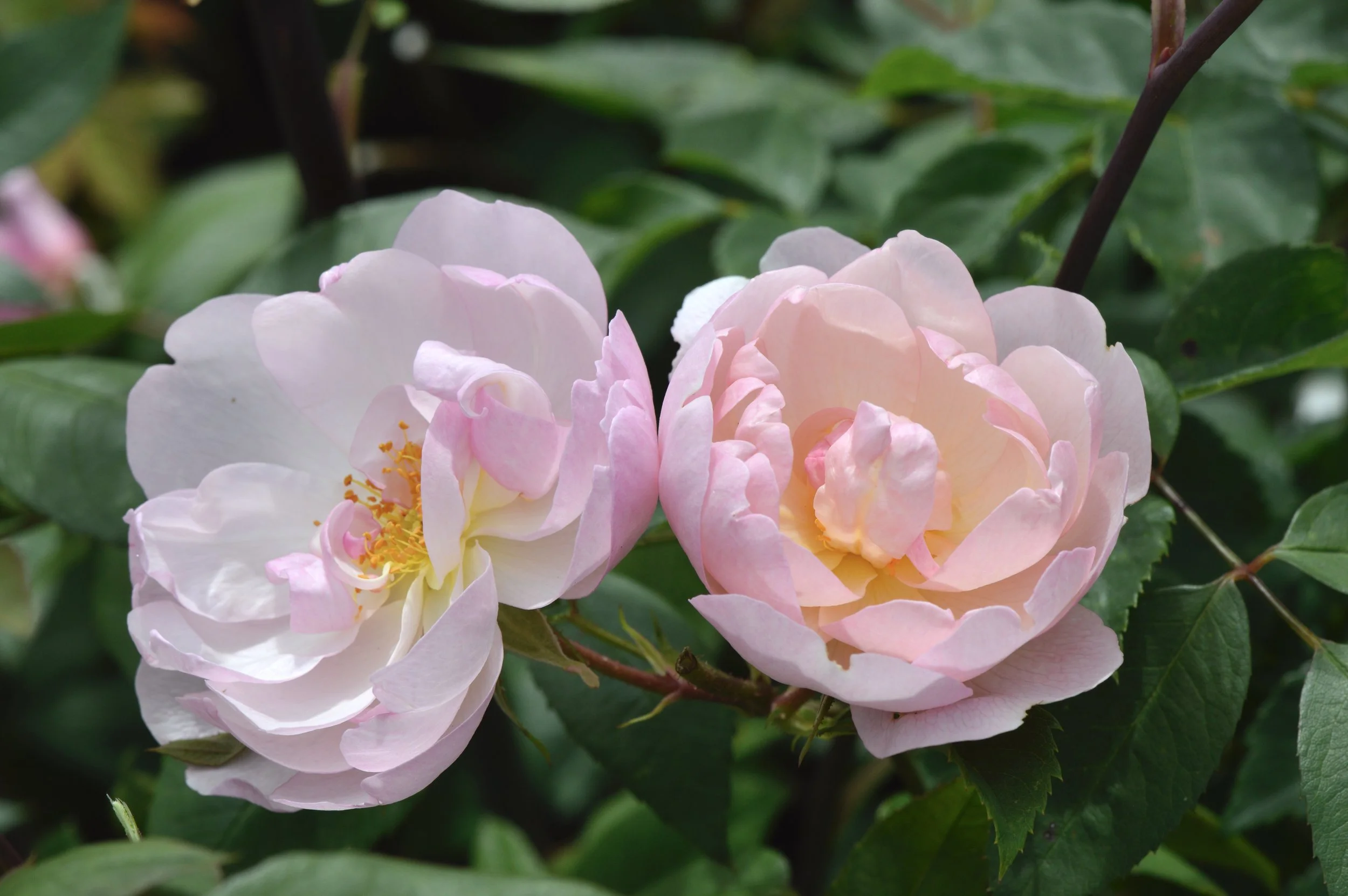
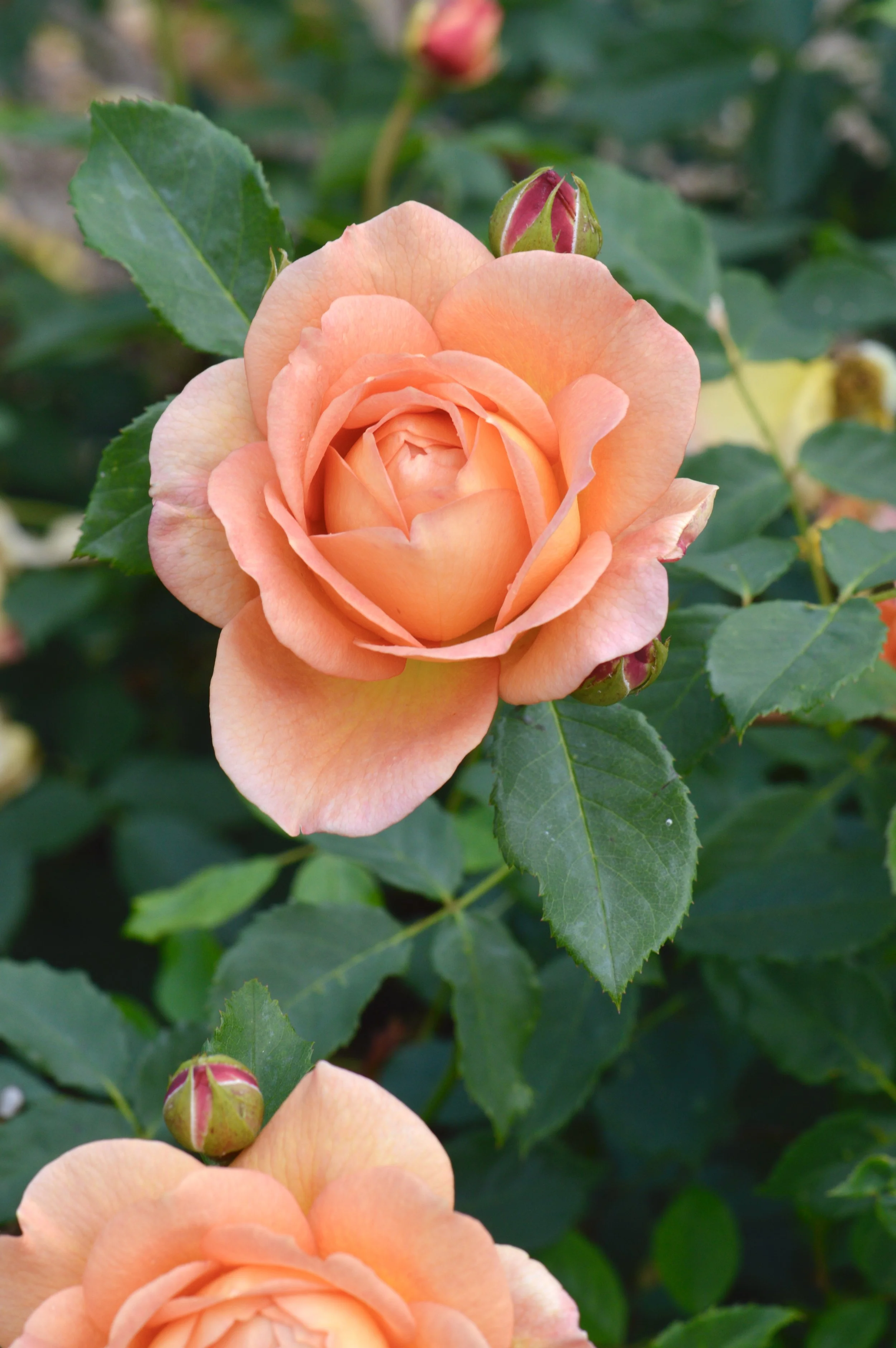
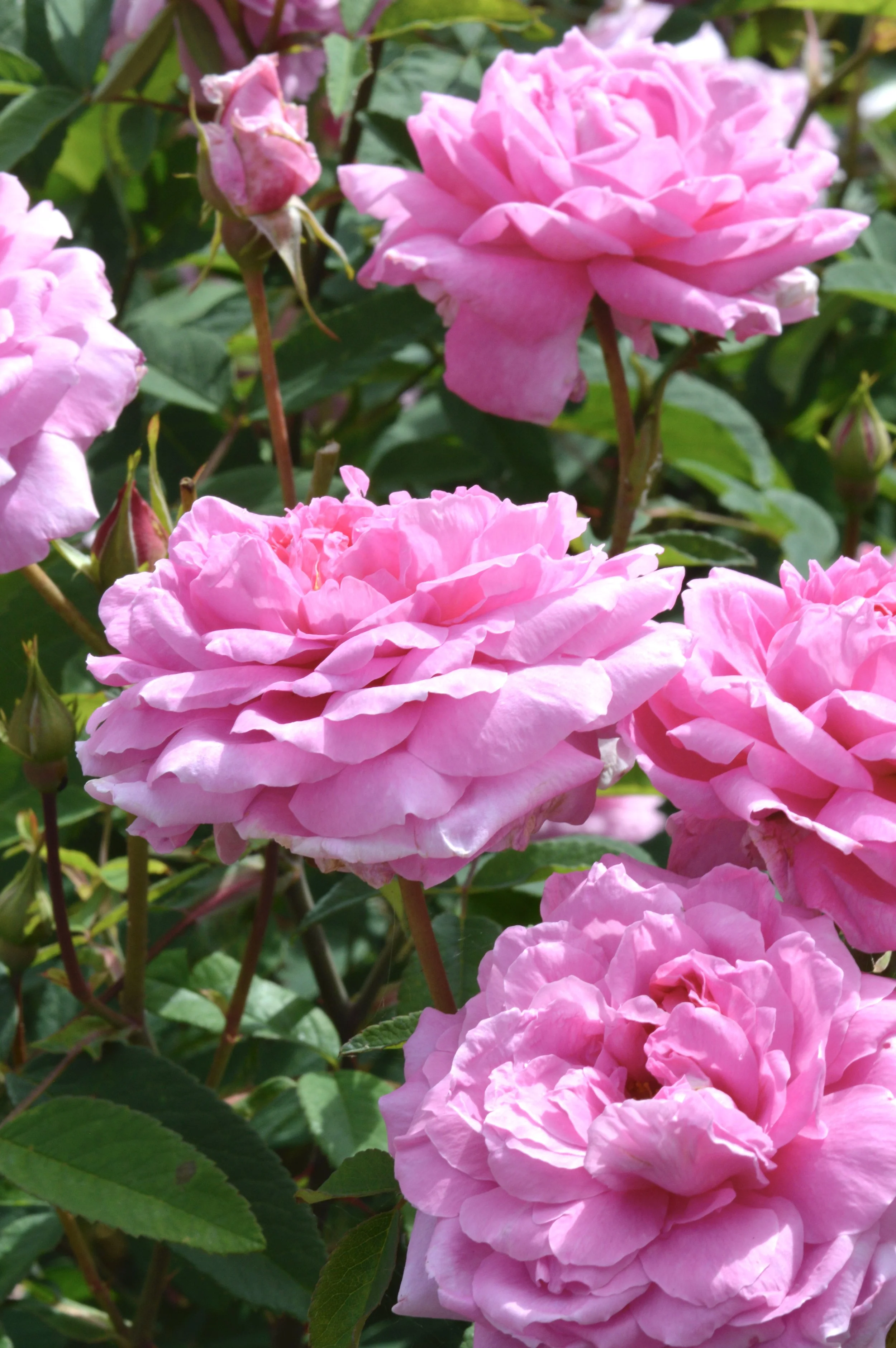
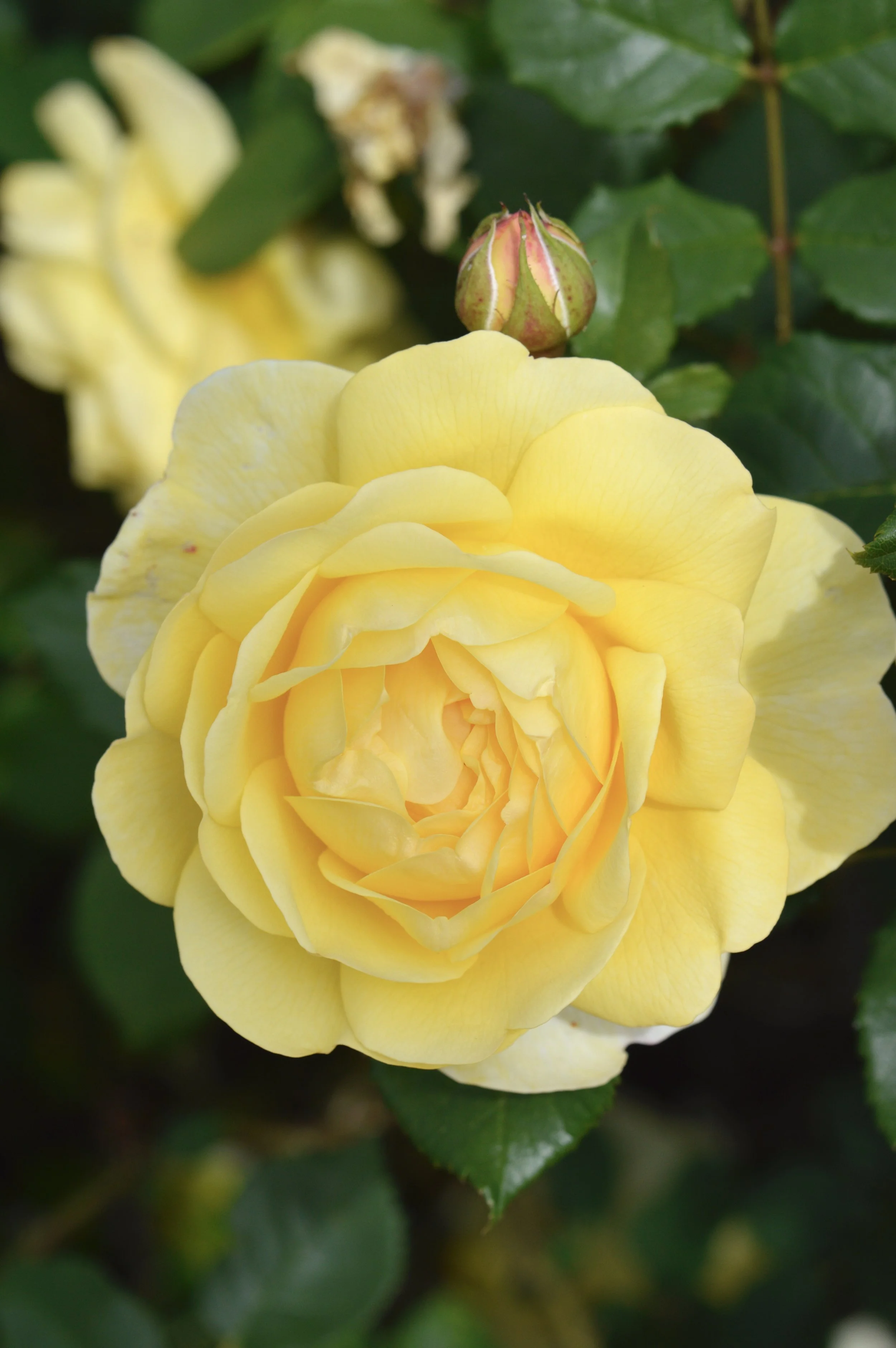
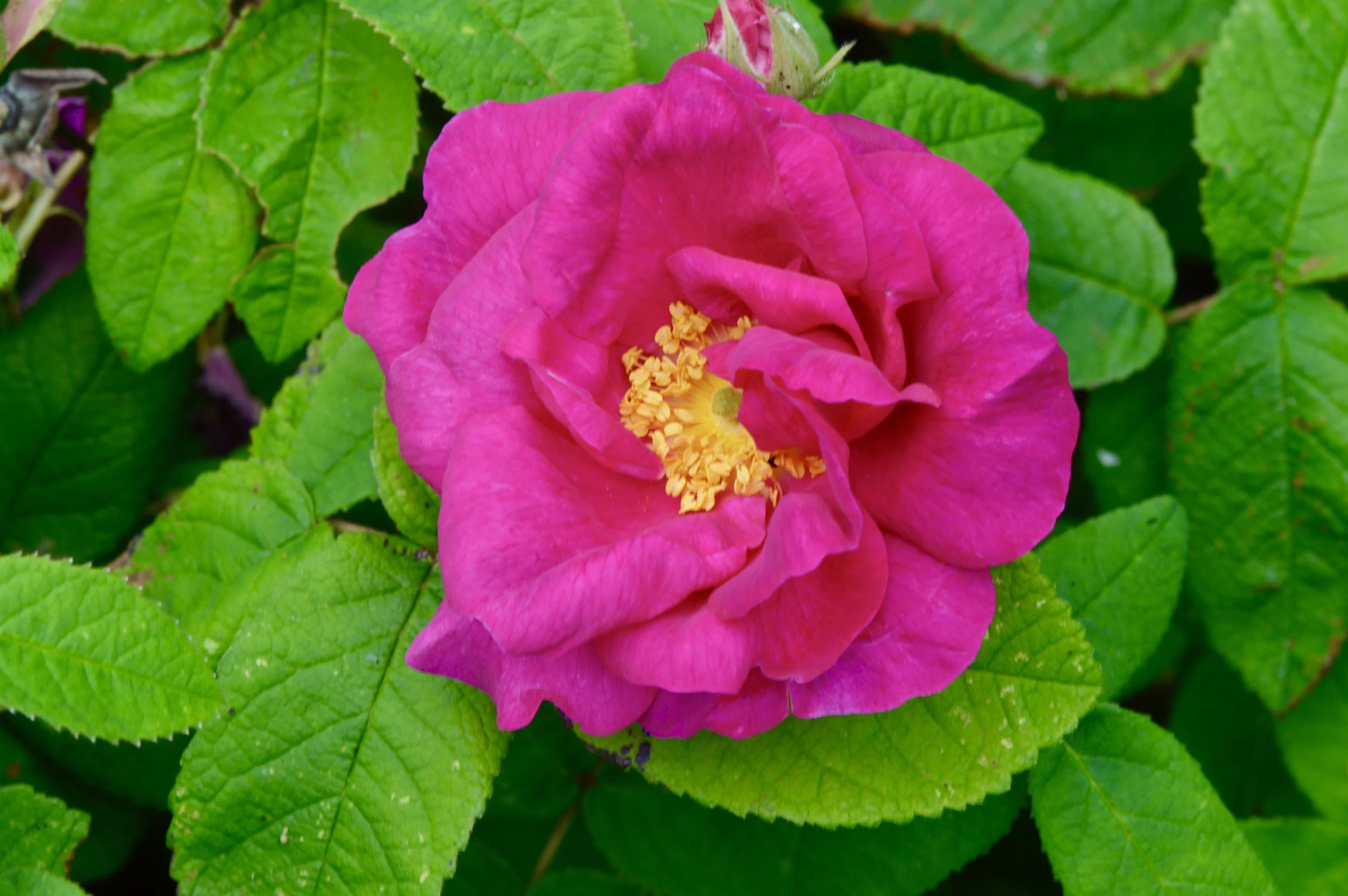
Above from top: Harlow Carr; Morning Mist; Port Sunlight; Scarborough Fair; The Lady of Shallott; The Mayflower; Vanessa Bell; The Apothecary’s Rose
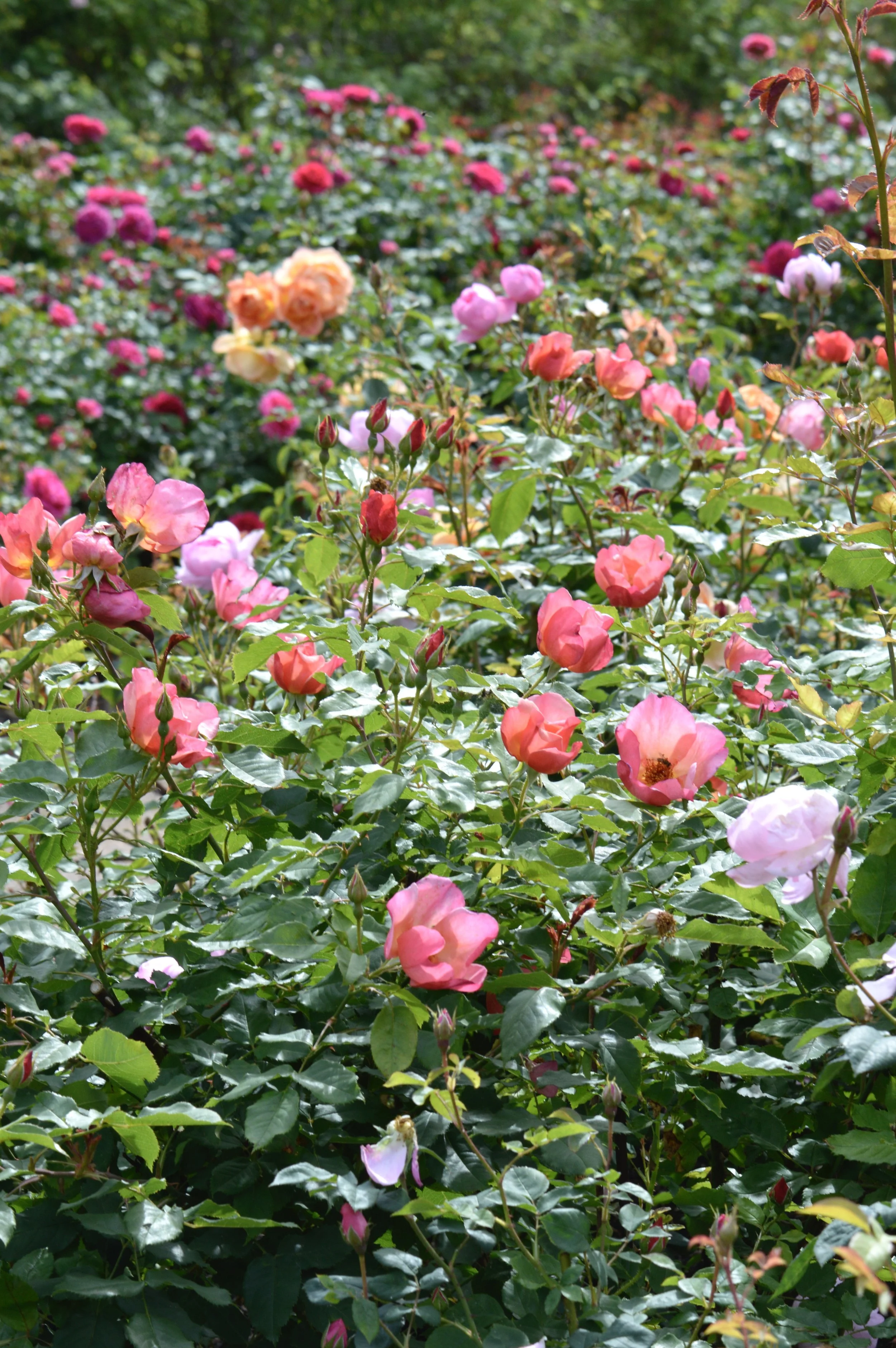
Sunlight shining through ‘Morning Mist’
Borders of perennials flowed out from the central rose beds in the cool colours of white Viola cornuta, blue catmint and phacelia, white Gillenia trifoliata, brunnera and scented woodruff. Two summerhouses look across the new rose garden: the fairytale wood and red-tiled Matilda’s summerhouse and a newly built Japanese- style tea house on an elevated mound.
I first visited Lowther Castle in 2011 when many of the features in the overgrown gardens were being uncovered. Mossy steps, dilapidated summerhouses, scrub and self-sown trees were being cleared and there was nothing where the rose garden now is. It has been fascinating to see the changes.
Although I revelled in the deep velvety crimsons of ‘Munstead Wood’ (named after Gertrude Jekyll’s garden) and ‘Darcey Bussell’, it was the softer shades that really caught my eye. The one that I kept coming back to for its subtle colouring was ‘Morning Mist’.
I first met this rose at Craster when a group of fisherman’s cottage gardens opened for the National Garden Scheme and I instantly fell in love with it. An unusual shade of coral-pink with prominent yellow stamens, this rose was introduced by David Austin in 1996. It has a light musk fragrance and later on has large orange hips.
It’s a shrub that has that informal look that makes it fit well into relaxed planting schemes and, above all, its open shape makes it good for insects. Roses don’t produce nectar but they do have protein rich pollen which bees need for energy and for development of their brood. ‘Morning Mist’, along with another single-flowered species Rosa mutabilis (a favourite of Dan Pearson and one he grows in his own garden) are plants I’d like to buy bare rooted next winter. Visiting a garden means you not only come away with ideas, but with a wish list.