
Secret gardens
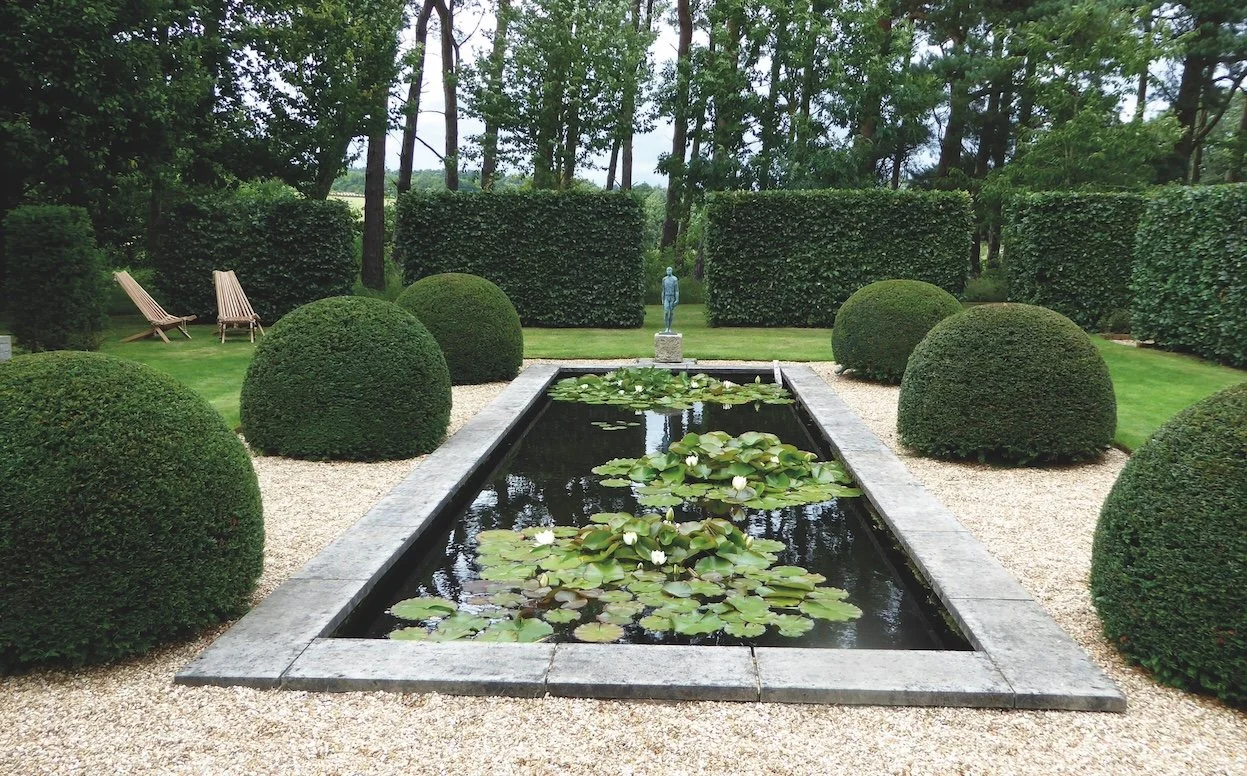
Symmetry and balance at Lambshield (all photos, Susie White)
First published in edition 205 of The Northumbrian, April/may 2025
Susie White Susie White guides us around some of the usually private gardens due to open in 2025 for the National Garden Scheme
It was such a stunningly simple idea, but revolutionary at the time; to raise funds for nursing through people opening their gardens to visitors.
At a council meeting of the Queen’s Nursing Institute in 1927, Miss Elsie Wagg suggested that people be asked to open their gardens for “a shilling a head”. It took off straight away, with 609 gardens opening their gates, and led to the formation of the National Garden Scheme. Among those who took part were Winston Churchill and the writer and gardener Vita Sackville-West.
In the near-century since, the NGS has donated many millions of pounds to nursing and health charities. More than £3.5m was donated last year alone, and the core beneficiaries – Macmillan Cancer Support, Marie Curie, Hospice UK, and The Queen’s Nursing Institute – are supported annually, providing a vital funding stream.
There’s a wonderful atmosphere of generosity, joy and community in these open gardens. With the very reasonable price of a ticket and no charge for children, it makes for an inexpensive day out. In Northumberland, we have a rich and varied range of gardens to visit. From picturesque village plots to historic manor houses, grand castles to city hospices, there’s an eclectic mix of the traditional and the contemporary. And with the centenary year coming up in 2027, the NGS is keen to find new gardeners to join the scheme.
There is often a misconception that you must have a large and perfectly maintained garden for it to be of interest to other people. But nationally there are groups of allotments, tiny urban yards, wildflower meadows, city back lanes and all manner of inspiring places. Sometimes, a village will participate so that you can wander around, and this is happening in July in Netherwitton, west of Morpeth. The gardens of this picturesque village range from small back plots to colourful cottage gardens and larger rural spaces. With teas in the village hall, this is a community event: sociable, fun, and a great way to get ideas.
In the fishing village of Craster a pair of former fisherman’s allotments will open. Within sight of Dunstanburgh Castle, they show what can be done in a windy coastal setting and include colourful prairie planting, small ponds and vegetable beds. Further north, tucked under the Cheviots, is Kirky Cottage, created by the well-known plantswoman Ginny Fairfax using many of her favourite plants from nearby Mindrum, which is also open on the same day. Her gravel garden is scented with great bushes of lavender and flourishing roses, and her plant sales are legendary.
You can learn so much from visiting NGS gardens, especially in how to deal with your own growing situation. The Beacon, open by arrangement, sits halfway up very steep land in Stocksfield, showing just what you can do with a dramatic slope. Often, gardeners in Northumberland have to deal with the wind, creating shelter with tree planting or walls. Cresswell Walled Garden was built in the 18th century as a kitchen garden next to a pele tower. It was abandoned in the 1930s when the main house, Cresswell Hall, was demolished. Managed by volunteers, it’s now been completely revitalised with flower borders, a medieval orchard, a gazebo, wildlife pond, greenhouse and vegetables.
Walled gardens were a common feature in Northumberland for large houses to grow produce, and this tradition is maintained in an exemplary way at Capheaton Hall. The extensive Victorian glasshouses feature vines, apricots, peaches, tomatoes, cucumbers and flowers, while outside there are flourishing vegetable borders. In front of the hall, magnificent views extend over the countryside and large formal ponds reflect the sky. A pretty 19th century conservatory holds tender plants, there’s a Georgian folly of a chapel, and giant Himalayan lilies stand tall and ethereal in the woodland.
Large country houses were often positioned with spectacular views and this is particularly so of Halton Castle, high on a hill above the Tyne Valley. Terraces lead up to the castle, which comprises a 14th century pele tower and an attached Jacobean manor house. They are not open to the public, but you can visit the charming chapel with its Norman origins. Halton Castle’s massive beech hedges shelter wide herbaceous borders, a cut-flower garden, and a box parterre with vegetables. Paths are mown through meadows swaying with ox-eye daisies and wildflowers in summer, a place for children to run in and explore.
Looking at other people’s gardens, chatting to the owners, is one of the best ways to get ideas. Seeing a garden develop is one of the joys of regular visits through the National Garden Scheme. Ferndene in Old Ryton has been gradually developed, even taking in a wooded dene. Resplendent in spring with tulips and other bulbs, in summer there is a wide range of perennials, roses and a formal box border. Making the most of a damp area, boardwalks run through a bog garden and there’s a wildlife pond and willow work.
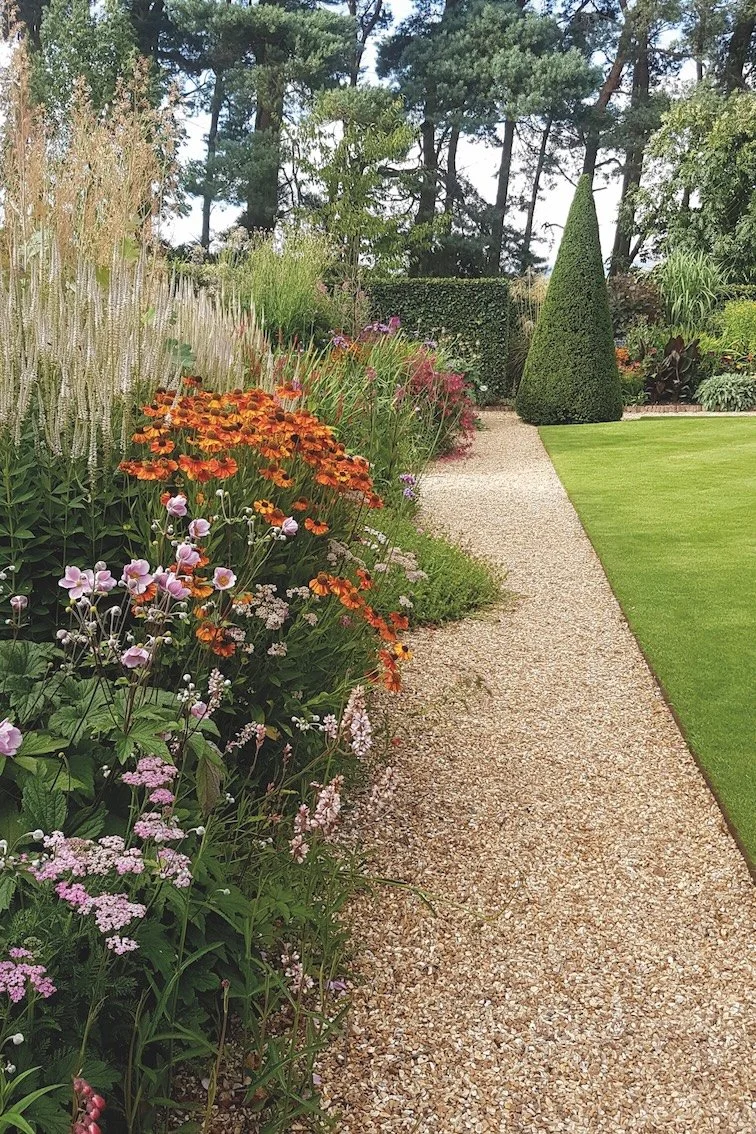
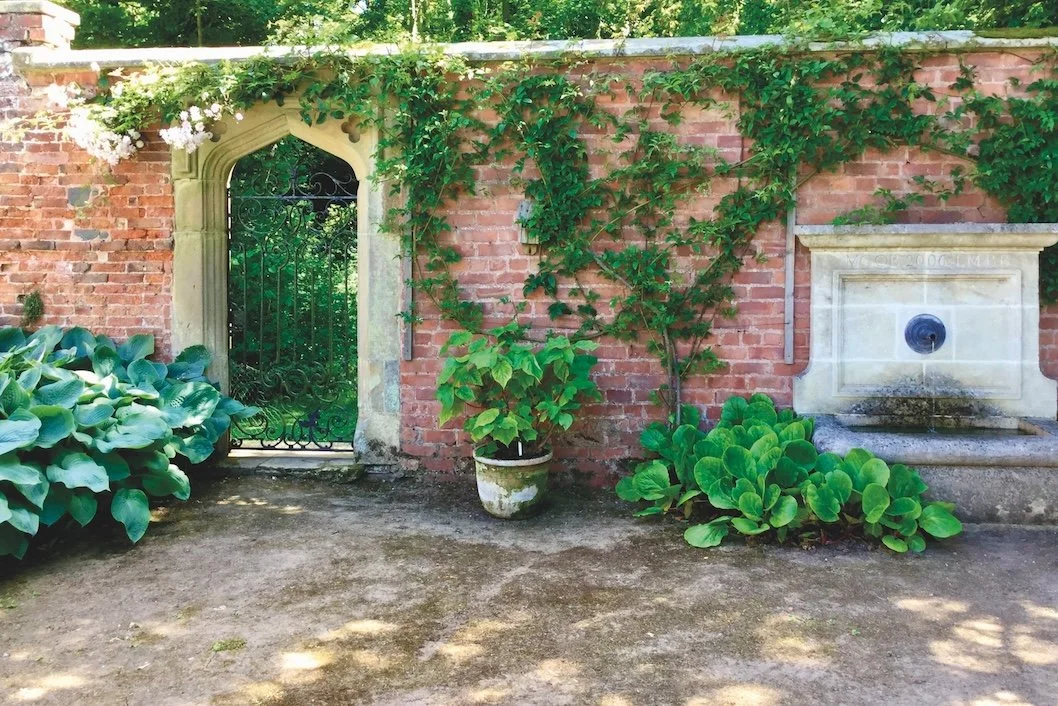

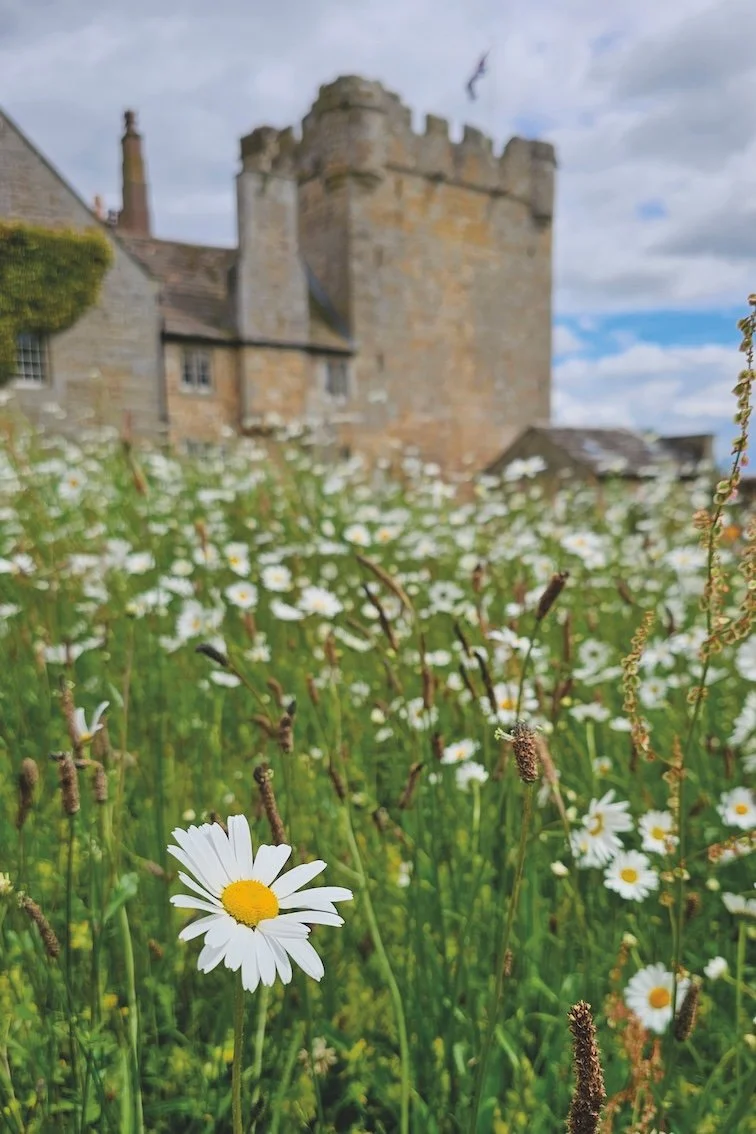
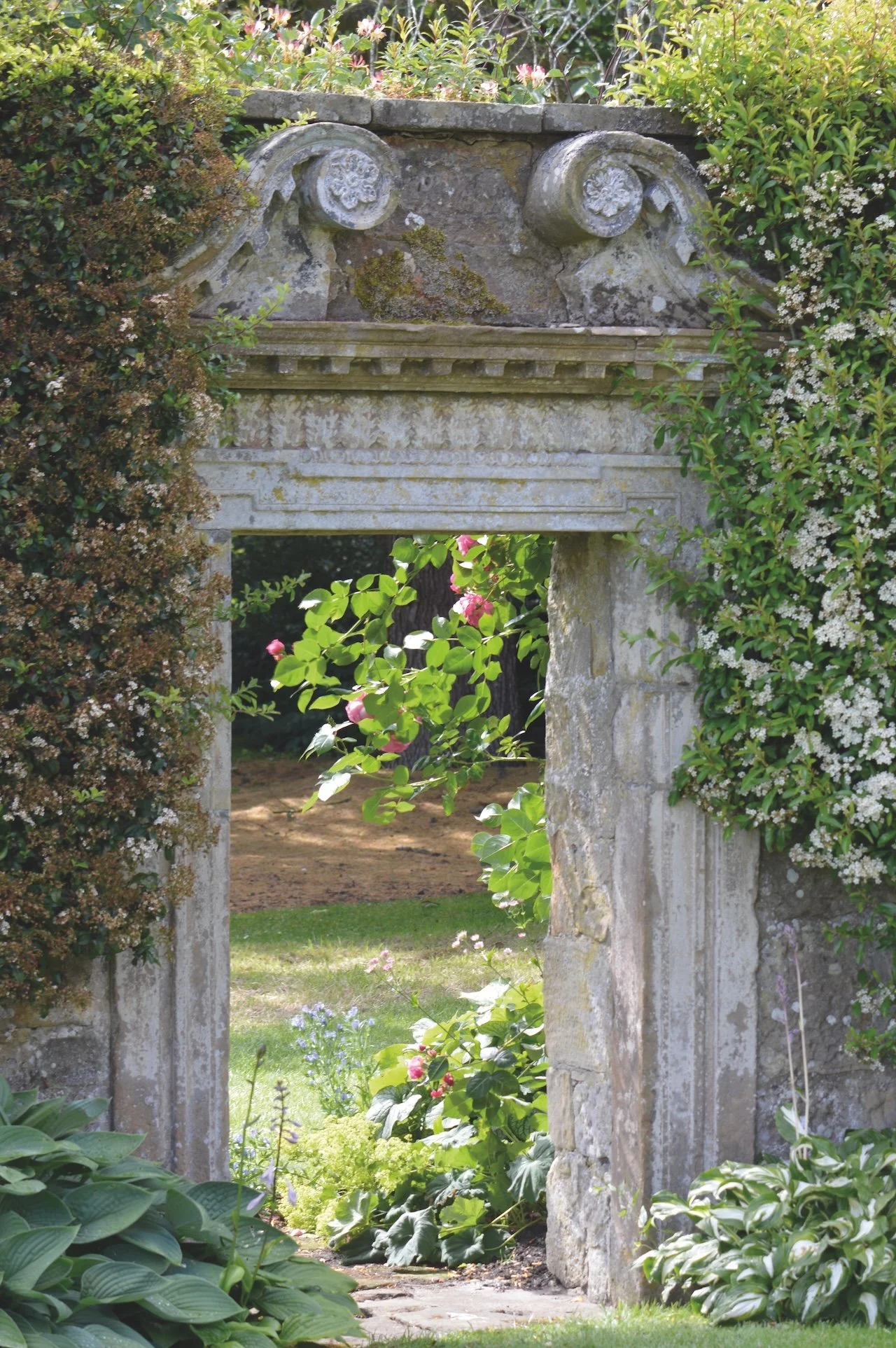
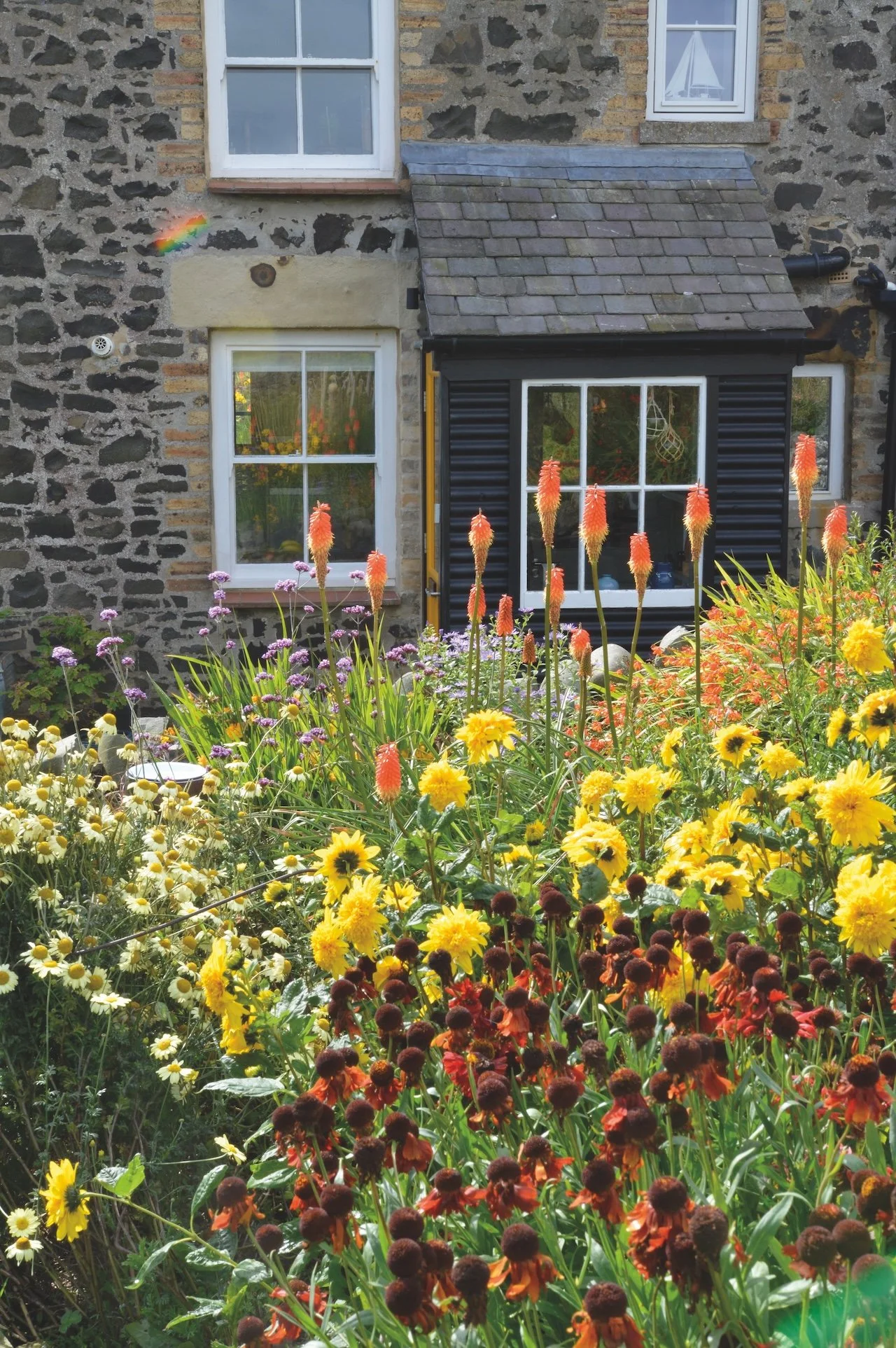
Above: Beautifully planted borders of Lambshield; Foliage planting in dappled light at Capheaton Hall; Lavender and roses fill the garden of Kirky Cottage; Ox-eye daisy meadow at Halton Castle; Romantic rose covered arch at Capheaton Hall; Vibrant planting at 1 Chapel Row, Craster
For alpine enthusiasts, High Trees in Hexham holds a wealth of unusual plants, many grown from Alpine Garden Society seed. Specimen trees include white-stemmed birches, Betula jacquemontii, a peeling barked Acer griseum, and a handkerchief tree, Davidia involucrata. Specialities include Himalayan poppies, bulbs, magnolias and rhododendrons as well as flowing borders, a highlight being the yellow scented trumpets of day lilies.
As well as historic gardens such as Whalton Manor with its Jekyll/Lutyens legacy, there are contemporary gardens, and Lambshield is a 3½ acre country garden begun in 2010. Beautifully laid out, each area around the old stone farmhouse has a different atmosphere, from the pared-back restraint of the rectangular pool garden with its yew hedges and topiary to the mixture of grasses and modern sculpture. Pleached hedges enclose intimate spaces contrasting with large, hot-coloured borders, cloud hedges and a woodland garden that sweeps down beneath mature trees. Local craftsmen have made green oak buildings using wood from trees at Lambshield and oak gates and cleft larch fencing.
Another contemporary garden designed by Chelsea medal winner Sarah Price for the Maggie’s Centre in Newcastle will open with a gardener on hand to explain the design. The Marie Curie hospice is another city garden, part-funded by the NGS; a reminder of where the money goes from garden visits – to nursing and health charities. In addition, granting bursaries to help community gardening projects and support gardeners at the start of their career.
For the garden visitor it’s an affordable day out, with beautiful gardens of all sizes and shapes, friendly chat, plant buying and, of course, tea and cake.
For information about the annual National Garden Scheme in the North East, pick up a copy of the booklet available from libraries, garden centres and other outlets, or you can find it online at: https://tinyurl.com/NGS-NorthEast
You can also search for any garden at: www.ngs.org.uk
To share your garden with others, whatever its size, while raising money for these important charities, contact the local NGS team via email at: maxine.eaton@ngs.org.uk or telephone 077154 60038