
Let the grass grow
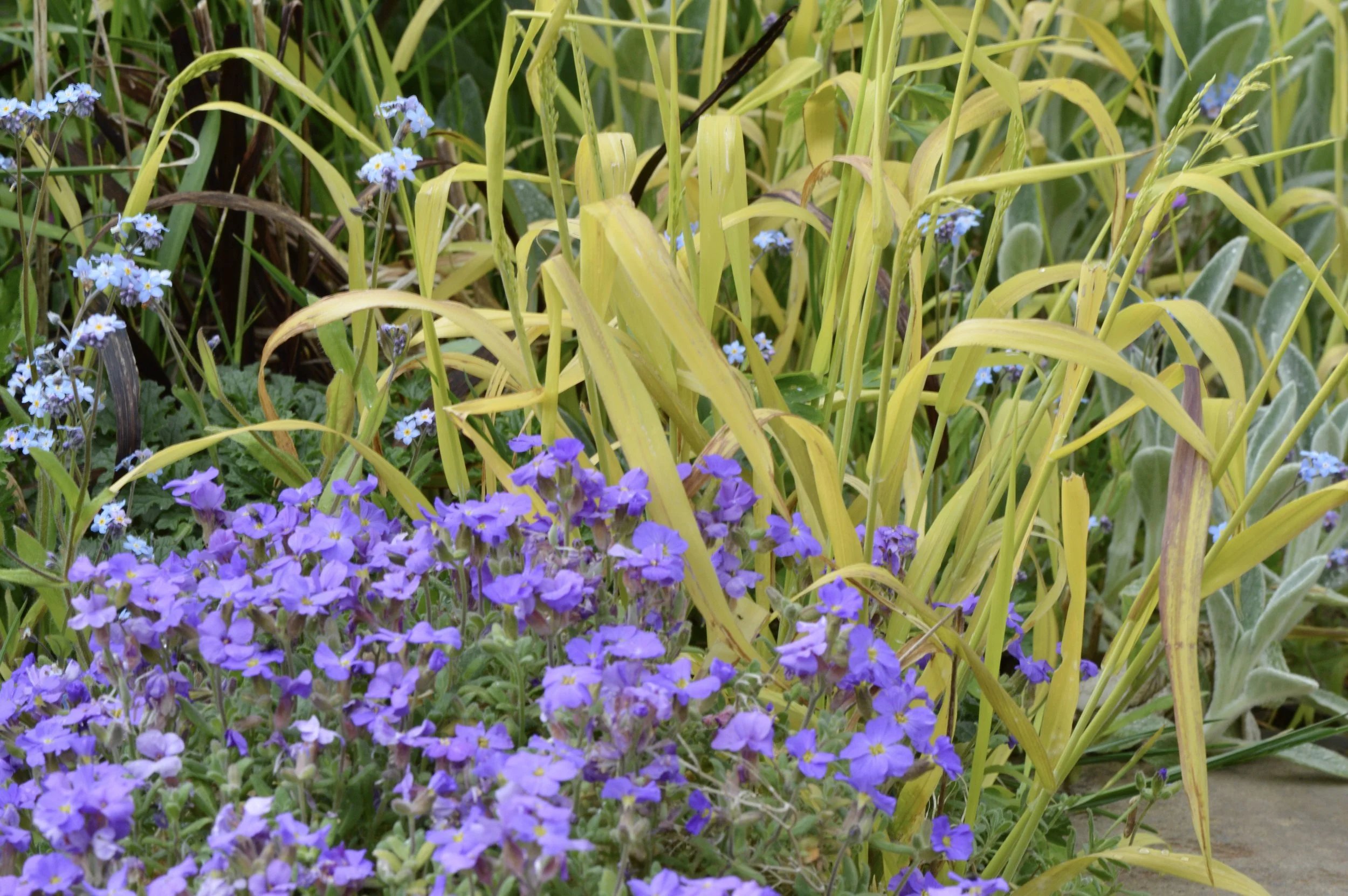
Bowles golden grass with forget-me-nots and aubrieta
First published in edition 196 of The Northumbrian, Oct/Nov 2023
Susie White celebrates the ornamental grasses which lend life, texture and height to her garden all year round, combining them with perennial plants for a billowing meadow effect
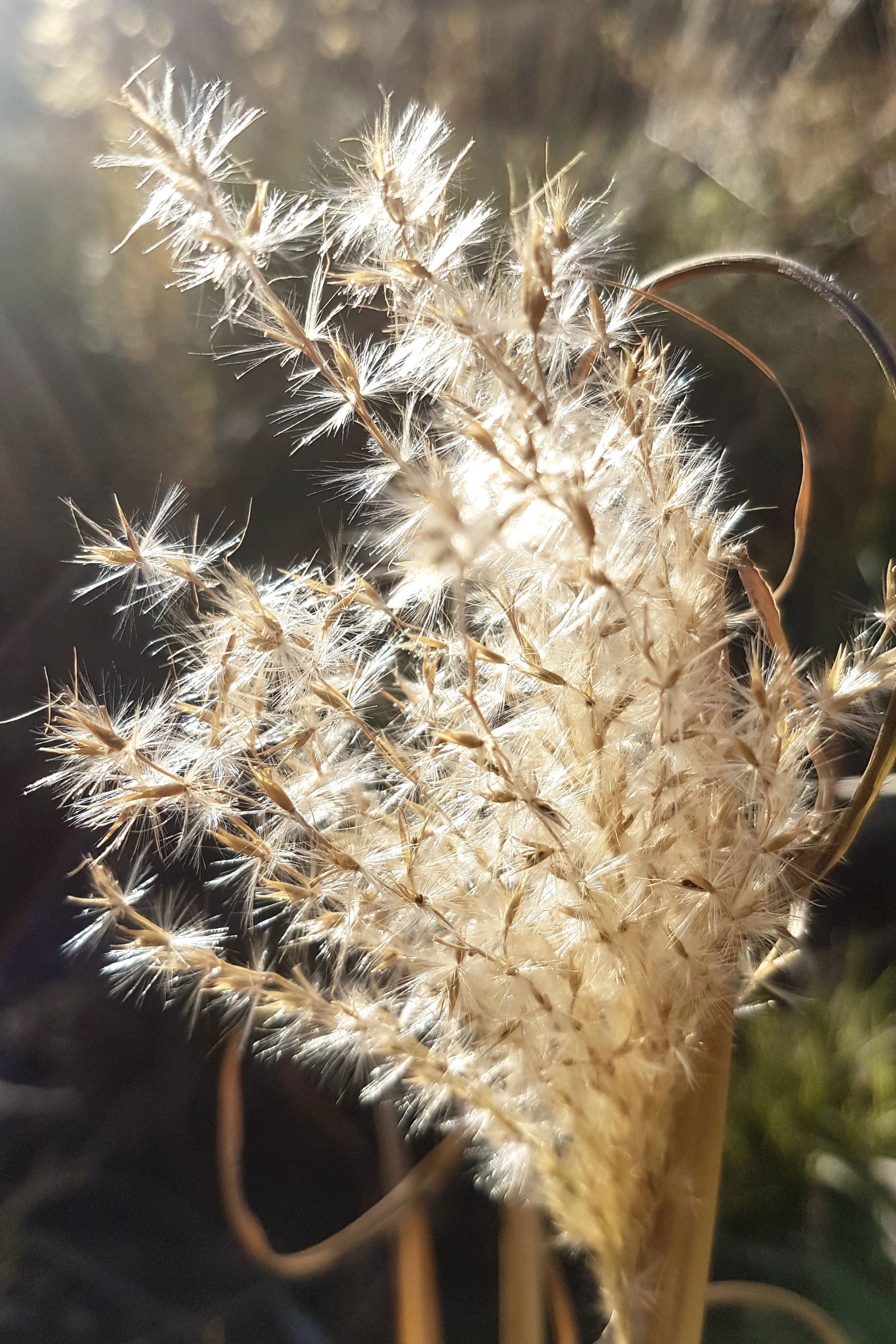
On a fine autumn day, the low angle of the sun illuminates every delicate seedhead on my Stipa gigantea. Flashing like burnished gold, you can see why this plant is known as golden oat grass. It’s one of many ornamental grasses I grow in my borders, combining them with perennial plants in a billowing meadow effect.
Although we tend to assume that this blending of grasses and perennials is relatively new, it was championed by William Robinson at Gravetye Manor in Sussex. He challenged the formal plantings of Victorian England, advocating a more naturalistic style in his garden and in his book The Wild Garden, published in 1870. Robinson grew several miscanthus varieties including the striped ‘Zebrinus’. He mixed pampas grass with Japanese anemone and acanthus – a combination that wouldn’t look out of place in today’s planting schemes.
Gertrude Jekyll incorporated some grasses in her designs, but it was German nurseryman Karl Foerster who really popularised them. His name is remembered through one of the most useful of all grasses, Calamagrostis x acutiflora ‘Karl Foerster’. He’s alleged to have spotted it alongside a railway line in the 1930s and pulled the train’s emergency brake in order to collect it. It’s a tall, slender grass that gives vertical interest not just in summer, but throughout winter as it bleaches to the colour of straw.
From the 1970s onwards, the trend for incorporating grasses into design schemes has fitted perfectly with the desire for more naturalistic gardens. With leading figures such as Dutch architects Piet Rudolf and Henk Gerritsen, it became known as The Dutch Perennial Wave. The aim was for year-round interest inspired by natural environments and it is sometimes known as prairie-style planting.

Sunlight illuminates the Stipa gigantea, golden oat grass
Ornamental grasses add texture, drama and swaying movement and can be woven through borders, planted in containers or grown in gravel gardens. They vary enormously in height, shape, foliage and colour, from diminutive blue fescues to the giant reed Arundo donax.
There are grasses for shade, for sun-baked dry positions, for pondside plantings or coastal areas. Immensely versatile and pretty low maintenance, it’s not surprising that they have become so much a part of garden culture.
I grow grasses throughout my garden and they bring different qualities to each season of the year. Spring sees the fresh bright yellow of Bowles’ golden grass providing complementary colour to the blue of forget-me-nots. A yellow form of wood millet, it was discovered by the famous 20th Century gardener EA Bowles and has a light, airy lushness that is perfect for a woodland border.
Another native is the wood melick, the dainty Melica uniflora albida, which gently seeds in shade. I grow it along a path edge where it curves delicately with its pale flowers like grains of rice.
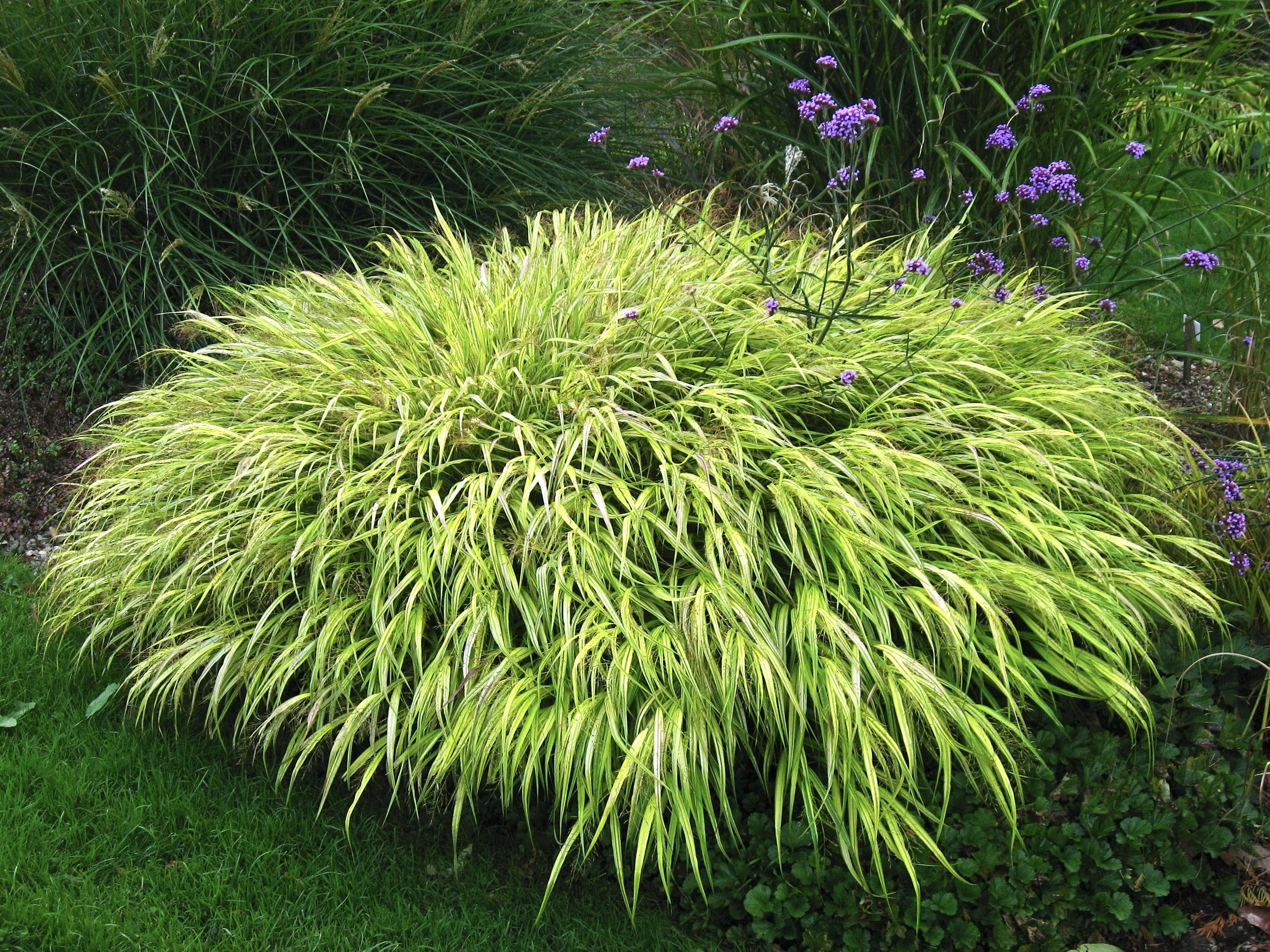
Variegated Japanese forest grass
Japanese forest grass is one of my favourites with its cascading rhythmic shape. I grow both the gold variegated form and the equally beautiful species plant, using them as repeats to unite areas of the garden: balanced either side of a path, spilling out of a galvanised tank, arching over terracotta pots.
Then there’s the dainty little quaking grass Briza media, which you see growing in the uplands; a delightful native that self-seeds. I grow this in gravel where the soil beneath is moist but well-drained. It makes a good choice for green roofs and its dangling flowers tremble in the slightest breeze.
These are all plants that like it cool. Grasses are divided into two types: those from cool climates and those from warm, sometimes known as cool-season and warm-season grasses. Knowing which category a plant falls into is a guide to how to care for it. Cool season grasses such as tall calamagrostis, airy molinia and feathery stipa are the earliest to green up in spring, so these need cutting back first.
It depends on the weather, but when I start to see fresh green growth, I generally cut them down in February. I use hedge trimmers, cutting in swathes from top to bottom so that they are chopped into fairly small pieces, leaving it all on the border as a weed-suppressing, moisture-retentive mulch. That is also the time to plant new ones, divide or move grasses rather than the autumn.
Cool season grasses flower in the middle of summer with warm season grasses following on later. As they start into growth later in spring, I leave cutting them back until March. These make big statements in the garden and their display lasts well into winter.
There are many dazzling types of miscanthus and some of the most popular are varieties of Miscanthus sinensis. The species comes from China and Japan and its many cultivars vary from short, compact clumps to over 2.5 metres. These are plants for an open, sunny part of the garden, mixing well with perennials such as sanguisorba, echinacea, cardoon and verbena.
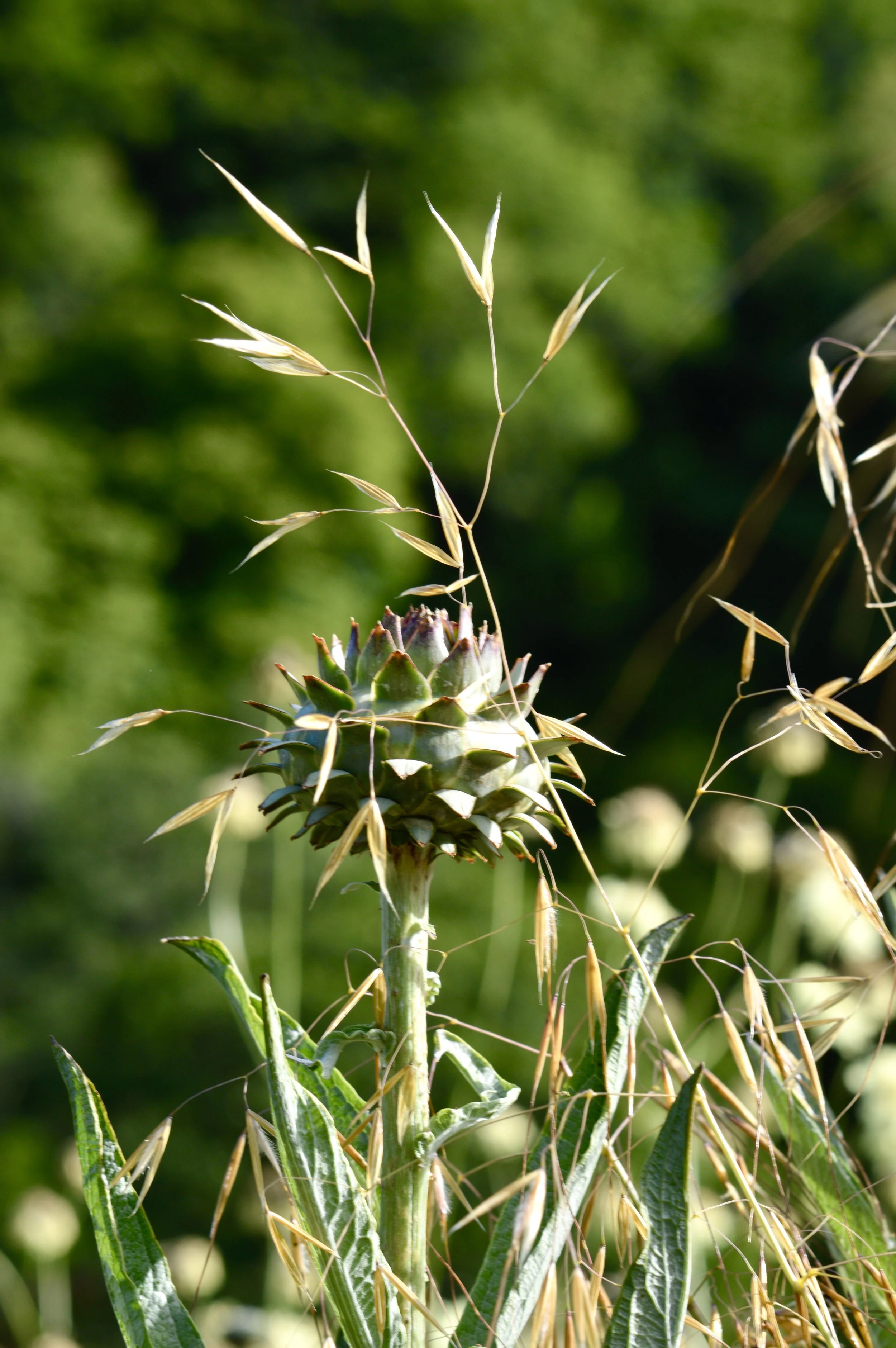
Dramatic cardoon with delicate golden oat grass
Their feathery plumes vary in colour from silver to purple-pink, the flowers arching to one side and used in fresh bouquets or as dried flowers. The light catches them, delineating every texture, their leaves bending in graceful arcs and in some varieties barred in gold or in silver stripes such as the ‘Zebrinus’ grown by Robinson.
Towering above all is Miscanthus giganteus, which can reach over 3 metres and is the highest point in my flower border. I love the rustling of its wide, curving green leaves; a sound like the wind passing through salt marsh reeds. It makes a good screen, captures carbon and is grown as a bioenergy crop. It doesn’t flower for me, but it is very striking.
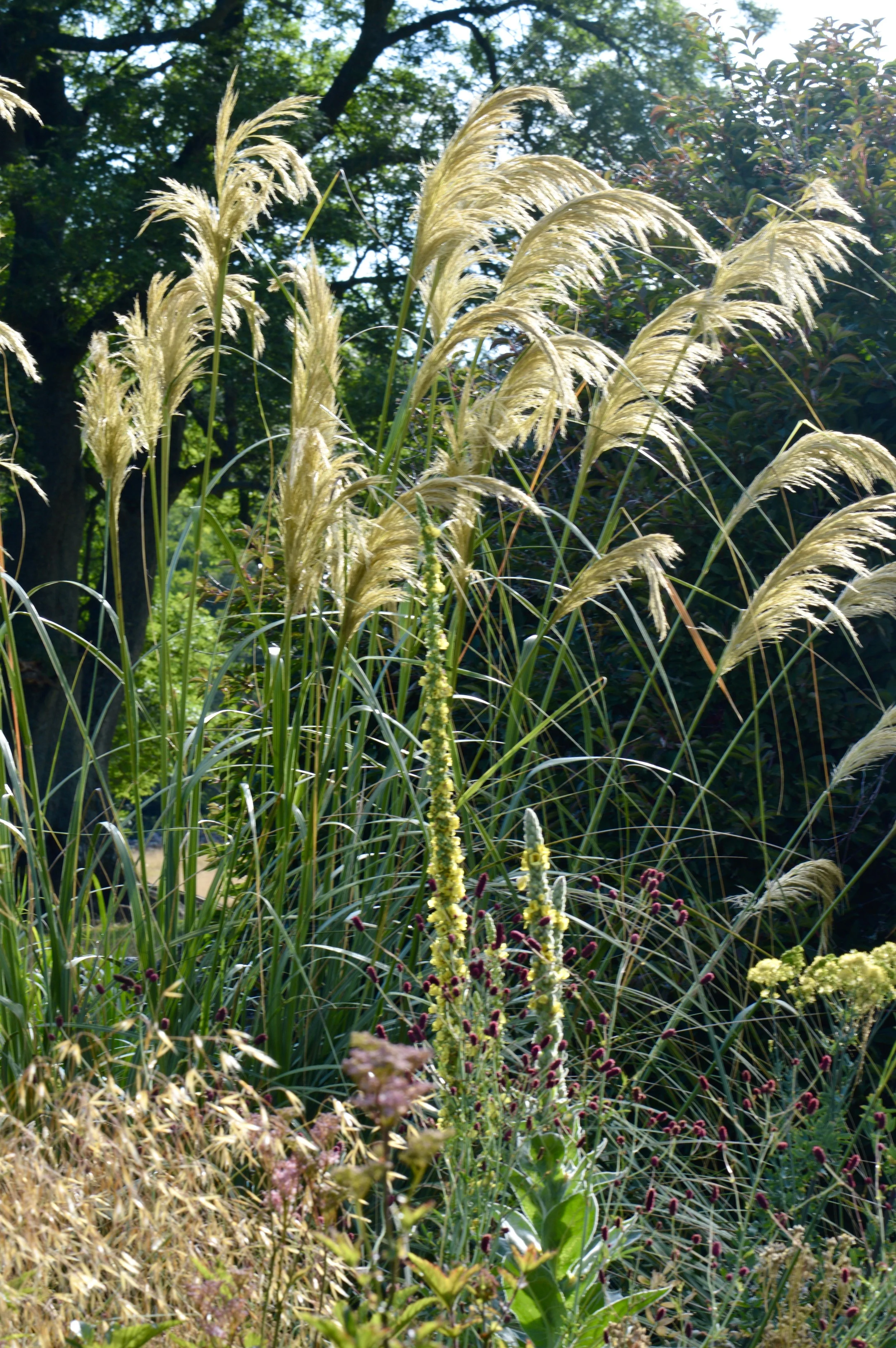
Pampas grass as a culmination of the border
Equally dramatic is the pampas grass that I grow at the furthest reach of the garden where its straw-coloured plumes link to the landscape and the field grasses on the hillside. Rather than see it in isolation (like the pampas in the lawns of the 1970s) it works as the culmination of that part of the border, rising above a silvery miscanthus, white flowered Sanguisorba canadensis and a large drift of pink meadowsweet.
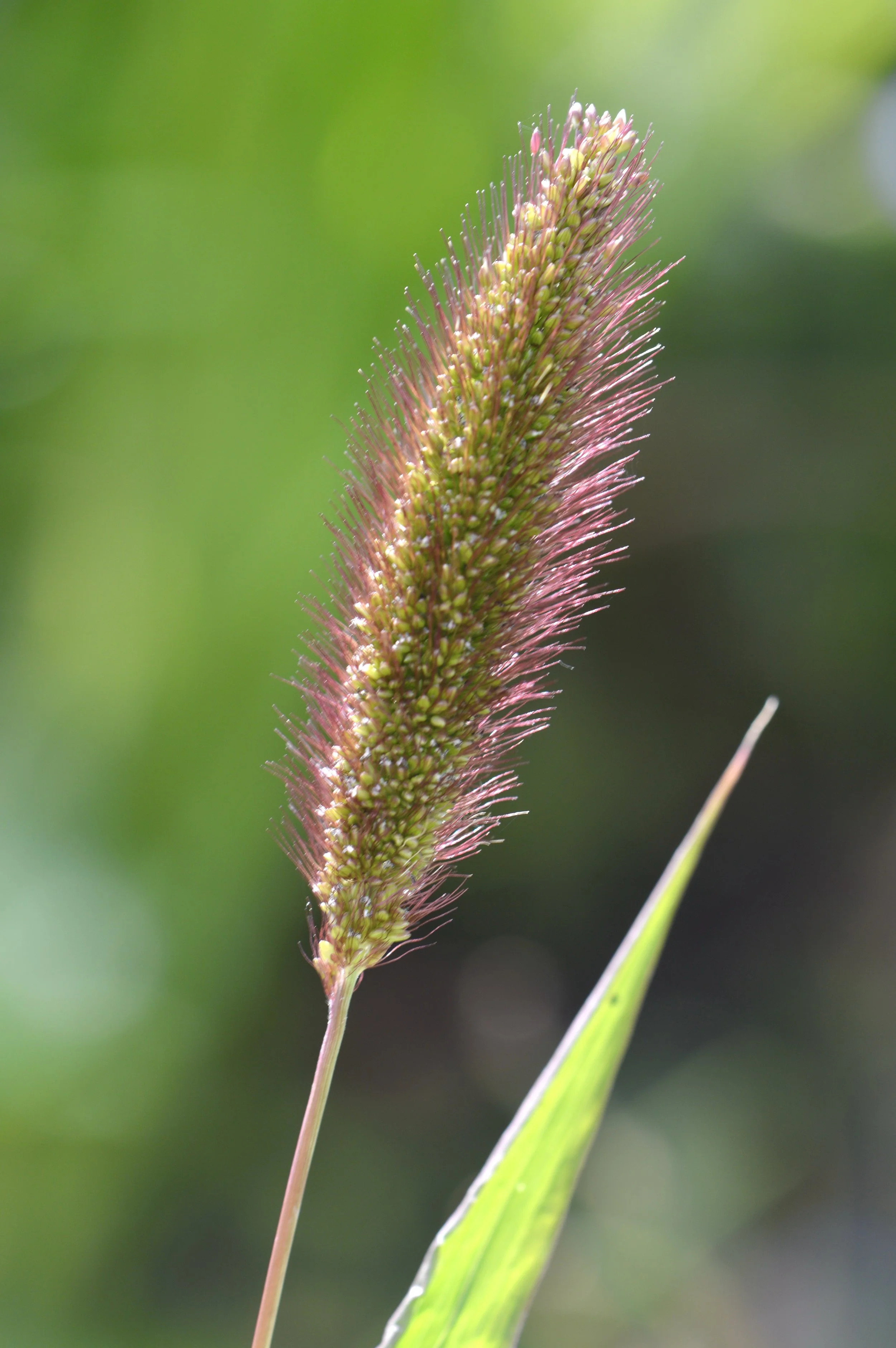
Burgundy flower spike on foxtail millet
In a complete change of scale and longevity there are the annual grasses that are useful fillers for any gaps in the borders. This year I tried Setaria italica, the foxtail millet that has burgundy coloured bottle brushes and provides food for birds. It combined well with cosmos and viper’s bugloss and I’ve saved seed so I can repeat it next year.
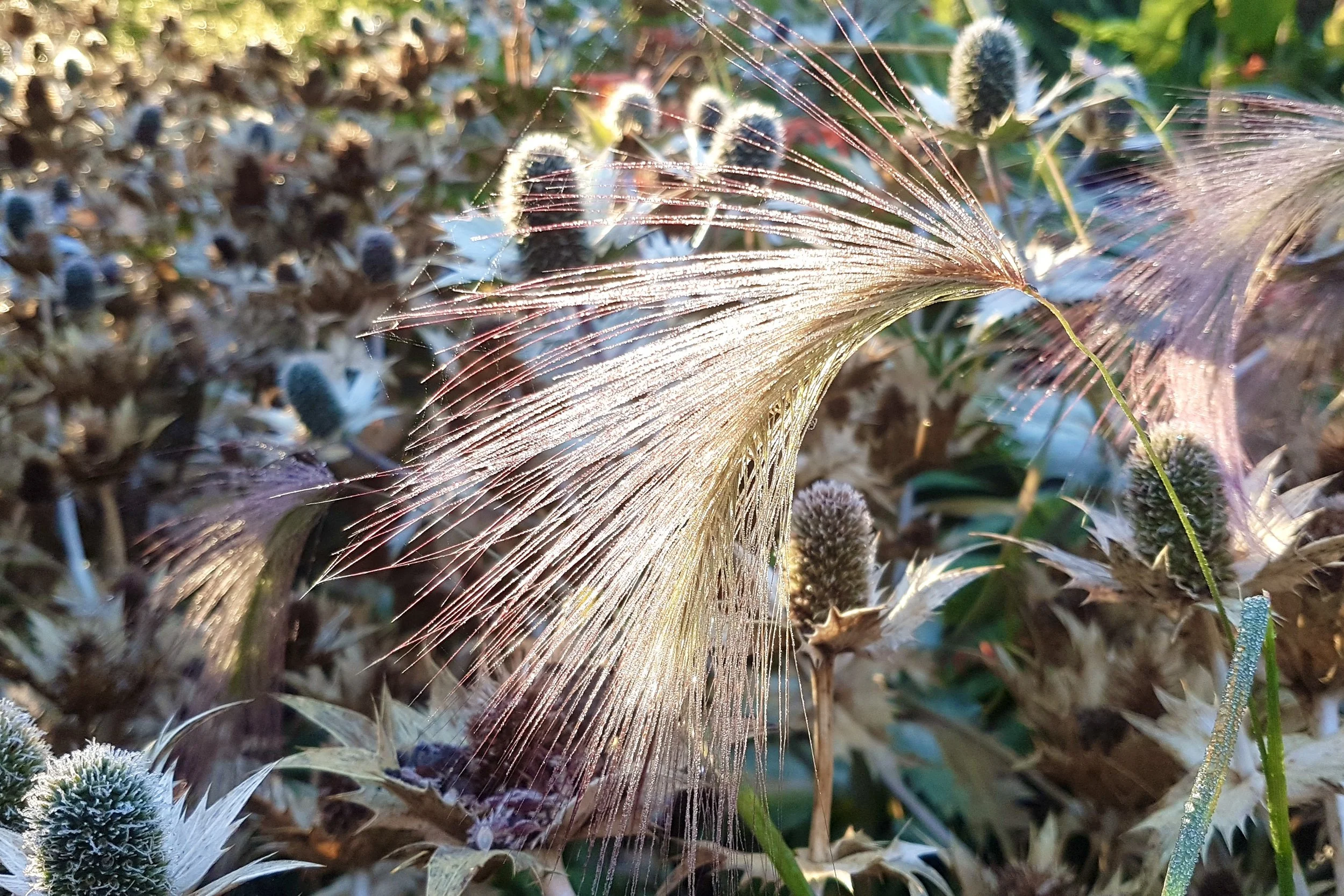
Wands of pink from the foxtail barley
The similarly named foxtail barley, Hordeum jubatum, seeds itself amongst the sea hollies and Dianthus carthusianorum of my gravel corner. It looks beautiful when sunlight catches its fan of pale pink flowers. This is a good plant for coastal gardens as it can withstand salt winds.
As we head into winter, grasses change colour, drying to shades of tan, biscuit and umber, but keeping their form and blowing with the wind. Frost crystals stand out all along their edges, snow lies along their leaves, and their seedheads become splaying fountains. For year-round interest, they are a group of plants that I would not want to be without.
Susie White is a garden writer and photographer and a member of the Garden Media Guild