
It takes a village...
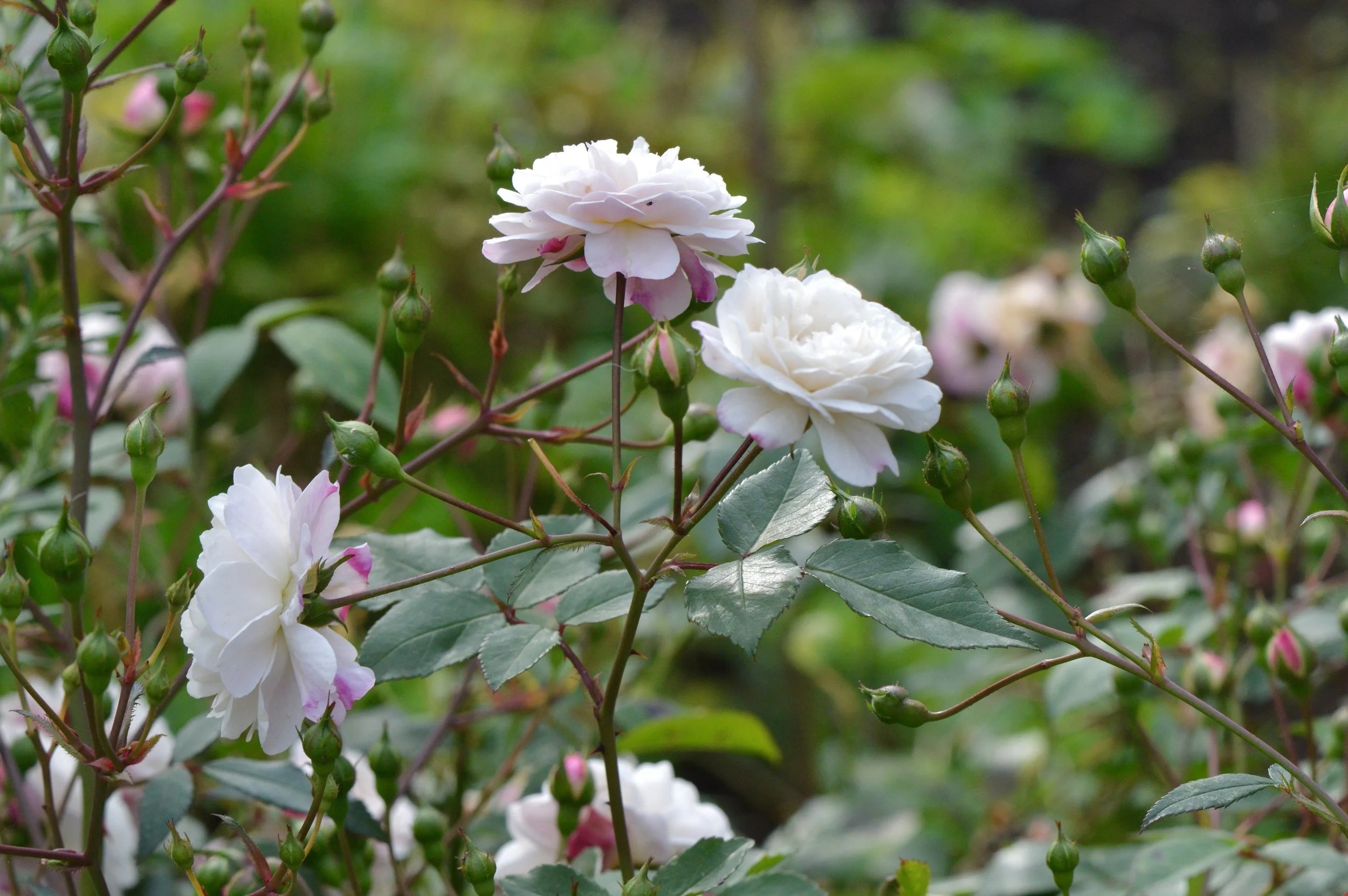
'Little White Pet' rose
First published in edition 197 of The Northumbrian, Dec/Jan 2023/2024
Susie White celebrates the garden at Corbridge Parish Hall – a voluntary effort which brings the community together in providing a space loved by locals and visitors alike
We need green spaces in our villages, towns and cities; areas where we can relax for a while or pause for a moment’s peace.
One such is the garden of Corbridge Parish Hall, a place I often stop while shopping in the village. Like a country garden, there’s a relaxed feel to the planting with plenty of places to sit and watch the wildlife. It has a peaceful atmosphere, though it is just behind the busy main street filled with shops.
The parish hall was built in 1922 by Edith Helen Straker-Smith in memory of her father Joseph Henry Straker. It has a pretty porch and two projecting wings that create a sheltered courtyard, and the building is well used by community groups for all sorts of classes and events.
The space between the hall and the road is laid out with flower beds. These had been filled with struggling roses until in 2012 the Corbridge in Bloom group decided to turn the area into a Jubilee Garden. With no budget behind it, people raided their gardens, dividing plants and making donations. Local traders could sponsor a planter, there was help from the local council, and from the WI, which also sponsors Quoins Corner by the village bridge. Everything was done by, and is now maintained by, volunteers.
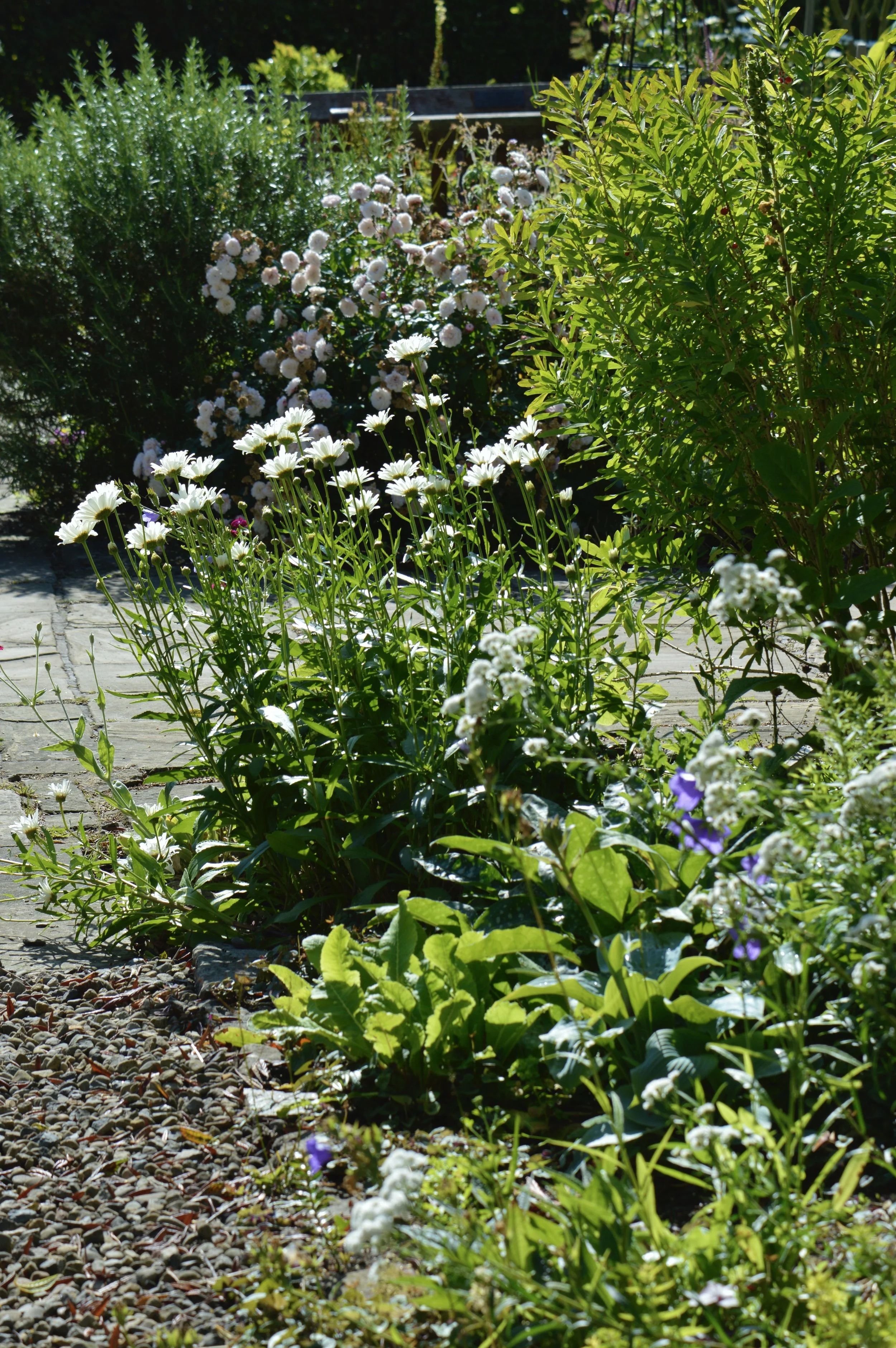
A country garden feel with daisies and roses
On a fine autumn day, I met the person chiefly responsible for maintaining this lovely garden. Alison Lambert has been volunteering for Corbridge in Bloom for several years and has now taken on the gardening at the Parish Hall. Alison lives in Corbridge and comes here twice, sometimes three times a week, and is often here pruning, weeding or hoeing.
She loves it here. “I was volunteering as part of the main team for Corbridge in Bloom,” she explains, “when I was asked if I would look after the garden at the hall. I took to it immediately and I’m getting quite knowledgeable about it now,” she laughs. “This garden was my lifeline when Covid happened and I could creep in and just do a bit. It’s magic on a summer morning with the sun shining on the garden. So many people stop and have a chat.”
Now retired, Alison had a busy work life as a sister at Newcastle’s Royal Victoria Infirmary, where she was involved in setting up the fertility unit, so she could only manage a pocket handkerchief-sized garden at home. “Then we moved to Darlington and made a plant-filled garden from a long lawn and marching conifers.”
She moved back to the Tyne Valley 14 years ago to a house with, she says, “an adequate garden which keeps me happy.” And the Parish Hall garden, too.
“During a drought we have to water the tubs and flower beds,” she says. “I have help with that so it’s there when I need it, but really I just enjoy doing the work and getting on with it myself.” After some years, the garden needed some revitalising and a sort-out of what didn’t perform well or was over vigorous. Japanese anemone had spread too much and needed to be reduced, and there were weeds – dandelions, chickweed, creeping buttercup and groundsel.
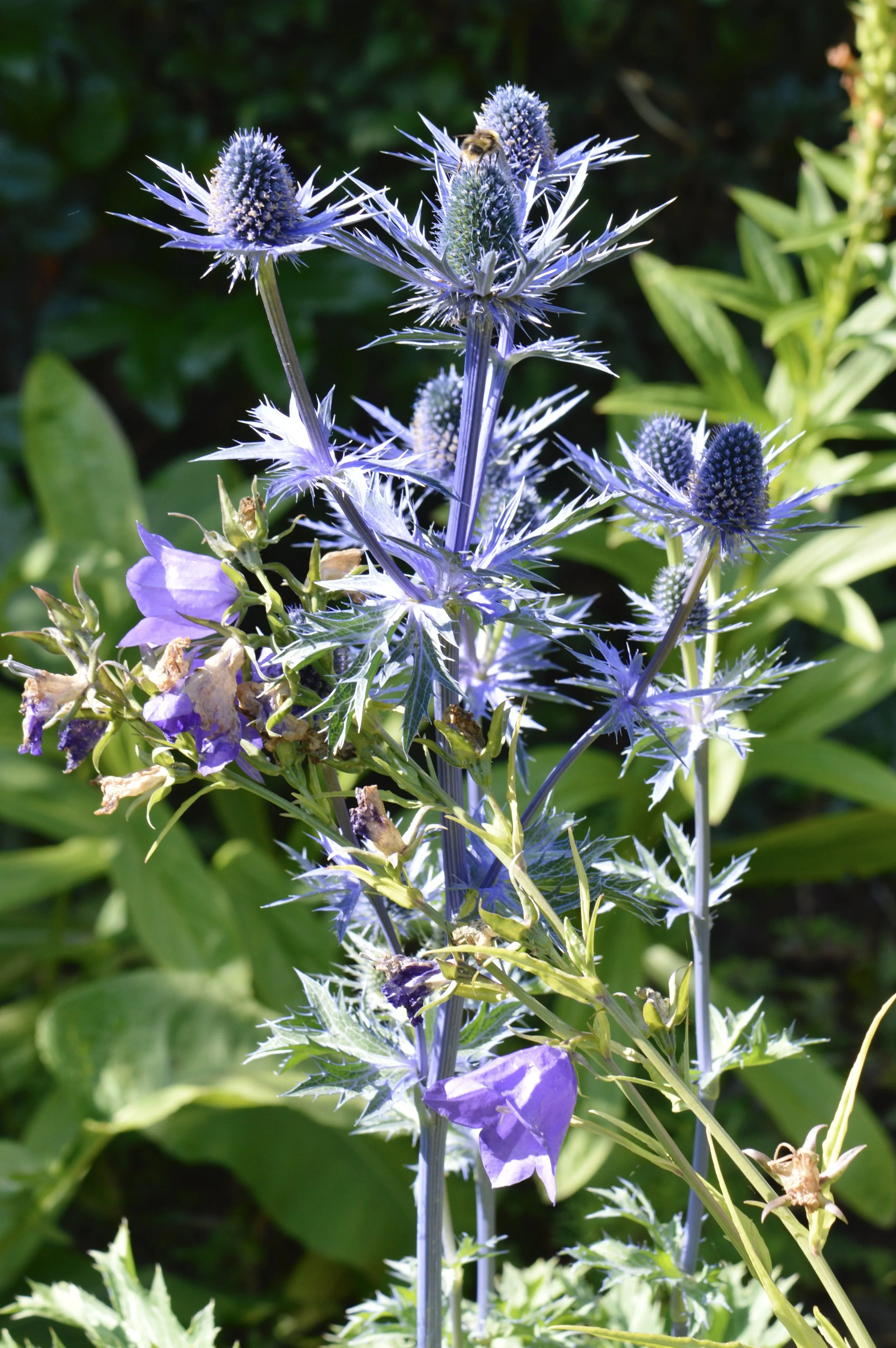
Sea holly for the bees
“I leave seedheads for the birds,” says Alison, “so plants such as sea holly and foxglove are left standing. There’s a friendly robin with me as I work and the cooing of the collared doves. They nest in the hanging lantern above the porch so Chris the caretaker has donated a dovecot lined in straw. So far, they haven’t been interested!”
“There’s a beautiful white lilac that I deadhead, though I can’t reach the top flowers. And a hardy fuchsia with delicate white flowers that is doing really well. We’ve recently added three metal obelisks and we’re growing a rose, a clematis and a variegated honeysuckle. The cats will lie on the catmint, though.” As Alison works, she is greeted by everyone who goes in and out of the hall, which is in constant use for yoga and art classes, talks and choir practice. It’s a sociable place.
A neatly trimmed privet hedge provides shelter and a place for wildlife as well as screening the garden. A stone-flagged path forms a generous entrance and opens out to left and right, enclosing two large flower borders. Ahead is the square courtyard formed by the wings of the hall with benches and flower tubs. There are two wooden compost bins tucked away down the side of the hall and the contents are spread on the beds. It is good soil and things do very well in it.
A good mix of sun and shade in the garden allows for plenty of variety in the planting. Attractive foliage plants – lady’s mantle, lungwort, bergenia, hostas and golden marjoram – flourish in the semi-shade of a beautiful paperbark maple, Acer griseum. Sunlight striking through its three-lobed leaves illuminates the peeling bark that curls up like sticks of cinnamon. There are hellebores for winter flowering as well as a fine specimen of the cut leaved mahonia, Mahonia ‘Soft Caress’. White phlox and a silver edged euonymus add to the cool colours of this woodland corner.
Away from the shade of the trees, the cottage garden feel continues with double white buttons of Achillea ‘The Pearl’, a deep maroon Dahlia and the bright buttery yellow of Rudbeckia ‘Goldsturm’. A beautiful Daphne mezereum blooms on bare stems and scents the air sweetly in February. It was planted in 2015 to mark the 100th anniversary of nearby Dilston WI.
Either side of the entrance path there are lavenders and a thriving rosemary bush on the corner of the sunniest border. Alison was about to prune it when someone asked if they could have 12 rosemary spikes for a memorial service, so she left them for him. She uncovered a magnolia that had been swamped by a hypericum and was rewarded by a load of flower buds. A pretty shrub rose called ‘Little White Pet’, a perpetual flowerer with small white blooms, is a favourite with many.
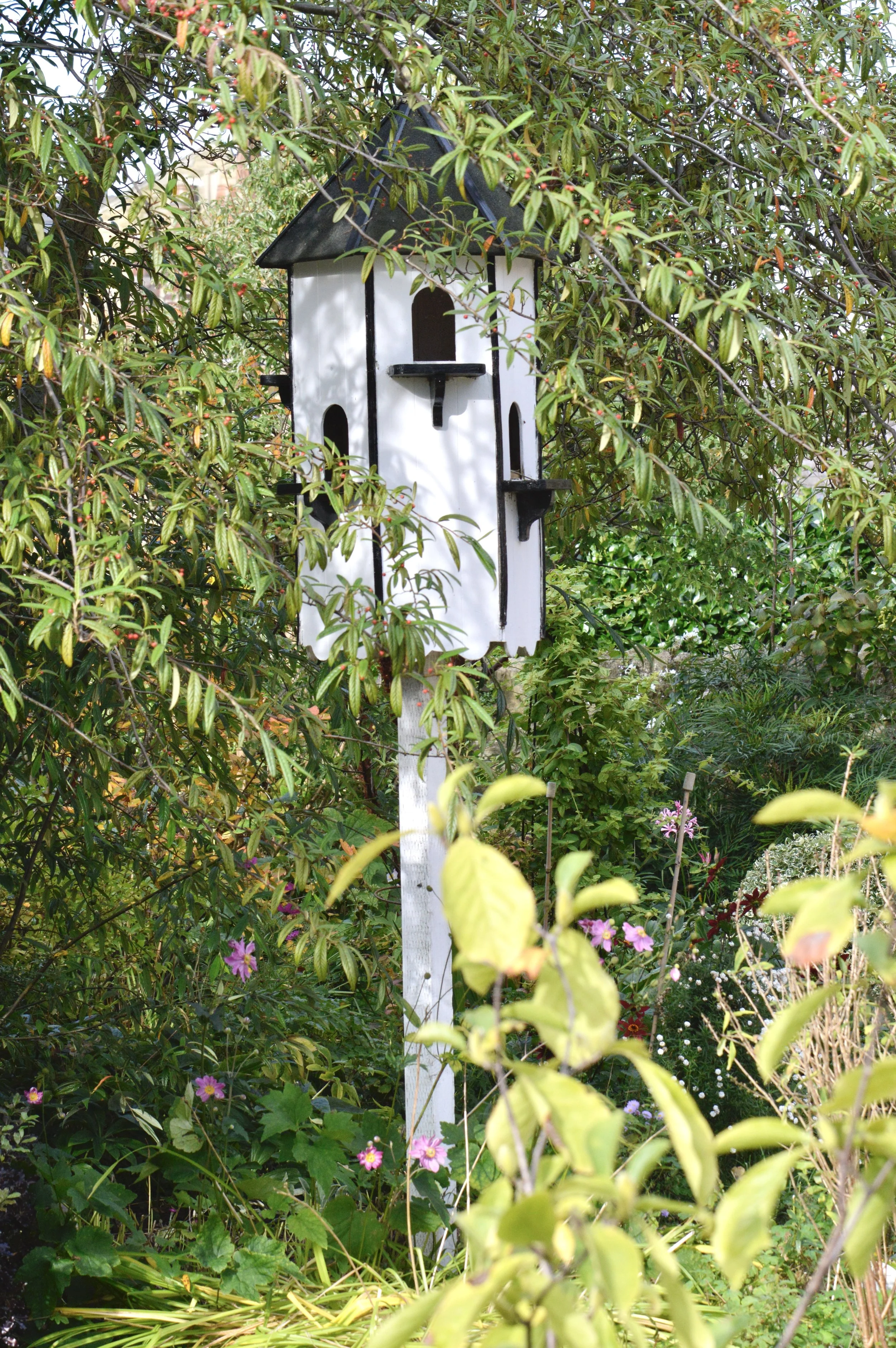
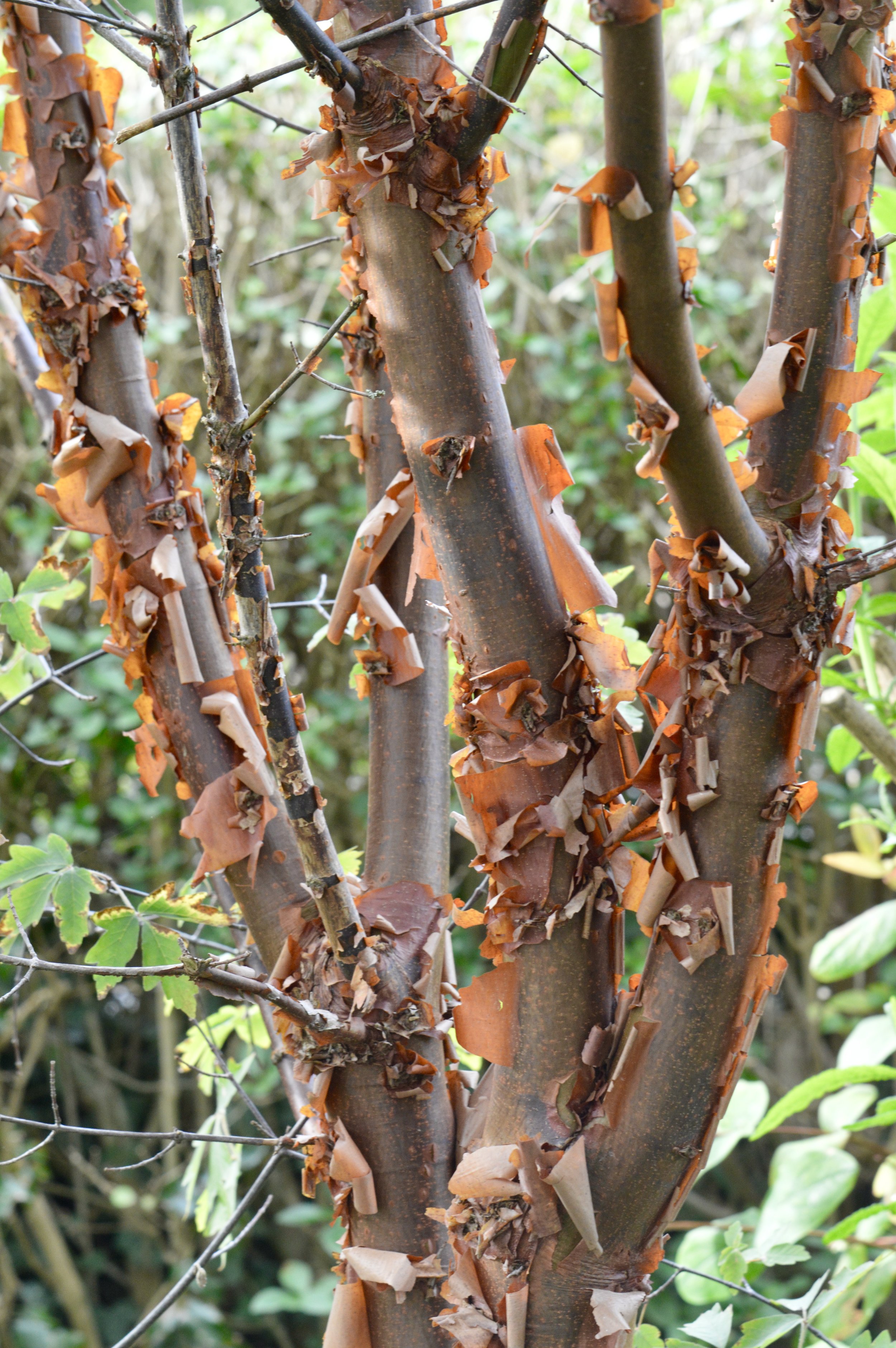
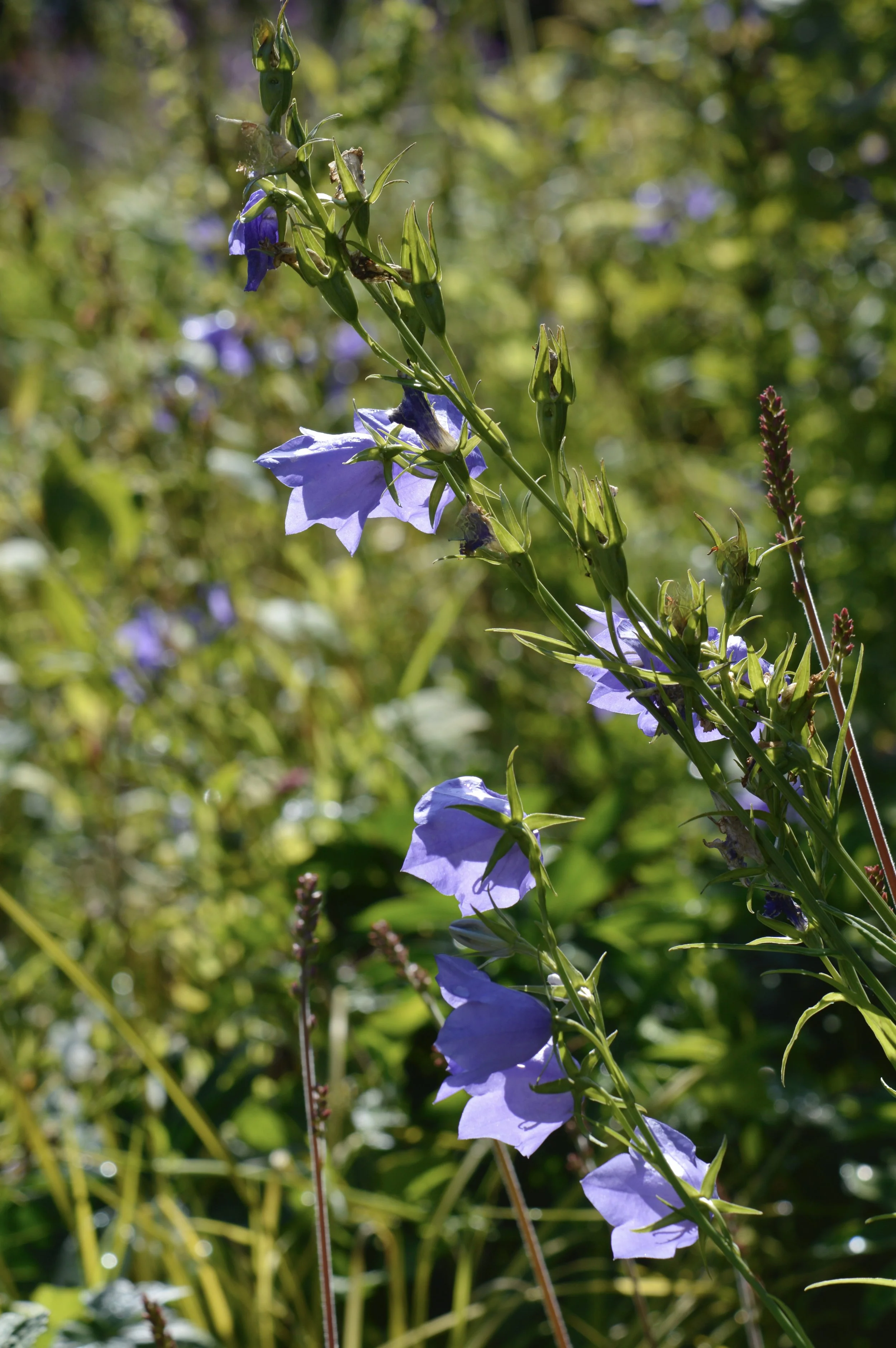
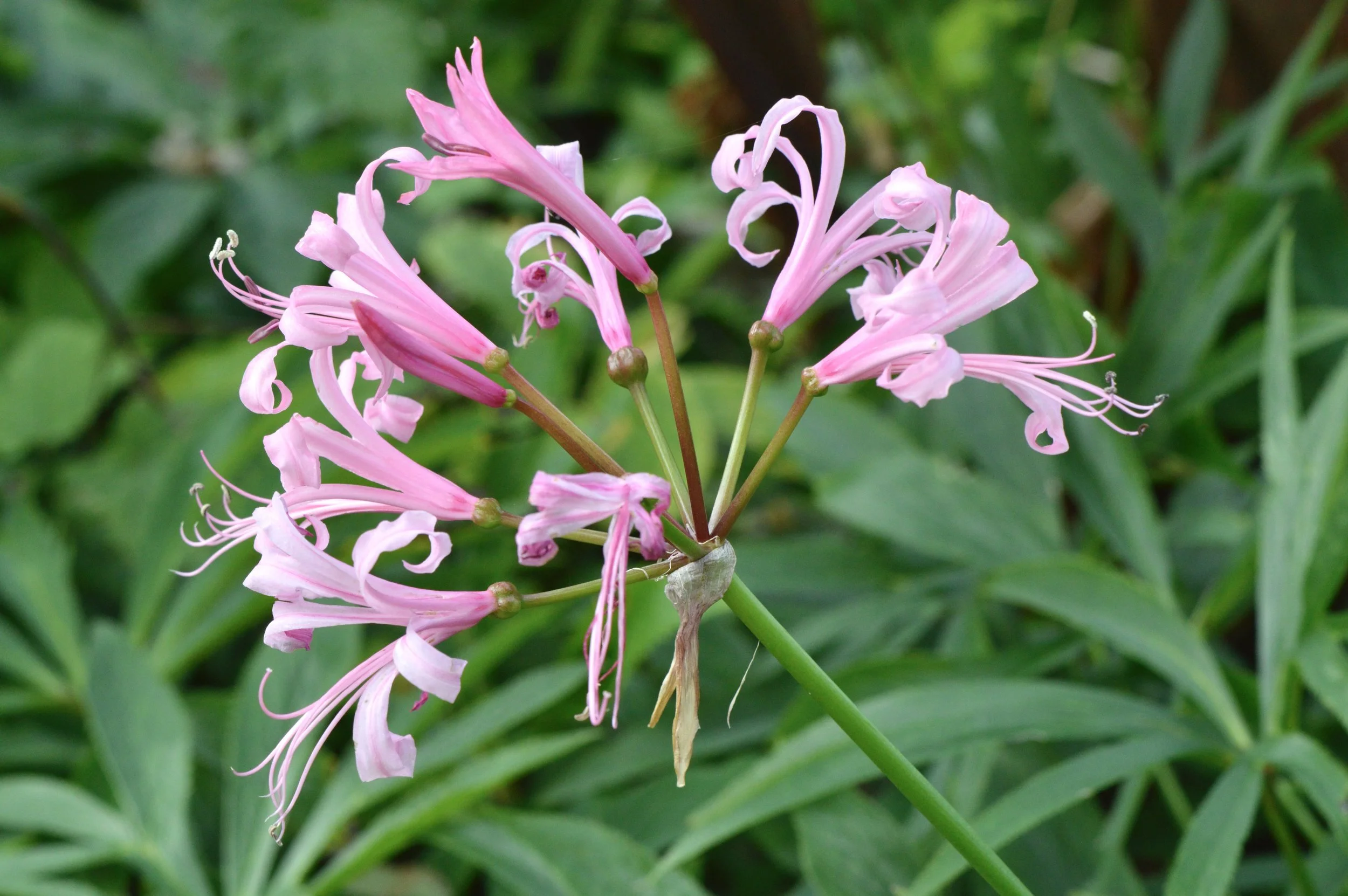
A dove house; cinnamon colours of the paperback maple; Canterbury Bells backlit by summer sun; Nerine blooming in October
Growing in full sun suits a relaxed mixture of irises, Phygelius, roses, geums and Shasta daisies. Behind a low edging of dianthus there are pretty cosmos and dazzling orange zinnias for late season colour that Alison raised from seed. There are lots of plants for insects – the season-long flowerer ‘Bowles’ mauve’ wallflower, spiky sea holly, flat topped yarrow, and starry astrantias. At the back of both sunny and shady borders are a pair of Amelanchiers for their delicate white petals in spring and autumn colouring of the leaves. “Aquilegias have seeded throughout,” says Alison, “and they look such a picture in late spring.” For this is a real garden, a delightful combination of trees, shrubs, perennials and annuals, and a place where you can feel at home.
Alison’s story shows just how rewarding volunteer gardening can be. It’s sociable and creative and brings her much happiness. She is just one of the volunteers from Corbridge in Bloom who make it an attractive place. The group is always looking for new volunteers, especially younger people, who are keen to make gardens for wildlife and for people to enjoy.
Susie White is a garden writer and photographer, and a member of the Garden Media Guild