
On the front line
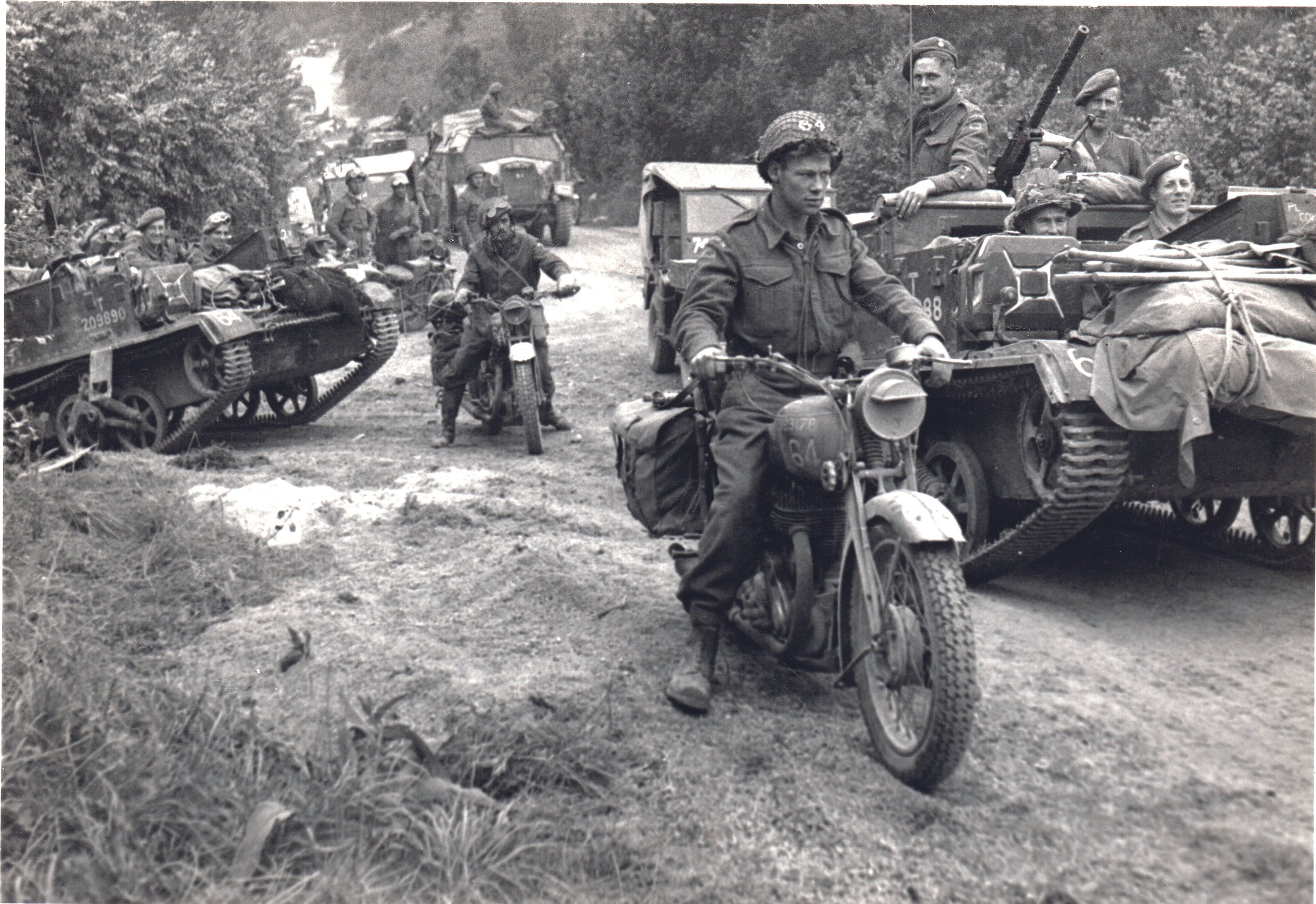
Men of the Royal Northumberland Fusiliers advancing to Vire, Normandy, which was badly hit by Allied bombing on D-Day, June 6, 1944
Many readers will be aware that the Royal Northumberland Fusiliers played their part in liberating Western Europe from the iron grip of the Nazis, but what was life like in war? STEPHEN ROBERTS presents some first-hand testimonies
During World War II, Royal Northumberland Fusiliers served in Europe, including during and following D-Day; in North Africa, where Captain James Jackman of the 1st Battalion was posthumously awarded the VC; and in the Far East. By war’s end, 896 men from eight battalions of the fusiliers had lost their lives – but what was life in warfare like for them?
A letter written by Major Neville Gill of the 3rd Reconnaissance Regiment on June 5, 1944, the eve of D-Day, to his fiancée Jacqueline presents a poignant picture.
He writes: “It is now nearly 10pm and I thought I would write you a line to say I am just thinking about you going to bed. I love you terribly much. Good night my one and only Jacqueline. I cannot express in words what life has given me on account of knowing you. All my love always, & always & forever, & ever, Neville.”
This is a letter written from the heart by a man who could not know if he would survive the next day, never mind to the end of the war. The following day, June 6, Neville’s detachment was to land on Sword Beach, one of five Allied landing beaches in Normandy. Concerned that the marines had dropped them on the wrong beach, Neville separated from colleagues who he sent to take cover, proceeding alone. As he investigated the situation a German bullet entered his chest and broke his spine. He spent a year in plaster and suffered a lifetime of pain. Sadly, he was never to marry and he died as a consequence of his injury in 1958 – realities which make his declaration of love for his fiancée on the eve of the landings all the more poignant.
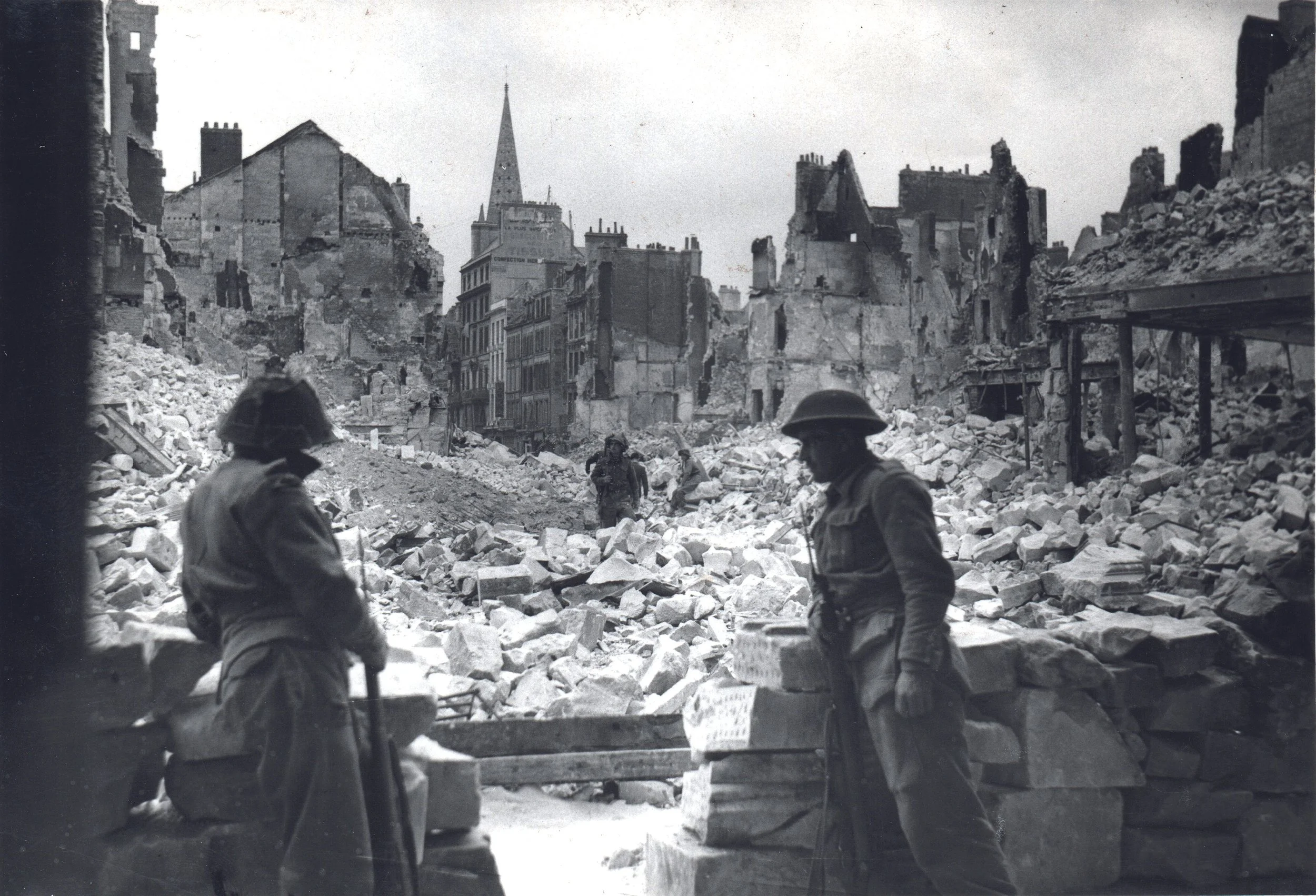
The Royal Northumberland Fusiliers liberated Caen, which was badly damaged by Allied bombing during the battle for the city between June and August 1944
Three battalions of the Royal Northumberland Fusiliers – the 4th, 7th and 8th (3rd Reconnaissance Regiment) – took part in Operation Overlord on the beaches of Normandy in June 1944, while the 1st and 2nd battalions fought their way through Italy.
The 8th Battalion was tasked with beach traffic control on D-Day, a formation of 100 men from the regiment landing on June 6. Meanwhile, the remainder of the battalion followed to join the 7th Battalion in the battle to liberate Caen before fighting on through northern France, Belgium and Holland, crossing the Rhine in March 1945 and ending the war in Bremen, Germany.
Between June 9 and 25, the 4th Battalion (formed into three independent machine gun companies each with a 4.2 inch mortar platoon, and attached to the 7th, 11th and Guards’ Armoured Divisions) also landed in Normandy. General Montgomery, commander-in-chief of ground forces, delivered an informal briefing to men of the 4th Battalion’s Number 1 Independent Machine Gun Company which landed at Le Hamel on the night of June 25, with Gold Beach, at the centre of the five Allied landing zones, effectively extending from here to La Rivière.
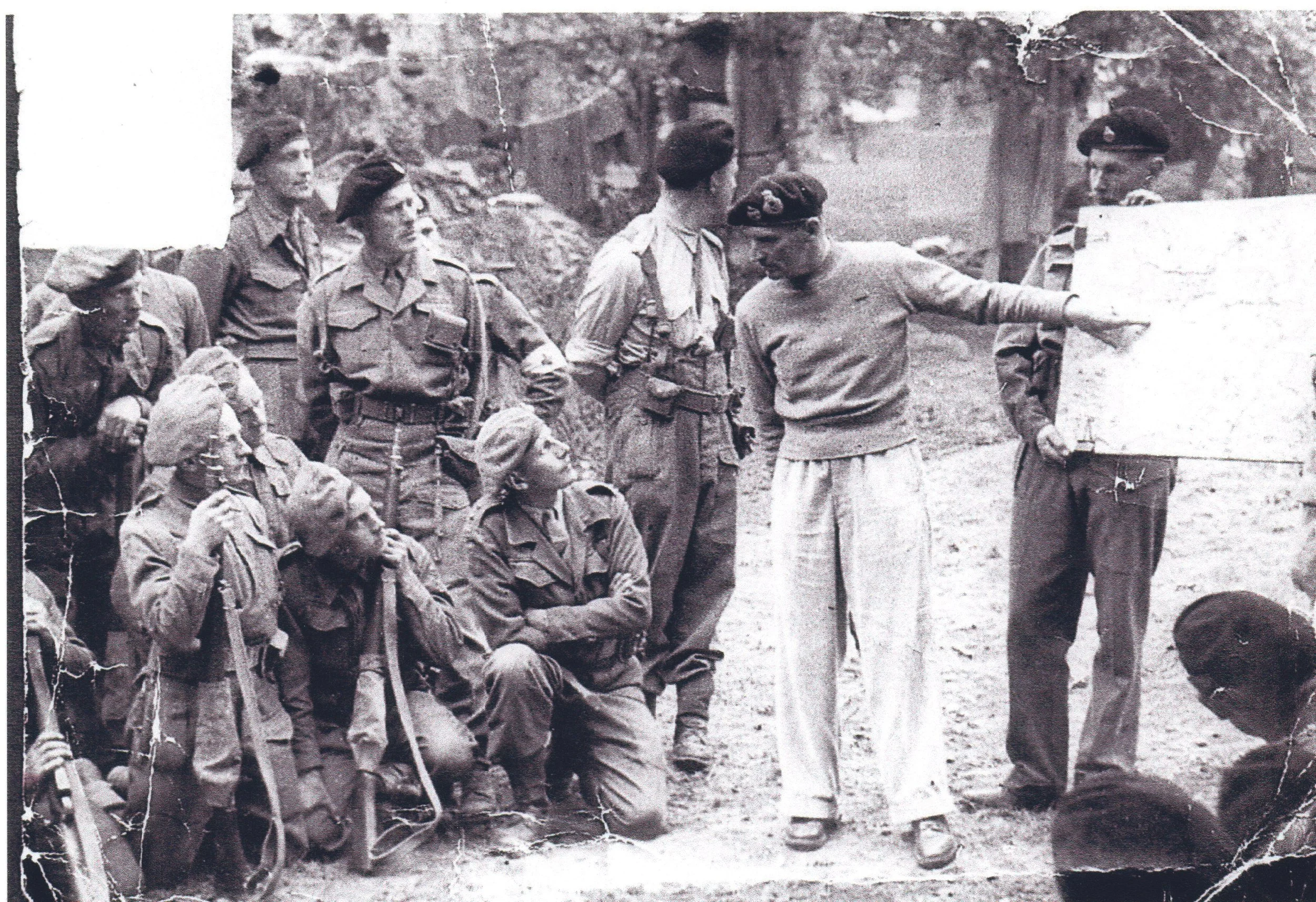
Field Marshall Montgomery briefs men of the Royal Northumberland Fusiliers
Number 2 Company, meanwhile, landed on Sword Beach, the easternmost of the five landing zones, on June 14, while Number 3 Company had been first in, landing at Arromanches in the centre of the Gold Beach landing zone on June 9.
By September, all three companies had reached Belgium. Arromanches-les-Bains in Normandy is remembered as one of two places where a Mulberry Harbour artificial port was installed, enabling the disembarkation of 9,000 tons of material each day. And they kept on coming. On June 29, the 7th Battalion (also made up of three machine gun companies and a 4.2 inch mortar company) came ashore from landing craft at Arromanches and immediately went into action.
Sergeant TC Dixon recalled the scene on the beaches: “Troop ships by the hundred filled the bay and soon landing craft were alongside the ships to start unloading vehicles, stores and troops. Down went the ramp of the LCT [Landing Craft Tank] and soon we started down the steep ramp into about 18 inches of water glistening in the red lamps of the beach wardens; quite an experience, but we made the shore in one run, so at 03.00 hours we were on French soil.”
With this, the 4th, 7th and 8th (3rd Reconnaissance Regiment) battalions were now all involved in the fight to knock down Hitler’s ‘Fortress Europe’.
Caen had been captured by the Germans during the Battle of France in 1940 and placed under military occupation. Following D-Day, the Battle of Caen took place between June 6 and August 6, 1944 with the British 2nd Army endeavouring to dislodge German forces from the heavily defended city. During the battle the city was badly damaged by Allied bombing raids which regrettably caused many civilian casualties and left little of pre-war Caen. In July, the 7th and 8th battalions took part in heavy fighting to seize control of what remained of the city and here Sergeant Dixon took up the story again: “The sky was soon filled with clouds of smoke rising from the bombing [of Caen], the most concentrated attack I have ever witnessed.”
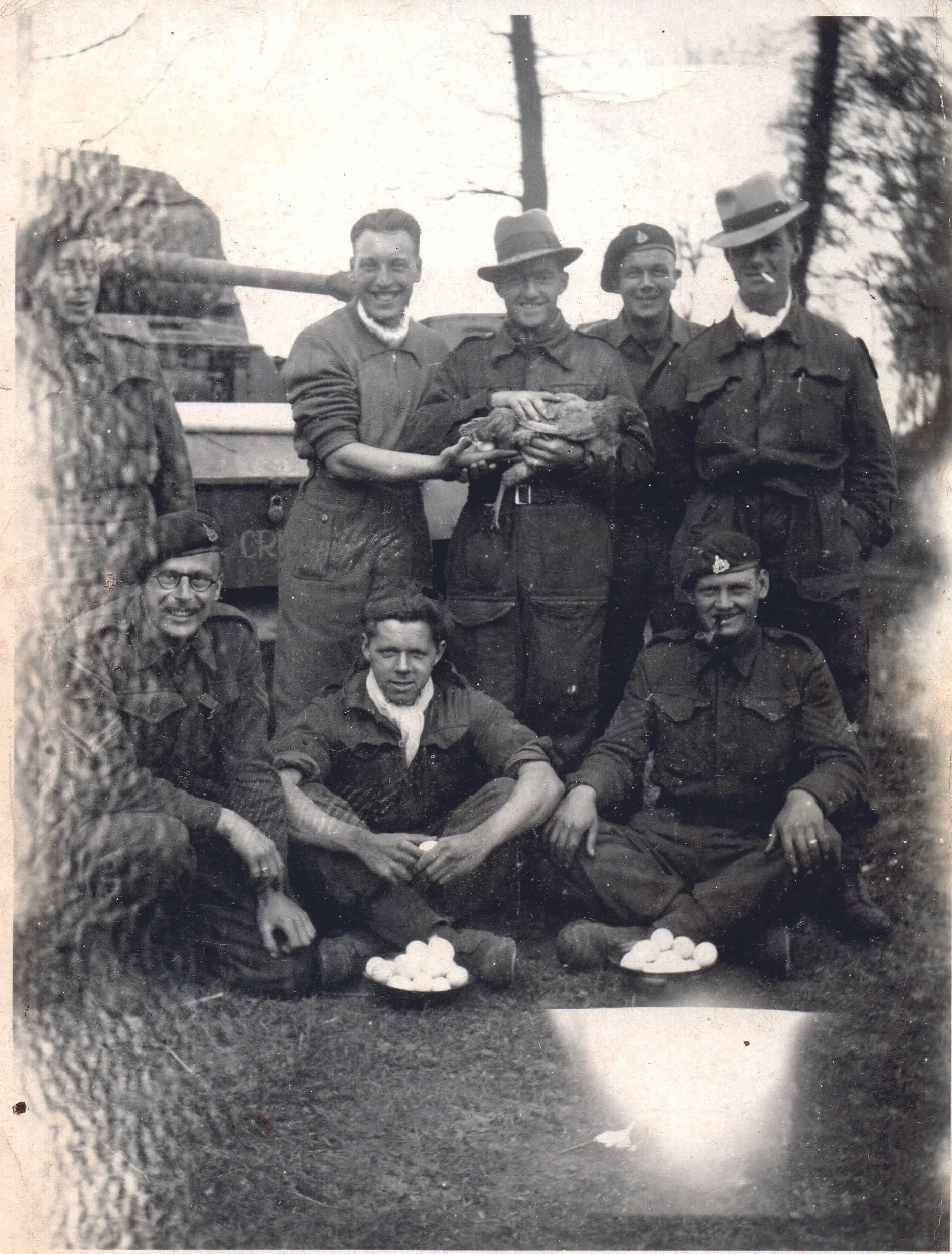
Soldiers of the 3rd Reconnaissance Regiment of the Fusiliers commandeered a hen to ensure a steady supply of eggs
Yet Dixon was overcome at the reaction of the city’s citizens when they were finally liberated, writing: “The cordiality with which French people greeted us, who had lost practically everything, principally to our bombardment, was most noteworthy and encouraging.”
There was an element of living off the land. They often bartered chocolate and cigarettes for milk and meat from the locals, and soldiers of the 3rd Reconnaissance Regiment commandeered a hen to ensure a steady supply of eggs. The 3rd regiment would spend the next ten months fighting its way through Normandy, Holland and Germany and in March 1945 men of that regiment would cross the River Rhine into Germany.
Sergeant Jimmy Skelton and Trooper Tommy Hudson would both win the Military Medal (MM) for rescuing a wounded comrade on October 22, 1944 in the vicinity of Venraij (Netherlands), after Skelton had asked for a volunteer to go out into No-Man’s Land with him to rescue the soldier – a member of a foot patrol that had come under heavy small arms fire.
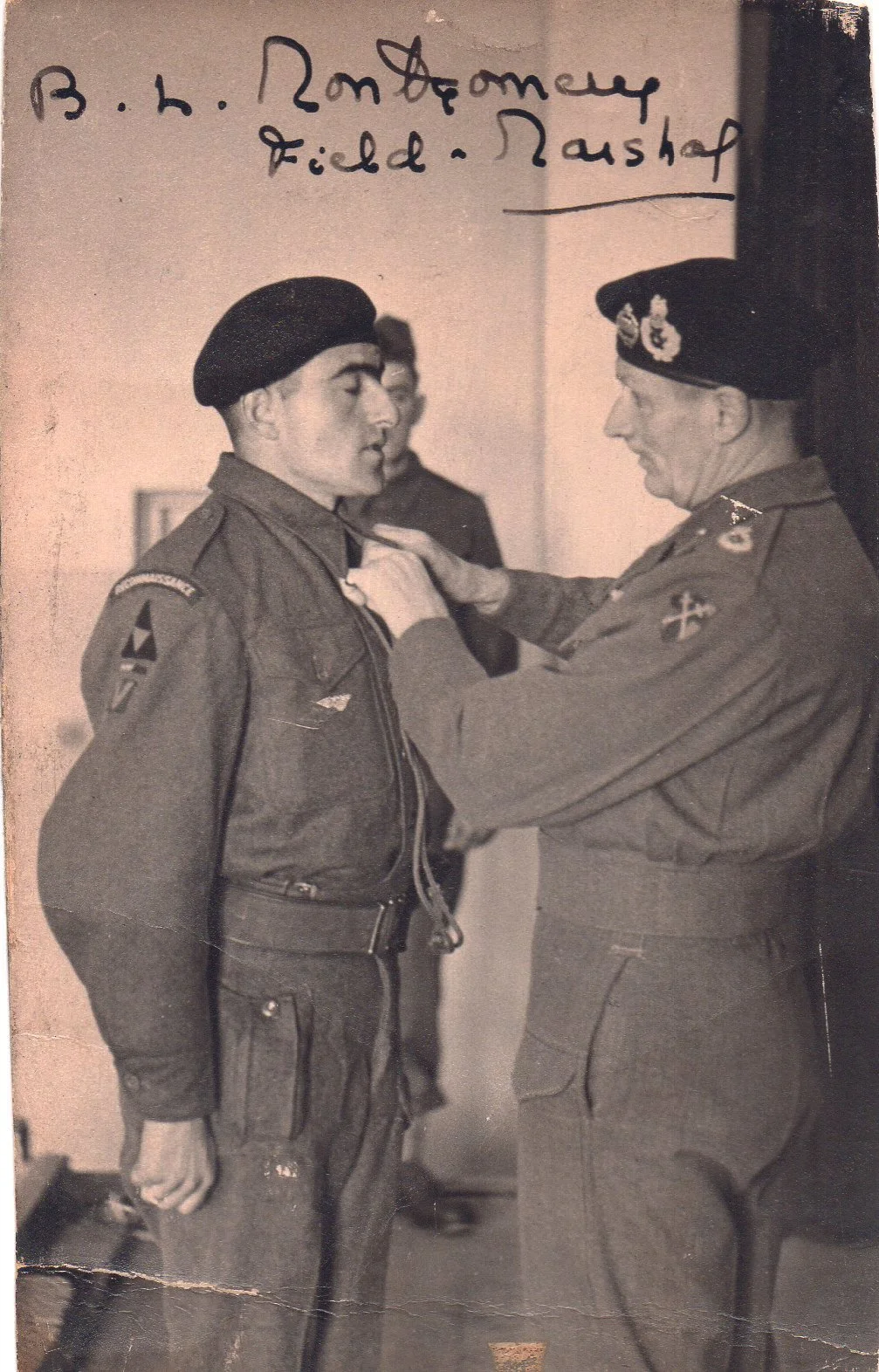
Tommy Hudson volunteered for this perilous mission, and his medal citation stated that: “Together they got to within 50 yards of the wounded man in an armoured car, but the car came under intensive fire from the enemy only 100 yards away. The order was given to dismount, and Trooper Hudson went forward still under very heavy fire and assisted in bringing the wounded man back and lifting him on to the car. The car then successfully disengaged and withdrew. Throughout, Trooper Hudson remained completely calm and his outstanding example of bravery proved a great inspiration to all those serving with him.”
The two men received their medals from Field Marshal Montgomery in a battlefield investiture. Tommy Hudson was a modest hero, someone who didn’t like to talk about his wartime exploits and who kept his precious gallantry medal tucked away in a drawer. He died, aged 65, in Hexham General Hospital, 43 years after his heroic action.
Sincere thanks to the trustees of the Fusiliers Museum of Northumberland for the use of the photographs and testimonials reproduced in this article.