
The great escape

The escapees’ 21ft open boat (photo: www.okkupasjonen.no)
IAN KERR recalls the wartime valour of five young men who escaped German-occupied Norway to join free Norwegian forces. Their journey by sea was perilous, while the welcome they received when they reached Holy Island could not have been warmer
Among the thousands of visitors who walk each year from the village on Holy Island to Lindisfarne Castle, I suspect few notice the wooden memorial benches by the field wall on the north side of the roadside. But if they pause to read one of these memorials, they might be inspired to go on to discover one of our county’s strangest wartime stories.
The plate on one of the benches is inscribed: “In great gratitude for the good welcome our five brave freedom fighters Tormod Abrahamsen, Nils Havre, Sven Moe, Jan Stumph, and Kay Thorsen received here on Holy Island 5th November 1941 after crossing the North Sea in a small boat. Presented on behalf of families and friends in Norway. Flekkeroy Historielag. 31st August 2010.”
Behind this simple inscription is a story of bravery and endurance shown by five young men who escaped from their homeland after it was invaded and overcome by the Germans in 1940.
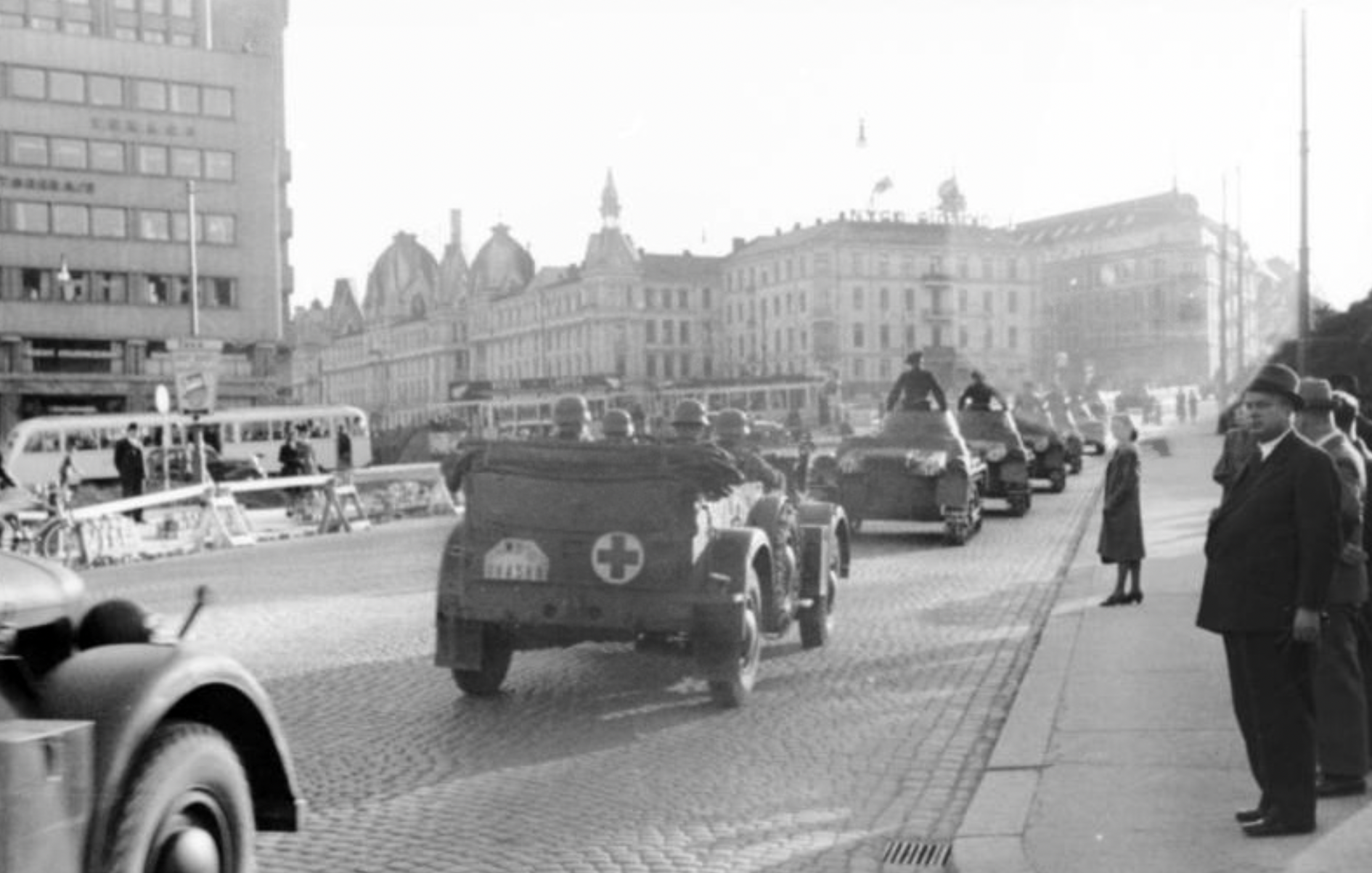
German troops enter Oslo, 1940
The Nazis set up a puppet government headed by Vidkun Quisling, head of the Norwegian Fascist Party, after the invasion – a man whose name became synonymous with wartime treachery.
The five, all aged 19 and 20, had gone to school together in the southern Norwegian port of Kristiansand and had links with the resistance. But they knew their future lay with the free Norwegian forces in Britain, which were being trained to serve with the Allied forces.
Sven Moe, who was already working with the resistance, needed to vanish and the group hatched a simple plan. They collected warm clothing, food, compass and maps and took a 21ft open boat owned by Sven’s father. It was essential that he knew nothing of their plan, though his boat and his son disappearing on the same night must have given him a clue.
The boys obtained a 15-litre can of fuel from a friend which they estimated would power their engine for the first night of their journey across the North Sea. They also had 240 litres of fuel stolen by the resistance from a German airbus, but as they were to discover, this aircraft fuel was ill-suited for a boat.
On October 30, 1941, the group smuggled their supplies aboard the boat with the intention of slipping out of port the following night. But the weather was against them, and they couldn’t leave until November 1. They bided their time on a local island until night fell before setting out south eastwards into the North Sea. The weather was rough, and the boat continually took in water which they had to bale out. German ships were also around, so to remain quiet they rowed rather than use the engine.
Moe, who kept a log of their journey, and two of the others were violently seasick and they wondered if they should turn back, but decided to press on. Conditions improved the next day, which brought an easterly wind, though seasickness remained a major problem. The group also quickly ran out of their good fuel and started to use the German supply, but it was poor for their engine, which seized every 10 minutes or so. Thorsen, who was skilled with engines, continually worked to get it going again so they could carry on.
On November 3, the favourable wind from the east continued, but the little boat ran into a minefield. The boys took turns at the bow, shouting instructions to steer the boat from danger. At one stage, Abrahamsen spotted a mine so close he could have reached out and touched it.
By the third night they were all exhausted. They had calculated it would take three days to cross to Britain, but by then they had no idea of their location and had very little water left. That night they were caught in a storm, the surrounding sea illuminated by lightning. Later, a convoy of some 40 ships passed close by. Suddenly, the convoy’s navigation lights were extinguished, a lookout having spotted the low open boat and mistaken it for the hull of a U-boat.
Around 11pm on November 4 they heard waves breaking on rocks and knew land was near, but in the darkness they dared not try to get closer for fear they had reached not Britain, but occupied German territory.
For the rest of the night, they kept the boat safely offshore, each taking turns on watch while the others tried to sleep. As a grey dawn broke, they saw waves breaking on a low spit of land and above it a strange castle. They crept slowly around the spit and past the castle until they saw boats and houses in the distance. The boys didn’t know it then, but they had reached Holy Island.
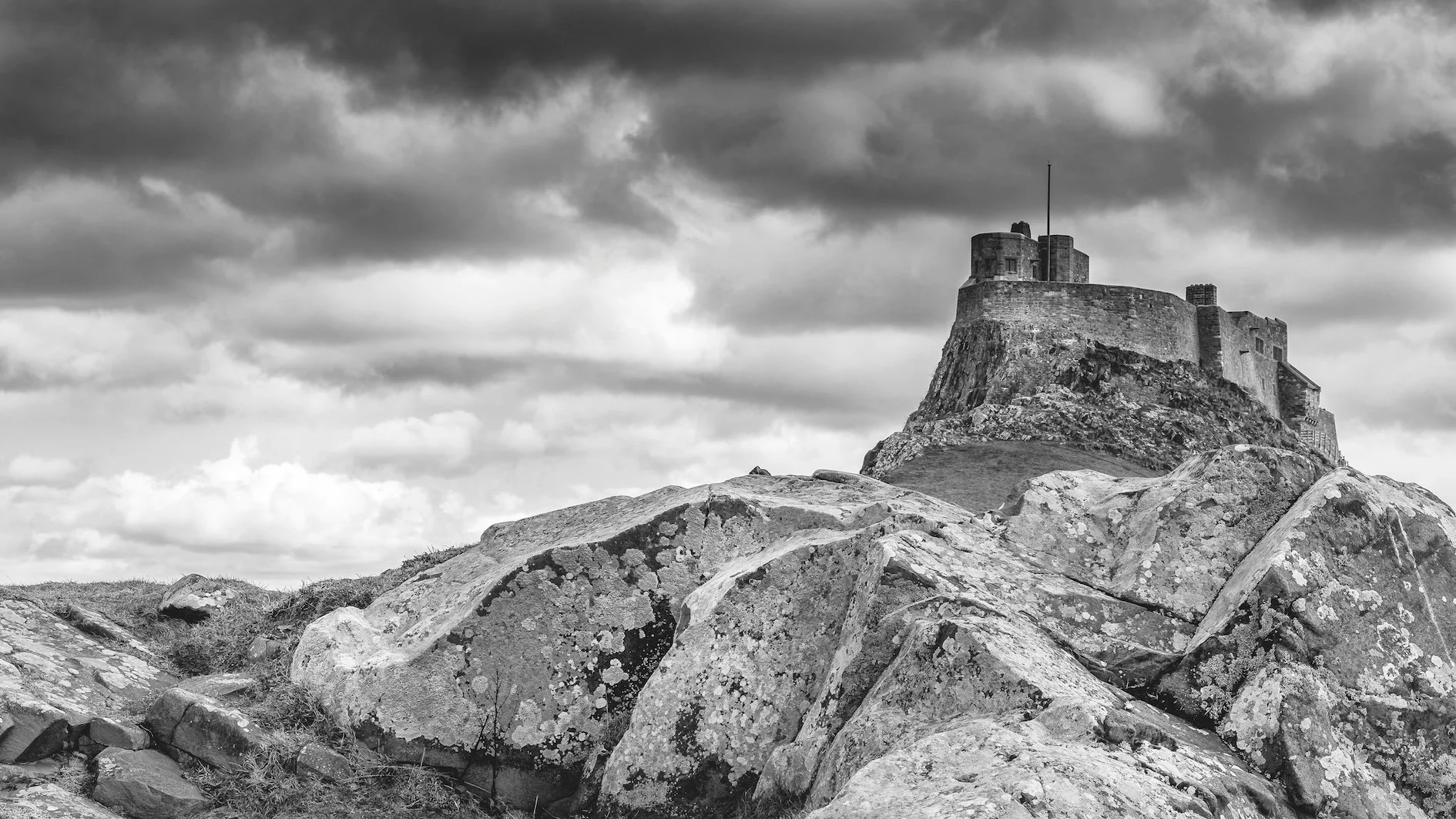
What did the group think when they first spotted Lindisfarne Castle?
Their boat was quickly spotted by islanders and once it was confirmed they weren’t Germans, the boys, seasick, exhausted, hungry and thirsty, waded ashore to a warm welcome. They were taken to the Lindisfarne Hotel where they were given hot food, dry clothing and that other great wartime comfort, cigarettes.
Sven Moe’s log entry for November 5 read: “Came on land. Holy Island. Splendid reception. Got breakfast at the hotel. Were sent to Berwick-upon-Tweed where we were examined. Went out and ate two dinners with meat. Slept in a cell at night.”
That night a coded message was sent from London to the Norwegian resistance. Declaring “Five boxes of crowberry arrived,” it was the pre-arranged signal of their success.
Against all the odds, the five had beaten the treacherous North Sea, mines and German vessels to reach Britain. The wartime annals of Norway are filled with similar attempted escapes, many ending with boats and their occupants vanishing, the North Sea proving an even more dangerous enemy than the Germans.
The five all joined the free Norwegian forces, but only Thoreson survived to return to Norway after the war, when the Germans had surrendered, and Quisling and 36 other collaborators and German war criminals of the occupation had gone before the firing squad.