
Actor: First Class
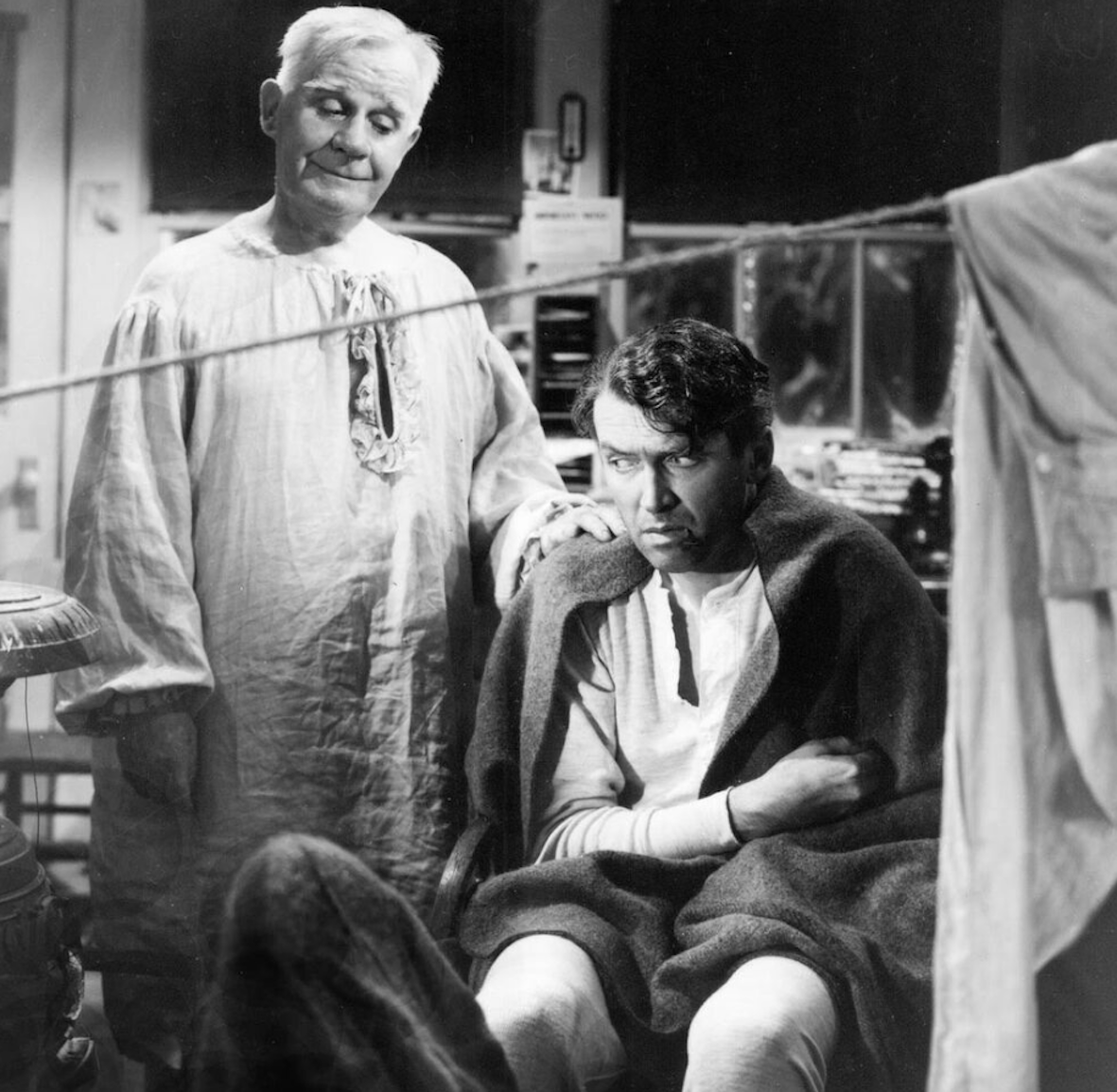
Travers as Clarence Oddbody, Angel: Secnd Class, with James Stewart as George Bailey in It’s A Wonderful Life
NM LYONS profiles the 20th Century character actor Henry Travers, It’s A Wonderful Life’s guardian angel and a son of Prudhoe
He was an Oscar-nominated actor familiar to most as Clarence the guardian angel in the Christmas movie staple It’s A Wonderful Life, yet while his face is familiar, it is less well-known that Henry Travers was a Northumbrian.
Born John Heagerty on March 5, 1874 in Prudhoe to Dr Daniel Heagerty (1841-1915) and Ellen Gillman Hornibrook (1842-1891), Travers had an elder brother, a younger sister, and an older half-brother from his mother’s first marriage. His father was from Passage West, Co Cork, but settled into general practice in Berwick when Travers was an infant. Residing in Main Street, Tweedmouth, the doctor went on to serve 30 years as district medical officer.
The product of well-ordered Victorian family life, Travers completed his education at Berwick Grammar School and was apprenticed to the well-regarded architect, Messrs James Stevenson & Son in Berwick, which during Travers’ apprenticeship was involved with the extensive remodelling and enlargement of Callaly Castle.
The death of Travers’ mother in 1891 had a profound effect on the siblings. By the age of 20 Travers had joined an amateur dramatic troupe, Tweedside Minstrels, while his father married a much younger woman, Fanny Maria Stevens, with whom he would have a son in 1897.
While details of Travers’ early career are sparse, reference is made in a December 1895 issue of The Era newspaper to the young actor as a lead character in a production of Fifty Fafty, a play at Queen’s Theatre, Berwick. Then, as the 1890s drew to a close, he began to work throughout the country with the James Wallace Quintet, where he refined his acting style.
Travers’ career coincided with British theatre moving away from the intricate stage machinery of historical drama. Innovative works from Ibsen and Chekhov offered dramatic realism and the emergence of the repertory movement provided opportunities for regular employment and a wider choice of roles.
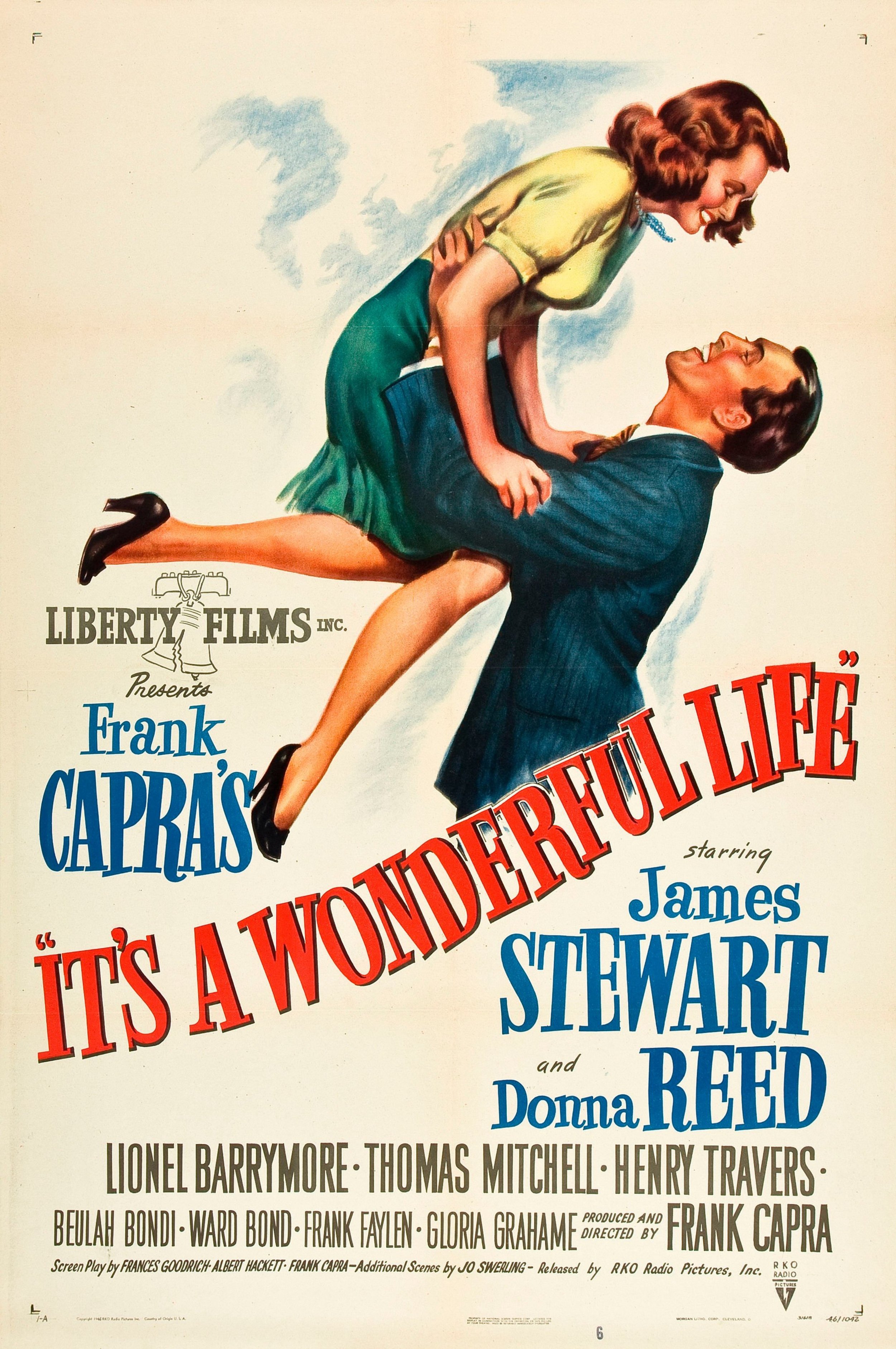
The poster for It’s A Wonderful Life
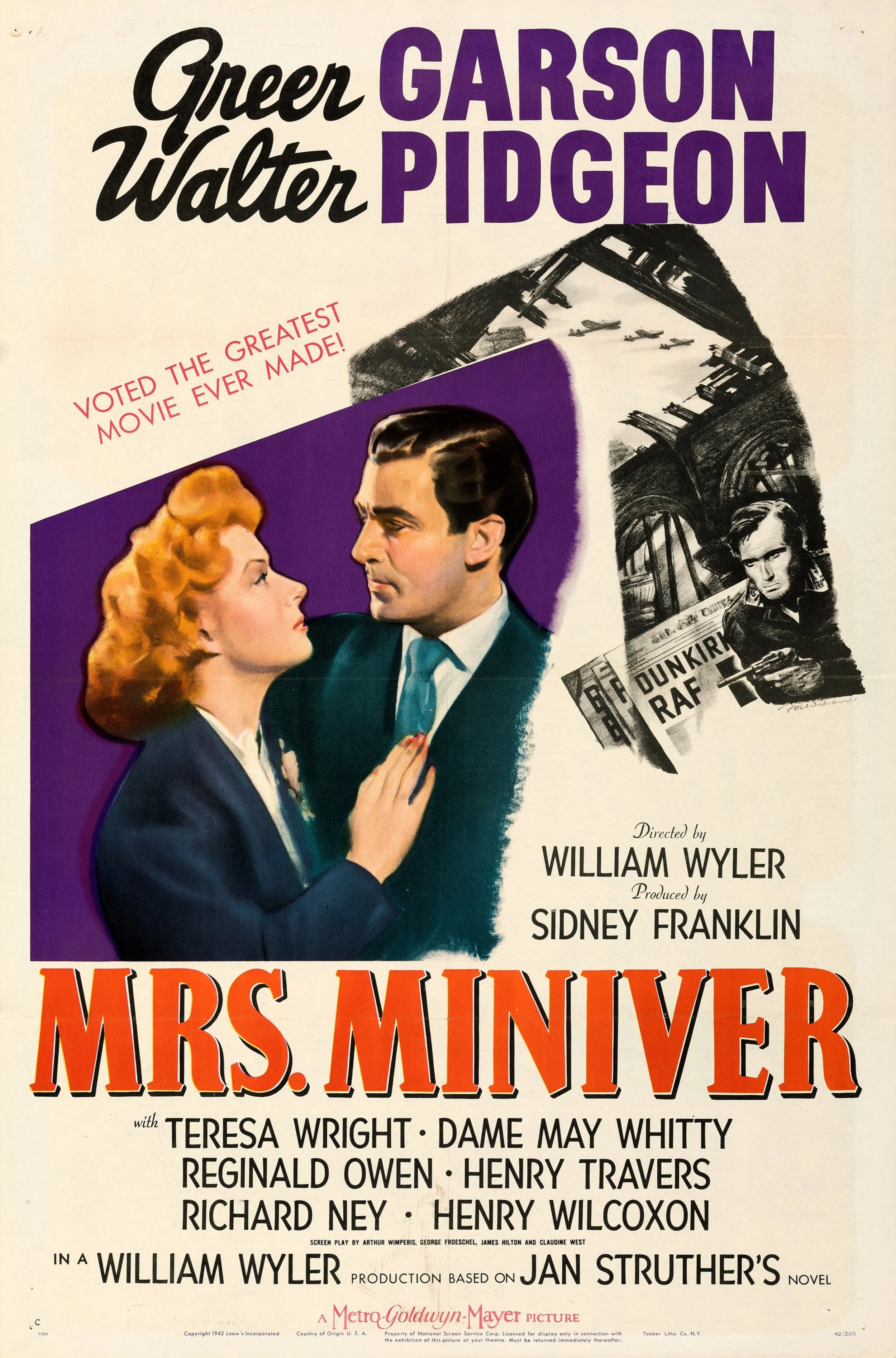
Travers was nominated for an Oscar for his performance in Mrs Miniver
Travers made his US theatrical debut in The Price of Peace in March 1901 at the Broadway Theatre in New York, remaining with the production for its three-month run. However, it was not until November 1917 that he made his first notable performance on Broadway in The Pipers of Pan. Working in with the progressive Theatre Guild, Travers began to be cast in non-traditional productions by the new wave of European and American playwrights.
Among his most successful productions were the American premiere of Saint Joan (1922), a revival of Caesar and Cleopatra (1925), and Androcles and the Lion (1925), for which The New Yorker noted, “Travers is one of the most consistent performers now in the American theatre, and at the same time one of its least-appreciated.”
Further success followed as Alfred Doolittle in Pygmalion (1927) and key roles in The Brothers Karamazov (1927), Eugene O’Neill’s Marco Millions (1928), Turgenev’s A Month in the Country (1930), and Pearl Buck’s The Good Earth (1932).
In 1933 Travers migrated to the west coast and the evolving film industry of Hollywood. There was no difficulty making the transition from the stage to screen as he did not suffer from an overblown acting style. He was cast in supporting roles, often as a wry and bumbling elderly man. His first screen appearance was in Reunion in Vienna (1933), a largely forgotten John Barrymore film perhaps best remembered as an example of a Pre-Code Hollywood (1927-1934) production, where content was restricted by local laws rather than the censorship of The Hays Code. In the same year, the classic The Invisible Man was released with Travers as Dr Cranly, employer of the tortured lead character played by Claude Rains.
Travers returned to the stage in 1936 to play Grandpa Vanderhof in Kaufman & Hart’s You Can’t Take It With You. Travers excelled in more than 380 performances of the Pulitzer Prize-winning play, bringing charm and pathos to the role. Despite this success, however, he was passed over for the lead in the movie adaptation in favour of Lionel Barrymore, the film becoming the highest grossing movie of 1938 and winning an Oscar for Best Picture.
Travers then appeared opposite Humphrey Bogart in the prison drama, You Can’t Get Away With Murder (1939), as Bette Davis’s family doctor in Dark History (1939), and as Doc Irving in Michael Curtiz’s technicolour western Dodge City (1939). These performances solidified his reputation and at the age of 65 Travers entered the last decade of his career in demand and at the apex of his popularity. Hollywood directing luminaries including Billy Wilder, Alfred Hitchcock, William Wyler, Leo McCarey and Frank Capra went on to elicit the best of his considerable talent.
Travers re-teamed with Humphrey Bogart in High Sierra (1941), gaining praise for Joan Leslie’s kindly but slyly observant uncle. William Wyler, a known perfectionist, then elicited a nuanced performance from him as a kindly railway stationmaster who names a cultivated rose for Greer Garson’s Mrs Miniver (1942). Its six Oscars, including Best Actress for Garson and a directing accolade for William Wyler, were richly deserved, but Travers was beaten to Best Supporting Actor by Van Heflin for the film noir Johnny Eager. The notoriously prickly Garson chose him for her next two films, Random Harvest and Madame Curie.
In 1943 Alfred Hitchcock cast Travers opposite Joseph Cotton as Mr Newton in the psychological thriller Shadow Of A Doubt. That same year, in The Moon Is Down, Travers played against type as the mayor of a Norwegian town grappling with Nazi occupation. In 1945 he gave an engaging turn as Horace P Bogardus, the millionaire charmed by Mother Superior Ingrid Bergman into donating a new school in the Bing Crosby Oscar-winning The Bells of St. Mary’s. He was equally charismatic opposite Abbott & Costello in The Naughty Nighties, playing a river boat captain swindled out of his controlling share of his boat in a crooked card game.
His defining role came in 1946 with It’s a Wonderful Life and the guardian angel Clarence Oddbody. While the film was initially unsuccessful, it has since become a perennial Christmas classic. Travers brought vast experience to the role, offering gentle comic timing to the pivotal role and never detracting from the protagonist George Bailey (James Stewart).
At the age of 75 and with more than 50 films to his name, Travers called time on his career with the forgettable Ronald Reagan comedy, The Girl From Jones Beach (1949).
In terms of his private life, Travers was reclusive by nature and there is little in the public domain to shed light on him. By the time he gained American citizenship in 1924, he was using his stage name Henry Travers in daily life, living at 155 West 44th Street, New York, and romantically involved with Amy Rosina Forrest-Rhodes, nee Wilson (1881-1954), whom he married in 1926. Also a theatre performer, she had been previously married to the music hall singer, comedian and pantomime dame Arthur Forrest (1850-1908).
Among the couple’s American and British friends were the actor, writer and director Alexander F Frank (1866-1939), known for silent films including A Suspicious Wife (1914) and The Tattooed Man (1915). When the couple relocated to Hollywood in 1933, comedy, musical and gangster film genres had been established, yet acting remained a precarious profession, Travers having to work long hours under strict studio contracts.
Life in LA provided the couple with a home in the fashionable chateau-style Fontenoy building at 1811 Whitley Avenue. Built in 1928 to a design by Leyland A Bryant, the 13-storey property housed four large units per floor, each occupying a corner location. There was a distinctive oval-shaped swimming pool, a large garden and subterranean garage. Within walking distance of Hollywood Boulevard, it enjoyed panoramic views of the ocean and the Hollywood sign and was almost exclusively home to people working on stage and screen.
Travers was widowed in 1954 and went on to form a new relationship with Ann Glud Murphy (1899-1983), a retired nurse from Washington State. By 1960 the couple had moved to 1537 North Stanley Avenue off West Sunset Boulevard, LA. On October 18, 1965 Travers died aged 91 from arteriosclerosis and was interred at Forest Lawn Memorial Park Glendale, California.
Since his death, Travers has been acknowledged as a versatile actor who imbued his characterisations with a deep sense of humanity. Northumberland has recognised his importance, the Maltings Theatre in Berwick naming a performance space after him and a blue plaque erected in his birth town Prudhoe. A touch of class for an angel of the celluloid screen.
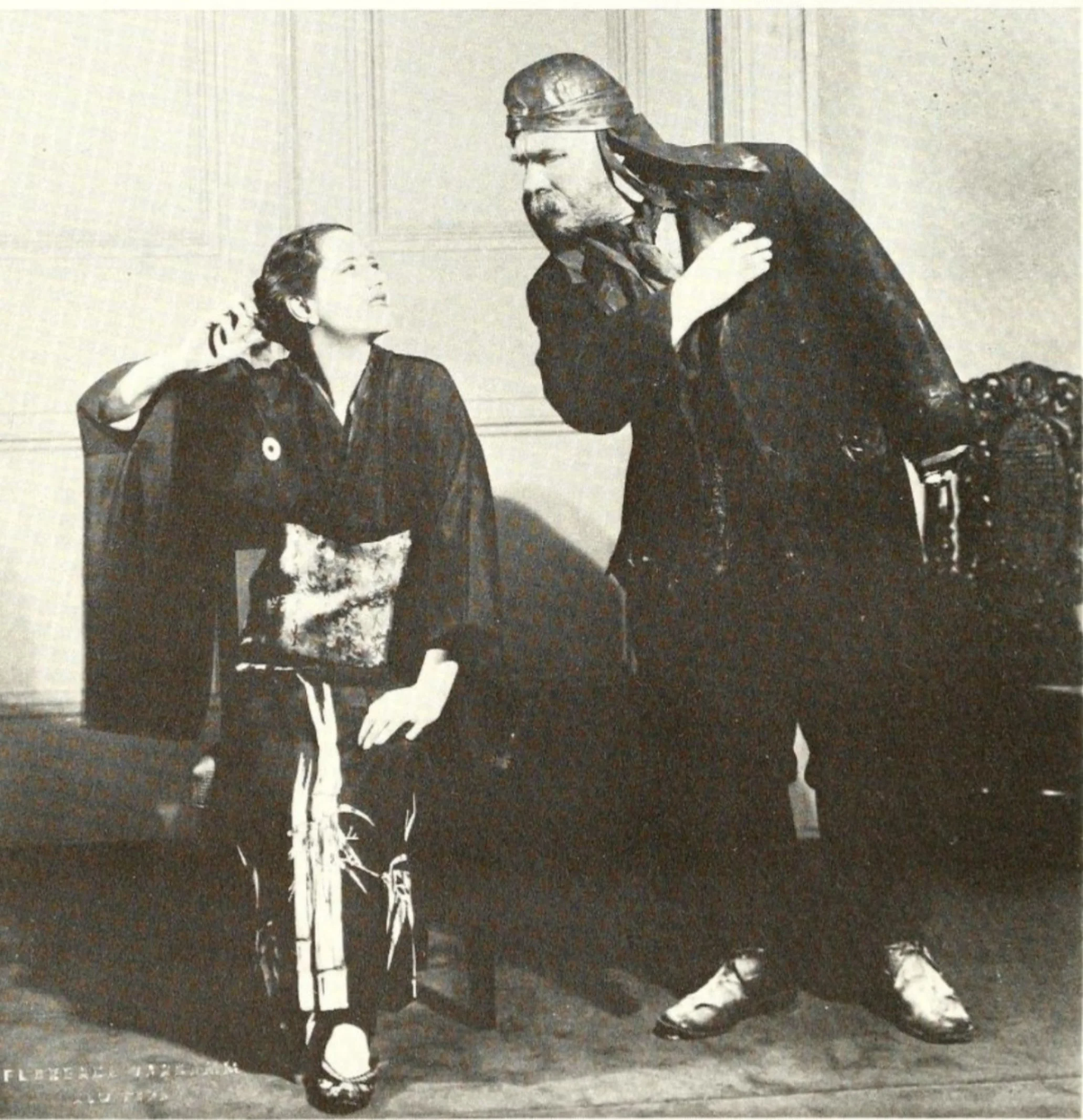
Henry Travers as Alfred Doolittle and Lynn Fontaine as Eliza in Pygmalion (1926)