
Grand designs
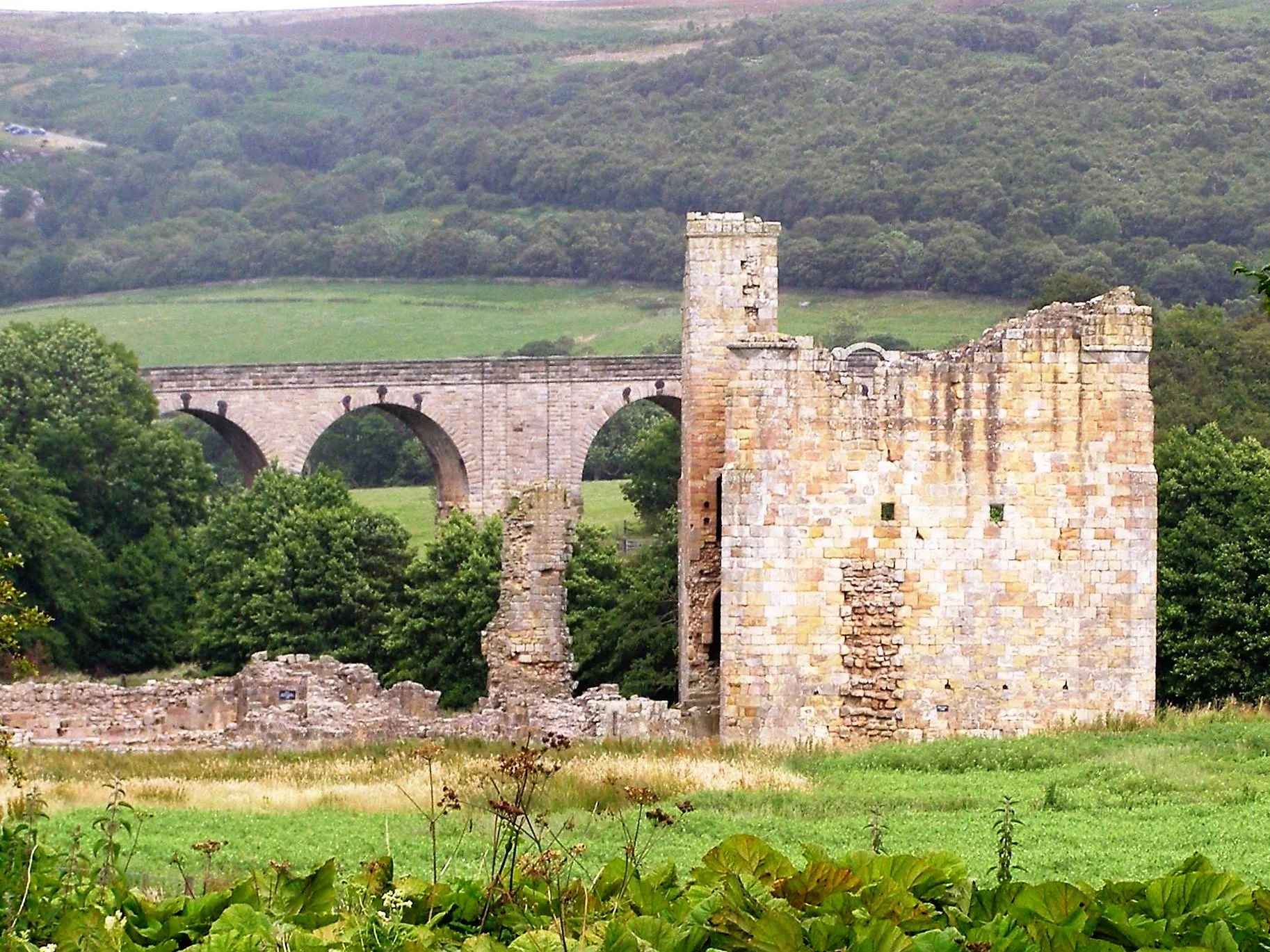
The castle and viaduct beyond
It might be tiny, but the village of Edlingham is home to
not one, not two, but three remarkable properties of historic
and architectural significance, as John Grundy reveals
About 10 years ago I wrote an article for this magazine describing the 18th Century turnpike road that ran between Hexham and Alnmouth. Part of that road, now graced with the romantic title B6341, goes from Alnwick to Rothbury and is one of the most rewarding short drives in the country.
It’s only 11.8 miles long (according to Google) but it takes you through a perfect cross-section of the Northumbrian landscape. One of its most beautiful moments occurs 4 or 5 miles west of Alnwick (according to me) at a place called Corby’s Crags. If you’re driving that way you won’t miss it because it is suddenly obvious that there’s a huge view to the north and loads of right-minded people gathered on the broad verge, irresistibly drawn like sensible lemmings to enjoy a stupendous vision of nearby valleys and far-off hills.
You’ll probably notice the far-off bits, the Cheviots and Kyloe hills, first, but the valley laid out below your feet is just as impressive. This is the valley of the Edlingham Burn, a small but pretty tributary of the River Aln. It includes the village of Edlingham, which is also small and pretty, and features three remarkable buildings on the southern edge of the village.
The first is the most recently built. This railway viaduct at the lower end of the valley was built in around 1885 by the North East Railway as part of the line from Alnwick to Cornhill. The line was largely unsuccessful, as you can imagine in such an underpopulated area, and it closed in the 1960s, but it left behind a host of evocative bits and pieces of stations, signal boxes and such like, and this must be one of the last traditional stone railway viaducts to be built. Tall, multi-arched railway viaducts are always exciting structures and this one is no exception – a bold but forlorn reminder of a doomed venture.
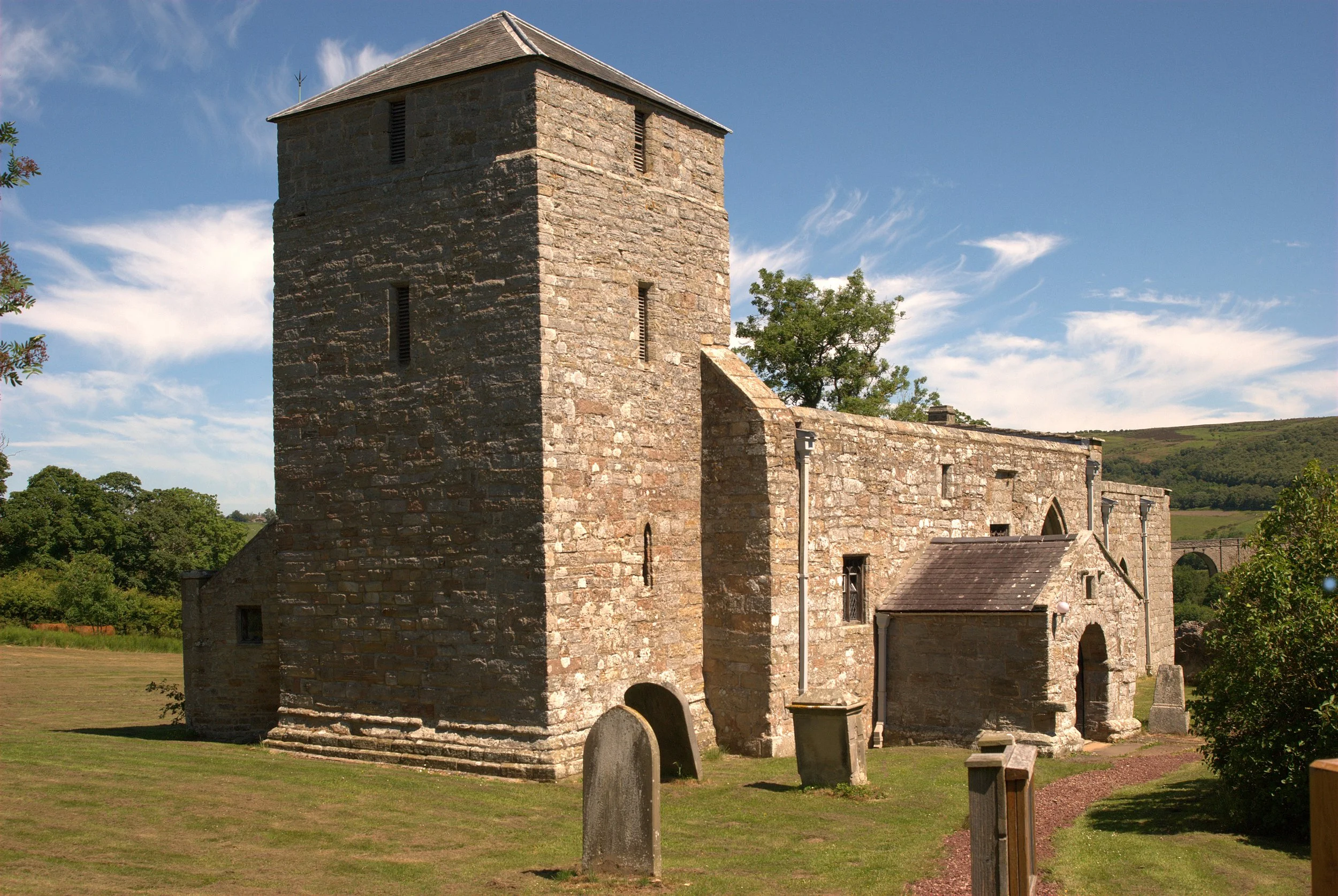
The church
Remarkable building number two is the parish church of St John the Baptist on the edge of the village. It is what my friend Eric used to call a little belter. That means it’s beautiful, though it’s quite different on the inside from the outside. The interior is an almost entirely unspoilt Norman church from the 12th Century. Actually, it probably wasn’t a new-build even then, as there is evidence that the Normans added to an existing Saxon church, but they did it well and the villagers have clearly been satisfied with it ever since.
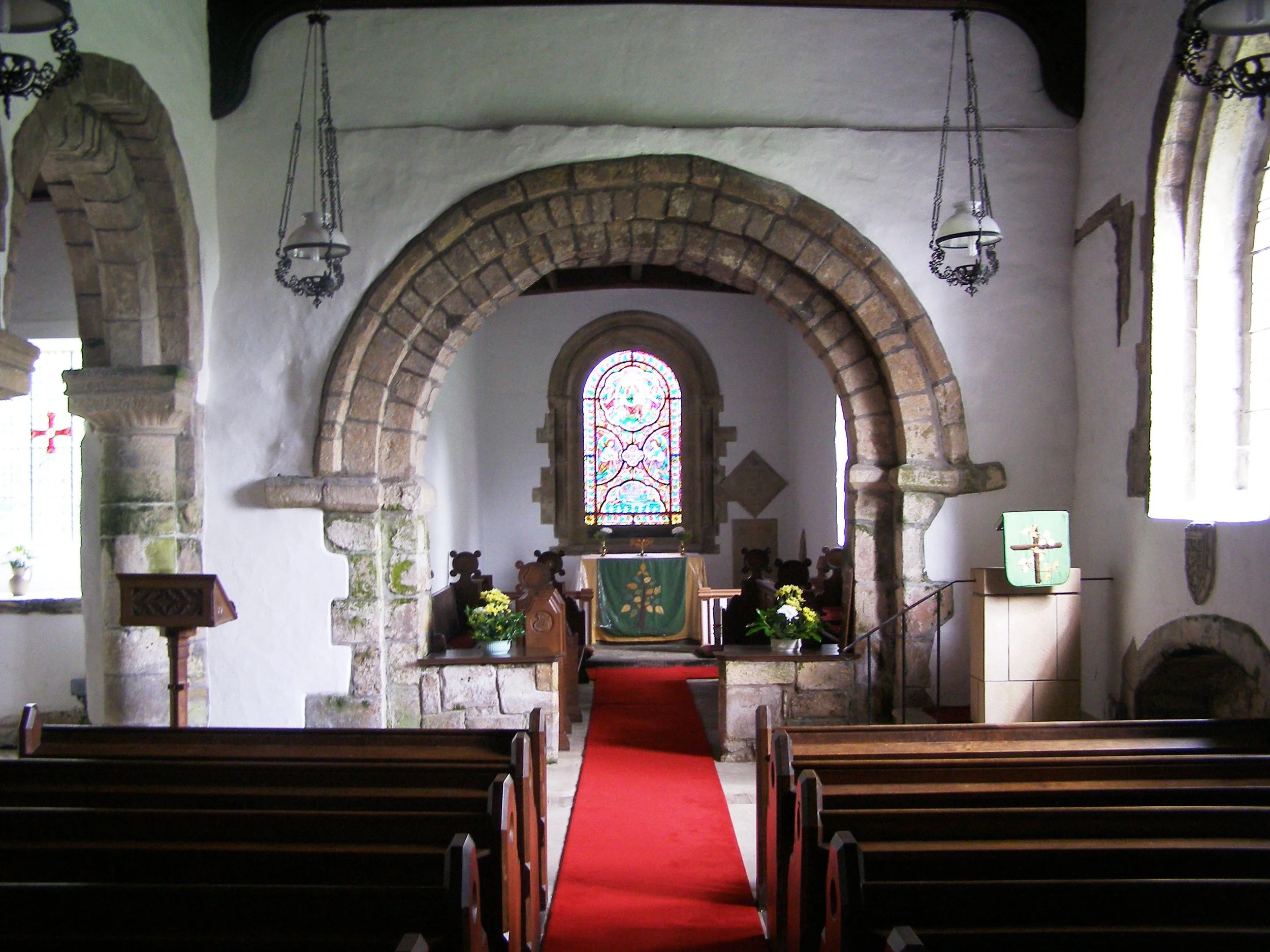
So inside it remains a little Norman jewel. Outside, on the other hand, it shows signs that it has passed through a whole heap of living. It is still lovely, of course, with glorious views from the churchyard, but only the stonework of the walls is still clearly Norman. For the rest, several different centuries have left their mark.
There are all sorts of different windows, for example, while the tower… well, the tower is large, satisfyingly solid, with only the narrowest of slit windows, and in Northumberland, especially up here in the wild hills, that makes you suspect it was added to the church, possibly in the 14th Century after the Border Wars had started in earnest. If so, it was intended to give the villagers a place of refuge in the event of the sort of attacks that must have seemed ten-a-penny for hundreds of years in this isolated spot. That need for security is re-emphasised by the south porch, which probably dates from the 16th or 17th centuries but has a stone-vaulted roof and is also defensible.
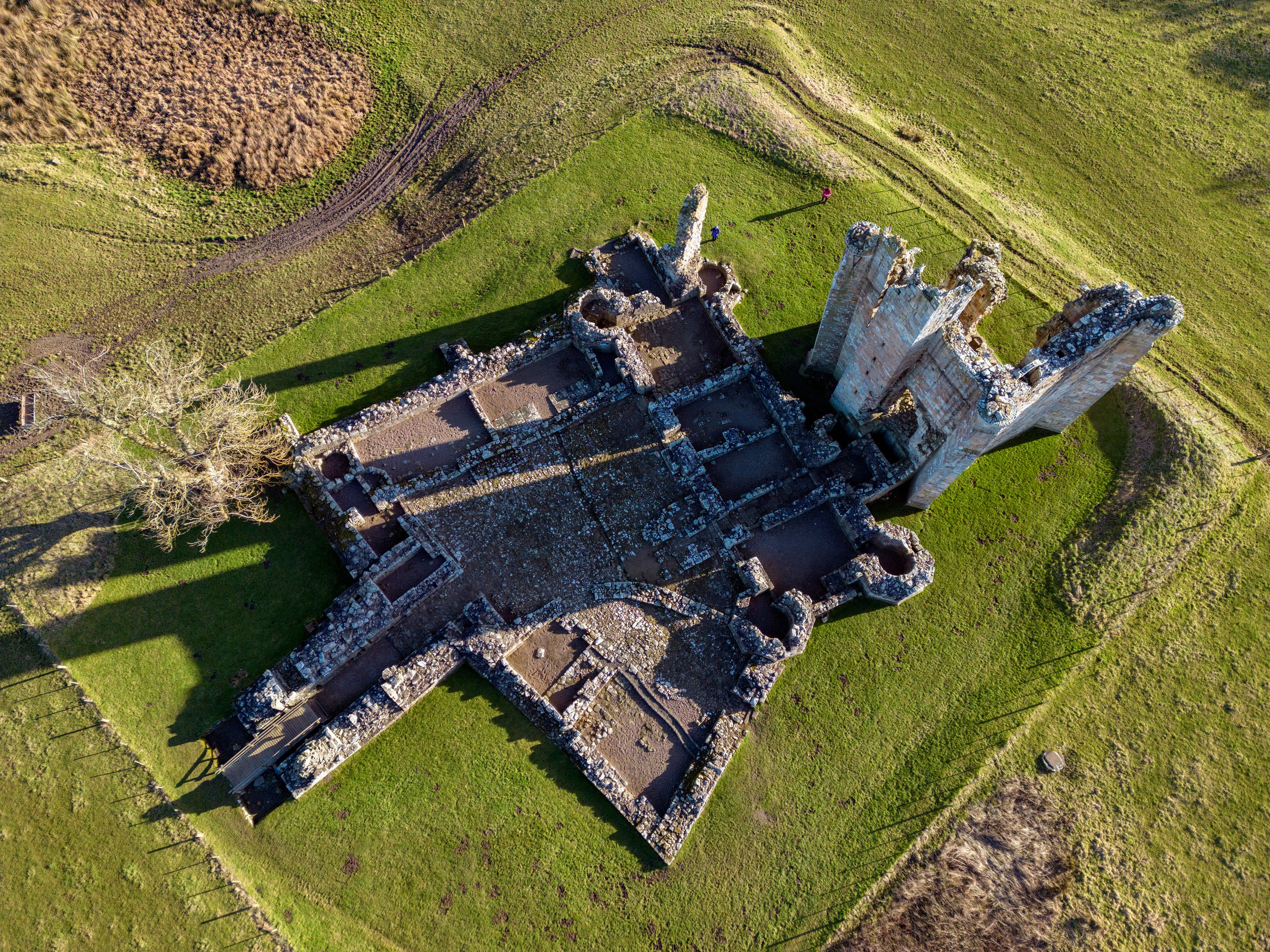
An aerial view of the castle
Those somewhat warlike elements bring me to the third remarkable building you can see from Corby’s Crags – Edlingham Castle. As far as I can tell, nobody knows when the site of the castle was first built on, but there must have been something at a very early date because in 1295 a man called Sir William Felton bought it from Thomas de Edlingham. Whatever he bought, Sir Thomas built himself a new manor house with outbuildings – not a castle because there was no sign at that time that the border was about to explode into the maelstrom of violence that would soon engulf it for the next 300 years.
As it happens, the real explosion happened the next year, 1296, with the invasion of the county by William Wallace. But in 1295, Sir William Felton, presumably chuffed at his luck, built himself a nice house in a pretty valley just a few miles from Alnwick, which was already one of the major places in the county.
For many years, certainly on the occasions of my first visits to this place, there was no indication that Sir Thomas’s manor house still existed. All that could be seen sticking up from the grass was a rather splendid example of a ruined tower-house surrounded by a litter of grassy bumps.
At that time everybody assumed that the visible tower was the whole story. A solitary pele tower – a posh one as you will see in a moment – but just one isolated tower all the same. But then (he said portentously…) between 1978 and 1982, archaeologists excavated the grassy bumps and the area around the tower and, lo and behold, what emerged from the soil but an unsuspected castle. It was a small one, but beautifully formed with curtain walls, a gatehouse, the remains of Sir William’s manor house and the splendid tower that had always been known about.
It was a shock. You don’t often find undiscovered castles, and Edlingham was taken under the wing of English Heritage, which means that you can visit the castle free of charge at all reasonable hours (as it says on the website).
The tower that was already known turned out to have been added to the manor house in about 1350 by Sir William’s son (another Sir William… why did they do that?). This was something that happened to many other manor houses in Northumberland, unfortified houses which had towers added to them later.
You might think the reasons this happened would be obvious – that the towers provided extra security when war enveloped the land. But it’s more complicated than that because the towers are often so splendid; such assertive expressions of architectural ambition that they seem to be drawing attention to themselves in a way you might not have wanted if you were building it merely to protect yourself from attack. Belsay and Halton castles are two other examples of splendid towers added to existing houses, which brings me to the tower at Edlingham.
It’s an addition to a smallish manor, let me remind you, built in the middle of the 1300s, which was a time of extreme danger and savagery on both sides of the border. It was also built in an isolated and possibly vulnerable situation, yet its surviving remains reveal that it must have been an extraordinarily elaborate building, possibly the poshest tower in the county.
Niklaus Pevsner, in the first edition of the Northumberland volume of The Buildings of England, writing in 1957 (i.e. long before the excavation) wrote this about what was visible at that time: “The castle, though no more than the ordinary tower-house, is one of the most interesting in the county… the beauty which it once must have possessed… calls for some measure of preservation…”
Pevsner was referring to the view of the surviving bits of the interior which you can see on the east side of the tower.
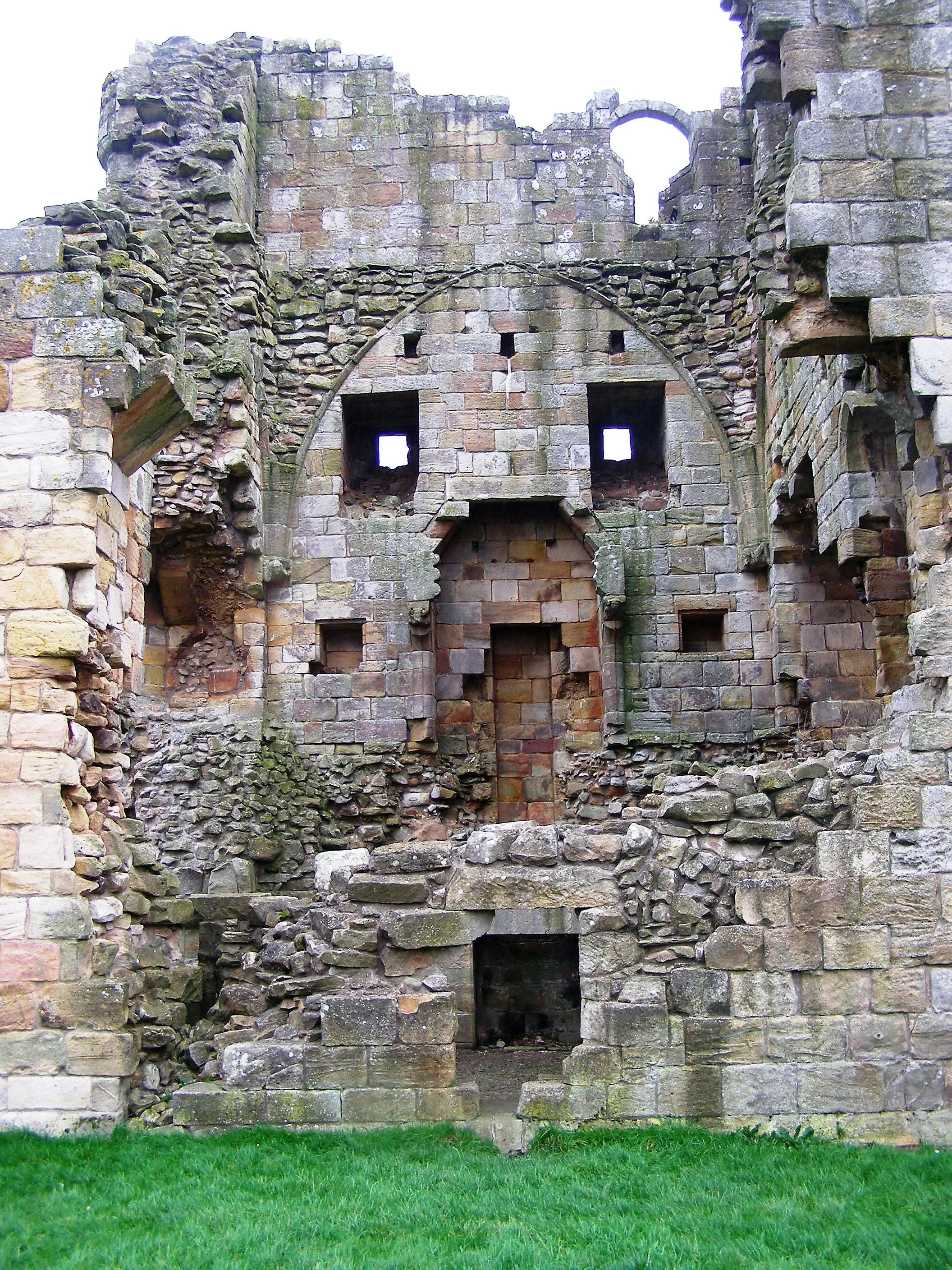
The remains of the castle’s great hall
These include the great hall that Sir William (the 2nd) created on the first and second floors of his new tower. You can see the outline of the extraordinary pointed stone vault that covered the two-storey room and imagine the splendour of the place.
There are delicately carved stone ribs outlining the vault, at the end of which are delicately carved stone heads. In the middle of the wall is a fireplace which must have been spectacular when it was whole. Even now, the carved stone heads and the richly carved surrounds suggest an interior of medieval magnificence on a Hollywood scale.
On the ground floor was the kitchen, which was covered by one of the grassy mounds before the excavation. It has another superb fireplace whose lintel is a flat arch made of interlocking stones. It’s called a joggled lintel and I think it’s extremely clever.
I hope you’ll take my word for it, but I’ve looked at numerous houses dating to the Middle Ages in Northumberland and beyond. I’ve seen many with towers bigger than Edlingham, and some that are more dramatic overall, but I have seen none with the level of sophistication to be seen inside Edlingham. Where on earth can it have come from? What must have been driving Sir William (II) to create something so – I can’t think of another word to describe it –posh in the middle of a war zone?
Three fine buildings then, all in a row. On the edge of a little village in Northumberland. I’m not sure I can think of a more distinctive group.
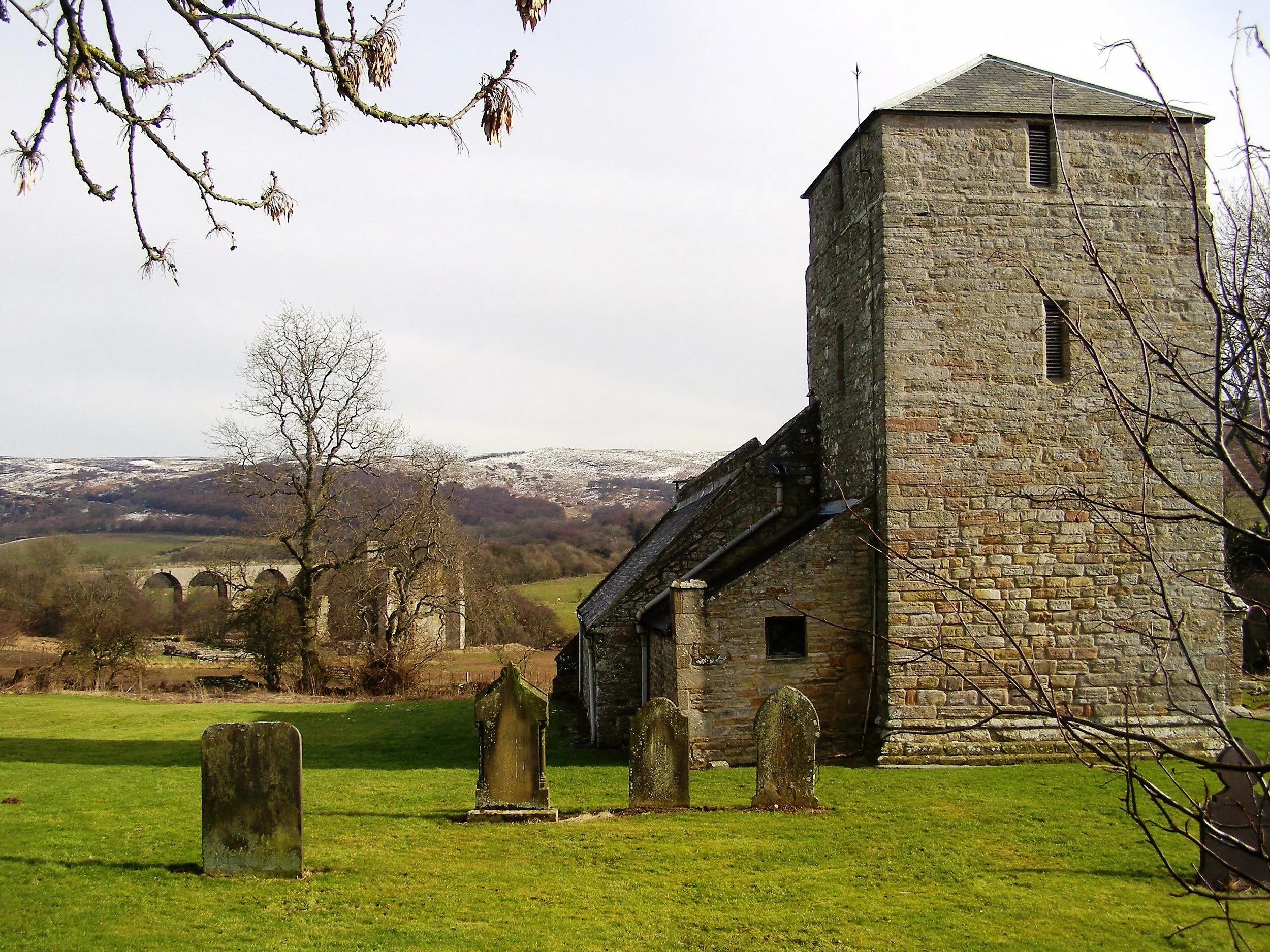
The church, castle and viaduct