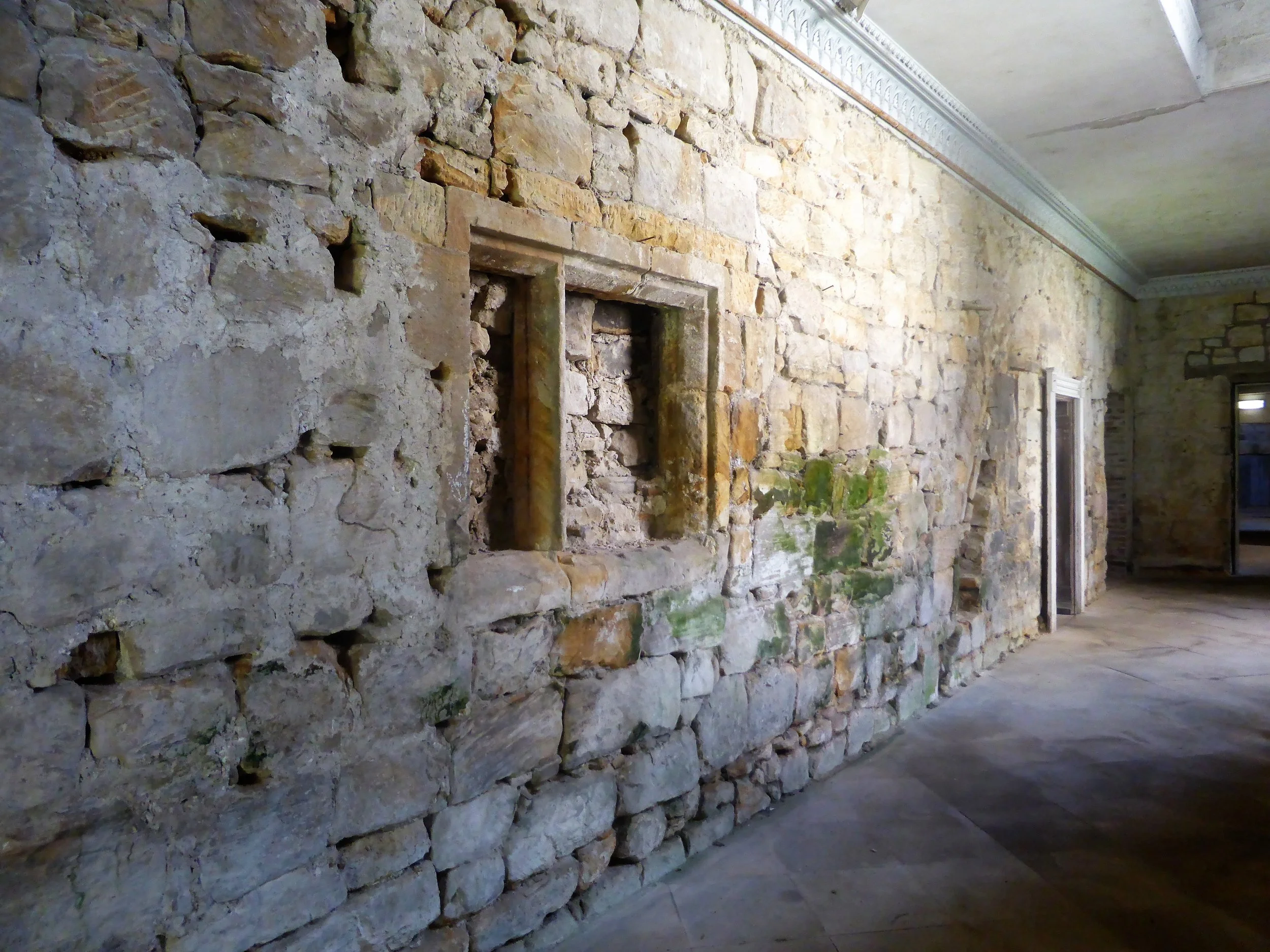
By prior arrangement
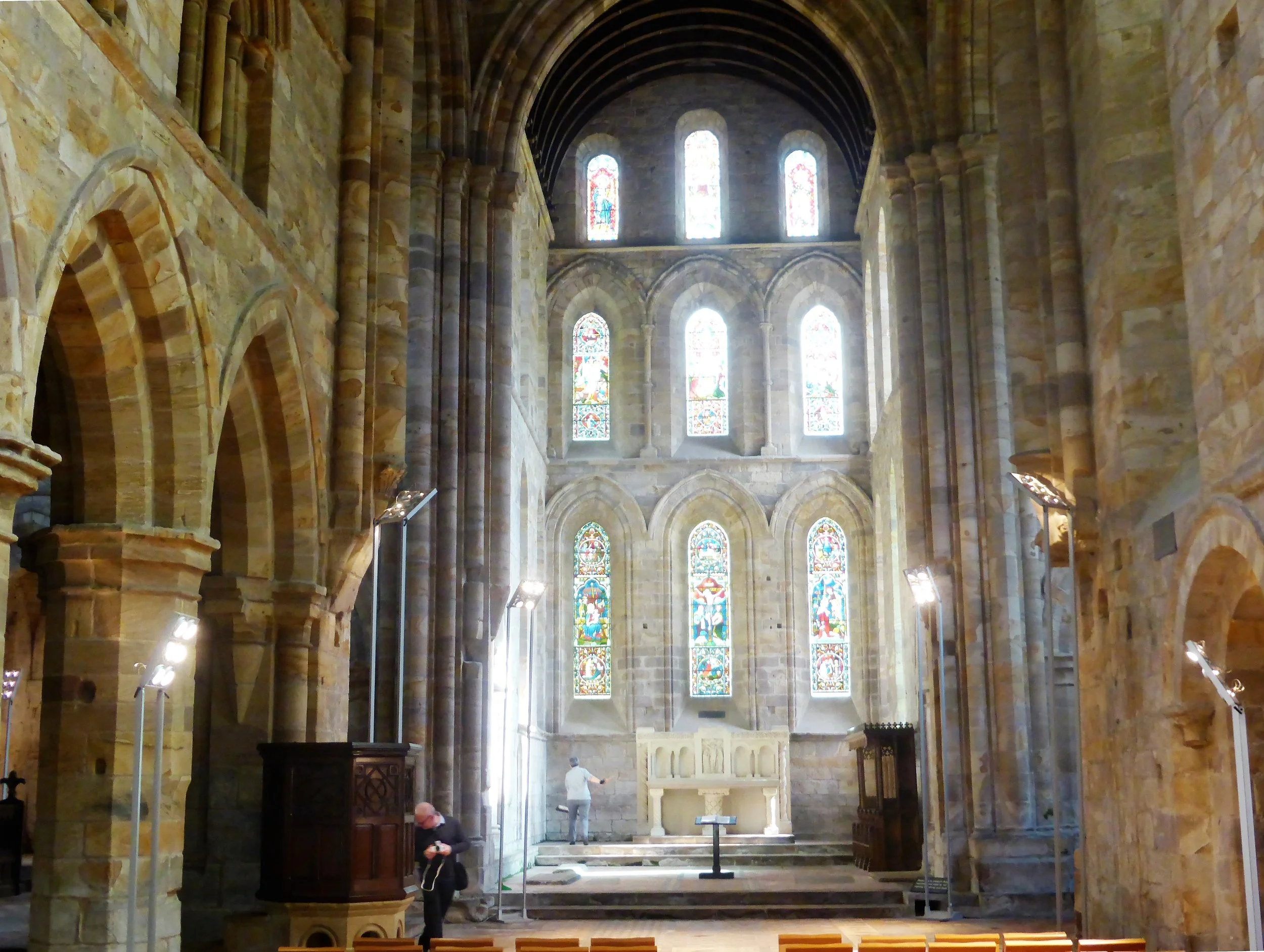
Inside the priory
First published in edition 197 of The Northumbrian, Dec/Jan 2023/2024
John Grundy gives thanks for the beauty and tranquillity of Brinkburn Priory, and those who, over the centuries and the present day, have cared for this enchanting place, and at least one contemporary (somewhat forgetful) visitor
Niklaus Pevsner, author of the magnificent Buildings of England series, was not a man given to flowery sentiment. His books, and the volume he published on Northumberland in 1957 was no exception, are remarkable for the cool accuracy and technical precision of their architectural descriptions. To follow them it helps to know what a ‘perp’ window looks like, or a ‘polygonal buttress’, and that’s what his devotees are looking for, so when he suddenly throws in a bit of raw emotion, you know that he’s talking about something pretty special.
As a case in point, this is how he begins his description of Brinkburn Priory: “The Priory (for Augustinian Canons) was founded about 1135. No more enchanted spot could have been found. The buildings lie at the bottom of a deeply cut dene almost surrounded by a loop of the Coquet river.”
There is still some technical stuff there – to get the full effect of what he’s telling you, you need to know what a ‘priory’ is and what ‘Augustinian Canons’ were, and you need to know whether 1135 was a significant date for the founding of priories. But before all of that you need to see this enchanted spot because he got it dead right – as spots go, Brinkburn is an enchanted one.
You park at the top of a hill and walk a few hundred metres through glorious woods laced with bluebells in spring and rich colours in autumn. There’s always bird song and the rustling of leaves, the constant sound of running water and bright glimpses of the fast-flowing Coquet through the trees.
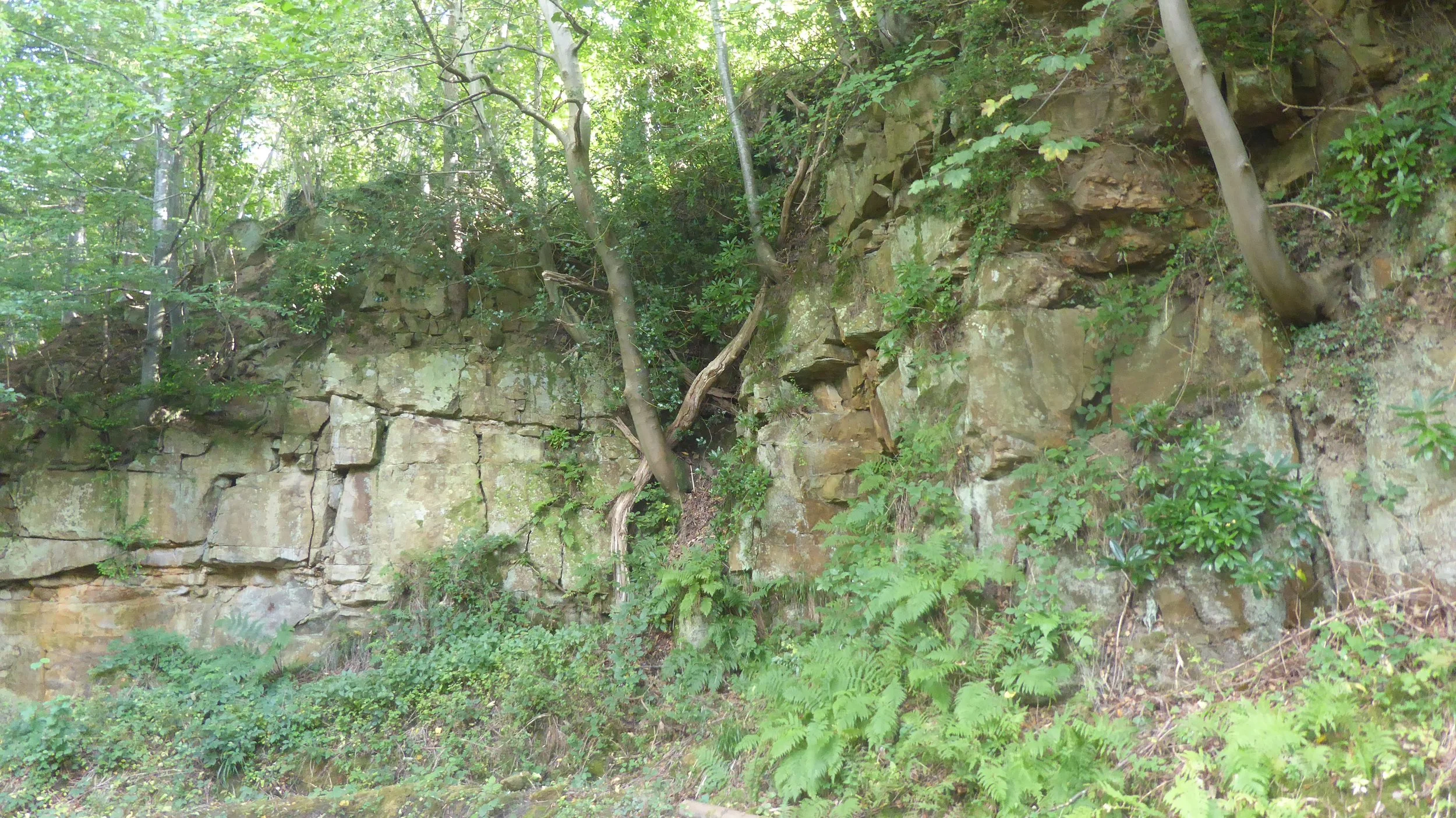
The quarry
The track widens at one point and you walk past a dramatic sandstone rock face laced with fascinating writhing root systems – the quarry where those Augustinian canons got the stone to build their priory. A few seconds later you get the first glimpse of the priory itself. It’s a lovely sight and a terrific arrival.
What you’re approaching is the north door of a large church. It is a brilliant piece of design, one of the finest pieces of medieval carving in Northumberland. But if you look at it carefully you can see that it mingles two quite different periods of architectural history. The doorway itself is purest Norman design with three richly carved round-headed arches, but the arches in the little row above the door are not round-arched at all, but pointed, and they are Gothic arches, which is a later style altogether.
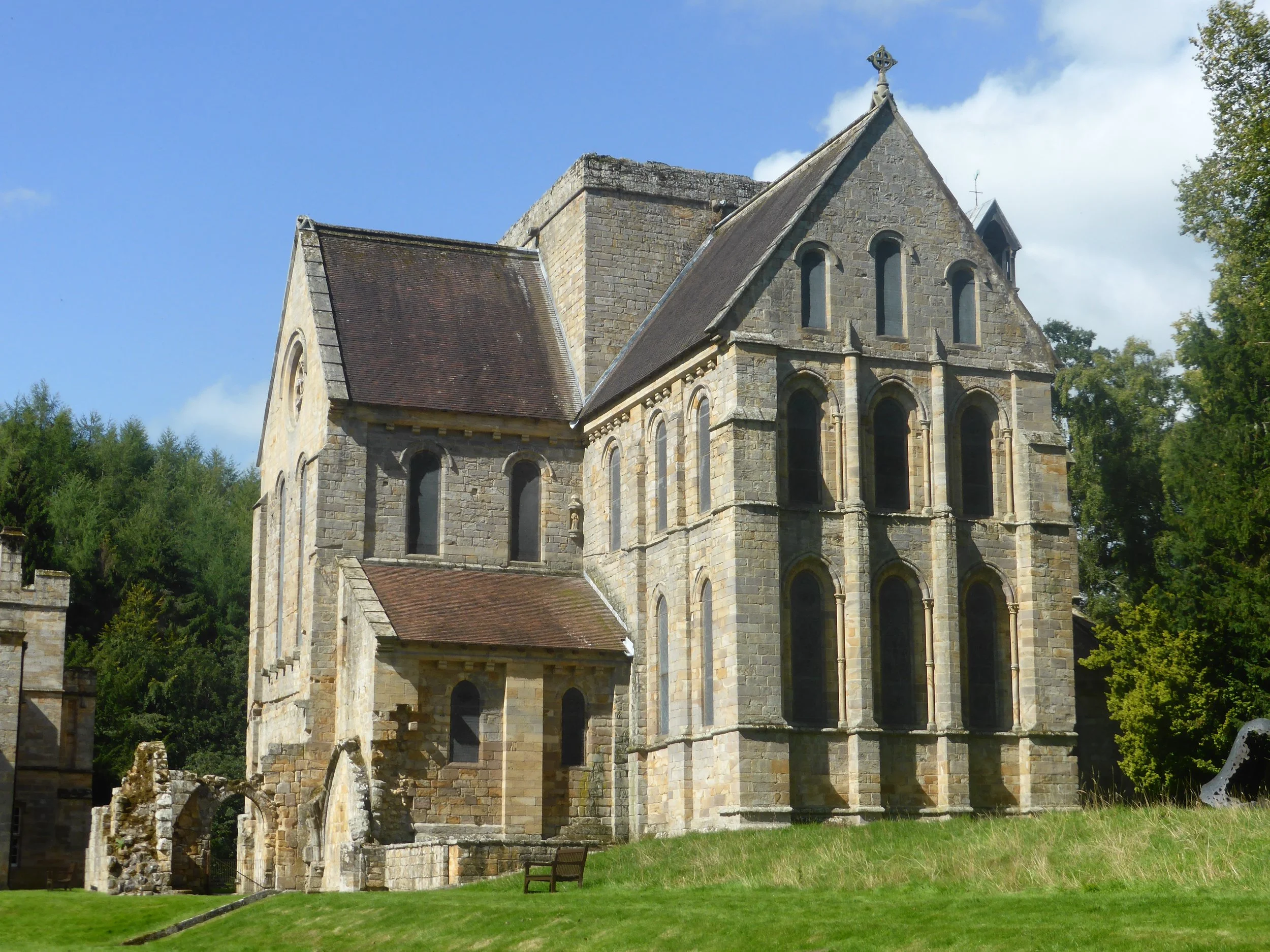
The priory
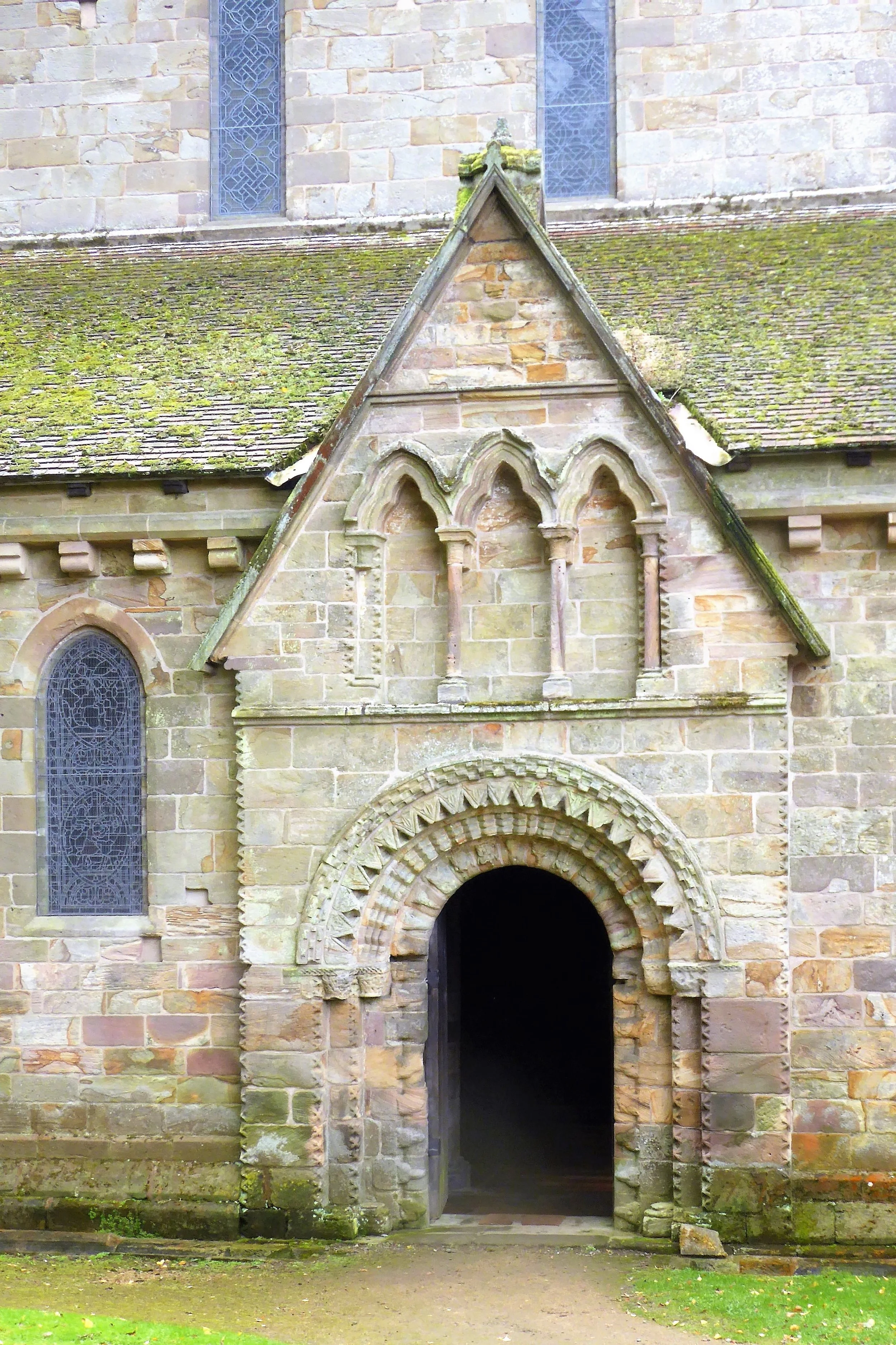
The priory door
So, what is going on here? Well, this oddness is, as they say, susceptible of a ready explanation. Niklaus Pevsner’s 1135-ish date is when the community was founded, but not when it was built. A group of canons came up from another priory in Norfolk to found a sort of daughter house. This was happening all over England at that time. The Norman Conquest was finally settling down and the land was being divided up and given to rich chaps and supporters of the new Norman royal family. One of them was William Bertram, who had a barony based on the village of Mitford, near Morpeth.
Bertram, like many other barons, was presumably eager to buy himself a bit of credit when it came to getting into heaven, so he gave land to the Augustinian canons. They were sort of monks with a difference; they spent a lot of time in religious devotion, but also took on other jobs, both as priests in neighbouring churches and in the pursuit of good deeds.
Nobody knows what sort of place those first settlers lived in, but in 1188 they became independent of their Norfolk origins, and that is when they started to build Brinkburn – just at the moment when the Norman (or Romanesque) style was giving way to the new Gothic style which was going to dominate Europe for centuries to come.
The result is glorious inside and out. The outside of their church looks magnificently grand in its enclosed, intimate valley, while the inside is beautiful; calm, uncluttered, and a perfect example of what Pevsner would describe as ‘EE’ – the Early English Style which was coming into fashion when Brinkburn was built.
So that’s the church – a lovely place and a lovely building inhabited by the nice, socially minded religious chaps who built it. But that’s not the end of the story. For the next 440-odd years the canons continued to occupy their delightful site, but it certainly wasn’t an unalloyed joy. For Northumberland in those medieval centuries didn’t allow anywhere perfect peace, as the border wars regularly got in the way.
The canons were in a very isolated spot. They were ransacked by Robert the Bruce in 1315, and 100 years later they had to call for help when their possessions were stolen or scattered by raiders. Then in 1539 they were closed down by Henry VIII during the dissolution of the monasteries (1539-1541), any remaining possessions pinched by the Crown and the site sold to the Fenwick family, who moved into some of the priory buildings and converted them into their manor house.
Over the centuries the Fenwicks and other subsequent owners have made endless changes, including the present front elevation which was built about 1810 in charming Georgian Gothic style. Inside the house, where the more modern plaster has been stripped off, extraordinary medieval bits and pieces of windows and arches, vaulted basements and masses of stonework have been exposed. It might be ruined and empty now, but it’s still enthralling; a fascinating mixture of different periods.
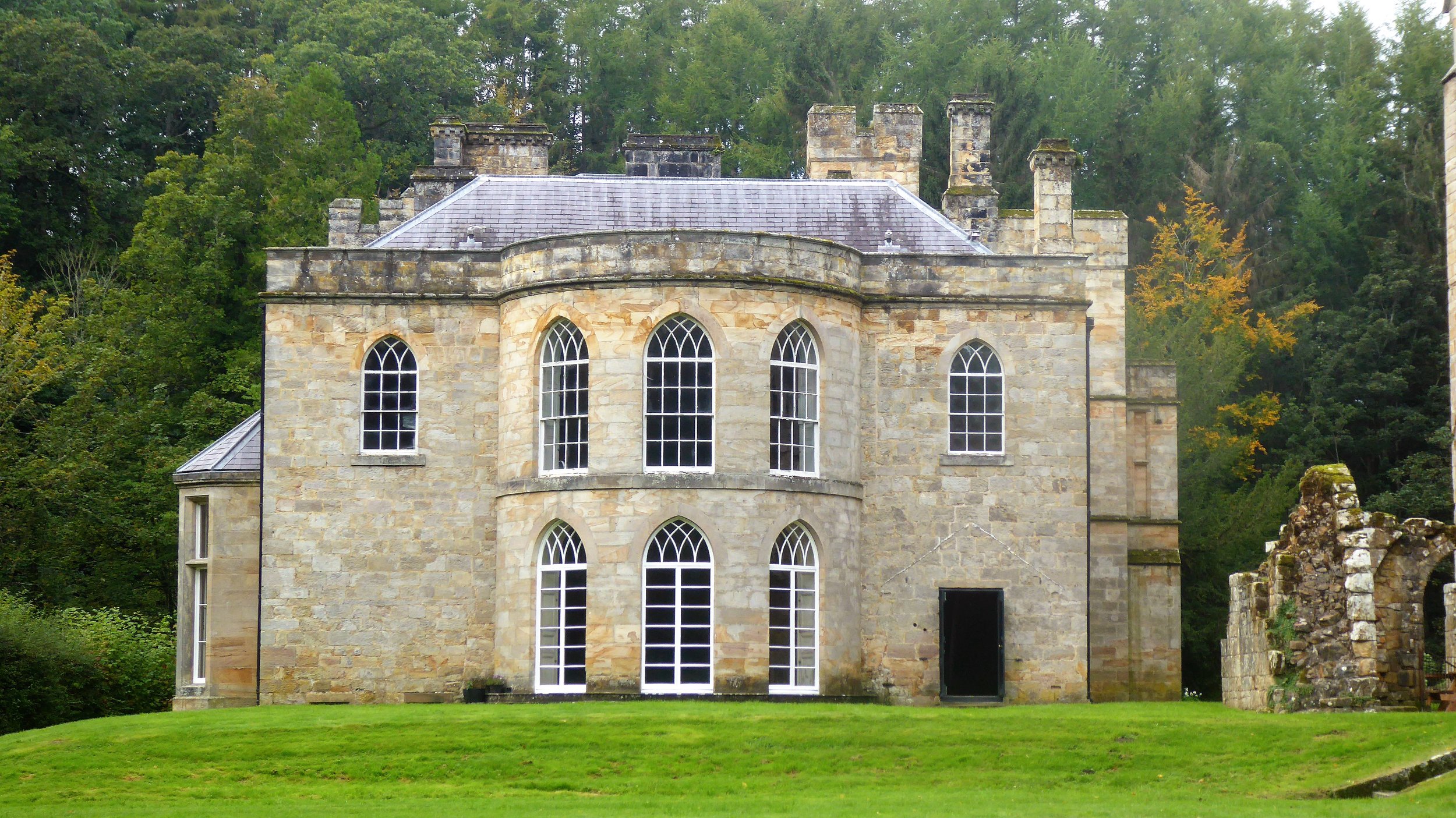
The Manor House
The place was eventually bought in 1825 by the last significant family to be involved with Brinkburn. They were the Cadogans and the man who bought it, Ward Cadogan, was a slave owner with large and valuable plantations in the Bahamas. He had a daughter, Sarah, his only child, who was born in the Bahamas in 1810, and what happened next was pure Pride and Prejudice. In 1825, just like Elizabeth Bennet’s flighty younger sister Lydia, 15-year-old Sarah eloped with a 29-year-old Army officer called William Hodgson, getting married over the border in Gretna. They were clearly forgiven, though, because their union was later reaffirmed in an English church, and they went on to live at Brinkburn.
Sarah’s father made her, and her children after her, the principal beneficiaries of his will, and her husband changed his name to William Hodgson Cadogan. A few years later in 1833, when Ward Cadogan died, Sarah inherited a bundle and in 1855, when she died, it all passed to her son who was called, rather extraordinarily and presumably as a way of hedging his bets in the family stakes, Cadogan Ward Cadogan.
I have gone on about these things because CWC had a huge and rather splendid impact on the place where he lived and what we experience when we go there today.
After the dissolution of the priory in 1539, it continued as a church for local people in this remote and scattered community, but over time it began to decay. At some time, the south-west corner collapsed and then in the 1700s the roof fell in. The same process happened in so many other places – at Holy Island, for example, and Tynemouth Priory, which were left romantically beautiful by the ravages of time. The same would have happened at Brinkburn if Cadogan Ward Cadogan had not stepped up to the mark and done something about it, and in 1858 he began to restore the church.
This could easily have been a negative. In Victorian times vast numbers of old churches experienced (and often suffered) restorations. There were different approaches to restoration favoured by Victorian architects, the commonest being the destructive approach – get rid of the bits you don’t like and rebuild in the fashionable style of the time. This was common and lots of marvellous old stuff was wiped away in the name of progress. Or there was the conservative approach – faithful restoration of what was there without adding Victorian embellishments.
Sadly, for several decades, the conservative approach was the least common and some terrible things were done to churches all over the country. Fortunately for Brinkburn, Cadogan Ward Cadogan selected architects who were extraordinarily faithful to the original church and did the absolute minimum to its design.
The man in charge was Thomas Austin, who had been a pupil of John Dobson and took over the practice when Dobson died. The work was continued after Austin died by his successor, a terrific architect called RJ Johnson. Without Austin, in fact without either of them, we wouldn’t enjoy the beautiful simplicity and purity that Brinkburn has today. They literally did as little as possible; they invented nothing, they added nothing from their own taste and imagination; they were as true as it was possible to be to the vision of the original builders.
So there you are – without the original friars this isolated masterpiece would never have existed; without the well-to-do families which followed it would probably have crumbled away; and without some extremely tasteful and self-effacing Victorians it could easily have been faffed around with unnecessarily. We have a lot of people to be grateful to.
English Heritage looks after it carefully these days. I should have mentioned them earlier; especially Juliet, who was in sole charge when I visited recently and not only answered my endless questions without complaint, but also, after I had returned home, single-handedly rescued my family reputation as a man not safe to be let out on my own by searching for and discovering my wallet lying in the grass at the furthest end of the valley.
Thank you, Juliet, and all those who have gone before you.