
By George(s)… (and a William)
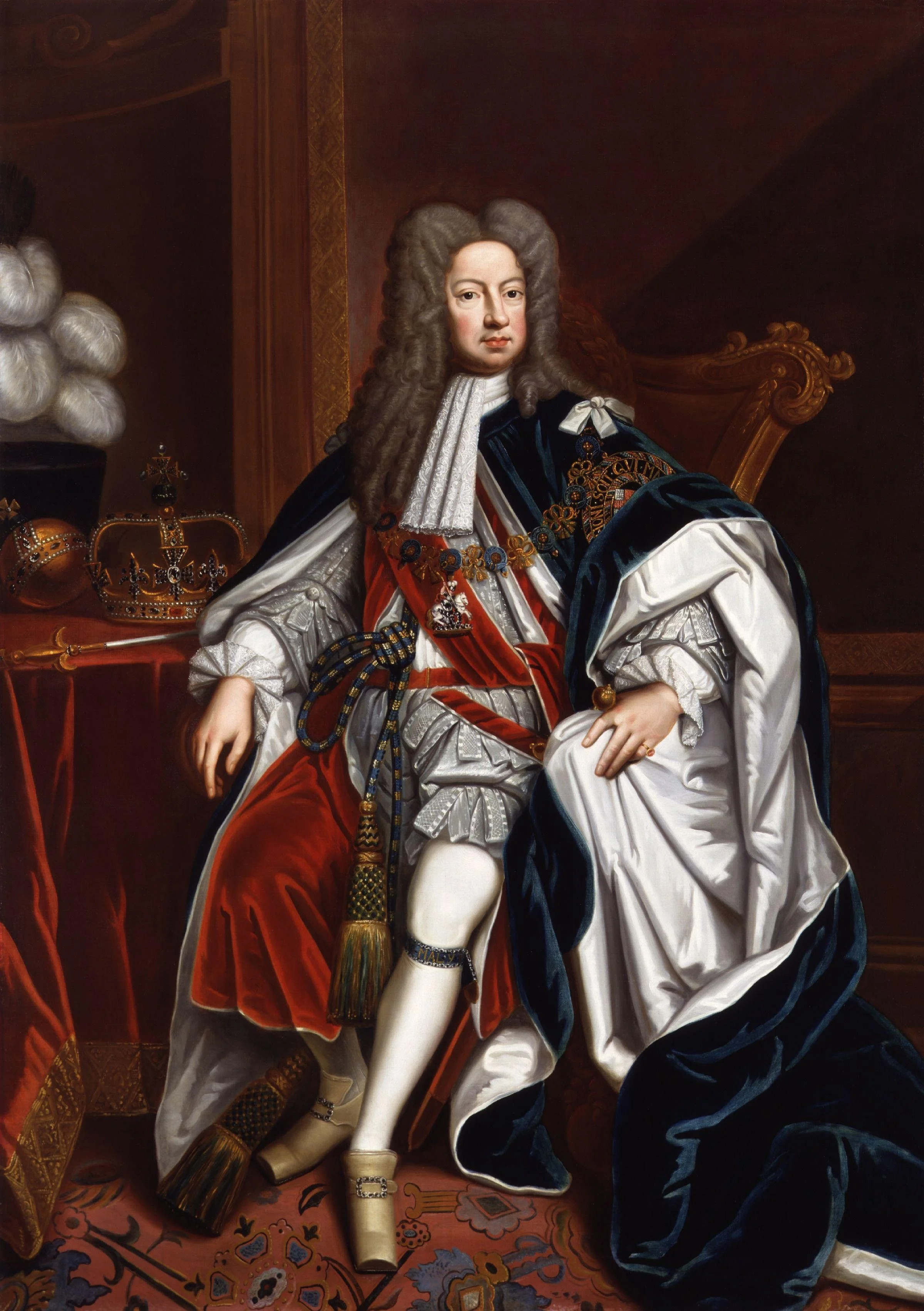
George I
As we welcome the new Carolean era, STEPHEN ROBERTS looks back to King Charles III’s Hanoverian ancestors, offering a fascinating tour of Georgian Northumberland and some of its notable characters
Having served up a tour of Tudor Northumberland (August/September 2022 issue) we sensed your wish for a sequel, so here is Georgian Northumberland. To remind you of your historic chronology, the Tudors were followed by the Stuarts, who were in turn followed by the Georgians (the Hanoverians).
The Stuart era ended with the death in 1714 of Queen Anne who, despite her heroic efforts, failed to leave any surviving heirs. We were lumbered then with George I (1660-1727), the Elector of Hanover, who spoke not a word of English but was the great-grandson of the first Stuart monarch, James VI/I. He got the Georgians off to a rollicking start by locking up his wife, taking a trio of unpopular mistresses, and getting himself mired in scandal.
Enough of the history lesson. After George I sailed over from Hanover to assume the royal reins, the new Germanic era was notable for its architecture and the number of extravagant mansions-cum-halls that were built or enhanced in the county. Belford Hall was designed by James Paine in 1756 for the manufacturer and merchant Abraham Dixon. It would be part-remodelled in 1818, towards the end of the era, by John Dobson. He was busy in our area, also designing Mitford Hall (1828) and Harbottle’s faux castle (1829), which admittedly did incorporate earlier work. There was another of these follies at Twizel, where Sir Francis Blake began building his ‘medieval’ castle around 1770.
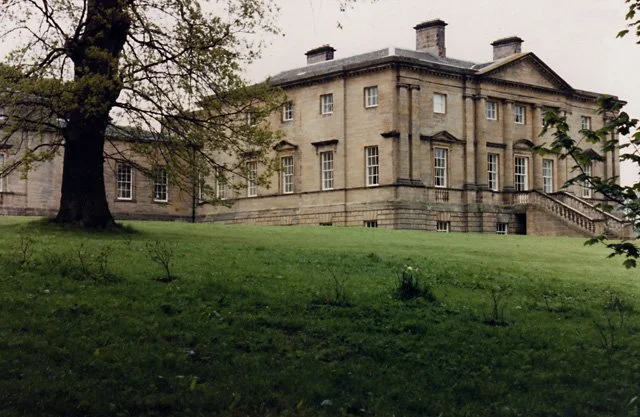
Belford Hall
Etal’s manor house was built in 1748 for Sir William Carr while the current Howick Hall was built for Sir Henry Grey in 1782. Bellingham also has the Georgian mansion Lee Hall, St Cuthbert’s church and a famed stone roof buttressed in the 18th Century, and a stone bridge of 1835. Bywell also has a Georgian hall, dated 1760.
Next came George II (1683-1760) who argued with his dad and was guilty of infidelities. He was a fan of Handel though and the last British monarch to lead his troops in battle, at Dettingen in 1743.
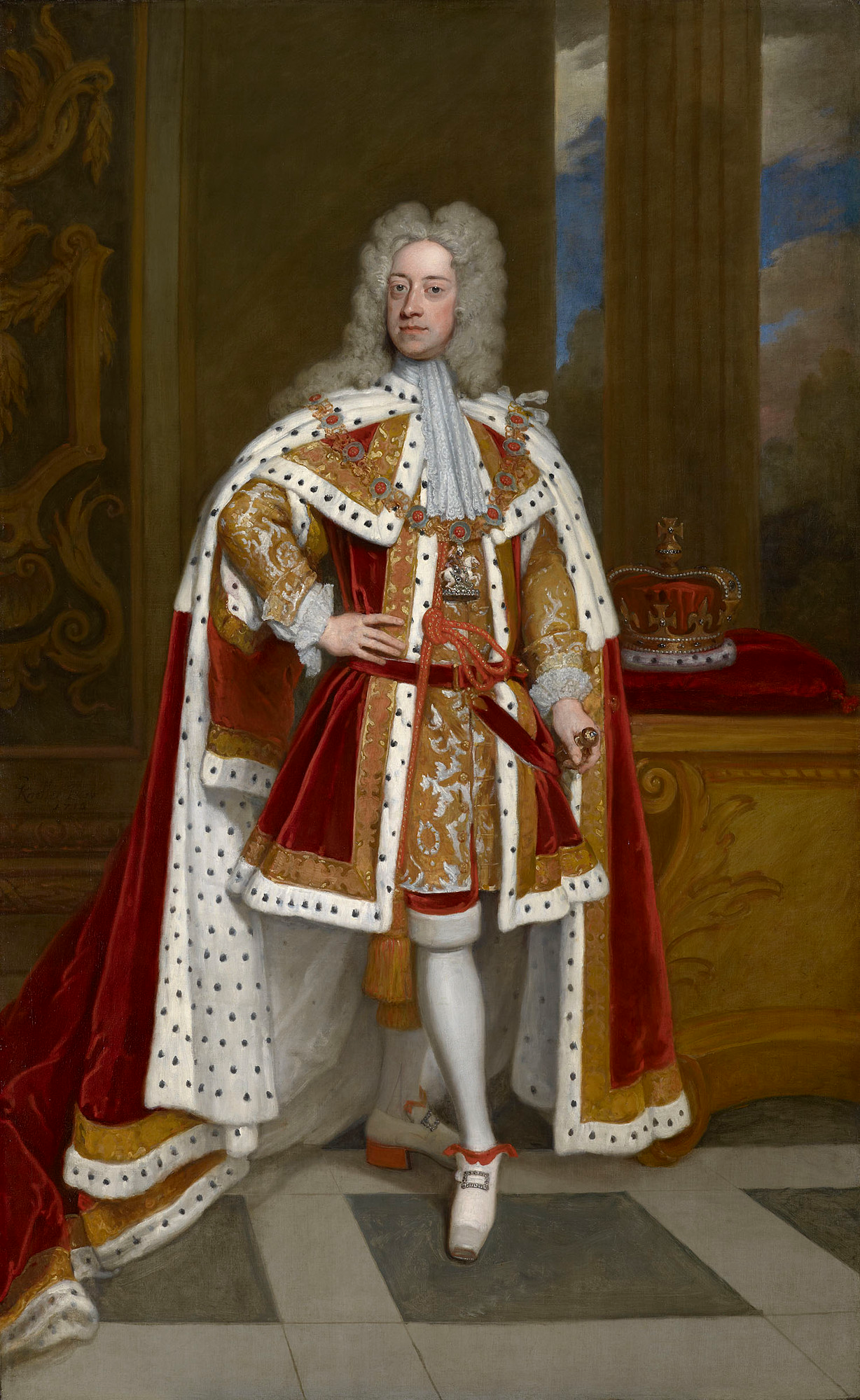
George II
The Georgian era may seem like ancient history, but that was actually being discovered a few years later, in 1747, when a hoard of Roman coins and silver dishes were famously discovered by workmen at Capheaton.
It wasn’t just about swanky houses either, for there were other developments such as the emergence of ‘sea bathing’, popularised by the Georgian kings, and the growth of towns and resorts in the pre-railway age.
Belsay village was ‘re-created’ in the early-19th Century and acquired Italianate buildings in the process courtesy of the same John Dobson who was active at Belford. Meanwhile, Blanchland experienced something similar, the trustees of Lord Crewe using the abbey ruins to rebuild houses in a model village in the mid-18th Century.
Cambo was also created as a model village (1740) and Capability Brown was schooled there. Stamfordham got itself a market cross (1736), while Hexham gained its colonnaded market place (1766).
Morpeth received a Georgian makeover – the Town Hall designed by Vanbrugh (1714); the courthouse/police station by Dobson (1822); and the late-Georgian Collingwood House, which once belonged to the admiral. Vanbrugh’s masterpiece though was Seaton Delaval Hall, a decade’s work (1718-28).
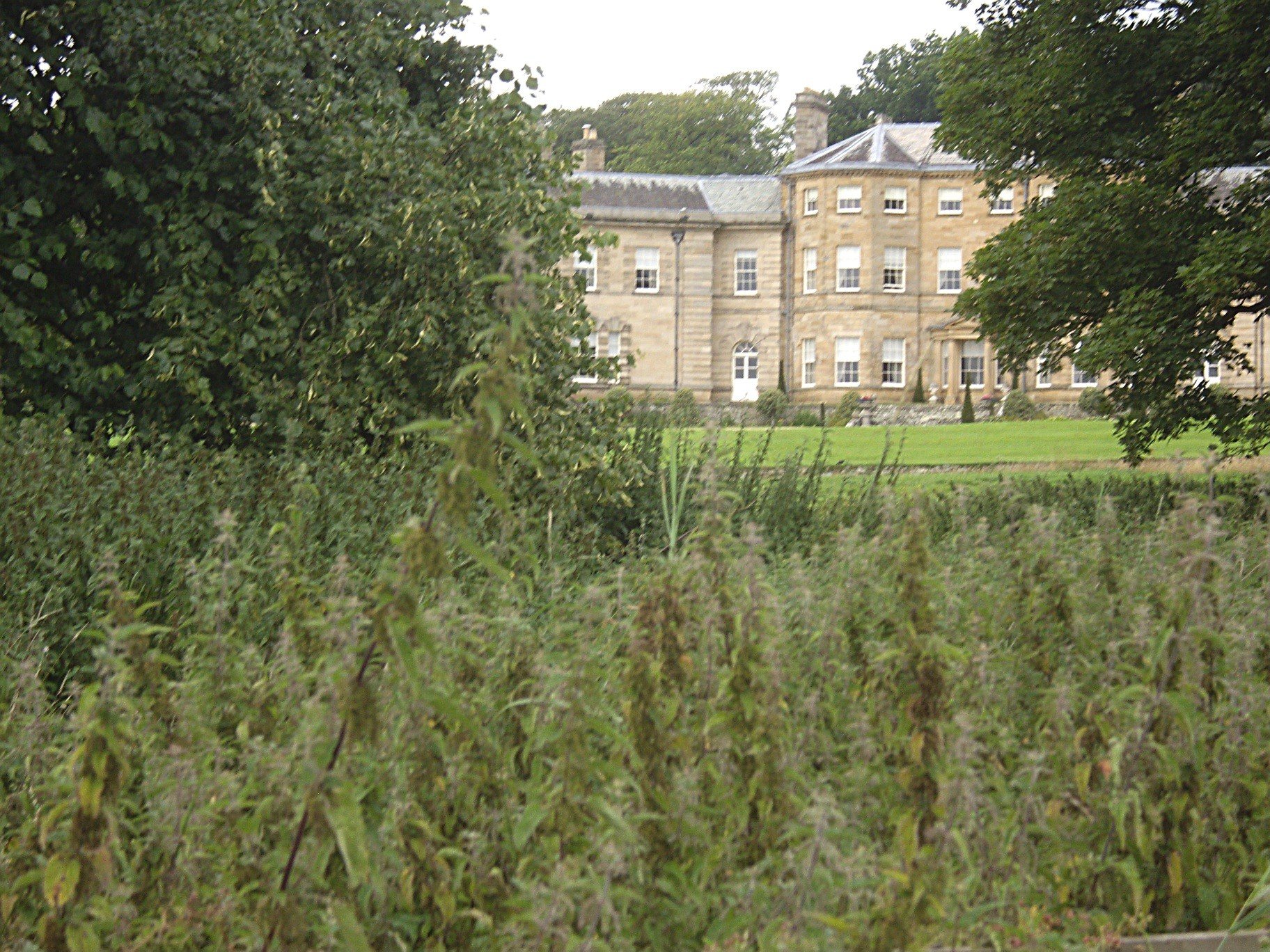
Chesters
That antiquity alluded to earlier was referenced again in the park at Chesters, another 18th Century mansion whose owner John Clayton, a classical scholar, was busily examining the Roman remains of Chesters (Cilurnum) in his grounds.
The Georgians were clearly into their antiquities as well as their architecture and Dr John Horsley, the ‘father of British archaeology’, died in Morpeth in 1732, the year his tome on Roman Britain was published.
I mentioned a late-Georgian bridge. The river crossing at Corbridge was Stuart, not Georgian, but it was the only bridge that survived the great Tyne flood of 1771 so it is worth a mention, as is the famous one at Haydon Bridge, rebuilt later in the decade.
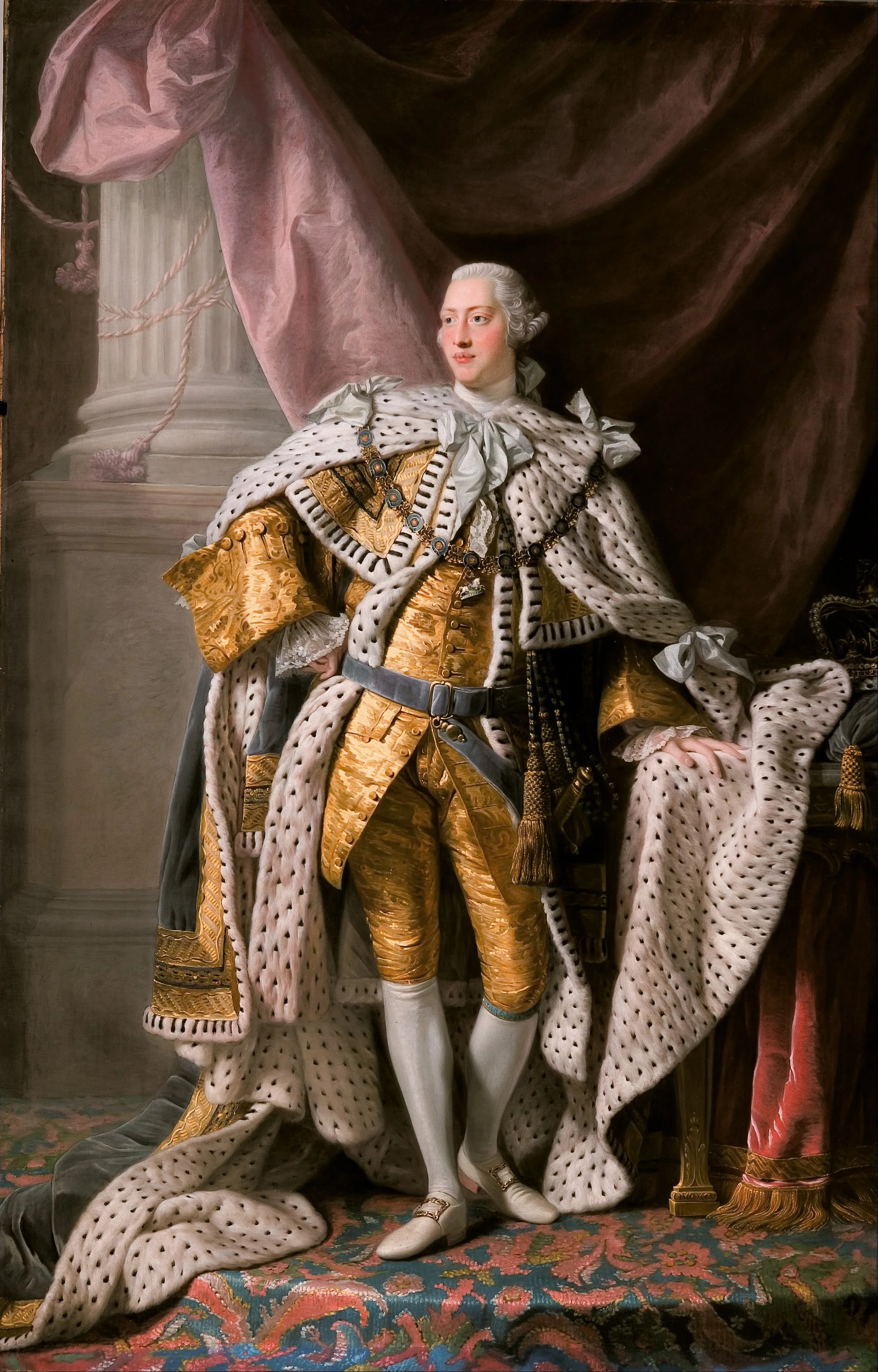
George III
George III (1738-1820) was the mad one. When he married in 1761, his bride Charlotte Sophia, Princess of Mecklenburg-Strelitz, embarked on a career of childbirth, bestowing 15 offspring on the king. An obstinate monarch, he lost the American colonies (careless…) and first lost his own marbles in 1788, which eventually led to the regency (1811-20) of his son, the future George IV.
Alnwick benefited from some landscaping in 1765 as the grounds around and below its famous castle were titivated by the Northumbrian-born landscape gardener, Lancelot ‘Capability’ Brown, born at Kirkharle in 1716. He also designed the gardens at Wallington Hall.
The Georgians weren’t always erecting useful things, however, Alnwick’s Percy Tenantry Column (1816) being a case in point, 83ft of it erected by grateful tenants when their rents were reduced at a time of agricultural depression. I like the story that it was dubbed ‘The Farmers’ Folly’ when the duke, surprised at his tenants’ extravagance, promptly bumped their rents up again. I’d like to think it’s true, but…
Alnmouth was an important grain-shipment port. It was the port for Alnwick and was still exporting substantial amounts of corn and importing Norwegian timber in the early-19th Century. However, it faced both natural and manmade calamity during George III’s reign. A catastrophic storm on Christmas Day 1806 saw the river Aln change course, the remains of an old Norman church destroyed, and the harbour silting up as a result.
The port had also been bombarded a generation earlier in 1779, courtesy of the American John Paul Jones who lobbed a 68lb cannonball into the town.
If Alnmouth’s harbour was under siege, Beadnell’s was on the up. Its harbour walls were built of drystone wall, most likely in the 1790s, and the place had already acquired a new church in 1740.
Another harbour in difficulty, however, was Cullercoats, which once exported salt, coal and grindstones. The last vessel to clear its harbour was the Fortune of Whitby in 1726. It had 21 tons of salt aboard –perhaps for the fish and chips.
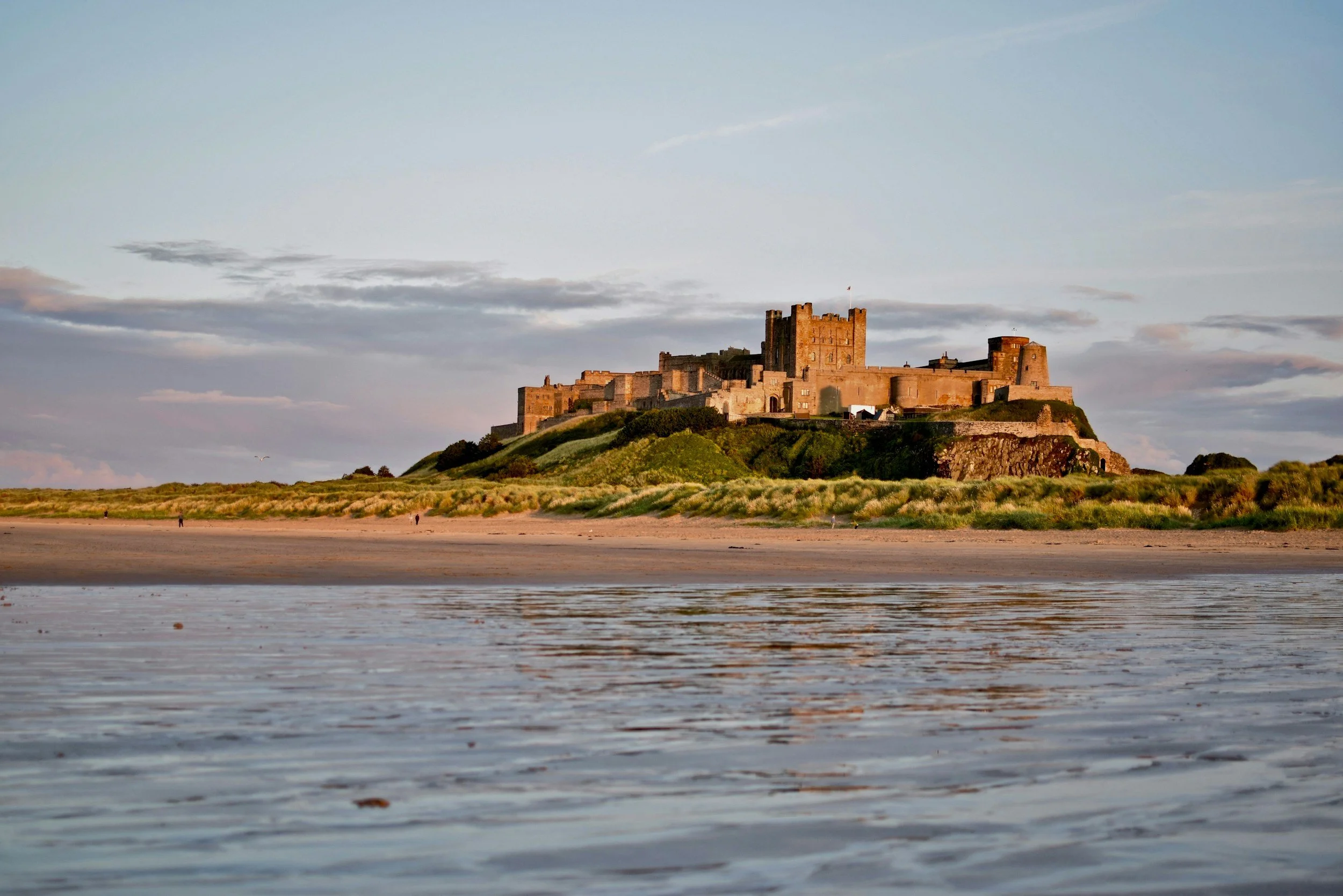
Bamburgh Castle
Another of the great Northumberland castles, Bamburgh, saw a good deal of restoration and alteration during the Georgian era, the late-18th Century seeing the castle used as a boarding school (for the training of serving lasses), a surgery/dispensary (for the poor), the site of a windmill (for grinding corn for the needy) and as a haven (for shipwrecked mariners). What a place.
Bamburgh – the village rather than the castle – was the birthplace of Grace Darling in 1815, her shot at fame coming right at the start of the Victorian era. The following year Daniel Gooch (see p14-p17) was born in Bedlington. Locomotive engineer and layer of Atlantic cables, his emergence was confirmation that the railway age was accelerating, following George Stephenson’s birth in Wylam (1781).
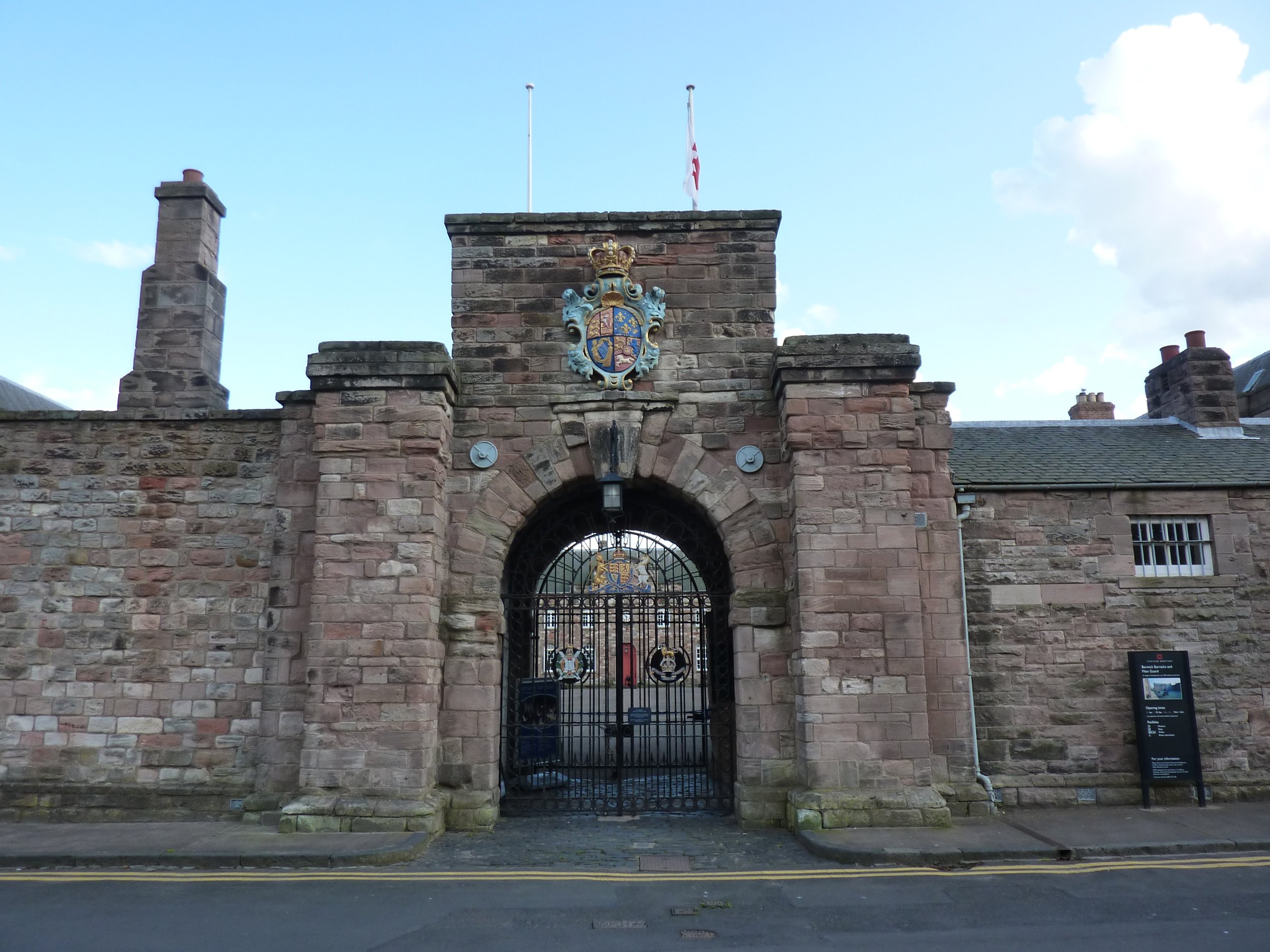
Berwick Barracks
Berwick saw very different developments. The late 18th Century saw its riverside walls rebuilt with gun emplacements in a nod to the constant wars with France, while its barracks had been built for the same reason (1717-21). A handsome town hall went up in the 1750s.
The French threat saw an ‘occasion’ in Blyth, when 7,000 British troops were inspected on the sands in 1795 with 30,000 spectators looking on.
The threat was sometimes closer to home. Felton saw Thomas Forster recruiting in 1715 because of the Jacobite rebellion and he raised 70 horsemen in the village. The Jacobites didn’t give up in their attempts to overthrow the Hanoverians and restore the Stuarts and 30 years later the Duke of Cumberland stopped at Felton on his way to defeat Bonnie Prince Charlie at Culloden.
More peaceably, people heard John Wesley preach at Felton – a little place with a bit of previous – in 1766. It had a Nelson monument erected outside the village in 1806.
Heddon-on-the-Wall housed refugee French royalist priests (1796-1802) in cottages originally built for miners, while a reminder of earlier wars came in 1810 when a mass grave was found under the north wall of Elsdon church. It was presumed to hold the remains of English dead from the Battle of Otterburn (1388).
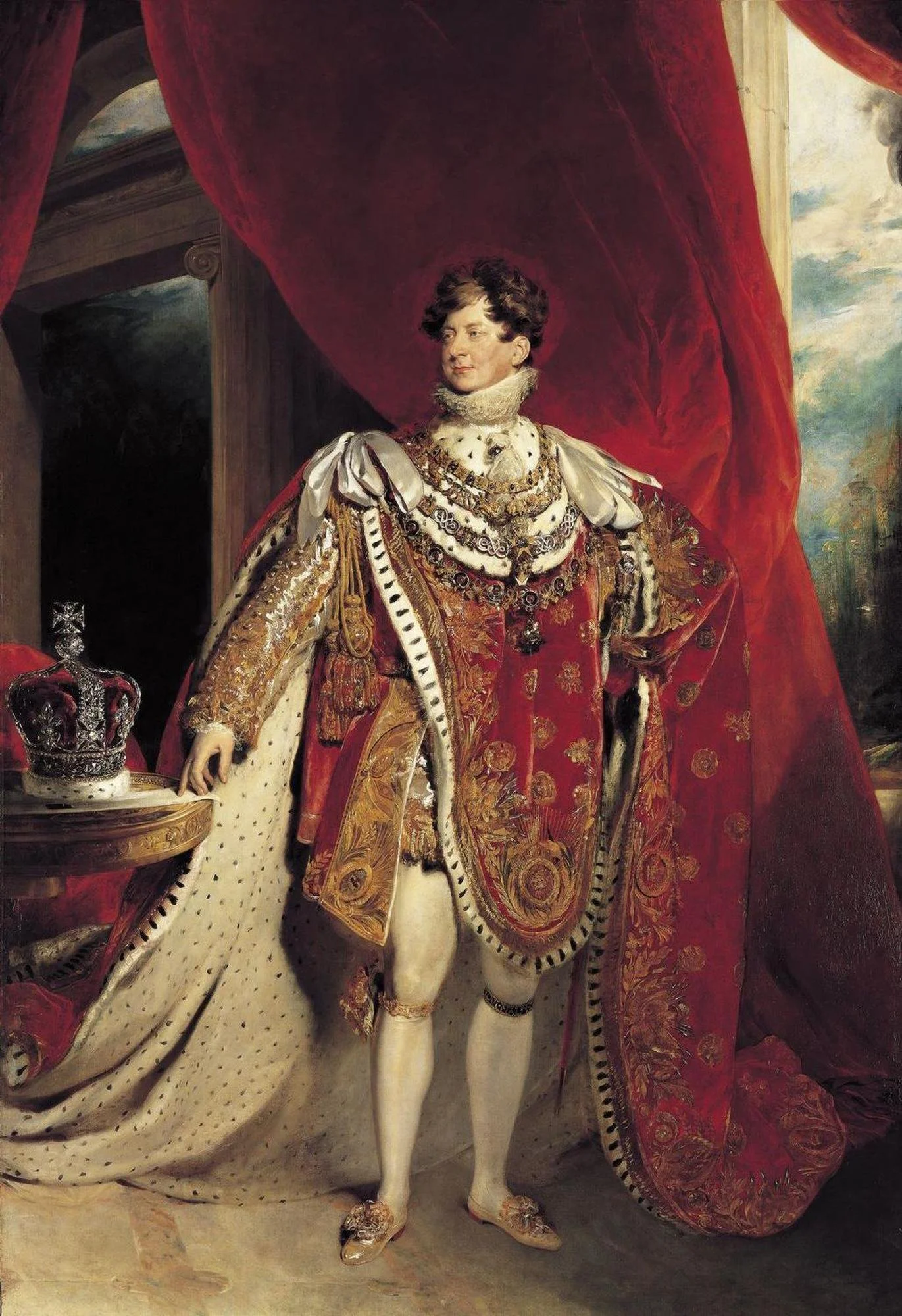
George IV
The last of the four Georges (1762-1830) was a chip off the old block – a lazy, selfish liar, not to put too fine a point on it. He also had ‘disreputable sexual morals’ and became corpulent, hence his nickname ‘Prince of Whales’. There were clearly ‘goings-on’ up north during his reign, a watch-house being erected in Doddington’s churchyard in 1826 to ward off body-snatchers with another in Morpeth (1831).
A century earlier, Hartburn’s church had benefited from something far less sinister in the shape of a pair of collection boxes (1721 and 1725). Education mattered too and a ‘crenellated school’ was built in Hartburn by Dr John Sharp, vicar here from 1740-96. Sport scored as well, Kielder Castle being built as a ‘shooting box’ by the Duke of Northumberland in 1775. Thomas Bewick was drawing birds rather than bagging them; he was born in Ovingham in 1753.
There’d be one final Georgian king, William IV (1765-1837), George IV’s younger brother, who filled the gap until the Victorian era got underway. Prior to his marriage (1818) he lived with an actress with whom he had 10 children, but his royal wedding failed to provide any living heirs. It was time for his niece, Queen Victoria.
CHRONOLOGY
1714 Death of Queen Anne and accession of George I, the first of the Hanoverian kings
1716 Birth of Lancelot Capability Brown at Kirkharle
1727 Death of George I and accession of his son, George II
1728 Completion of Seaton Delaval Hall after a decade’s work
1760 Death of George II and accession of his grandson, George III
1771 Only Corbridge’s bridge survives the great Tyne flood
1820 Death of George III and accession of his son, George IV (Prince Regent)
1828 Mitford Hall built, one of the many Northumberland works of John Dobson
1830 Death of George IV and accession of his younger brother, William IV
1831 Morpeth’s watch tower built because of the spate of grave robbing
1837 Death of William IV and accession of his niece Victoria –the end of the Georgian era